Glossary · Mechanism
Lépine calibre
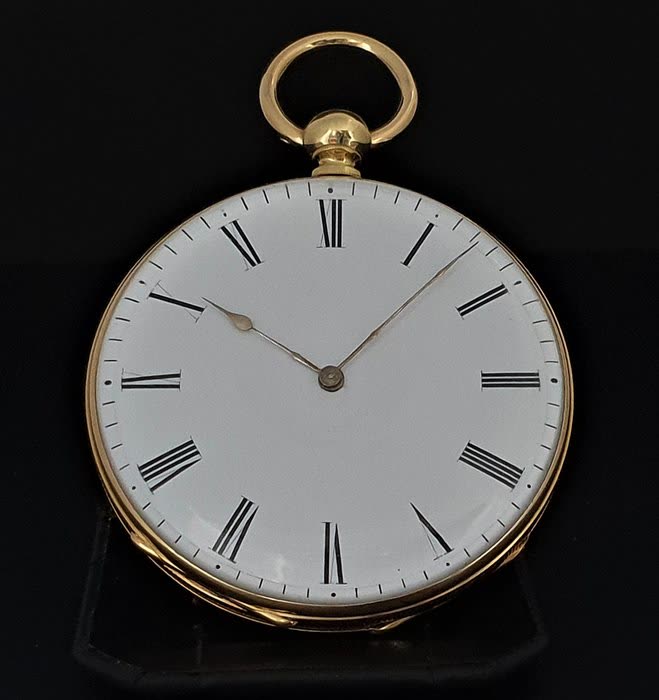
A thin movement layout with separate bridges and the winding at twelve, in line with the seconds.
Explanation
The Lépine calibre, introduced by Jean-Antoine Lépine in the late 18th century, replaced the full top plate with separate bridges for each wheel, allowing much thinner watches. Combined with cylinder or later lever escapements it defined the modern thin watch. The name also describes open-face watches wound at 12 o'clock with the small seconds at 6, in line with the stem.
In the object catalogue
Catalogued objects whose own source record mentions “Lépine calibre”. The quoted line shows where; it is the seller’s or museum’s wording, not independent verification.