
Source catalogue · individual objects
Object Catalogue
Individual objects described by auction houses, specialist dealers and collection catalogues. Attribution, dates and specifications remain source-reported unless independently established; rights clearance is pending.
Browse makers and their key pieces · George Graham profile
14 of 5699 objects · Page 1 of 1
Pocket watch · Verge & pair-cased watch
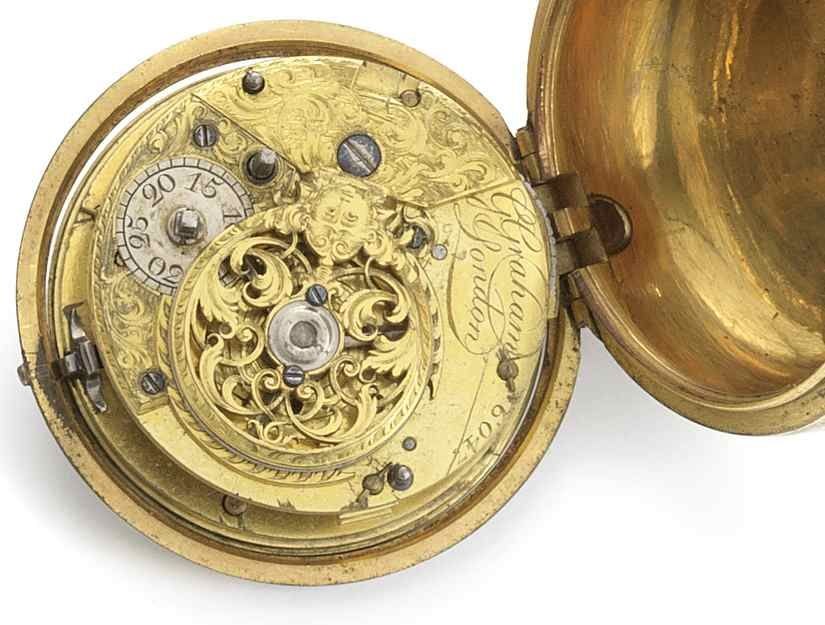
George Graham Gilt Metal Pair Case Cylinder Pocket Watch No. 6047
This George Graham pair case pocket watch dates to circa 1742 and measures 50 mm in diameter. The source reports it features a gilt full plate fusee cylinder movement with squared baluster pillars, a three-arm steel balance, a pierced and engraved balance cock, and a silvered regulator. The top plate and dust cap are signed by the maker and numbered 6047. The movement is housed in a gilt metal hinged inner case, complemented by a hinged outer cover lined in leather showing evidence of former stud work. The enamel dial features black Roman numerals, outer five-minute divisions, and steel hands.
Full description
www.bonhams.com · 45
Pocket watch · Verge & pair-cased watch
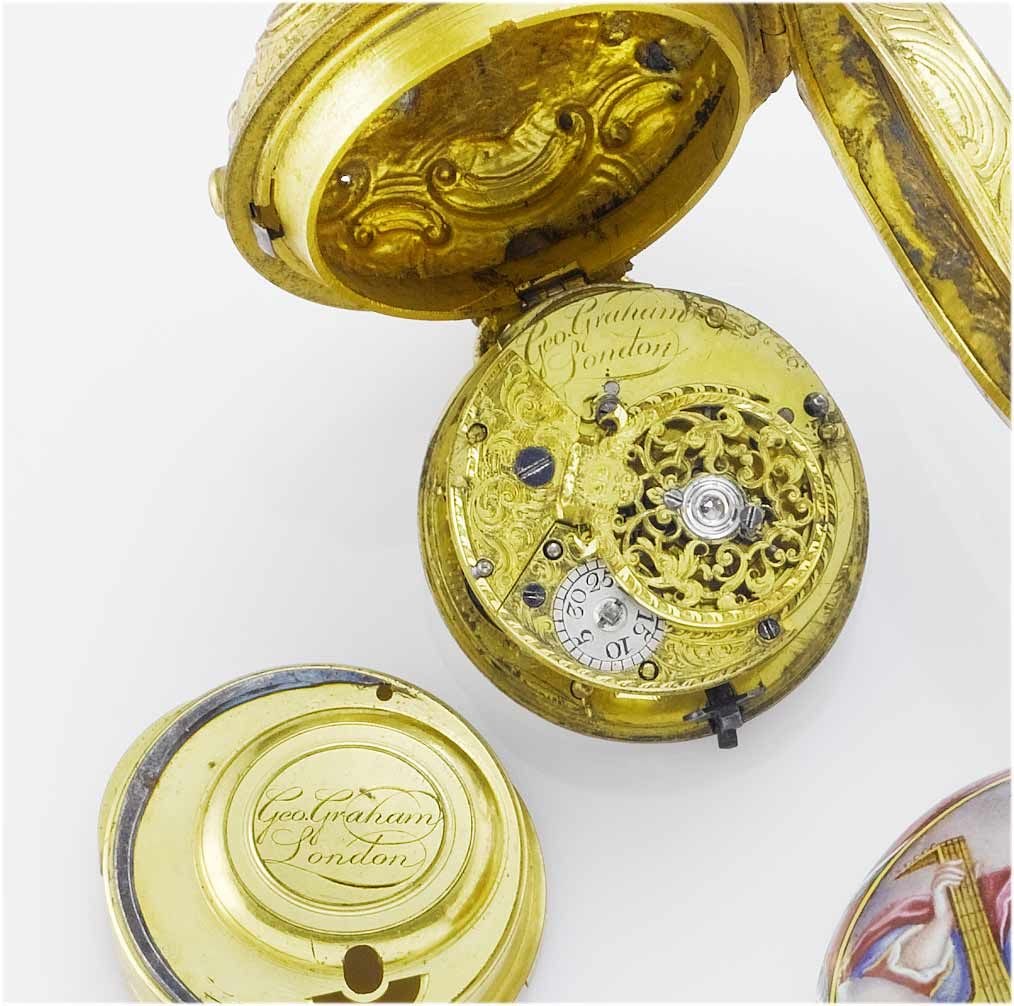
George Graham cylinder pocket watch No. 5746
This early 18th-century English pocket watch movement is signed by George Graham, London, and numbered 5746, dating to circa 1735 according to Bonhams. The gilt movement incorporates a cylinder escapement, Egyptian pillars, a pierced and engraved balance cock, and a diamond endstone. A separate gilt dust cap is signed 'Geo. Graham London' and scratch-numbered on its interior. The watch is fitted with an associated 47 mm gilt-metal repoussé outer case, alongside an enamel dial with Roman numerals and a hand noted as later replacements. The source records this piece in Jeremy Evans's 'Thomas Tompion, at the Dial and Three Crowns'.
Full description
www.bonhams.com · 4
Pocket watch · Early watch (16th–17th century)
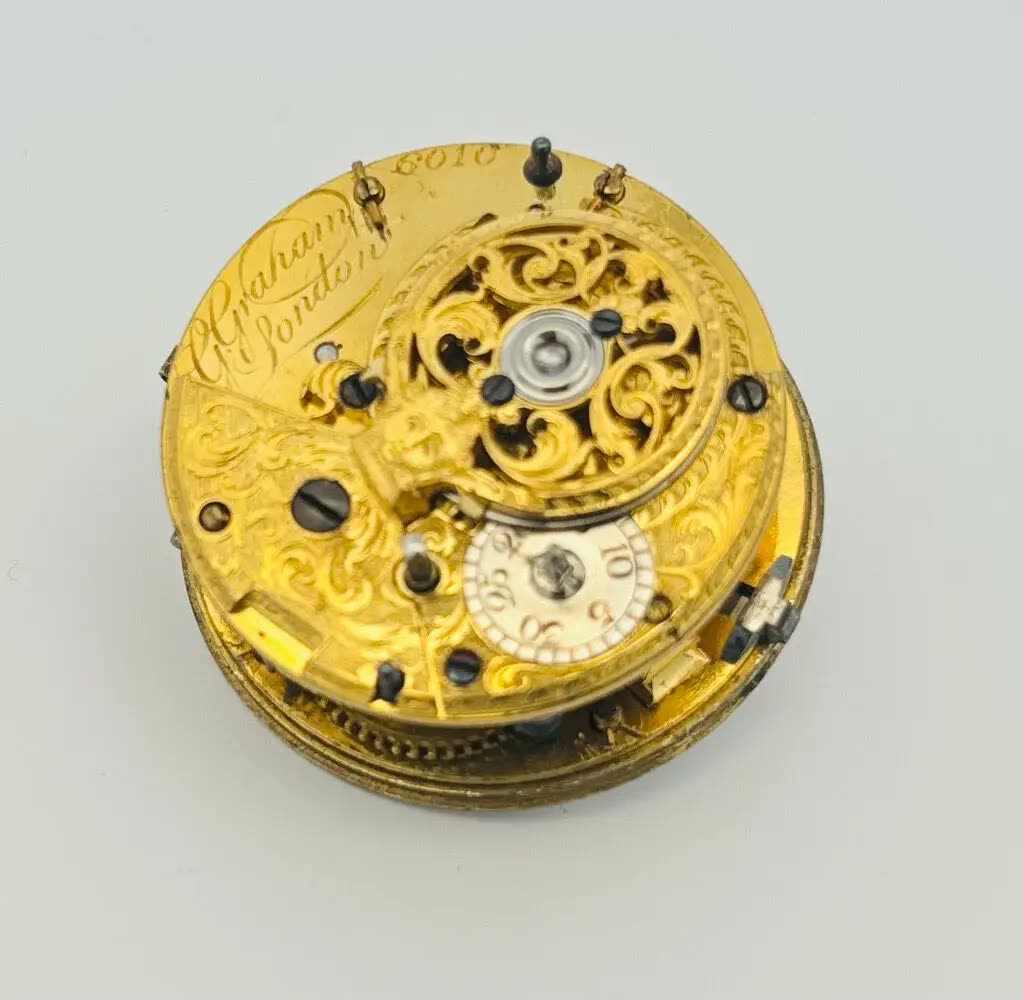
George Graham fusee pocket watch
This horological lot features an 18th-century fusee pocket watch movement engraved 'Geo Graham London' and numbered 6010. The gilt movement measures 4.0 cm in diameter and features pierced and engraved foliate scrollwork, an ornate balance cock, and a silver regulator disc. According to saleroom notes, the watch is accompanied by a 4.5 cm silver case stamped JW*, which literature records date to 1741, as well as an outer 5.0 cm shagreen case. The auction house notes the shagreen case was not made by D. Grieve of Carlisle and that the movement is untested with faults.
Full description
www.bonhams.com · 49
Pocket watch · Verge & pair-cased watch
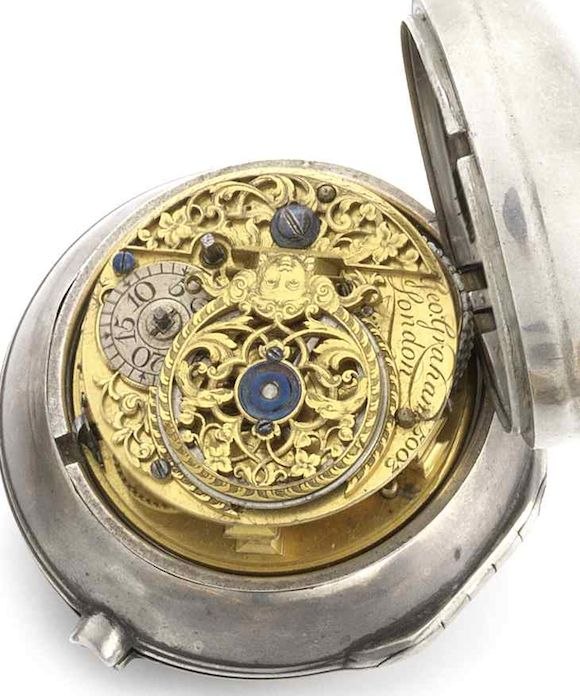
George Graham silver pair case pocket watch
According to the auction catalogue, this silver pair case pocket watch houses a gilt full plate movement signed 'Geo: Graham London' and numbered 5003, with the movement dated to 1722. The movement is configured with Egyptian pillars, a pierced and engraved balance cock with a diamond endstone, and silvered regulation. The 52mm watch is fitted with a later silver pair case bearing London hallmarks for 1784. Bonhams reports a later enamel dial with black Roman numerals and five-minute markers, lacking its hour hand.
Full description
www.bonhams.com · 43
Pocket watch · Verge & pair-cased watch
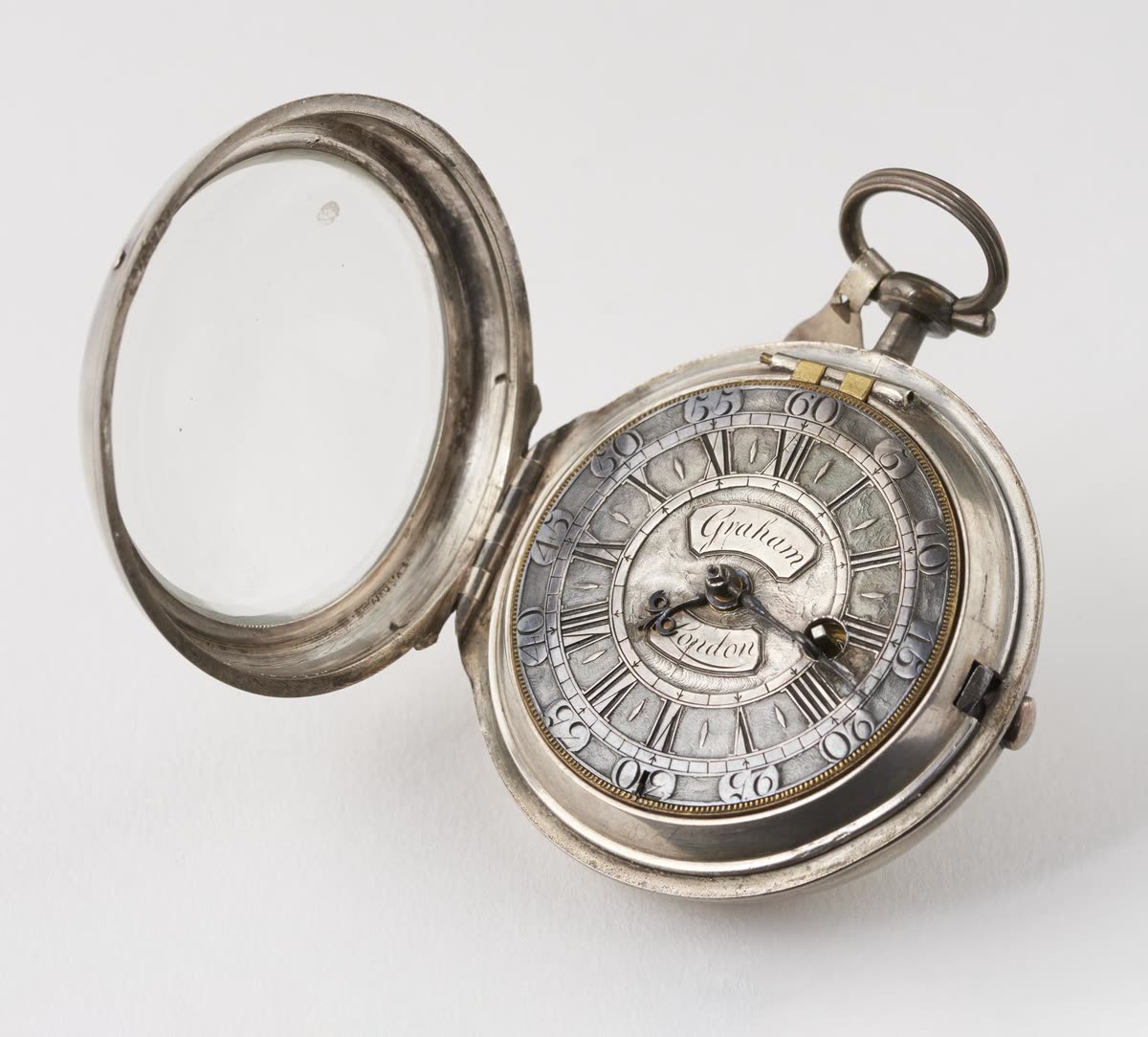
Pocket Watch in Silver Case, by George Graham, 1725-1750
This antique silver-cased cylinder pocket watch is attributed by the Science Museum Group to maker George Graham of London, dated between 1725 and 1750. Catalogued under object number 1916-146, the timepiece is constructed from silver and unspecified metal, measuring 25 mm by 58 mm by 62 mm with a mass of 0.09 kg. The front features a relief or engraved silver dial with Roman numerals for the hours, outer Arabic numerals marking five-minute increments, and signature cartouches reading 'Graham' and 'London'. According to museum documentation, the movement is numbered 5223 and suffers from a broken escape wheel arbor and missing chain.
Full description
collection.sciencemuseumgroup.org.uk · 1916-146
Pocket watch · Stopwatch & timer
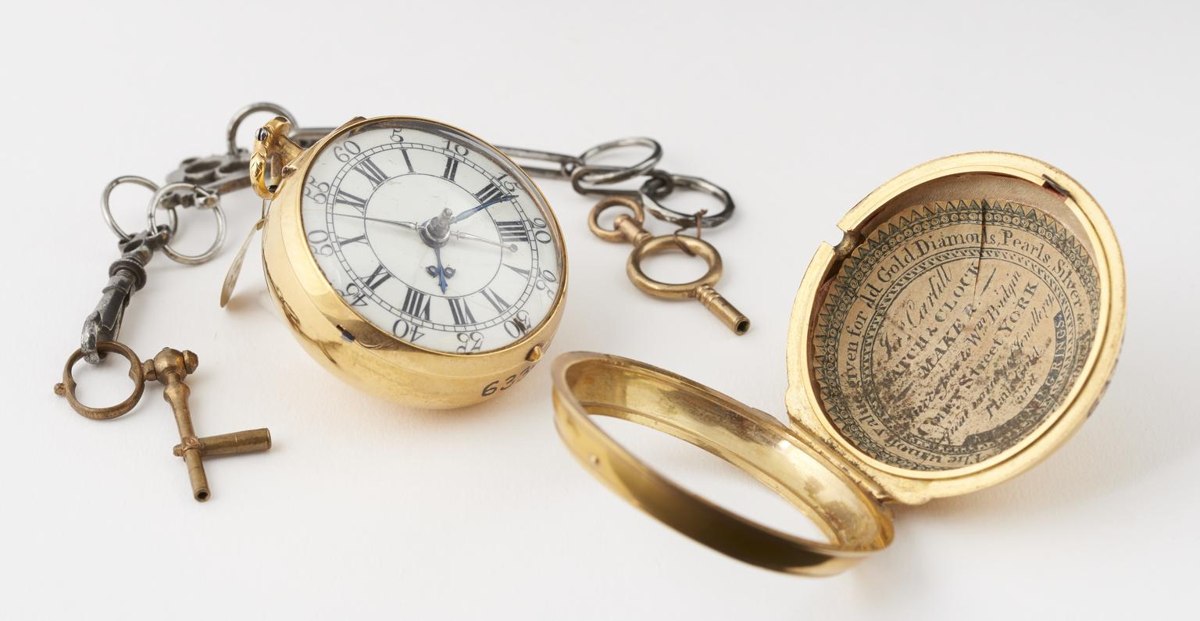
Pocket Stop Watch in Gold Case by George Graham
According to the Science Museum Group, this antique gold-cased pocket stop watch was made in London between 1730 and 1748 by George Graham. Recorded under movement number 6296, the timepiece features a cylinder escapement and is accompanied by an ornamental chain holding two watch keys. The watch is arranged with a protective outer case containing an inserted watchmaker trade paper. The white enamel dial is configured with Roman hour numerals, an outer ring of Arabic five-minute numerals, and blued hands. The object is in the Science Museum Group collection on credit from the Victoria and Albert Museum.
Full description
collection.sciencemuseumgroup.org.uk
Clock · Longcase clock
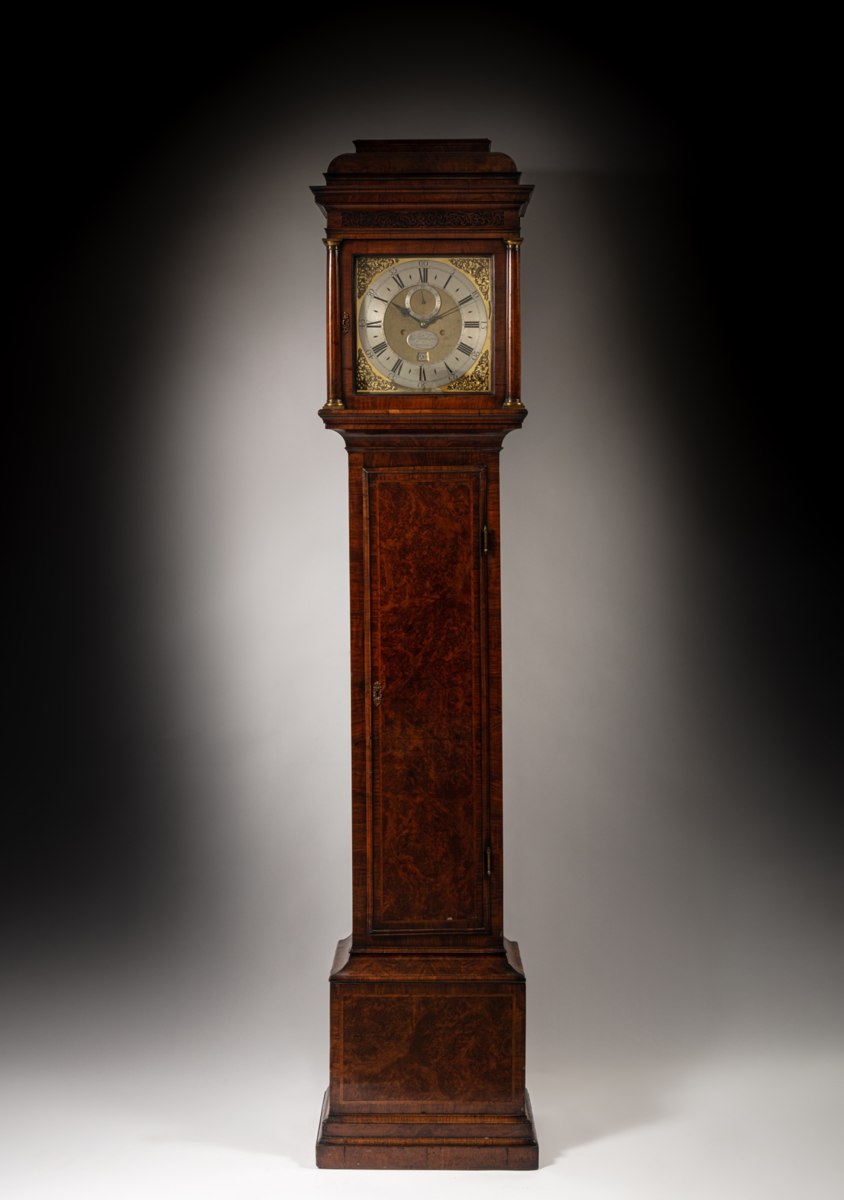
George Graham No. 679 George II Walnut Longcase Clock
This George II walnut longcase clock was crafted in London circa 1730 and is attributed by Sotheby's to George Graham, marked with number 679. The walnut case stands approximately 225 cm tall, featuring a moulded caddy top, pierced frieze frets, brass-capped hood pilasters, a long rectangular trunk door, and a stepped plinth base. Its square brass dial displays Roman numerals, Indian mask and scroll spandrels, a subsidiary seconds dial, a date aperture, and maintaining power lever. According to the auction description, the movement incorporates five latched knopped pillars, anchor escapement, bolt and shutter maintaining power, and rack striking on a bell.
Full description
www.sothebys.com · 38
Clock · Longcase clock
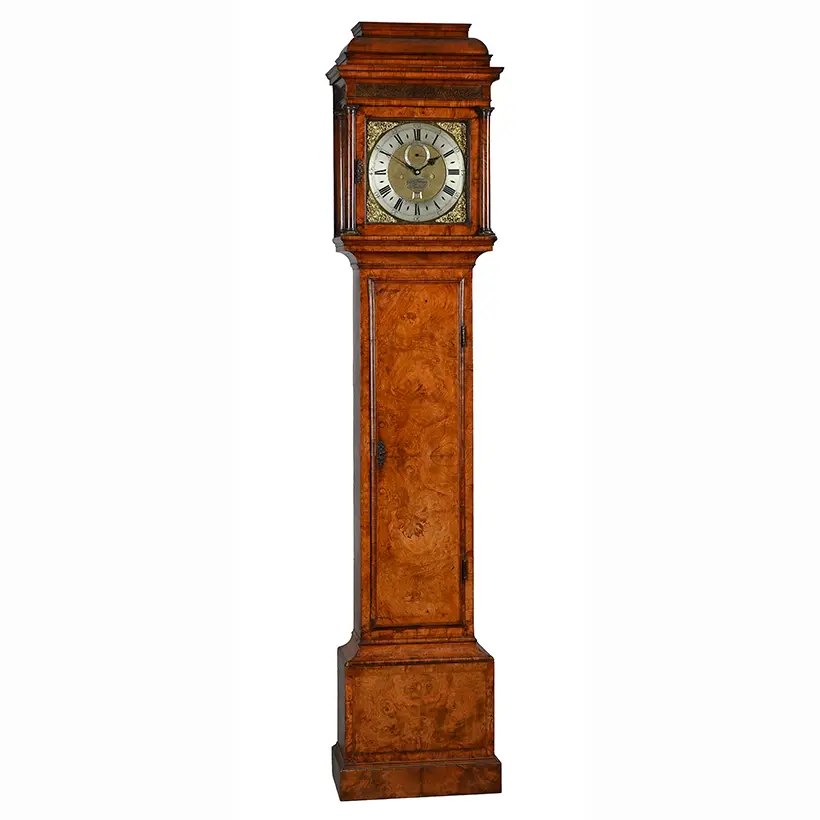
George Graham George I Burr Walnut Eight-Day Longcase Clock, No. 662
According to the auction catalogue, this George I burr walnut eight-day longcase clock by George Graham dates to circa 1725 and bears serial number 662. The source states it features a two-train bell-striking movement with five latched knopped pillars, deadbeat escapement with inverted Y-shaped pallets, bolt-and-shutter maintaining power, and a brass-rod seconds pendulum. Its 12-inch square brass dial presents a matted centre signed on an oval plate, applied silvered Roman numeral chapter ring, subsidiary seconds, and double-screwed gilt Indian mask spandrels. The burr walnut case incorporates a domed caddy surmount, fretwork frieze, three-quarter hood columns, and a book-matched figured rectangular trunk door stamped 662.
Full description
www.dreweatts.com · 236
Movement · Pocket watch movement
George Graham Watch Movement Mounted in a Brass Stand
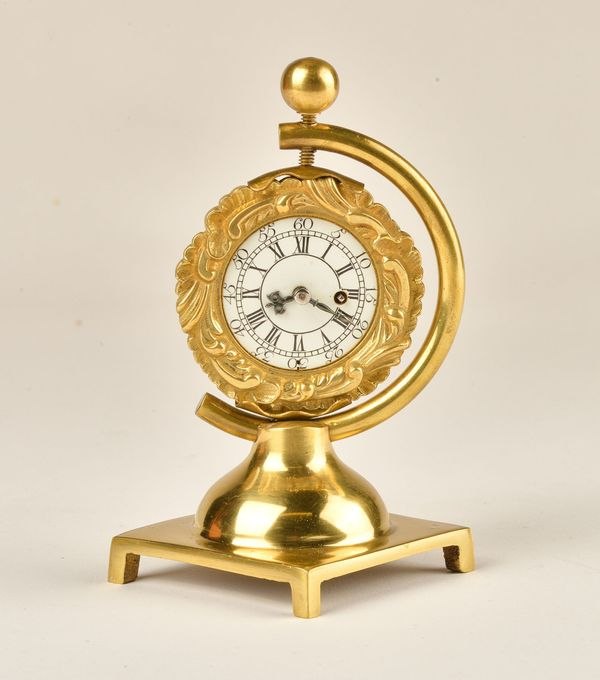
This pocket watch movement by George Graham of London, numbered 565 and dated by the auction source to circa 1735, is mounted within an ornate cast brass bezel and suspended in a C-shaped brass stand. According to the auction description, the movement features square baluster pillars, a chain fusée, a cylinder escapement, an outer dust cover, and a pierced bridge cock with a diamond end-stone. The watch is fitted with a later white enamel dial featuring Roman hour numerals, Arabic minute intervals, a winding aperture near 4 o'clock, and beetle-and-poker hands.
Full description
app.bellmans.co.uk · 9a
Pocket watch · Open-face watch
George Graham Gilt-Metal Consular Cased Cylinder Pocket Watch
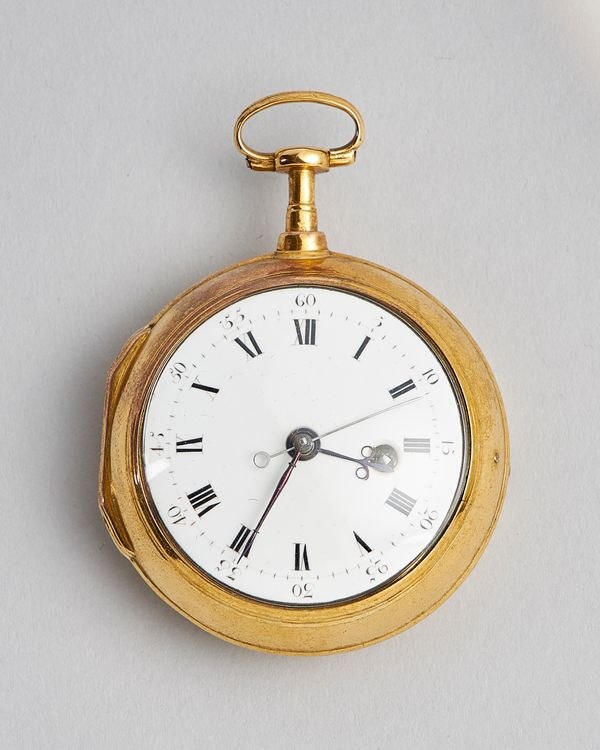
According to the auction catalog, this pocket watch houses a cylinder movement by George Graham, London, numbered 6195 and dated circa 1744, featuring sweep centre seconds. The movement is fitted within a later gilt-metal consular case configured with a pendant and a hinged glazed front cover. The watch displays a 42.5 mm enamel dial recorded by the auctioneer as re-enamelled, marked with black Roman numerals for the hours and an outer track with Arabic numerals at five-minute intervals.
Full description
app.bellmans.co.uk · 679
Pocket watch · Early watch (16th–17th century)
Pocket Watch by George Graham, No. 6363
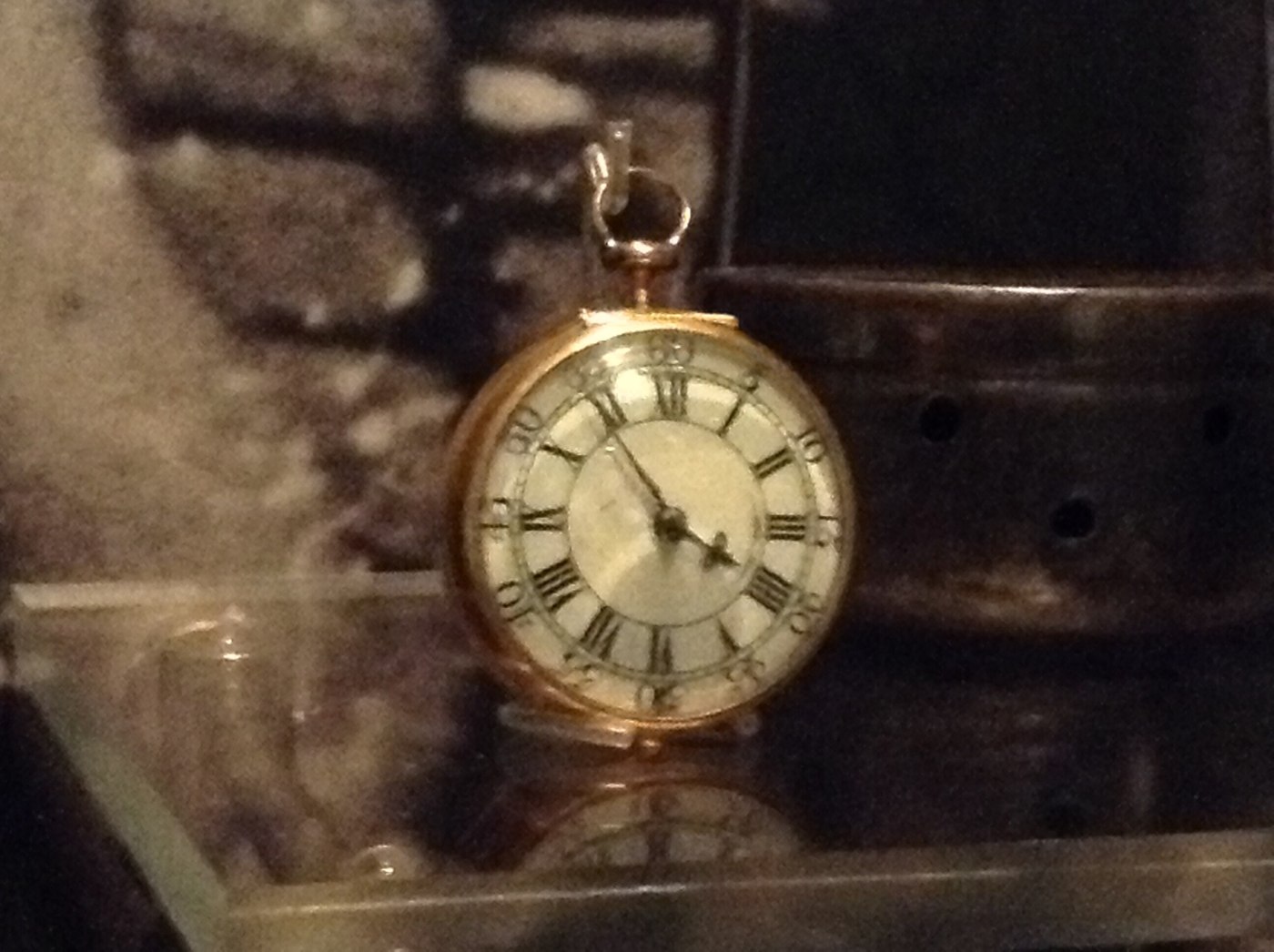
This gold-cased pocket watch, numbered 6363, is attributed to the London maker George Graham and dates to approximately 1747. The timepiece features a white enamel dial marked with black Roman numerals and an outer ring of Arabic numerals calibrated in increments of five. The movement is constructed with a key-wound spring, a fusee and chain mechanism, and a cylinder escapement. The back plate, visible upon opening the case, displays an ornate foliage design and is engraved with the maker's name and serial number. A secondary mark appears on the works cover. The watch, measuring approximately 4.1 cm in outside diameter, was acquired by the museum in 1949 as a donation from Joseph Lowy.
Full description
collections.museumsvictoria.com.au · ST 23132
Clock · Bracket clock
Table or bracket clock by George Graham
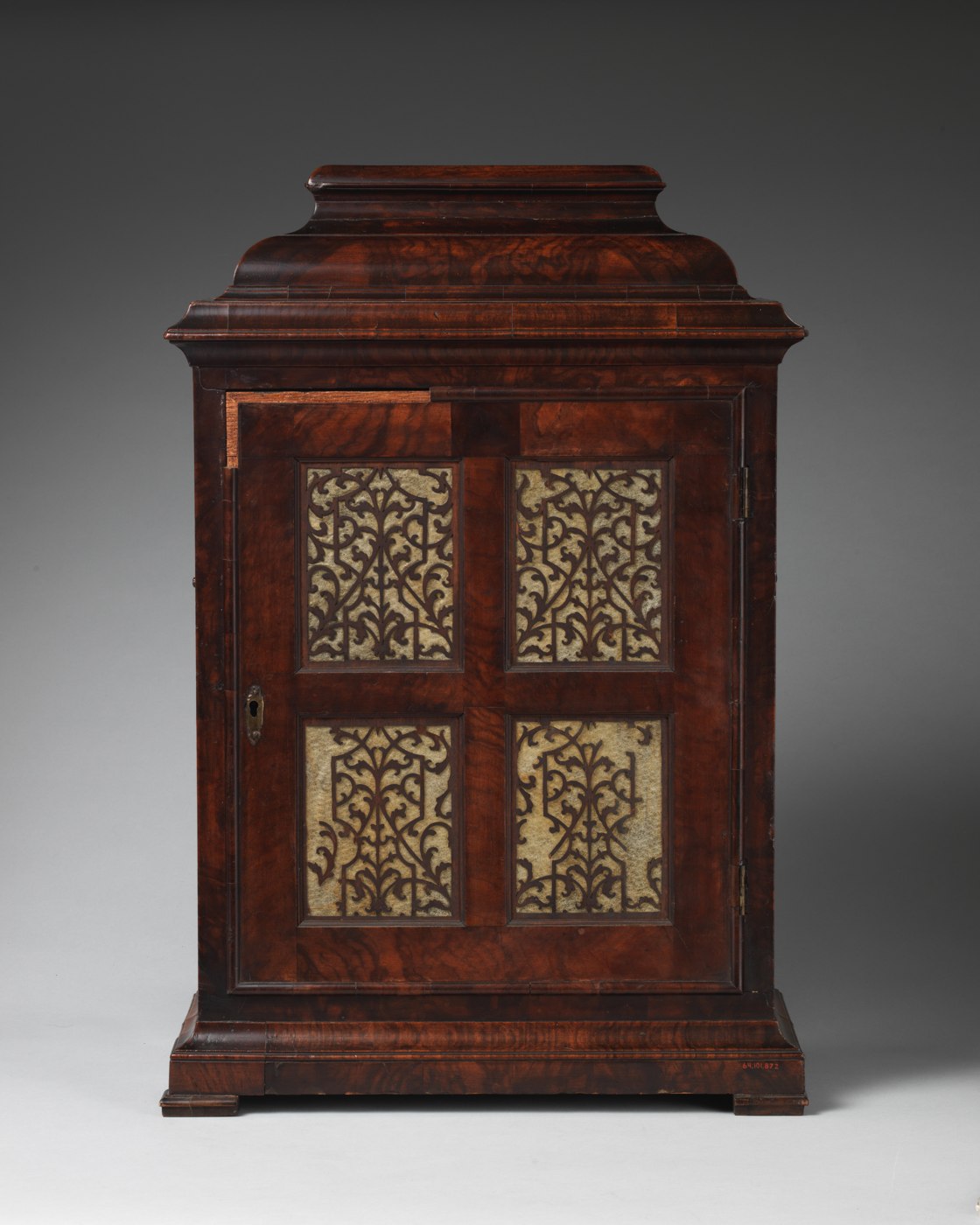
This table or bracket clock is attributed to the English clockmaker George Graham. Dated circa 1720, the clock features a case constructed of walnut veneer over an oak carcass, ornamented with brass hardware. The dial is composed of gilded and silvered brass. The internal mechanism consists of brass and steel components. The overall dimensions of the object are 24 1/2 by 16 3/4 by 8 3/4 inches (62.2 by 42.5 by 22.2 cm). It is currently part of the collection of The Metropolitan Museum of Art, having been gifted to the institution by Irwin Untermyer in 1964. The signature "Geo. Graham London" appears on the dial. The design incorporates a silvered chapter ring, subsidiary dials, and decorative brass corner mounts. The movement is mounted within the wooden casing, which includes side panels featuring ornate brass fretwork.
Full description
Source listing · 64.101.872
Pocket watch · Repeating watch
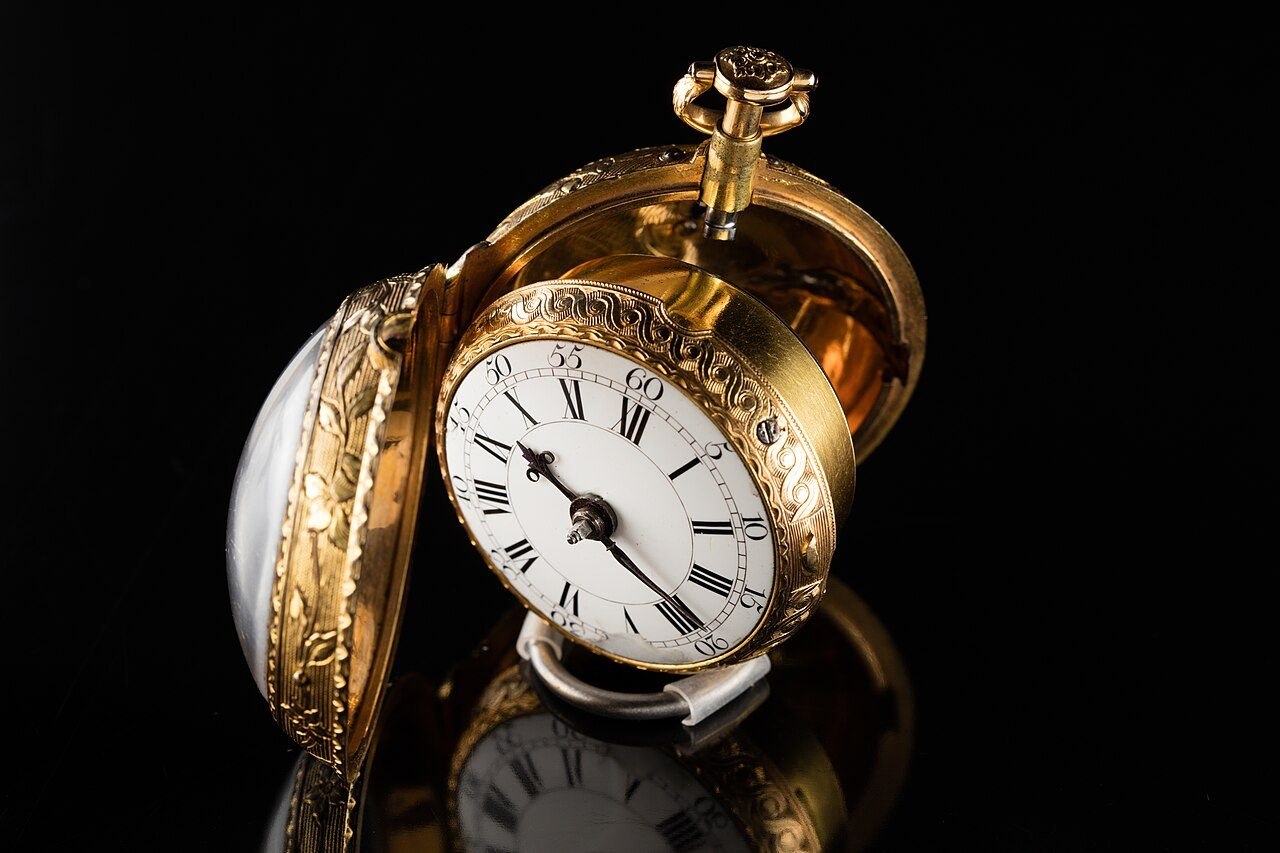
George Graham quarter dumb repeating verge pocket watch
This gold quarter dumb repeating verge pocket watch is attributed to George Graham of London. The object features an enamel dial with beetle and poker hands, housed in a case fitted with a dome glass. Technical specifications noted include a fusee movement pivoted through the balance wheel and a large diamond end-stone. The watch incorporates a stirrup bow and is described as a quarter dumb repeating watch. The Auckland Museum, which holds the piece as part of its history collection under accession number 1942.92, notes that it is considered to be a potential forgery. The watch was once owned by Judge Martin of Russell and entered the museum collection as a gift from Miss E. G. Martin in 1942. Its design reflects the style of historical verge escapement timepieces, though its origin remains subject to institutional uncertainty.
Full description
commons.wikimedia.org · 1942.92
Pocket watch · Repeating watch
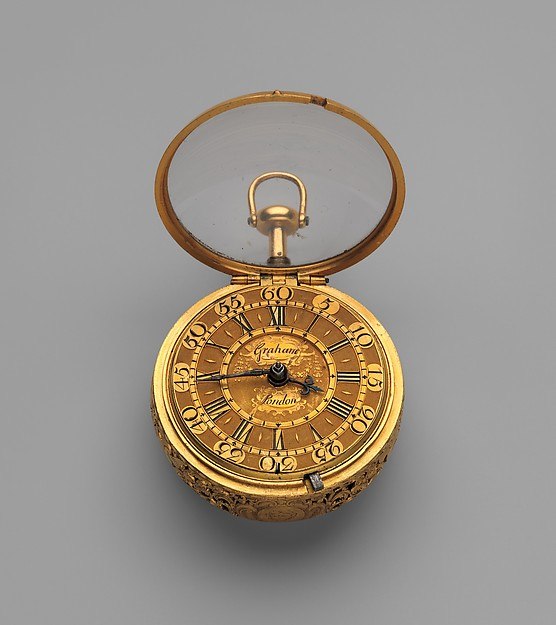
Pair-case repeating watch by George Graham
This pair-case watch with a quarter-repeating mechanism was made by the London-based clockmaker George Graham (1673–1751) and is dated 1719–20. The object, held by The Metropolitan Museum of Art (accession number 52.62a–d), features an inner and outer case constructed of gold. The dial is executed in champlevé gold, and the movement is constructed from gilded brass with components in partly blued steel. The diameter of the watch and case is 2 3/16 inches (5.6 cm). The watch is accompanied by two keys, with lengths of 1 1/16 inches (2.7 cm) and 1 inch (2.5 cm) respectively. The signature "Geo Graham, London" is engraved on the movement, which also bears the serial number 467. The watch face displays both Roman numerals for hours and Arabic numerals for the five-minute increments.
Full description
Source listing · 52.62a–d