
Source catalogue · individual objects
Object Catalogue
Individual objects described by auction houses, specialist dealers and collection catalogues. Attribution, dates and specifications remain source-reported unless independently established; rights clearance is pending.
Browse makers and their key pieces · Dent profile
17 of 5699 objects · Page 1 of 1
Pocket watch · Pocket chronometer & deck watch
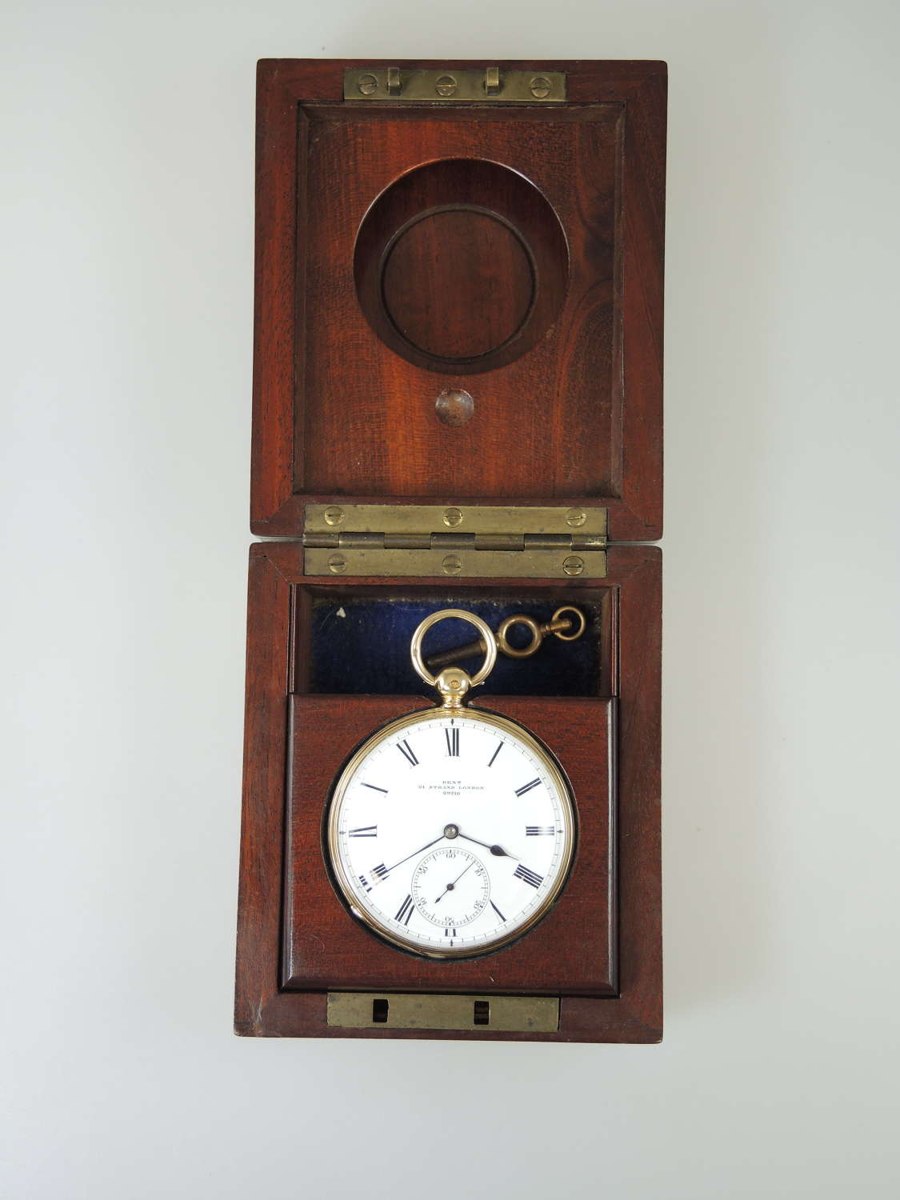
Dent 18K Gold Pocket Chronometer with Original Box
This mid-nineteenth-century open-face pocket chronometer is signed by Dent, London, and numbered 29216. Housed in a solid 18K gold case bearing London hallmarks for 1863 and the maker's mark JWS, the watch is powered by a key-wound gilt fusee movement featuring a detent escapement, a free-sprung balance with large gold timing weights, and a helical hairspring. The white enamel dial is configured with Roman numerals, blued steel hands, and a subsidiary seconds dial at 6 o'clock. It is preserved in its brass-bound three-tiered wooden box containing a bone disc numbered 29216.
Full description
www.atlam-watches.co.uk · 5.35
Clock · Mystery clock
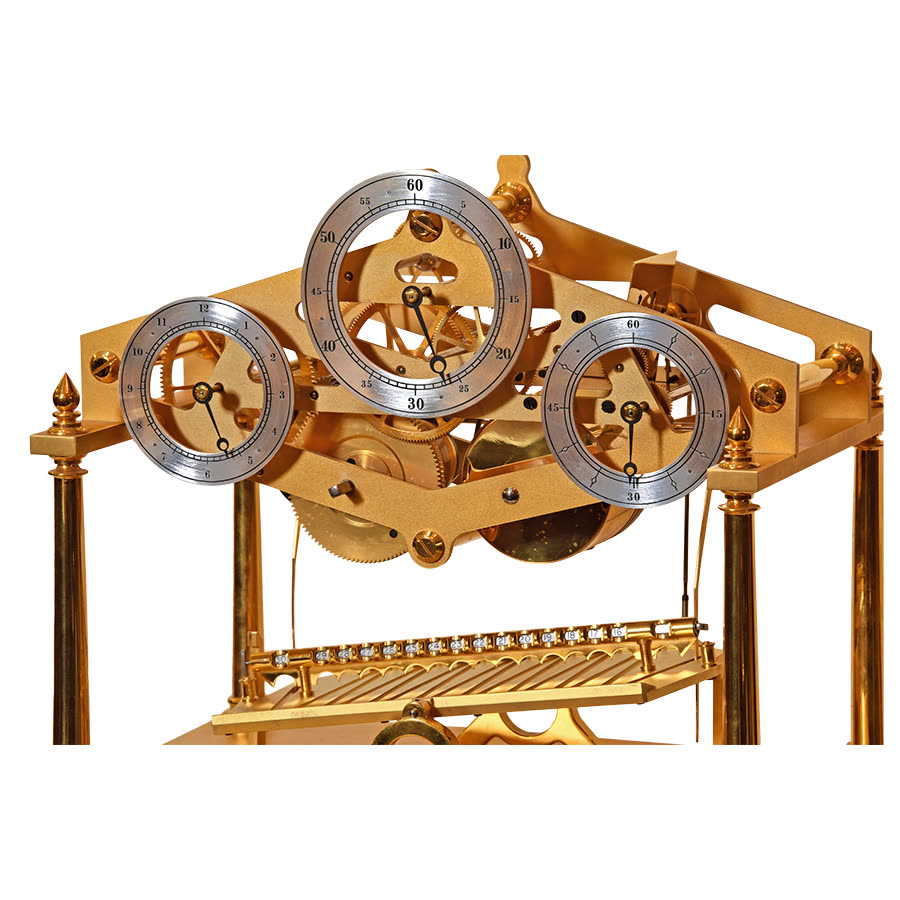
Dent of London Congreve Rolling Ball Clock by Andrew Fell
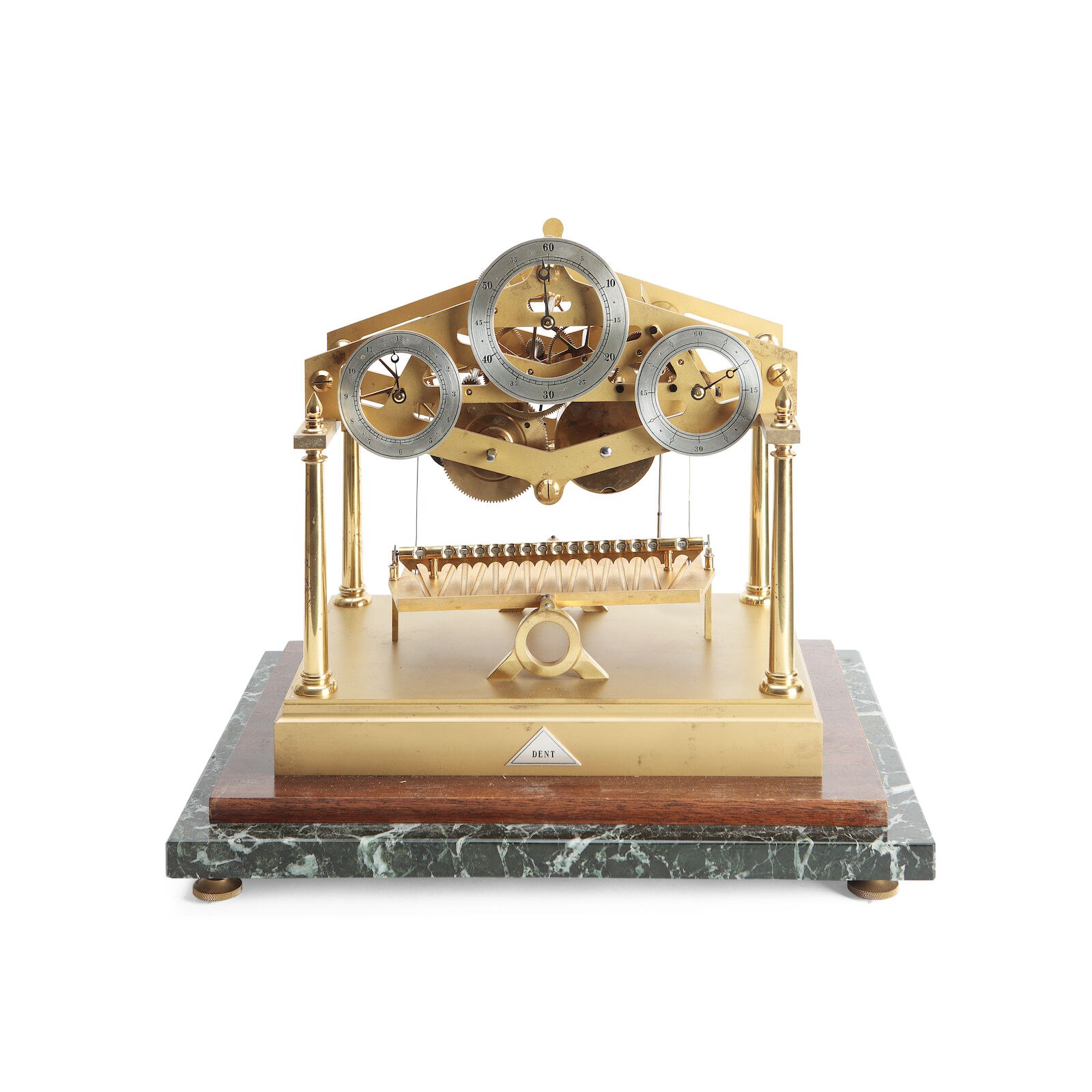
According to the seller, this Congreve rolling ball clock was crafted by Andrew Fell for Dent of London circa 1973 as number 141 in a limited edition of 150. Originating from Sir William Congreve's 1808 invention, the mechanism employs an inclined grooved platform traversed by a metal ball in 15-second cycles rather than a conventional pendulum regulator. Reaching the end of the zig-zag track trips an escapement that reverses the tilt and advances the seconds. The clock is powered by an 8-day fusee-driven timepiece movement set within an open brass architectural case with four classical columns, three silvered pediment dials, and a revolving seconds cylinder.
Full description
www.renaissanceantiques.com · JMOR 1026 P
Clock · Travel & alarm clock
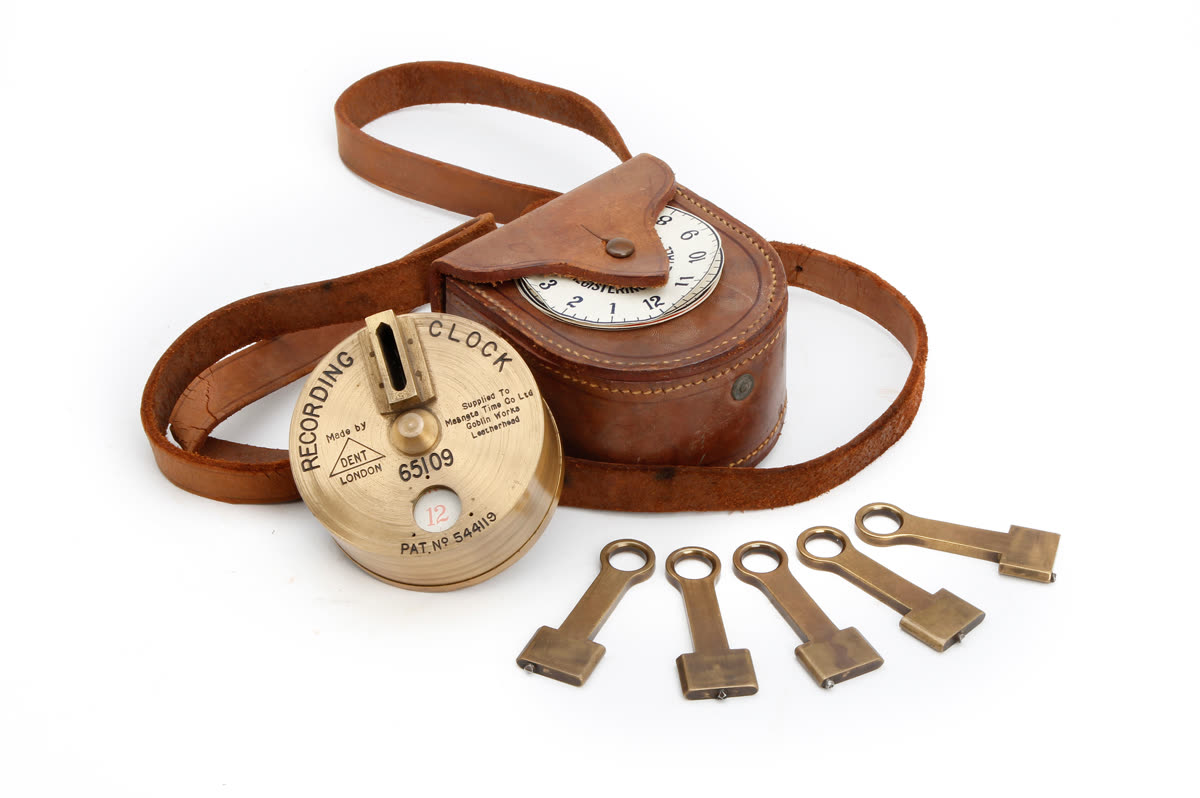
Dent Night Watchman's 'Tell Tale' Recording Clock
This mid-20th-century night watchman's 'Tell Tale' recording clock was produced by Dent and supplied to 'Magneta Time Co Ltd, Goblin Works, Leatherhead'. Preserved in a circular brass case measuring 9 cm (3 1/2 inches) in diameter, the timepiece is marked with serial number 65109 and patent number 544119. According to the auction source, the device is accompanied by a dedicated leather carrying case, multiple unused recording papers, and station keys.
Full description
www.bonhams.com · 495
Clock · Regulator
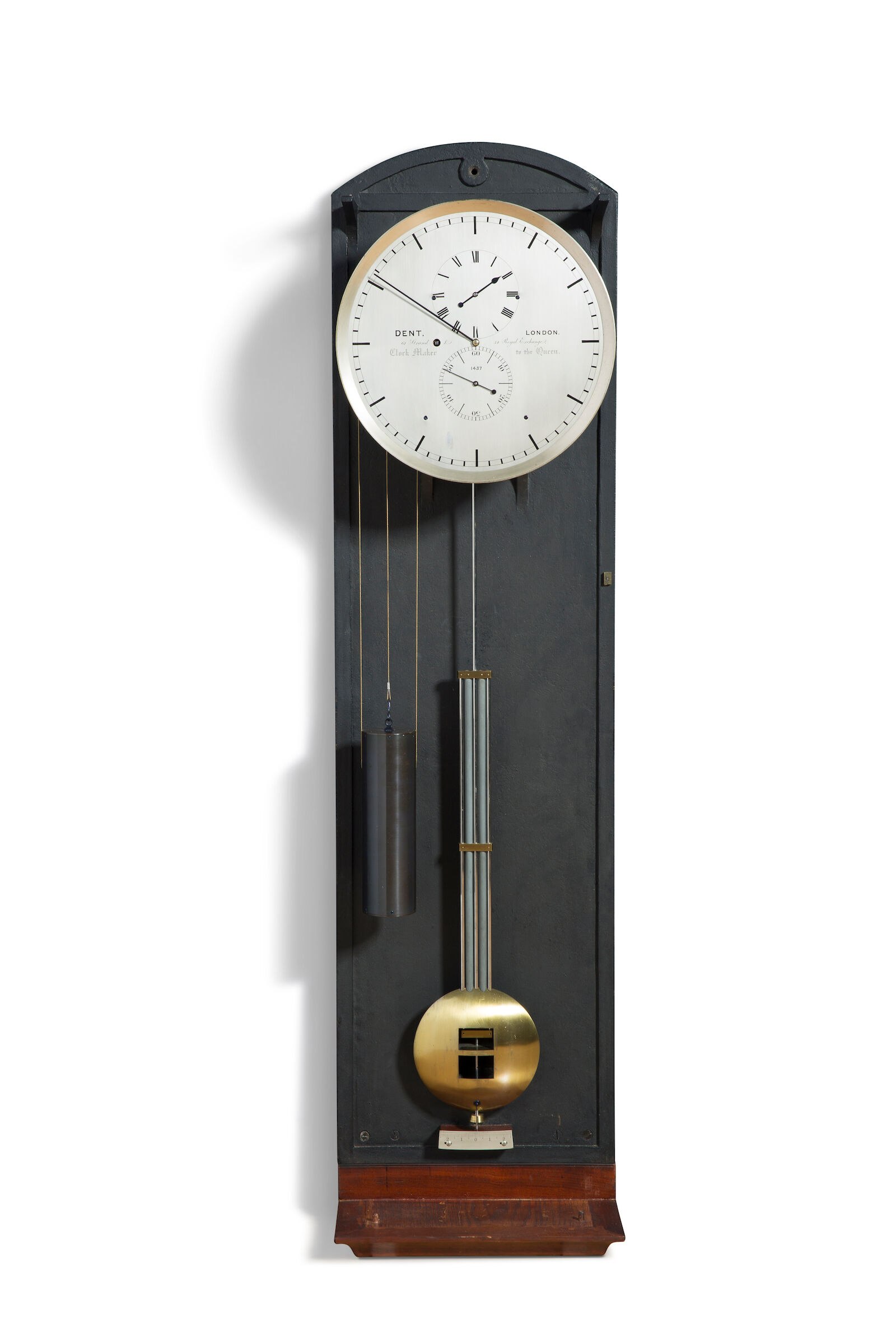
Dent Mahogany Wall Regulator with Dennison's Three-Legged Gravity Escapement, No. 1437
This English precision wall regulator was manufactured by Dent, 61 Strand & 34 Royal Exchange, London, circa 1853, bearing serial number 1437. According to the source, the movement features a substantial four-pillar construction secured to a cast-iron backplate with Harrison's maintaining power, six-crossing wheels, and Dennison's early three-legged gravity escapement. The timekeeper is fitted with an Arnold-style zinc and steel gridiron pendulum comprising five rods and a brass-clad pierced bob. A 15-inch circular silvered regulator dial presents an outer minutes ring, an upper subsidiary Roman hour chapter ring, and a lower subsidiary seconds dial, accompanied by blued steel hands.
Full description
www.bonhams.com · 148
Pocket watch · Open-face watch
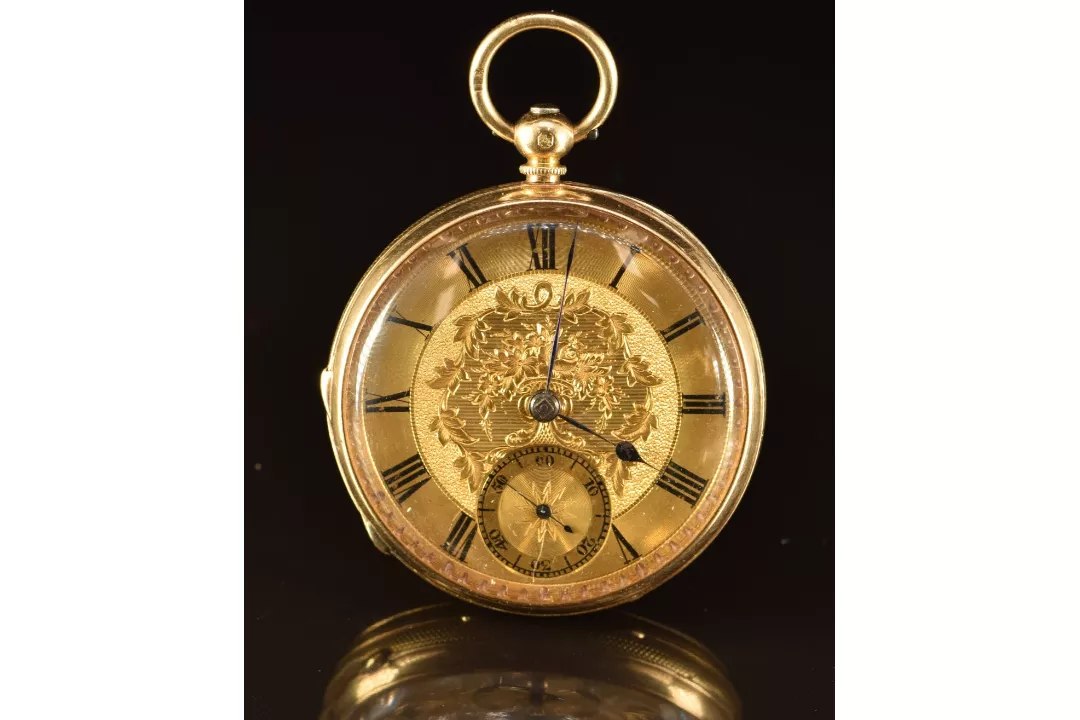
E J Dent 18ct gold open faced pocket watch
This is an 18ct gold open faced pocket watch catalogued by Harper Field and attributed to E J Dent of London. The case measures 42 mm in diameter and houses an engraved gold dial decorated with floral motifs, black Roman numeral hour markers, and blued hands, accompanied by a recessed subsidiary seconds dial at the 6 o'clock position. The auctioneer notes that the movement is signed and bears serial number 25500. Total gross weight of the timepiece is reported as 63.5 grams.
Full description
www.the-saleroom.com · 2373
Pocket watch · Pocket chronometer & deck watch
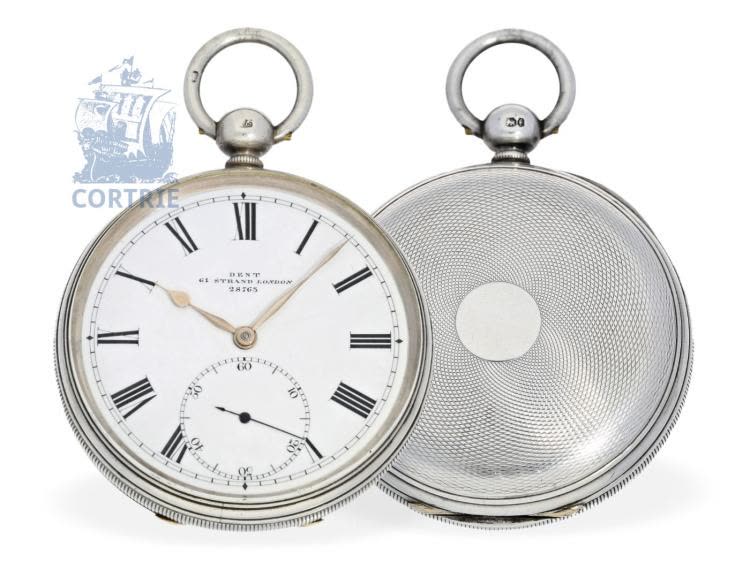
Dent London Marine Deck Watch No. 28763
Cataloged as a rare English marine deck watch dated to 1862, this timepiece was produced by Dent, London under serial number 28763. It features an original silver pocket watch case measuring approximately 52 mm in diameter with an engine-turned back and gold hinge. According to the auction description, the watch houses a key-wound full-plate Ankerchronometer movement with a diamond endstone, an engraved balance bridge, and a large balance with gold screws. The enamel dial is signed 'DENT 61 STRAND LONDON 28763' with Roman numerals and a subsidiary seconds dial.
Full description
www.invaluable.com · 4274
Pocket watch · Chronograph & split-seconds watch
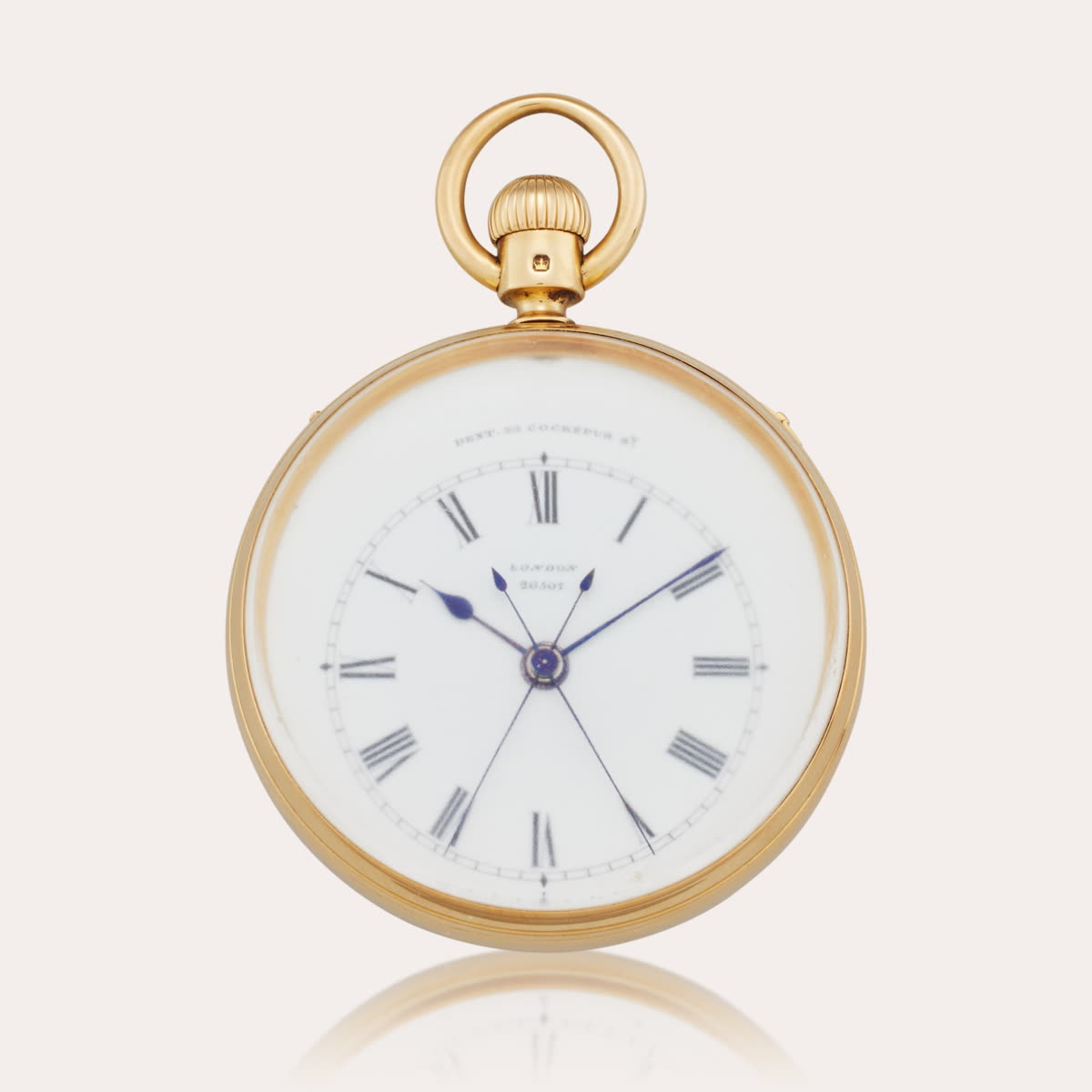
Dent, London Yellow Gold Open-Faced Keyless Split-Seconds Chronograph Pocket Watch, No. 26507
This open-faced keyless split-seconds chronograph pocket watch, numbered 26507, dates to 1870–71 and is signed by Dent, London. The 18k yellow gold case measures 49 mm in diameter and carries London hallmarks for 1870 with maker's initials AN for Adolph Nicole, featuring a pin for hand setting and a crown locking slide on the band. The source reports a gilt three-quarter plate lever escapement movement with Nicole Nielsen winding and bi-metallic compensation balance. The eccentric white enamel dial features black Roman numerals and blued steel hands, housing a single-button split-seconds chronograph mechanism without reset operated through the crown.
Full description
www.sothebys.com · 428
Clock · Regulator
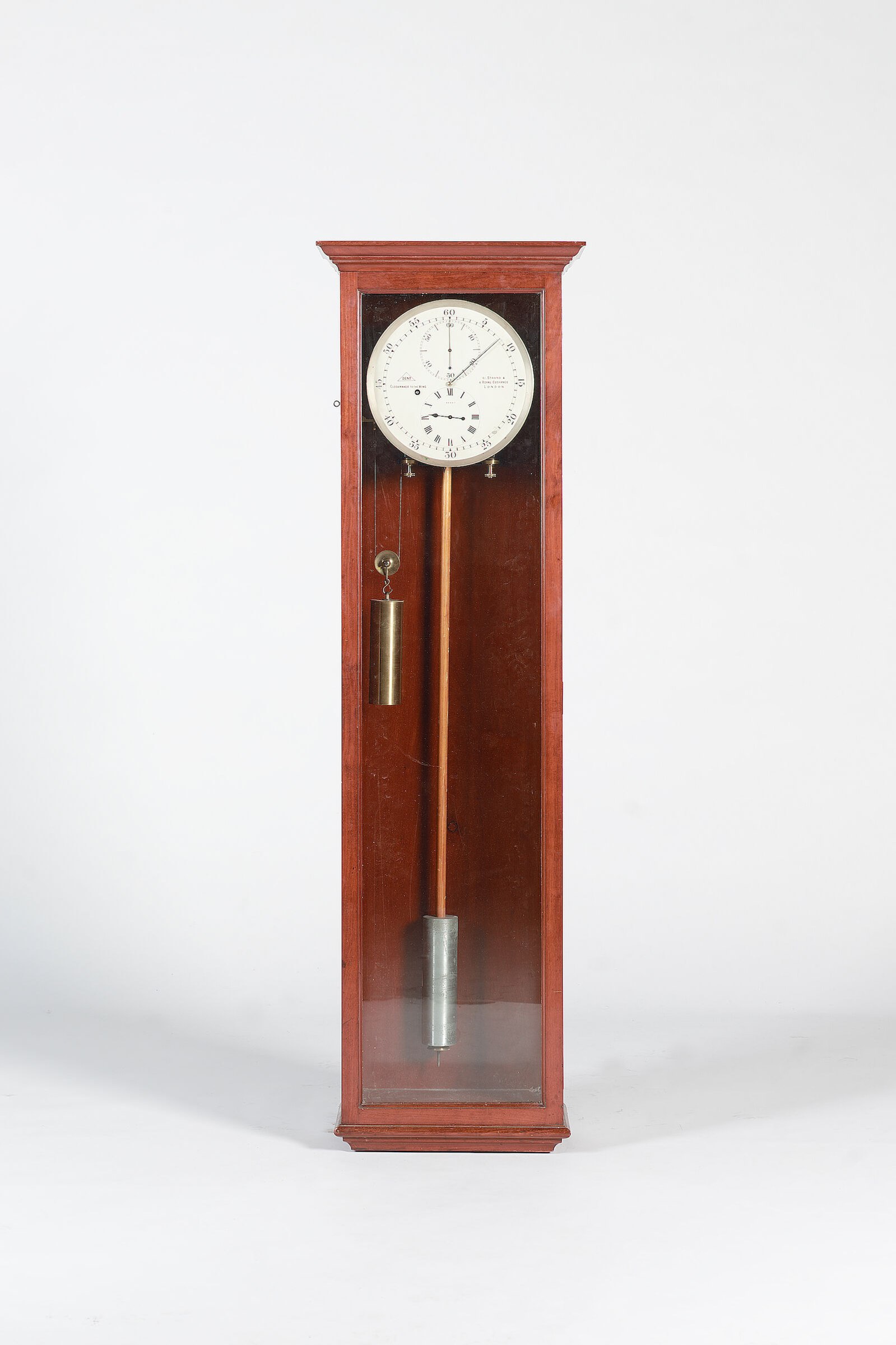
Dent mahogany wall mounted regulator No. 55557
This early 20th-century English wall-mounted regulator is documented by Bonhams as signed by Dent, clockmaker to the King, 61 Strand & 4 royal Exchange, London, numbered 55557. The rectangular mahogany case features a moulded cornice above a long glazed door with a moulded edge and shaped base. Its 9-inch circular painted dial presents a regulator configuration with subsidiary seconds. According to the auction catalogue, the weight-driven movement incorporates 'wriggle' decorated plates, maintaining power, high-count pinions, and a deadbeat escapement. It is equipped with a wooden rod pendulum terminating in a cylindrical bob, suspended from a cast bracket on the backboard.
Full description
www.bonhams.com · 54
Clock · Novelty & automaton clock
Dent Congreve rolling ball clock, no. 77
This Congreve rolling ball clock, designated number 77 and dated 1974, is attributed by the source to Dent, Robert Mackinnin. The timepiece features a single fusee movement fitted with a roll-over seconds indicator. Time is indicated across three silvered Arabic chapter rings marking hours, minutes, and quarter-minutes, equipped with blued moon hands. The open brass movement is supported by four turned columns resting on a brass plinth with an applied maker's plate. The clock base is mounted upon a tiered mahogany and green variegated marble foundation.
Full description
www.bonhams.com · 650
Movement · Pocket watch movement
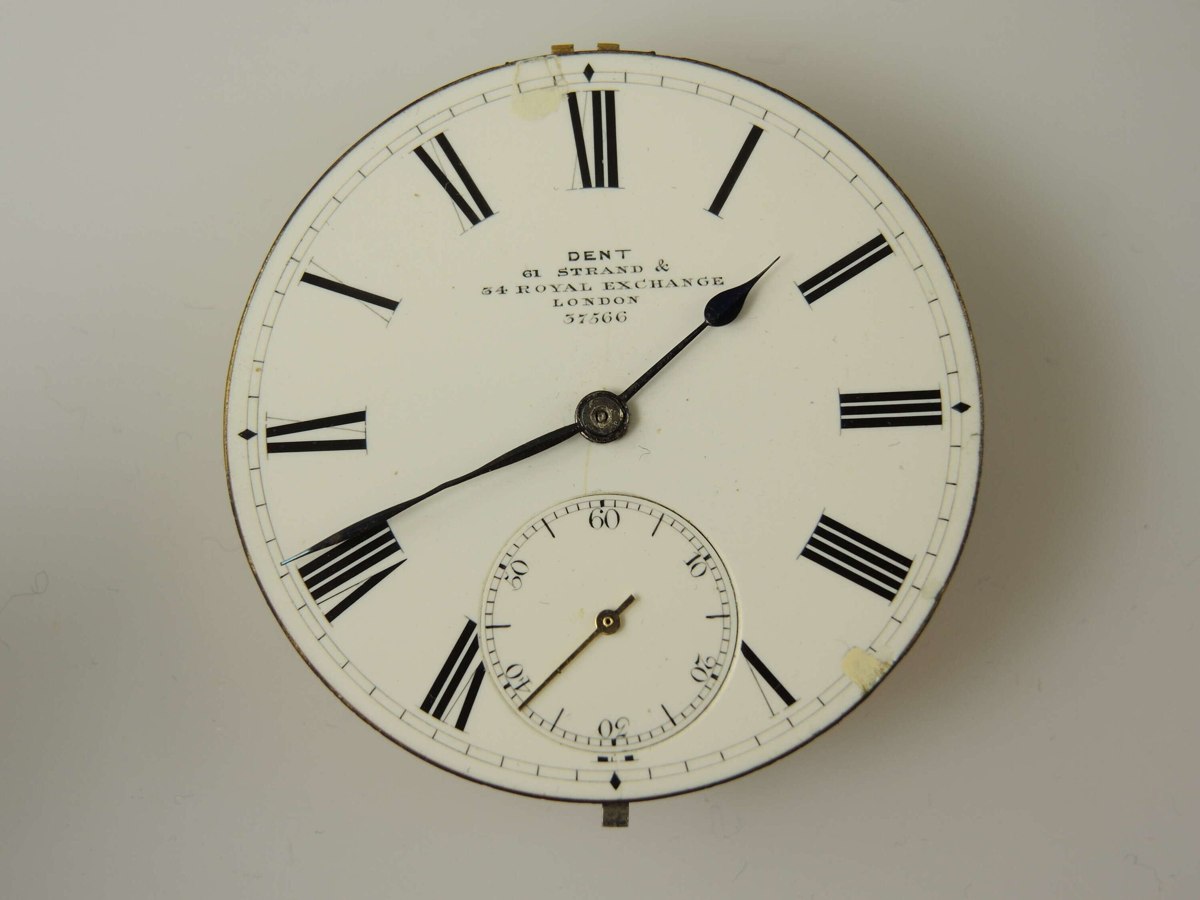
Victorian fusee pocket watch movement by Dent, London
This is an English key-wound and key-set fusee pocket watch movement dating to circa 1860, produced by Dent of London. According to the seller, the gilt three-quarter plate mechanism features a lever escapement, three-arm gold balance wheel, and a diamond endstone. The movement is fitted with an enamel dial bearing Roman numerals, a subsidiary seconds track, blued steel hands, and a gilt sub-seconds hand, inscribed with Dent's London addresses at 61 Strand and 34 Royal Exchange along with serial number 37566.
Full description
www.antiquesboutique.com
Marine chronometer · Two-day marine chronometer
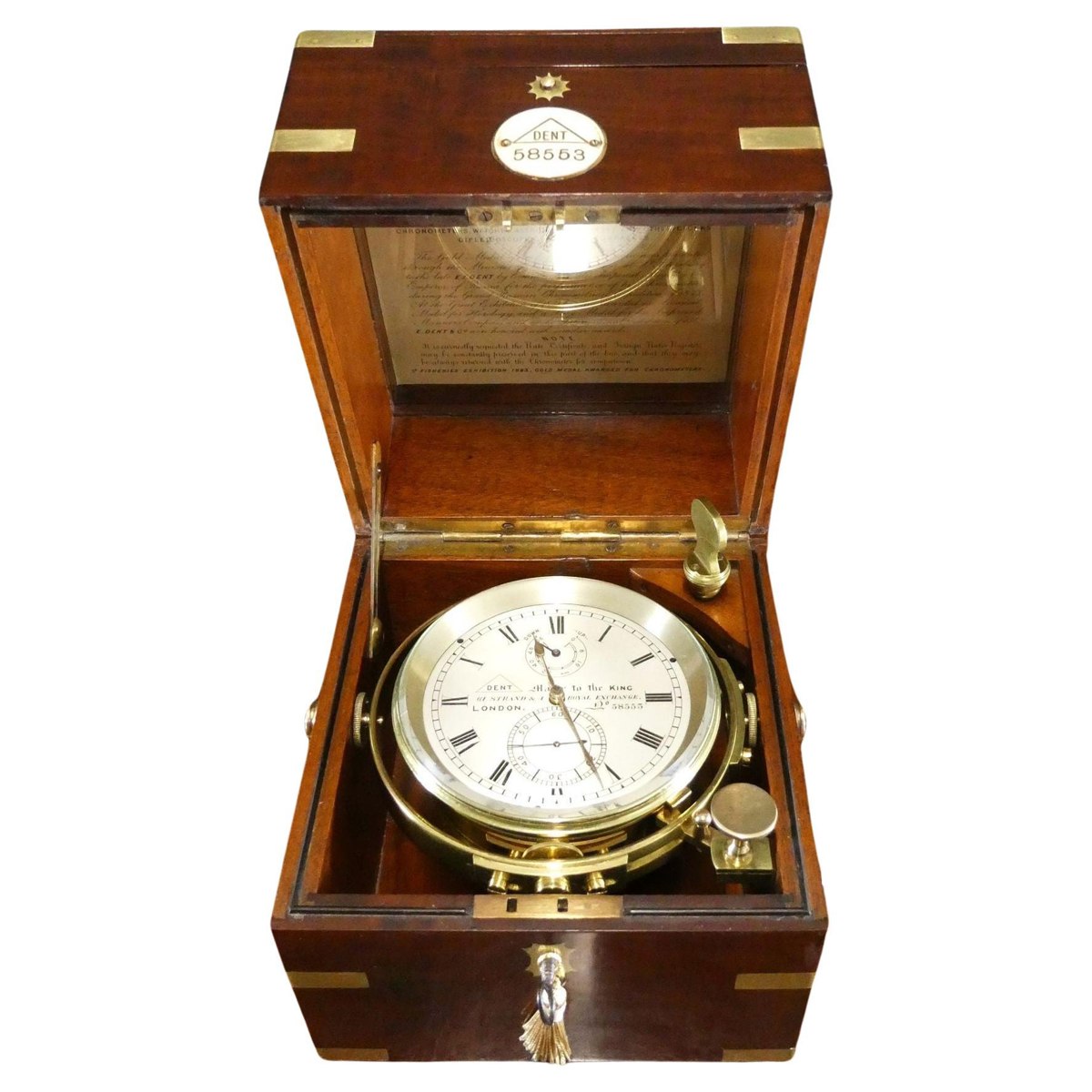
Dent London Two-Day Marine Chronometer No. 58553
This two-day marine chronometer by Dent of London is numbered 58553 and dated to circa 1915 by the source. The mechanism is mounted in a brass gimbal within a three-tier mahogany box reinforced with brass corner brackets. A circular ivory or ivorine plaque on the box exterior bears the maker's mark and serial number. The silvered dial features black Roman hour numerals, a subsidiary state-of-wind dial below XII, and a subsidiary seconds dial above VI. It is signed with Dent's address at 61 Strand and 4 Royal Exchange, London, noting royal appointment to the King. The interior lid retains an original printed maker's trade label.
Full description
www.1stdibs.com
Clock · Turret & tower clock
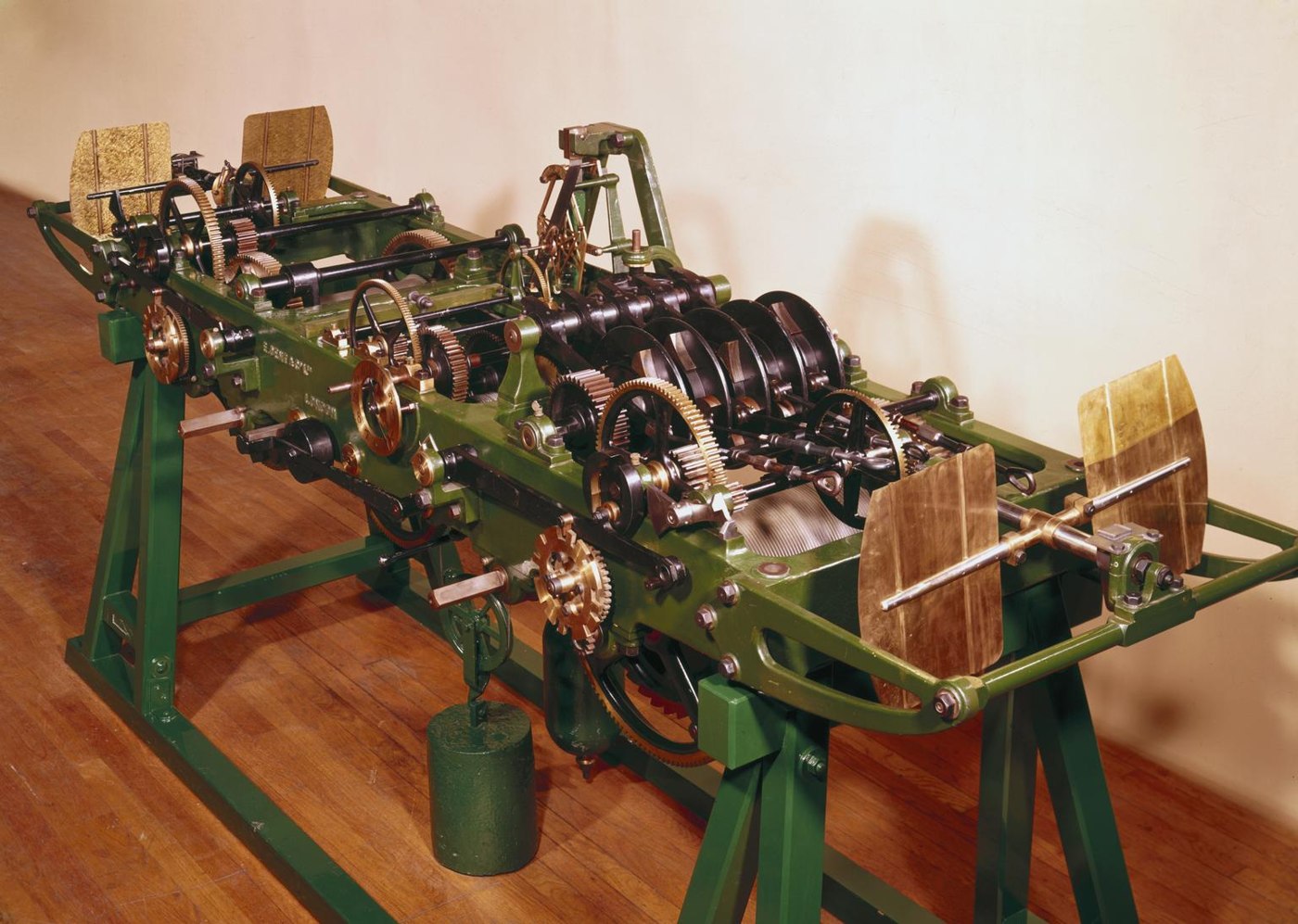
Three-train flatbed turret clock movement
This is a three-train turret clock movement produced by E. Dent and Co. Ltd, dating to approximately 1939. The mechanism is designed as a weight-driven system mounted on a flatbed double-trestle frame. The clock features a going train equipped with a double three-legged gravity escapement, a design associated with Edmund Beckett, Baron Grimthorpe. The movement integrates separate trains for timekeeping, striking, and the Westminster quarters. Both the striking and quarter-chime trains are regulated by locking plates. The construction is robust, intended for installation in a tower or turret, and is supported by a significant framework to maintain the alignment of the gear trains. It is operated using a 1 1/2 second pendulum.
Full description
collection.sciencemuseumgroup.org.uk · 1969-513
Movement · Escapement & demonstration model
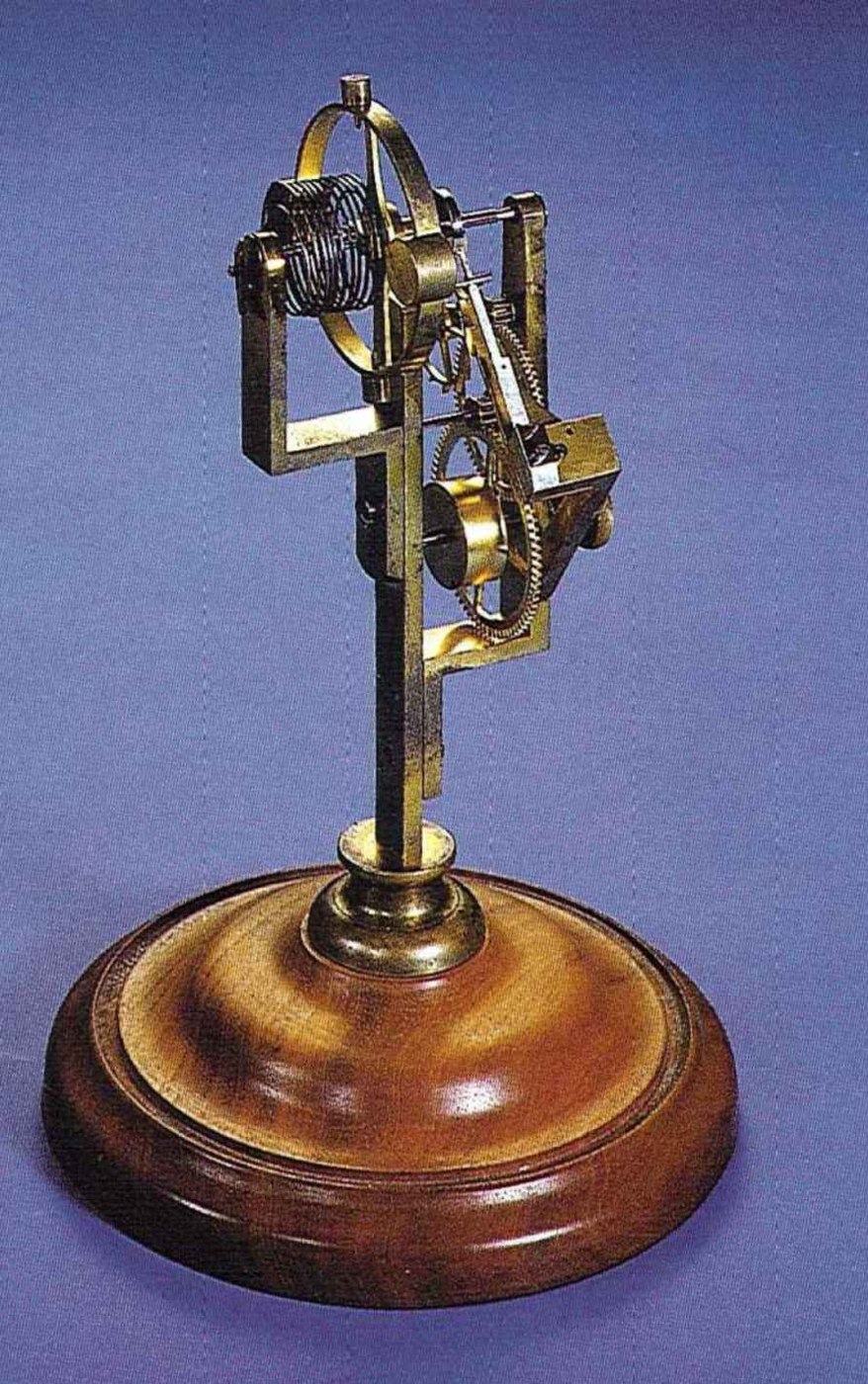
Dent Demonstration Model of the Earnshaw Chronometer Escapement
This circa 1880 demonstration model of an Earnshaw chronometer escapement was produced in London by Dent. Intended for display purposes, it was formerly held in the premises of E. Dent & Co. The object features a vertical arrangement with the gear train secured between bridges on a brass bar. The going train is powered by a small gilded barrel wound via a knurled button, providing approximately one hour of duration. The wheels are gilded and fixed to lantern pinions with screws. The escapement mechanism follows the Earnshaw pattern, utilizing a polished steel spring-detent, a steel locking pin and roller, and a gold-alloy passing spring. The balance staff is equipped with blued-steel end-plates, while the plain brass balance includes adjustable circular weights and timing screws. The assembly is completed with a helical blued-steel spring and is free-sprung with terminal curves, mounted on a turned mahogany base.
Full description
catalog.antiquorum.swiss · 186
Clock · Skeleton clock
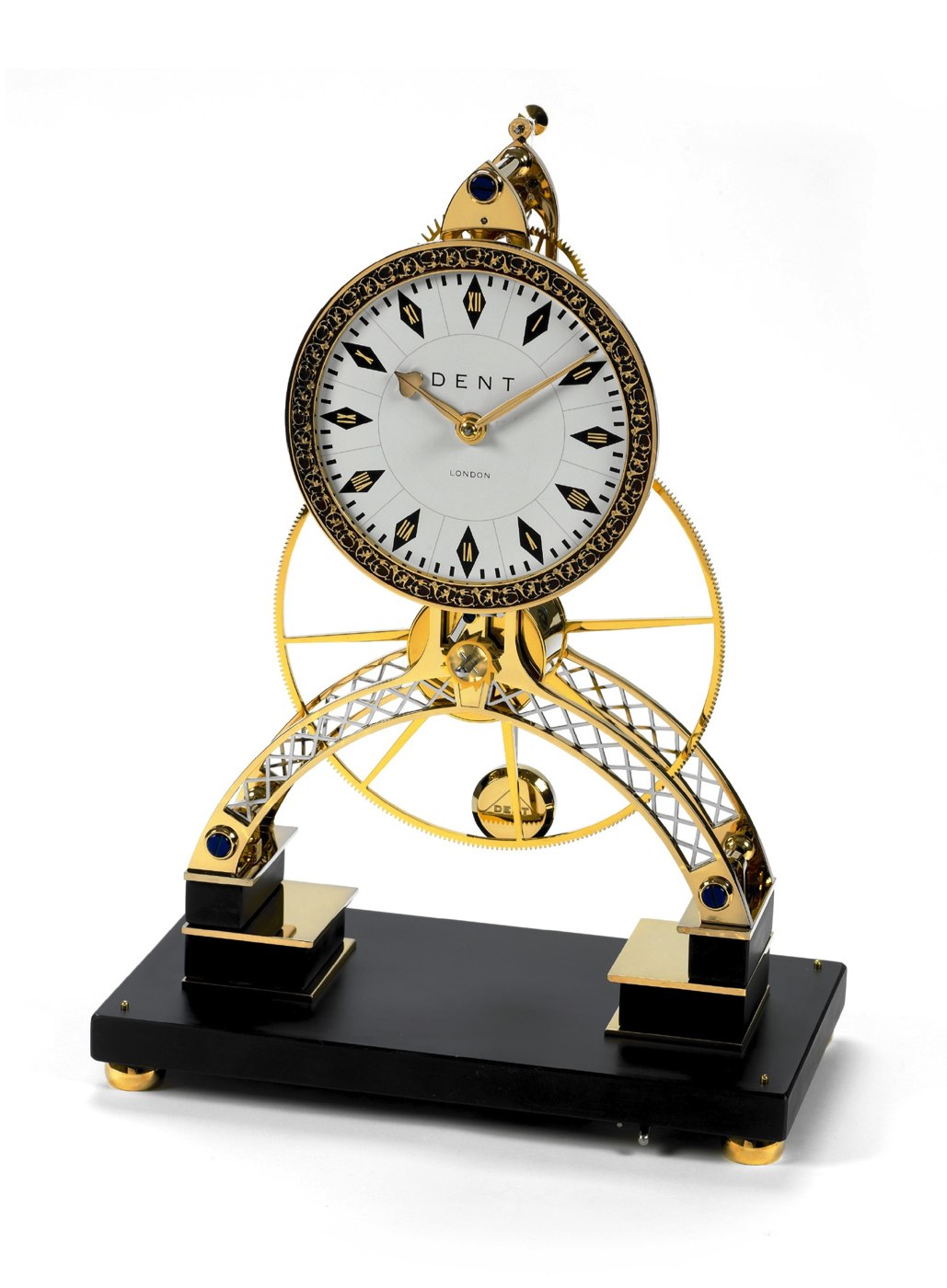
Dent Elizabeth Clock No. 003
This Dent "Elizabeth Clock" No. 003/250, produced in 2010, is a limited edition skeleton clock featuring an eight-day movement. The construction combines 18K gold-plated brass and stainless steel elements. Its aesthetic is defined by a dual crescent-form main bridge assembly with decorative steel cross-pattern filigree, supported by a layered column base mounted on a black rectangular plinth. The clock utilizes a Graham deadbeat escapement and an adjustable silk suspension system for the signed Invar pendulum. The dial features a white finish with gilt Roman numerals set within black diamond-shaped indexes, framed by a relief foliate border in gilt brass. The clock stands at 16 ¾ inches high and is accompanied by a beveled glass case, winding key, and hand-setting key. The base integrates four feet with an adjustable leveling lever situated on the underside.
Full description
catalog.antiquorum.swiss · 20
Pocket watch · Pocket chronometer & deck watch
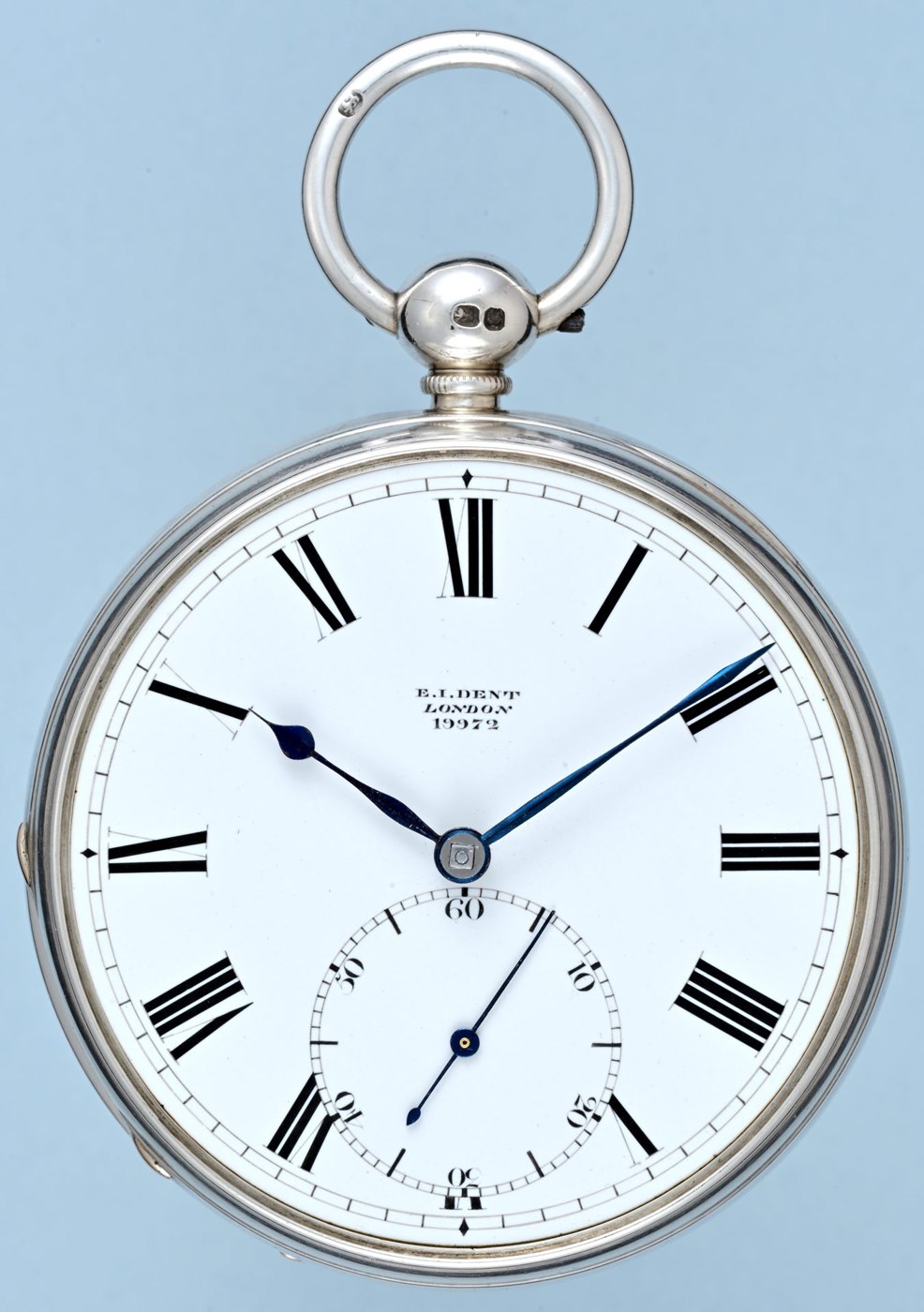
Dent Silver Deck Watch
This Dent deck watch is a mid-19th-century English timepiece presented in a plain silver open-face case with gold hinges. The watch features a key-wound, gilt full-plate movement equipped with a fusee, a helical free-sprung blued steel balance spring, and Harrison's maintaining power. The escapement is an Earnshaw-type spring-detent mechanism, with the balance bridge featuring a diamond endstone. The white enamel dial is signed and numbered, displaying Roman numerals, a subsidiary seconds dial, and blued steel hands. The piece is housed in a three-tier mahogany deck box fitted with brass hardware and an inset bone plaque on the lid bearing the maker's signature and the watch's serial number. A locking key attached to a signed brass disk is included.
Full description
Source listing
Pocket watch · Hunter-case watch
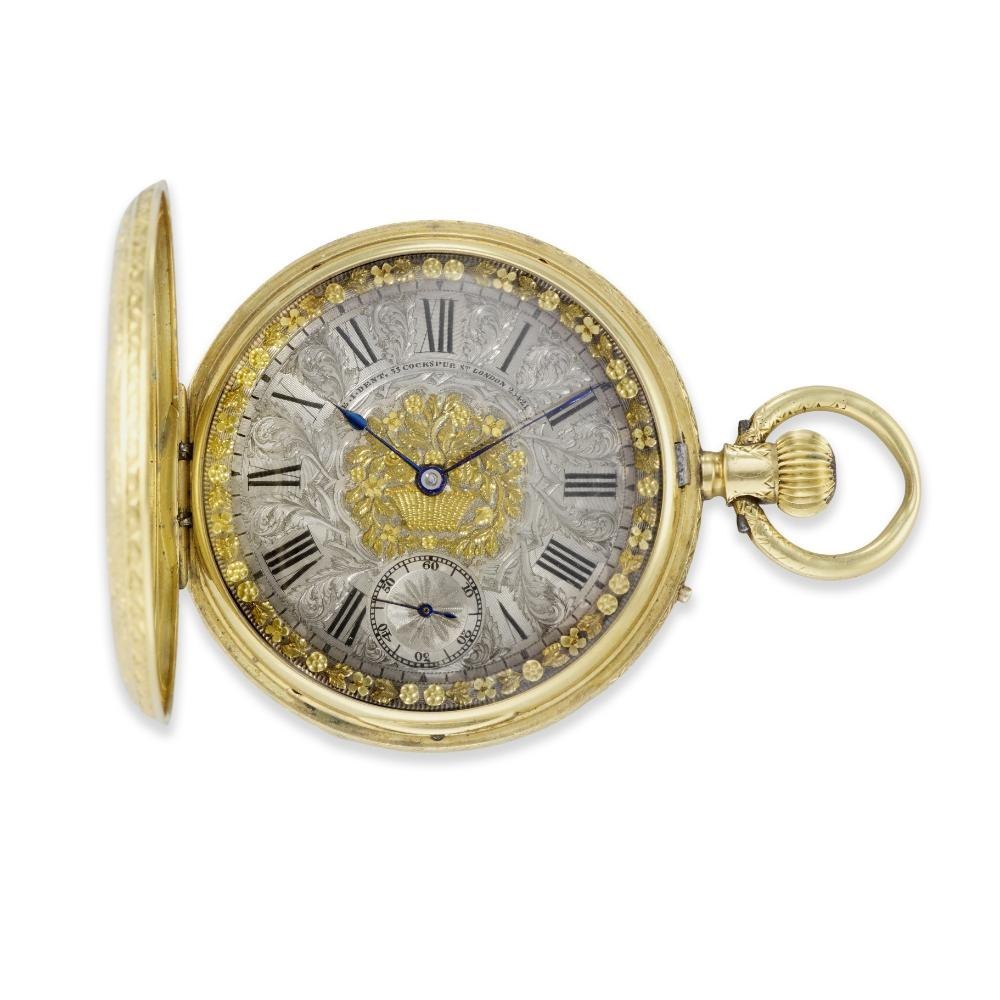
E. J. Dent 18k gold keyless wind full hunter pocket watch
This 18k gold full hunter pocket watch, produced by E. J. Dent of 33 Cockspur Street, London, dates to 1861 based on its London hallmark. The watch utilizes a keyless winding mechanism to drive a gilt 3/4 plate English lever movement, which is identified by the number 23427. This movement features a cut and compensated bi-metallic balance and a diamond end stone. The watch is encased in an 18k gold housing measuring 48mm in diameter, which exhibits foliate engraving on the exterior. The silvered dial is decorated with engraved foliate motifs at its center and border, incorporating applied foliate embellishments. It features black Roman numeral hour markers, a subsidiary seconds dial at 6 o'clock, and blued steel spade hands. The case back is stamped with the initials W.S. and the serial number 23421, while the maker's signature appears on both the dial and the movement.
Full description
Source listing
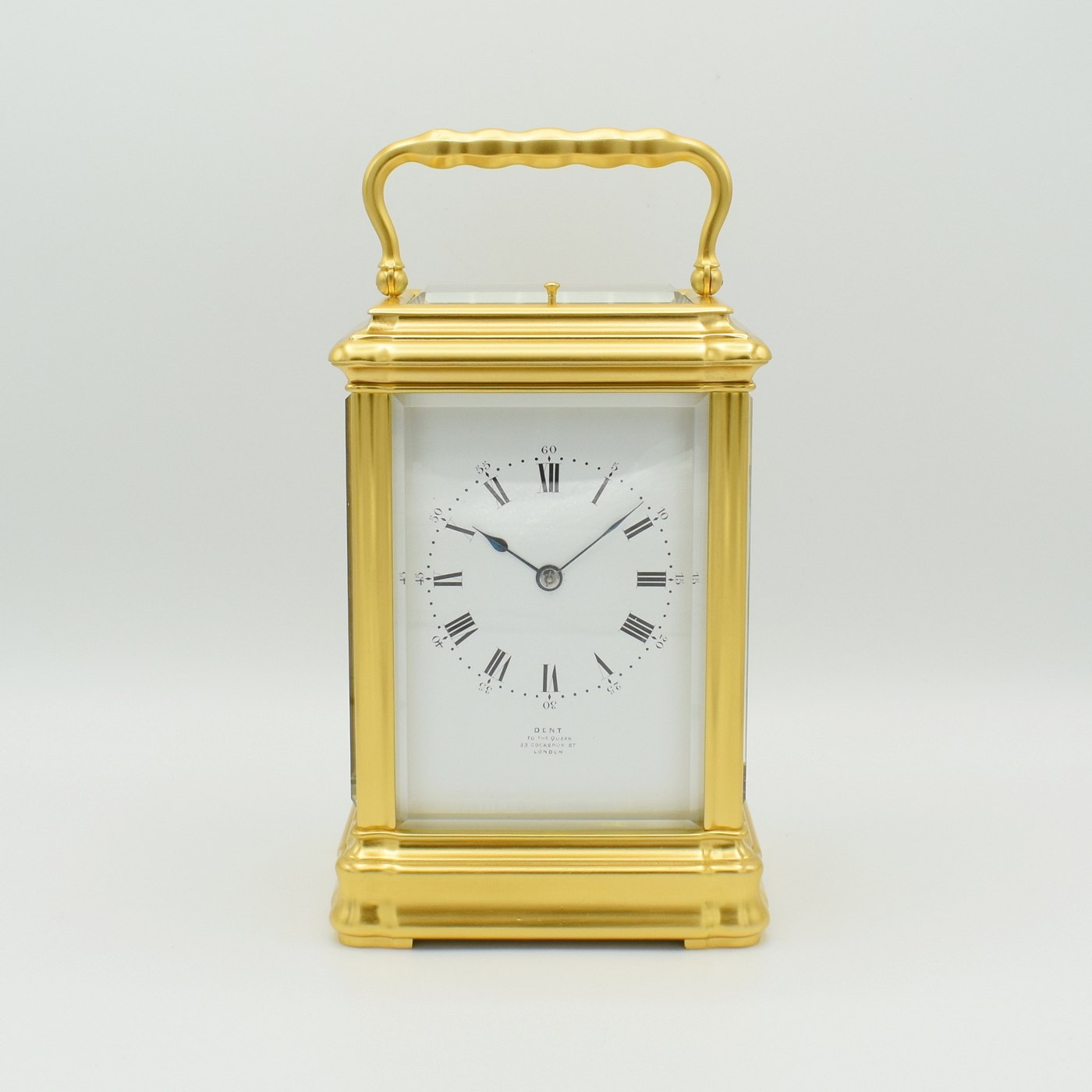
Clock · Carriage clock
Dent Giant Carriage Clock
This carriage clock is categorized by the seller as a 'Giant' carriage clock, produced by the firm Dent. The clock features a gilded brass case and a white oblong dial. It is an eight-day movement with a soft gong strike and a repeat-on-demand function. The clock is inscribed on the dial with the maker's name, 'Dent', 'To The Queen', and the address '33 Cockspur St, London'. The back plate of the movement is stamped with the number 1897, while the front plate is stamped with the initials 'H.L.' The clock measures 120 x 160 x 260 mm and weighs 1 kg. The date of manufacture is placed by the seller at around the 1880s.
Full description
theclockandwatchshop.co.uk