
Skip to content
The Encyclopedia of Horology

Clock · Bracket clock

Queen Anne brass-mounted ebonised bracket clock by Francis Reynolds

Partially verified

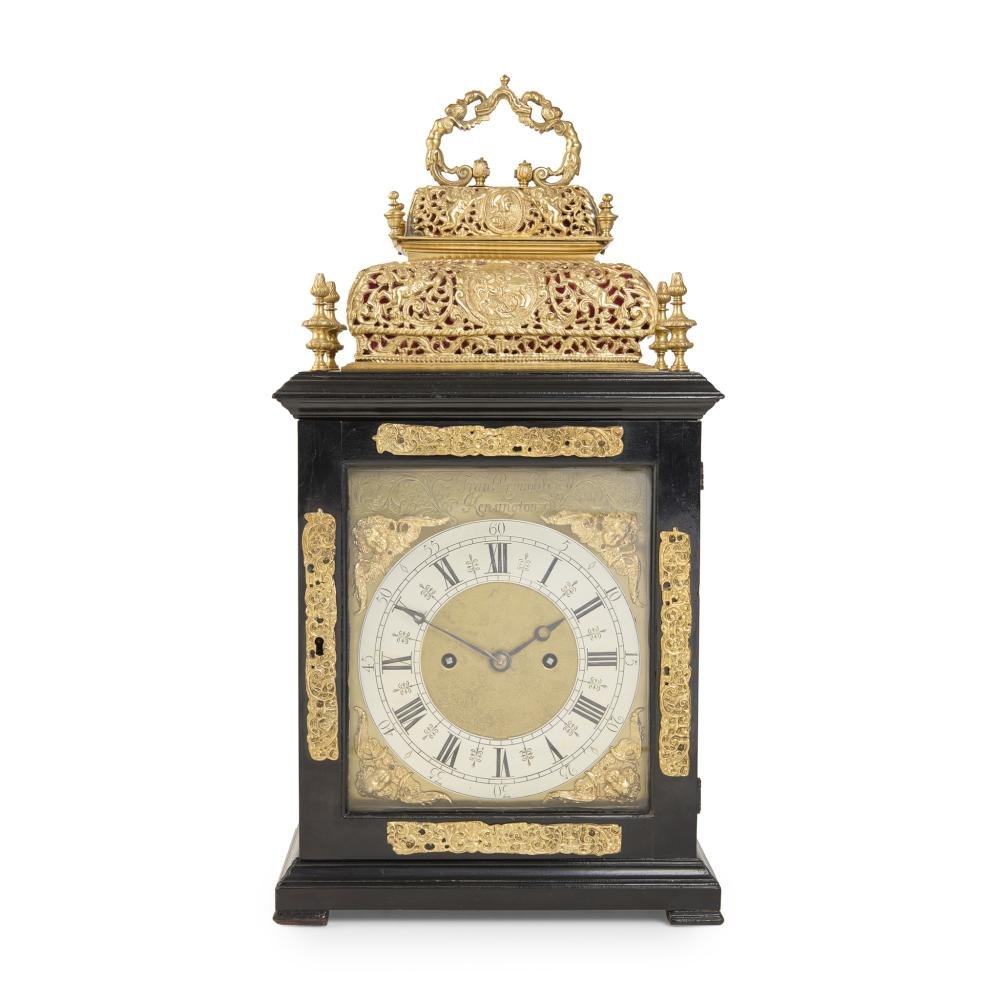
This Queen Anne bracket clock, attributed to Francis Reynolds of Kensington, dates to the early 18th century and has undergone later restoration. The clock features a 7-inch square brass dial with a matted center, a silvered chapter ring with Roman numerals, and Arabic five-minute markers. The dial is signed 'Fran. Reynolds, Kensington' at the top, flanked by foliate engraving, and includes winged cherub spandrels. The ebonised case is detailed with a pierced repousse double basket top surmount, a twin caryatid cast handle, and relief panels depicting St. George slaying the dragon. The movement is a twin fusee mechanism with an anchor escapement that strikes to a bell. The clock measures 50cm high with the handle, 26cm wide, and 17cm deep. It is supported on block feet and includes gilt brass mounts, flambeau urn finials, and silk-lined sound frets on the sides.

Front view of the Queen Anne ebonised bracket clock featuring the basket top and engraved dial.
Front view of the Queen Anne ebonised bracket clock featuring the basket top and engraved dial. — Lyon & Turnbull (via Invaluable). Rights pending — permission not yet requested. Original source

Catalogue identity

Source
www.invaluable.com
Category
Clock · Bracket clock
Maker / attribution
Francis Reynolds
Reference
Not recorded
Catalogue / lot identifier
Lot 7
Source-reported date
Early 18th century
Source-reported place
United Kingdom

Source-reported attribution and specifications are not independent authentication. A listing does not establish present ownership, current display, availability or permission to reproduce.

Object description

Dial and Signature

The clock features a 7-inch square brass dial that acts as the primary time-telling face. The central portion of the dial is matted and features two winding holes for the internal movement. A silvered chapter ring is present, detailing Roman numerals for the hours and Arabic markers for five-minute intervals.

The dial is signed at the top edge with the inscription 'Fran. Reynolds, Kensington,' situated within an area of foliate engraving. The corners are decorated with winged cherub spandrels, and the time is indicated by a pair of blued steel moon-shaped hands.

Evidence for this section
  • “the 7-inch square brass dial with a silvered chapter ring with Roman numerals and engraved Arabic five minute markers”
  • “signed 'Fran. Reynolds, Kensington' above to the top of the plate flanked by foliate engraving”

Case Construction

The ebonised case incorporates complex decorative metalwork. The top of the clock features a pierced repousse double basket surmount, which is fitted with a twin caryatid cast handle. The upper section of this mount displays a profile mask flanked by putti, while the lower section includes a relief panel of St. George slaying the dragon.

The exterior is accented with brass flambeau urn finials located at the angles. The sides of the case contain silk-lined sound frets framed by gilt repousse work. The base is finished with a rope twist and beaded ogee moulded border, resting on block feet.

Evidence for this section
  • “the case with pierced repousse double basket top surmount with a twin caryatid cast handle”
  • “the lower tier with relief panel of St. George slaying the dragon within a putti and scroll decorated field”

Movement and Restoration

The internal mechanism is a twin fusee movement equipped with an anchor escapement, designed to strike on an internal bell. The auction description notes that the object is from the early 18th century but has undergone later restoration.

The glazed door and case rails feature gilt brass mounts, and the rear of the clock matches the aesthetic details found on the front, including repeated gilt brass mounts.

Evidence for this section
  • “the twin fusee movement with anchor escapement striking to a bell”
  • “EARLY 18TH CENTURY, WITH LATER RESTORATION”

Open research questions

  • Which specific components of the clock are documented as having undergone restoration?
  • What is the verified provenance of the clock prior to its inclusion in the Lyon & Turnbull auction?

Source evidence

Recorded claims and source quotations for Queen Anne brass-mounted ebonised bracket clock by Francis Reynolds
FieldSource-reported valueSource quotation
MakerFrancis Reynolds“BY FRANCIS REYNOLDS, KENSINGTON”
DateEarly 18th century“EARLY 18TH CENTURY”
Dial7-inch square brass dial“the 7-inch square brass dial”
SignatureFran. Reynolds, Kensington“signed 'Fran. Reynolds, Kensington'”
MovementTwin fusee“the twin fusee movement”
EscapementAnchor escapement“anchor escapement”
Dimensions50cm high“50cm high [including handle]”

Visible details

  • The dial plate is signed 'Fran. Reynolds, Kensington'
  • The case features a double basket top with a cast handle
  • The movement is a twin fusee design with an anchor escapement
  • The dial has silvered chapter rings and blued steel moon hands

Research qualifications

  • The source indicates the clock has had 'later restoration' without specifying which components were affected
  • The exact age of the components is not individually dated, and the mechanism's originality is unverified

Photograph identity and source facts were screened before import; rights clearance remains pending.

Consulted source

QUEEN ANNE BRASS MOUNTED EBONISED BRACKET CLOCK, BY FRANCIS REYNOLDS, KENSINGTON

Reviewed 2026-10-26 · Record b0c9018c11

Terms in this record

Glossary explanations for terms named in this object’s record.