
Structural Design and Components
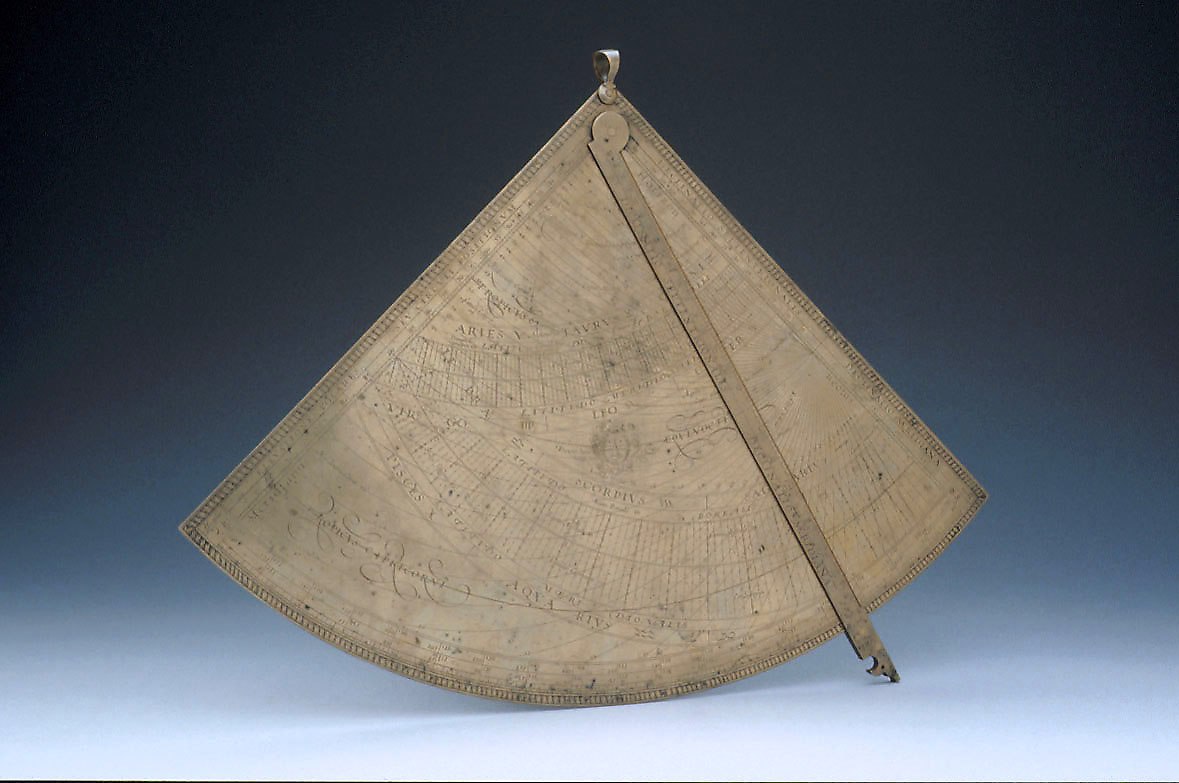
The instrument is a large, brass-constructed quadrant with a radius of 297 mm, featuring a suspension ring at its apex. It incorporates a dual-sided radial rule, designed by soldering two separate brass components together, enabling its application across both faces of the instrument. The edges and limb are finished with geometric decorative motifs.
This quadrant is identified as a functional model of the heavens rather than an observational tool. Its design is derived from 13th-century principles established by Profatius Judaeus, essentially functioning as a folded astrolabe capable of complex astronomical calculations.
Evidence for this section
- “The quadrant is rather big, and has at the apex a ring for suspension.”
- “A radial rule is made of two brass parts soldered together at the ends, so that the same rule is used for both sides of the instrument.”
- “The instrument was probably not used for observation, but as a model of the heavens and as a calculating device for the same tasks as an astrolabe”