
Skip to content
The Encyclopedia of Horology

Tool · Arabic-inscribed astrolabe, Iberia

Astrolabe by Muḥammad ibn Fattūḥ al-Khamā’irī

Partially verified

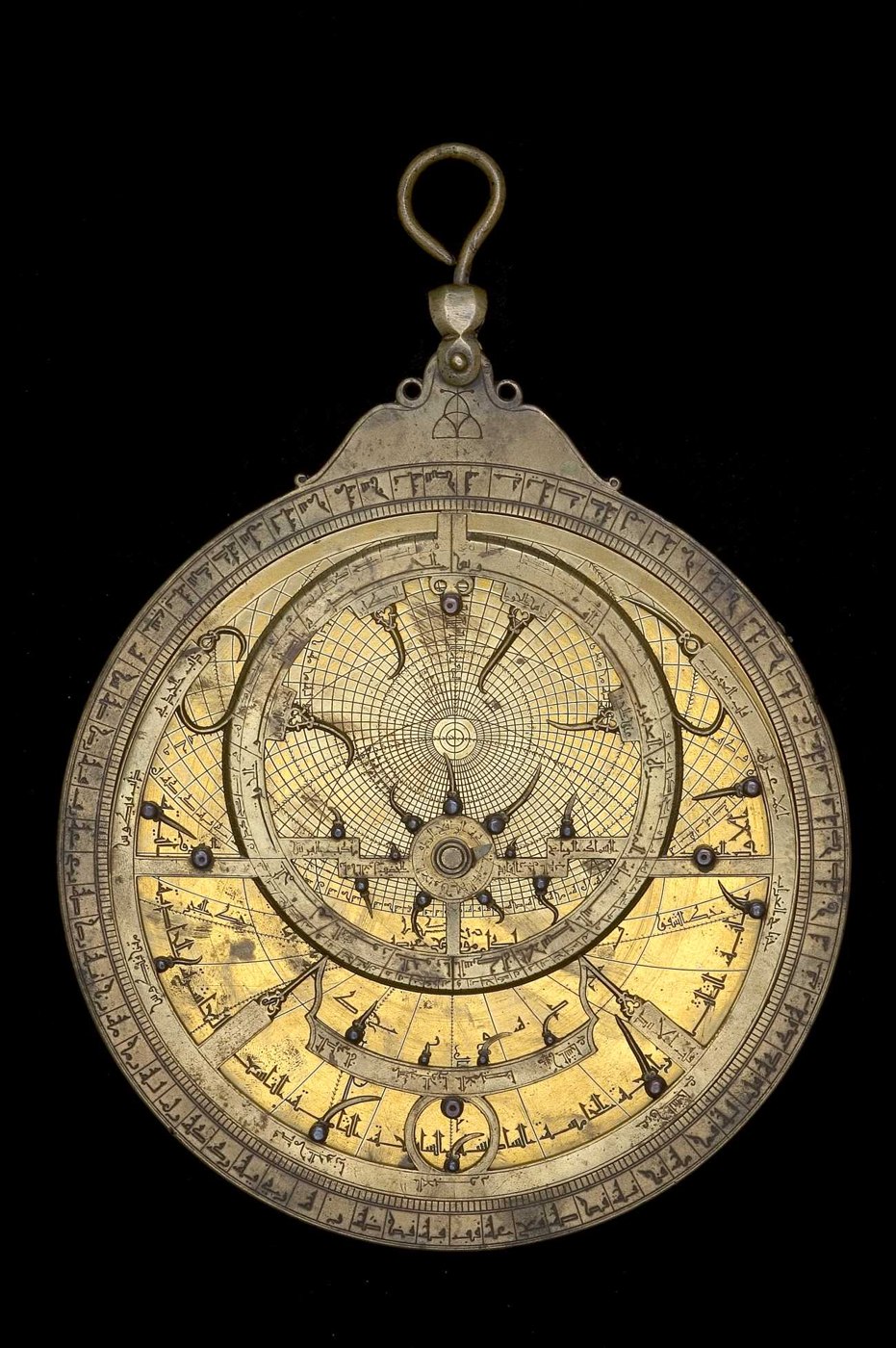
This brass astrolabe (inventory 50934) was produced by the maker Muḥammad ibn Fattūḥ al-Khamā’irī in Seville in A.H. 621 (1224/5). The instrument features a one-piece construction for the mater and limb, which includes a degree scale divided every 5 degrees. The back displays seven distinct scales, including altitude, zodiacal signs, a calendar, a perpetual calendar, a shadow square, and cotangent scales. It was acquired in 1924 as part of the Lewis Evans collection, having previously passed through an Edinburgh shop in 1876.

Front view of the astrolabe (inventory 50934) showing the rete, throne, and degree scale.
Front view of the astrolabe (inventory 50934) showing the rete, throne, and degree scale. — History of Science Museum, University of Oxford. Rights pending — permission not yet requested. Original source

Catalogue identity

Source
www.mhs.ox.ac.uk
Category
Tool · Arabic-inscribed astrolabe, Iberia
Maker / attribution
Muḥammad ibn Fattūḥ al-Khamā’irī
Reference
Not recorded
Catalogue / lot identifier
50934
Source-reported date
1224/5 (A.H. 621)
Source-reported place
Seville

Source-reported attribution and specifications are not independent authentication. A listing does not establish present ownership, current display, availability or permission to reproduce.

Object description

Construction and Design

The limb is graduated with a degree scale marked every five degrees, facilitating basic angular measurements. The device uses an eye-bolt type shackle for suspension, which connects to the throne via a bracket.

The instrument includes five specific plates designed for latitudes ranging from 31°0' to 40°0'. The rete, which features zero marked stars in the catalogue entry, is a simple indicator-line type. For manipulation, it incorporates four silver knobs. The entire assembly is secured by a central nut and bolt, where the shank is square-fitted into the alidade to ensure co-linearity between the front-facing pointer and the rear-mounted alidade.

Evidence for this section
  • “The mater and limb are of one-piece construction.”
  • “The throne is of the simple, engraved type made of brass attached with integrated base”
  • “The rete is of the indicator-line (simple) type.”
  • “There are four silver knobs for turning the rete.”

Signature and Back Scales

The instrument bears a clear maker's signature located on the throne, written in Arabic. The translation identifies the maker as Muḥammad ibn Fattūḥ al-Khamāʾirī and specifies the date of creation as A.H. 621. This provides a precise attribution for the manufacture of the piece in Seville.

The back of the astrolabe is highly complex, featuring seven distinct scale types. These are arranged in concentric circular patterns and include scales for altitude, zodiacal signs, a calendar, and a perpetual calendar. Additionally, the instrument contains a shadow square with its four faces, and two cotangent scales located in the lower quadrants. These scales provide the primary functionality for the user, allowing for astronomical calculations and timekeeping functions based on altitude and date.

Evidence for this section
  • “بسم الله هذا ما صنع محمد بن فتوح الخمائري بمدينة ٳشبيلية في سنة خكا الهجرية”
  • “The back contains 7 scales of the following types: Altitude; Zodiacal signs; Calendar; Perpetual calendar; Shadow square; Cotangent.”

Provenance and Condition

The astrolabe has been part of the University of Oxford’s History of Science Museum collections since 1924, when it was presented by Lewis Evans. Records indicate that Evans obtained the item from his collaborator, E. B. Knobel, in 1911. Knobel had previously purchased the instrument in 1876 from a second-hand furniture shop in Edinburgh. The records note a historical association with the sale of a Colonel North, though this remains an anecdotal account of its earlier history.

Regarding its condition, the report states that the sights, which were original components of the double-ended, counter-changed alidade, are now missing.

Evidence for this section
  • “Presented by Lewis Evans in 1924”
  • “Evans bought it from his friend and collaborator E. B. Knobel in 1911.”
  • “The sights that were originally on this alidade have since broken off and are now missing.”

Open research questions

  • What were the original identities of the stars intended for the rete, given the absence of names in the current report?
  • Can the provenance link to Colonel North be verified through 19th-century auction or sale records?

Source evidence

Recorded claims and source quotations for Astrolabe by Muḥammad ibn Fattūḥ al-Khamā’irī
FieldSource-reported valueSource quotation
MakerMuḥammad ibn Fattūḥ al-Khamā’irī“Muḥammad ibn Fattūḥ al-Khamā’irī”
Place of originSeville“Seville”
Date1224/5 (A.H. 621)“1224/5 (A.H. 621)”
Inventory number50934“Inventory number: 50934”
MaterialBrass“Material Brass”
Acquisition1924, from Lewis Evans“Presented by Lewis Evans in 1924”
Rete typeIndicator-line (simple)“The rete is of the indicator-line (simple) type.”
Plates5 plates“There are 5 plates with latitudes ranging from 31°0' to 40°0'”

Visible details

  • Maker's signature in Arabic on the throne
  • Four silver knobs on the rete
  • Double-ended, counter-changed alidade
  • Integrated throne base

Research qualifications

  • Original sights are missing from the alidade
  • Star pointers are not marked with star names in the source description

Photograph identity and source facts were screened before import; rights clearance remains pending.

Consulted source

Astrolabe, inventory 50934 (Seville, 1224/5 (A.H. 621))

Reviewed 2026-10-26 · Record 23e9eb53cb

Terms in this record

Glossary explanations for terms named in this object’s record.