
Construction and Mater
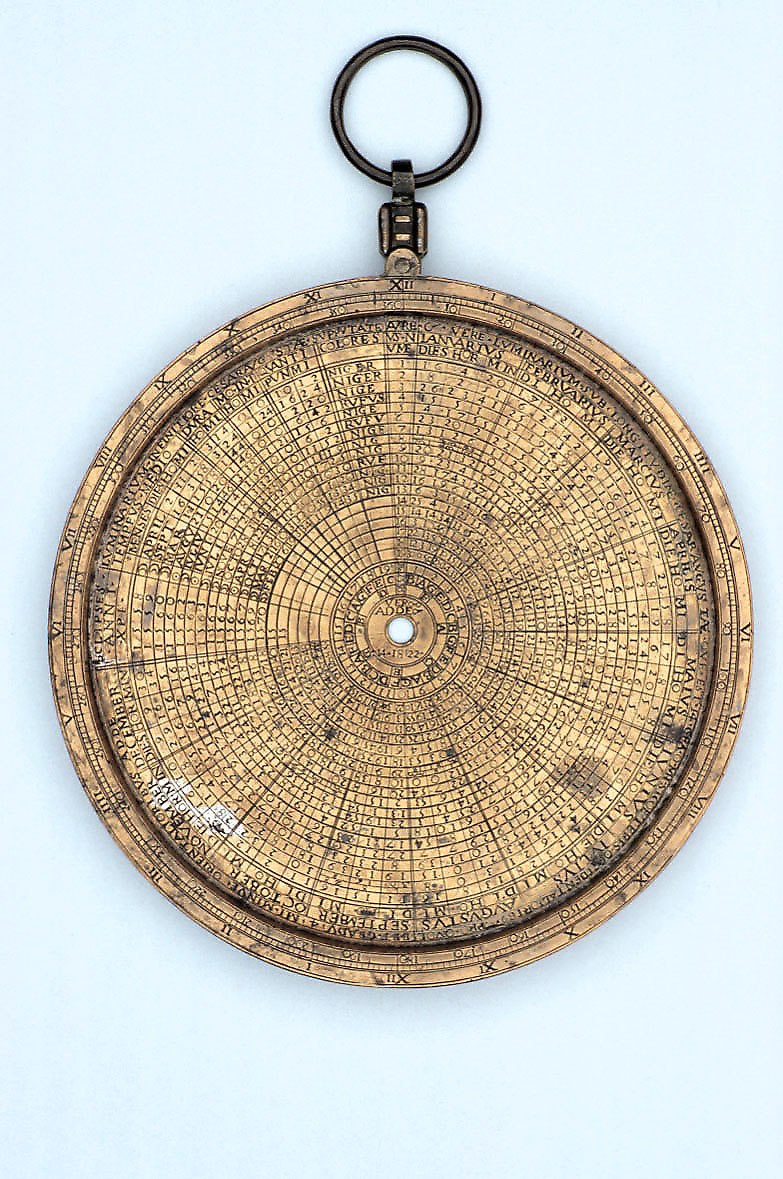
The astrolabe is constructed of brass and measures 133 mm in diameter. Currently, only the mater remains, with the limb soldered directly to the back plate. The suspension mechanism, including the shackle and ring, is extant. The interior surface of the mater is entirely occupied by a radiating table of numbers used to determine conjunctions, oppositions, and solar and lunar eclipses.
This table is specifically calculated for the Spanish town of Zaragosa, referred to in the instrument as Caesar Augusta, and covers the years 1558 to 1570. The limb is engraved with a degree scale of 0 to 360 and a scale of hours numbered I to XII twice. The outer rim is marked with the names of the 12 classical winds.
Evidence for this section
- “The limb is soldered to the back plate, shackle and suspension ring.”
- “The inside surface has a radiating table of numbers for calculating the conjunctions, oppositions and eclipses of the sun and moon, constructed for the Spanish town of Zaragosa and the dates 1558 to 1570”