
Magazine · Care, conservation & repair
Why Is My Pocket Watch Not Working? Safe Checks
A stopped pocket watch is not necessarily broken, but forcing it to run can turn a service problem into damaged parts. Start with external observations, preserve what is original, and leave internal investigation to a qualified watchmaker.
October 1, 2026 · 8 min read
AI-drafted from search research. Not yet editorially reviewed — check important facts against the cited sources.
Key takeaways
- Identify the watch and its winding system before trying to operate it.
- Only try gentle, normal winding on a familiar mechanical watch with no warning signs.
- A tight crown does not prove that the watch has been damaged by “overwinding.”
- Ticking without moving hands, or running only in one position, needs professional investigation.
- Conserve original material first; opening, oiling and adjusting the movement belong to a qualified watchmaker.
Why has my pocket watch stopped working?
A mechanical pocket watch needs stored energy, a functioning gear train and an escapement that releases that energy in controlled steps. A failure anywhere along that path can stop the hands. The simplest explanation is an unwound mainspring, but resistance from deteriorated lubrication, corrosion, displaced components or broken parts can produce the same outward symptom. Silence alone does not identify the fault. [7, 9]
First establish what kind of watch you have. An antique-looking case does not guarantee a mechanical movement: some later pocket watches are quartz and require a battery. A stopped quartz watch may have an exhausted battery, but battery contacts, the electronics or the hand-driving mechanism can also fail. Do not wind or open an unfamiliar watch to settle the question; use existing documentation or ask a watchmaker.
What can I safely check before seeking pocket watch repair?
Work over a clean, padded surface with the watch supported, not dangling from its chain. Record what happened before it stopped: ordinary use, winding, setting, a fall, damp storage or years in a drawer. If the watch is an undocumented antique or has been unused for a long time, observation is safer than attempting to restart it.
- Look through the crystal for loose hands, displaced fragments, condensation or obvious contact between a hand and the glass. Do not press the crystal to test clearance.
- Check external controls visually. On a familiar pendant-setting watch, confirm that the crown is in its normal running position; do not force an unfamiliar stem or lever.
- Distinguish the time display from subsidiary functions. A stationary central hand may belong to a stopwatch rather than ordinary timekeeping.
- If it is a familiar, recently serviced mechanical watch that has simply run down, try gentle normal winding, stopping at normal resistance or anything unusual.
- Listen without shaking. Note whether it starts, stops again or continues ticking while the display appears unchanged.
- Write down the result and stop testing if winding feels gritty, slips, clicks abnormally or suddenly becomes resistant.
Checking does not require opening the back or removing the bezel. The distinction between hunter, half-hunter and open-face cases helps explain what you can see without dismantling anything. A protective dial lid is not the same as a movement cover. If a cover resists normal operation, leave it alone rather than using a knife or improvised lever.
Should I wind a stopped pocket watch?
Only when its operating method and condition are sufficiently clear. On a familiar crown-wound mechanical watch in regular service, gentle winding is a reasonable first check. Do not use a universal turn count: winding systems, crown sizes and mainsprings differ. Stop when you reach the watch's normal fully wound resistance, and stop earlier if the feel changes unexpectedly. Winding harder is never a diagnostic test.
An unfamiliar key-wound watch requires the correct key, winding point and operating direction. Guessing can damage a square or mechanism. Fusee pocket watches introduce additional considerations because power passes through a chain or line and a tapered pulley. Have their operation demonstrated by a specialist rather than applying instructions intended for an ordinary crown-wound watch.
What do different pocket watch symptoms mean?
| What you notice | Possible explanations | Safest response |
|---|---|---|
| Silent after ordinary use | Power exhausted; internal resistance; setting or movement fault | Try normal winding only if the watch is familiar and has no warning signs. |
| Crown is already tight | Mainspring fully wound; winding mechanism obstructed | Do not apply more force; arrange examination. |
| Crown turns unusually freely | Winding engagement or mainspring problem | Stop winding and report the changed feel. |
| Ticks, but hands do not advance | Hand-driving fault, loose hand or obstructed display | Observe through the crystal; do not reposition the hands manually. |
| Runs briefly, then stops | Insufficient usable power, friction or a damaged component | Record the duration; do not repeatedly restart it. |
| Runs only in a particular position | Possible pivot, jewel, balance or clearance problem | Record the position and stop experimenting. |
| Stopped after a fall | Shock damage, displaced hands or other internal disturbance | Leave it unwound and seek professional assessment. |
| Quartz watch has stopped | Battery exhaustion or another electrical or mechanical fault | Ask for battery and condition checks rather than assuming a battery alone will fix it. |
Several faults can coexist. A neglected watch might have degraded lubricant as well as a worn bearing, while an impact can disturb both the movement and the hands. A brief return to ticking does not prove that continued operation is harmless. These distinctions explain why a responsible repairer examines the complete watch rather than prescribing a part from a symptom alone. [7, 9]
Why is my watch ticking but not moving?
First confirm which hand you are watching. On some chronograph pocket watches, the prominent central seconds hand measures elapsed time and remains stationary until the chronograph is started. Ordinary running seconds, if present, may appear on a smaller dial. The absence of central-hand movement therefore does not necessarily mean that timekeeping has stopped.
If the ordinary time display truly does not advance despite sustained ticking, the fault may lie in the hand-driving mechanism or the attachment and clearance of the pocket watch hands. Two hands can interfere, and a displaced hand may touch the crystal or dial. Observe without pressing, bending or setting repeatedly. A watchmaker must establish whether the display fault is isolated or accompanies a movement problem. [7, 9]
How should an antique pocket watch be repaired?
The governing order is conservation before restoration before repair. First document and protect surviving original material; next decide whether any restoration is justified; then authorize only the mechanical intervention compatible with those decisions. For an heirloom or historically significant watch, dependable daily running is not automatically the right objective. Preserving it as a documented, non-running object may be preferable to extensive replacement. [30]
- Photograph the closed case, visible dial and existing damage before handing the watch over.
- Gather previous service records, family information and any existing movement photographs.
- State your objective: preservation, occasional demonstration or regular use where appropriate.
- Ask for assessment before polishing, dial work, engraving removal or component replacement.
- Request documentation of significant findings and retention of removed original parts where practicable.
Use the antique pocket watch identification checklist to organize existing evidence, but leave movement access to a qualified watchmaker. Case construction varies; the guide to pocket watch opening types explains why one method does not fit every watch, not why an owner should experiment. Cleaning or adjusting the exposed mechanism at home risks damage that may be difficult to reverse.
How do I fix an Elgin pocket watch that has stopped?
Apply the same safe checks to an Elgin: establish its winding and setting method, note the symptoms and avoid forcing the controls. The Elgin National Watch Company made many different movements, so “Elgin” alone is not a repair specification. The movement's markings and serial number can help a watchmaker identify it using published factory literature. The case number should not be substituted for the movement number. [4]
The Elgin B. W. Raymond record is a starting point for identification, not a universal repair guide. Some pocket watches use a setting lever rather than a pull-out crown; forcing the wrong control can damage it. Ask the repairer to confirm the setting method and demonstrate normal operation after service. Buying a replacement mainspring, balance or donor movement before that assessment is premature.
What will a pocket watch repair specialist check?
Choose a watchmaker with relevant pocket-watch experience, especially for early mechanisms or complications. Assessment may include the winding and setting work, mainspring and barrel, train freedom, pivots and jewels, escapement, balance assembly and hand clearances. A complete service can require controlled dismantling, cleaning, inspection, appropriate lubrication, reassembly and testing; it is not simply adding oil to make the watch tick. [7, 9]
- Do you regularly work on this movement type and period?
- Will you document the condition before beginning intervention?
- Which proposed work is necessary for preservation, and which is optional?
- Will you seek permission before replacing original parts or altering the finish?
- How will you test winding, setting, running duration and performance in relevant positions?
- What use and storage limits should I follow afterward?
Escapement work is particularly unsuitable for trial-and-error adjustment. In lever-escapement pocket watches, small relationships among the balance, roller, fork and escape wheel are fundamental to reliable operation. Moving a regulator does not cure dirt, wear or impact damage, and disturbing other adjustments can introduce additional faults. Explain the symptoms to the watchmaker rather than requesting an assumed adjustment. [3, 7]
Can cleaning or oiling make a stopped pocket watch run?
External cleaning cannot remedy an internal fault, and household oil, penetrating spray or solvent should never be introduced into the movement. Lubricants must be selected and applied appropriately to a clean, inspected mechanism. Adding oil to an assembled, dirty watch can spread contamination and leave the actual cause unresolved. Opening, oiling and adjusting a movement belong to a qualified watchmaker. [7, 9]
For owner-level care, follow safe pocket watch cleaning guidance: keep work external and avoid liquids entering openings or reaching vulnerable materials. Do not polish away tarnish, inscriptions or finishes merely because the watch has stopped. Store the watch supported in a clean, dry location with stable conditions, away from vibration and strong magnetic sources. Magnetic exposure is possible, but stopping alone does not establish magnetism as the cause.
Do complicated pocket watches need different checks?
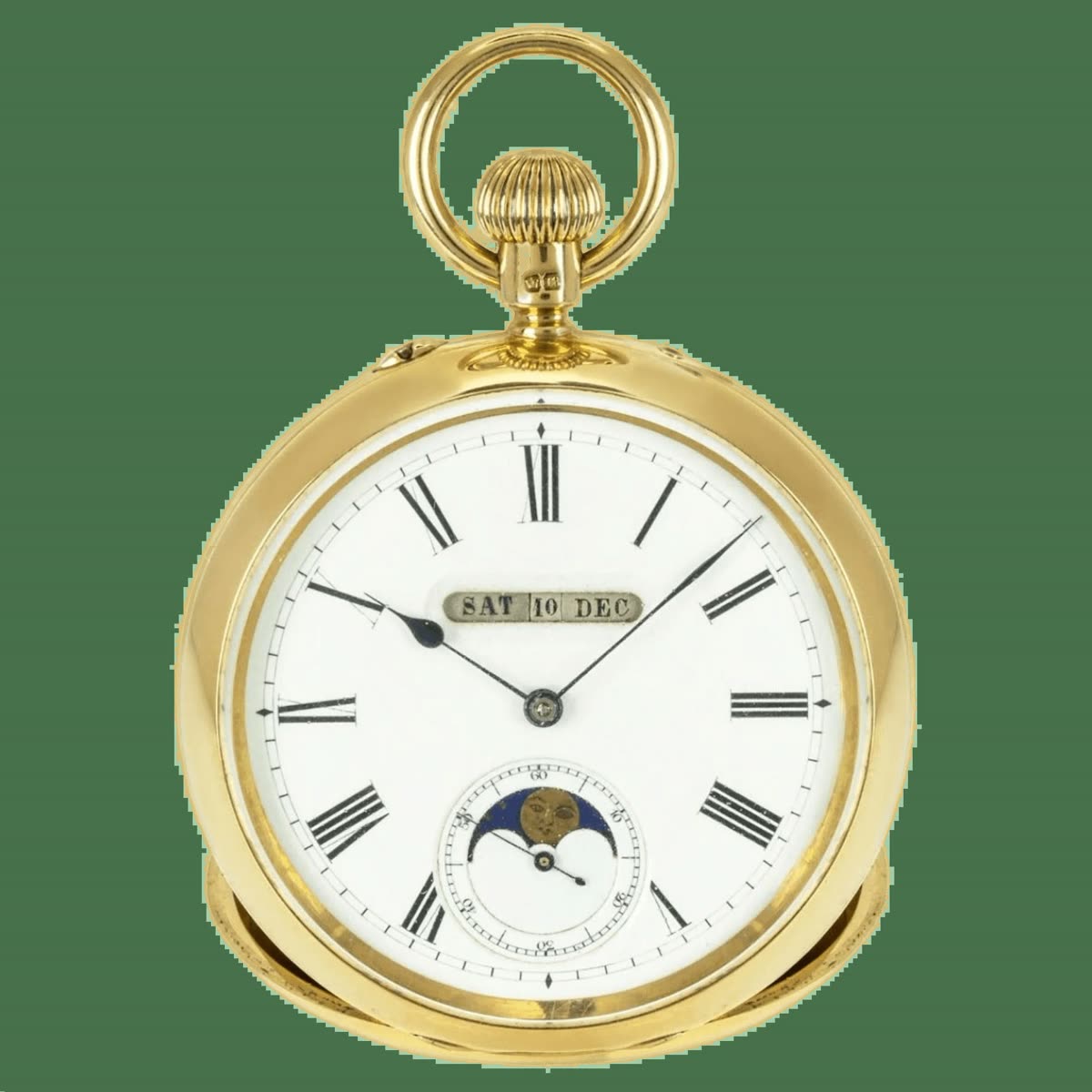
Yes: additional displays and striking mechanisms introduce additional controls and possible failure points. A stopped calendar display does not necessarily mean the timekeeping train has stopped, while a non-striking repeater may have a problem separate from ordinary timekeeping. Do not repeatedly operate pushers, slides or correctors to discover what works. Correct operation depends on the specific design and condition. [5]
Treat repeater pocket watches and calendar pocket watches as specialist work. Report exactly which function stopped and whether the ordinary hands still advance. The safest endpoint of home troubleshooting is a useful description, not a forced restart: identify what you can externally, preserve the watch unchanged and give a qualified specialist enough information to investigate without guesswork.
Frequently asked questions
Can I shake a pocket watch to make it start?
Do not shake or tap a stopped pocket watch. A brief restart would not prove that the movement is healthy, and shocks can aggravate damaged or displaced parts. If gentle normal winding of a familiar, serviceable mechanical watch does not restore running, stop testing and arrange examination.
Why does my pocket watch stop after a few minutes?
Short running can result from inadequate usable power, friction, hand interference or damaged movement components. The duration alone cannot identify the cause. Note whether it stops consistently and whether the hands meet at the stopping point, but do not repeatedly wind or reset it to reproduce the failure.
Can I repair an antique pocket watch myself?
Safe owner work is generally limited to documentation, external observation and normal operation when the mechanism is understood and its condition permits. Internal repair requires specialist skills, tools and control of stored spring energy. Opening, dismantling, oiling or adjusting an antique movement should be left to a qualified watchmaker.
Does a stopped pocket watch need a new mainspring?
Not necessarily. An exhausted mainspring may only need normal winding, while a fully wound watch can remain stopped because of a different fault. Unusual winding behavior may suggest a mainspring or winding-system problem, but a watchmaker must inspect it before deciding whether replacement is necessary.
Should I replace the battery in an antique-looking pocket watch?
First confirm that the watch is quartz: appearance alone is not enough. If it is quartz, ask a suitable watch repairer to check the battery and its compartment, particularly after prolonged storage. A replacement battery will not correct corrosion, faulty contacts or an unrelated mechanical or electronic failure.
How often should an antique pocket watch be serviced?
There is no single interval suitable for every antique pocket watch. Movement condition, previous work, use and storage all matter. Follow advice specific to the watch after assessment, and seek attention sooner if winding changes, performance deteriorates or moisture appears. An undocumented service history warrants assessment before regular use.
Sources
- Gazeley, W. J., Clock and Watch Escapements
- Published factory grade and serial literature (Hamilton, Elgin, Illinois, Waltham)
- de Carle, D., Complicated Watches and Their Repair
- Fried, H. B., The Watch Repairer's Manual
- de Carle, D., Practical Watch Repairing
- General conservation principles as applied in museum practice