
Pocket watches · Complication
Repeater Pocket Watches
Partially verifiedWatches that sound the time on demand, striking hours and subdivisions on a bell or gongs when a slide or pusher is operated.
Mechanism
Operating the slide winds a dedicated striking train; a snail cam read by a rack determines how many hour blows are released, with a quarter or minute rack governing subdivisions.
Typical characteristics
- Case slide or plunger charging the striking train
- Racks, snails and hammers occupying much of the movement space
- Audible through pierced case backs on earlier examples, or gongs on later ones
Construction and interpretation
Repeating work sounds the time on demand. It differs from a sonnerie, which can strike automatically at intervals, although a complicated watch may combine both functions. A slide or plunger supplies or releases energy to the repeating mechanism; racks reading stepped snails determine the number of blows. The case actuator and sound are observable evidence, but a visible slide alone does not prove that a complete or working repeater survives inside.
The subdivision being sounded is central to the description. A quarter repeater gives hours and completed quarters; a five-minute repeater counts five-minute intervals; a minute repeater adds the minutes since the last quarter. Bell and gong constructions, tone conventions and regulator designs vary. Record the actual sequence only when the watch can be operated safely under competent supervision, and distinguish a documented mechanism from a seller's generic use of the word repeater.
| Repeater type | Time subdivisions | Example at 2:49 |
|---|---|---|
| Quarter | Hours and completed quarters | 2 hours; 3 quarters |
| Five-minute | Hours and five-minute intervals | 2 hours; 9 five-minute intervals |
| Minute | Hours, quarters and remaining minutes | 2 hours; 3 quarters; 4 minutes |
| Sonnerie | Automatic striking at intervals | Not defined solely by on-demand repetition |
Do not move the hands or interrupt a repeating sequence without mechanism-specific advice. A silent or incomplete strike needs specialist assessment.
Identification characteristics
- Slide in the case band or a pusher in the pendant
- Two mainsprings or barrels in many designs
- Hammers and gongs visible on the movement's dial side or under a cover plate
Collector significance
Before reliable artificial light, repeating work was practical rather than decorative; today among the most sought-after complications.
Known variations
- Quarter repeater
- Five-minute repeater
- Minute repeater
- Grande sonnerie
Photographs
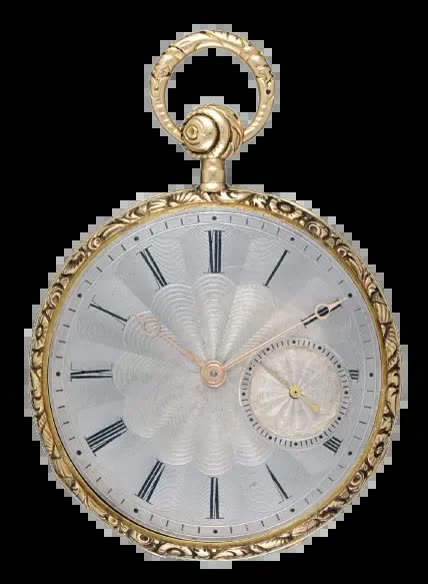
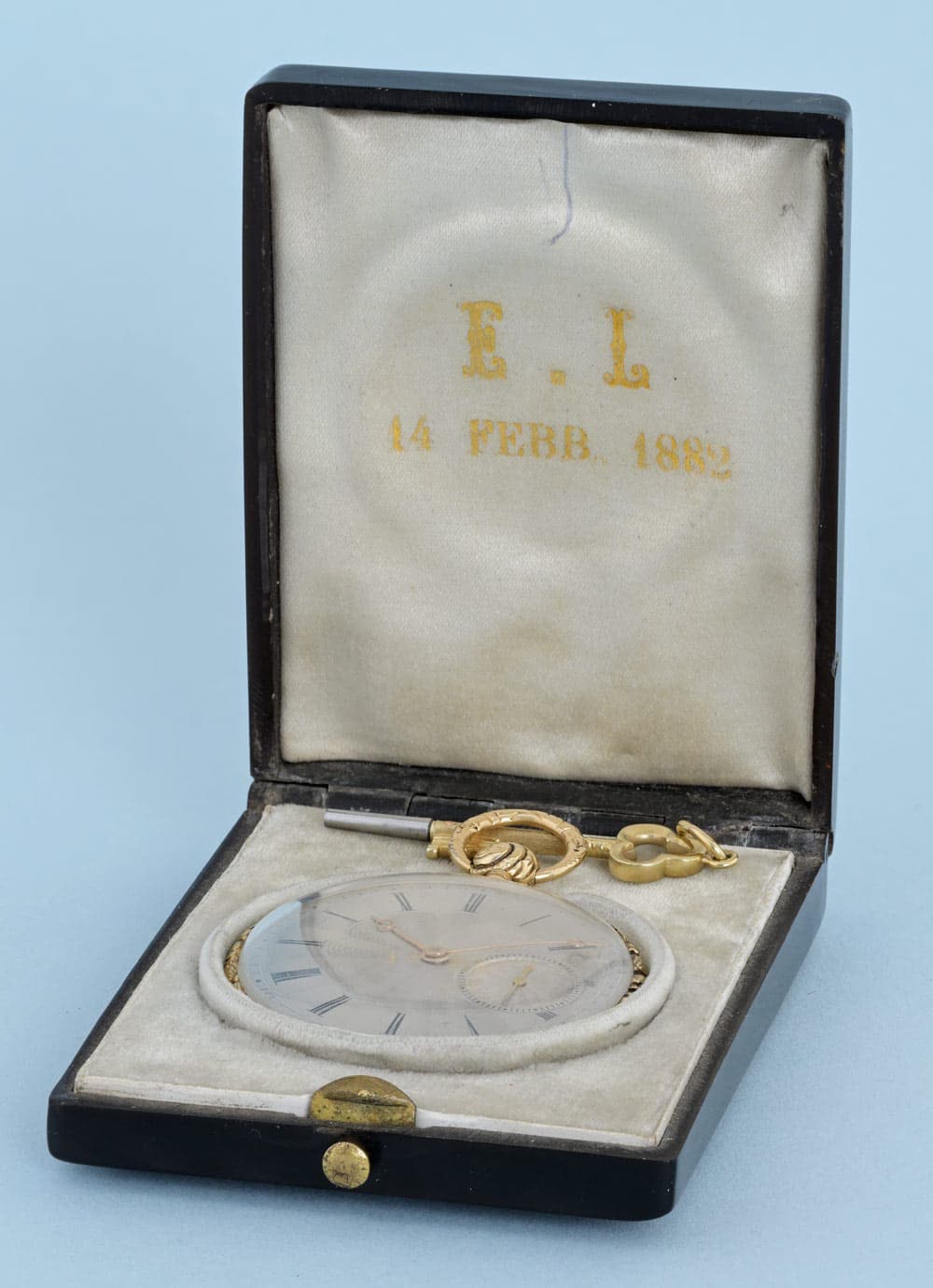
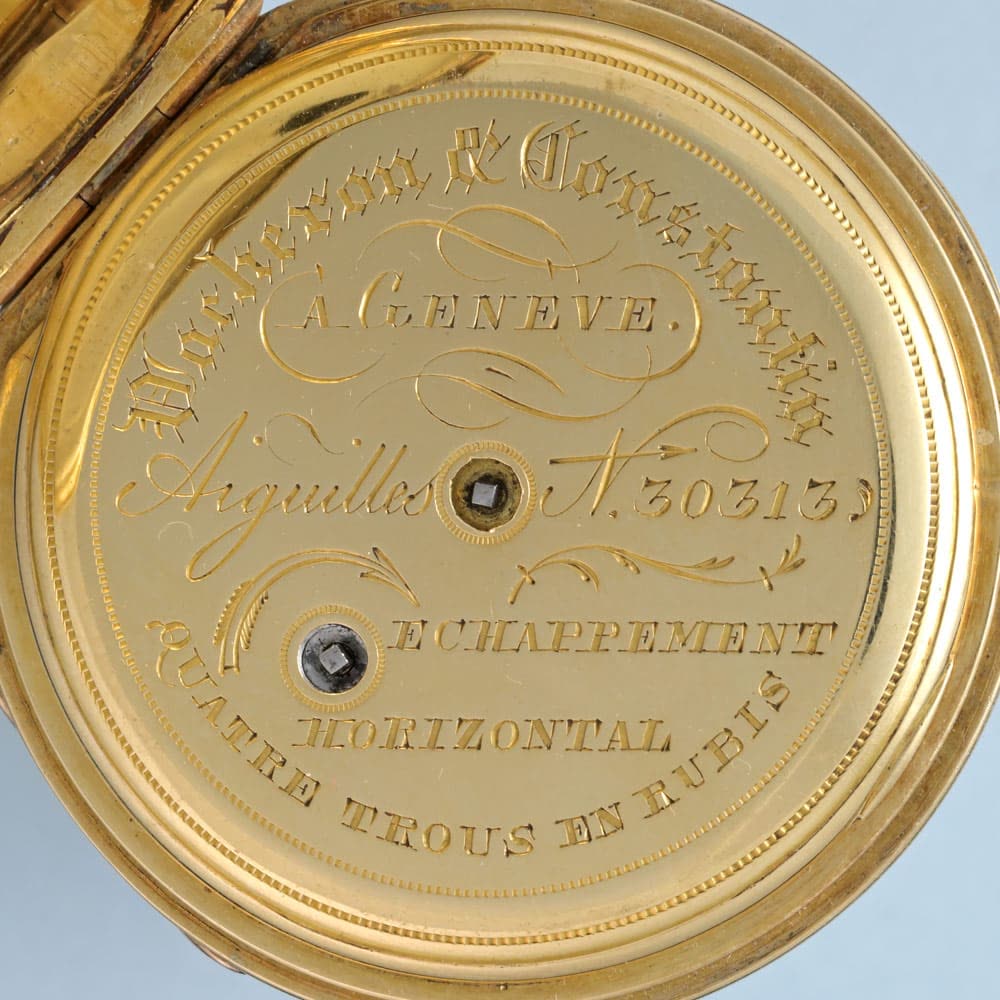
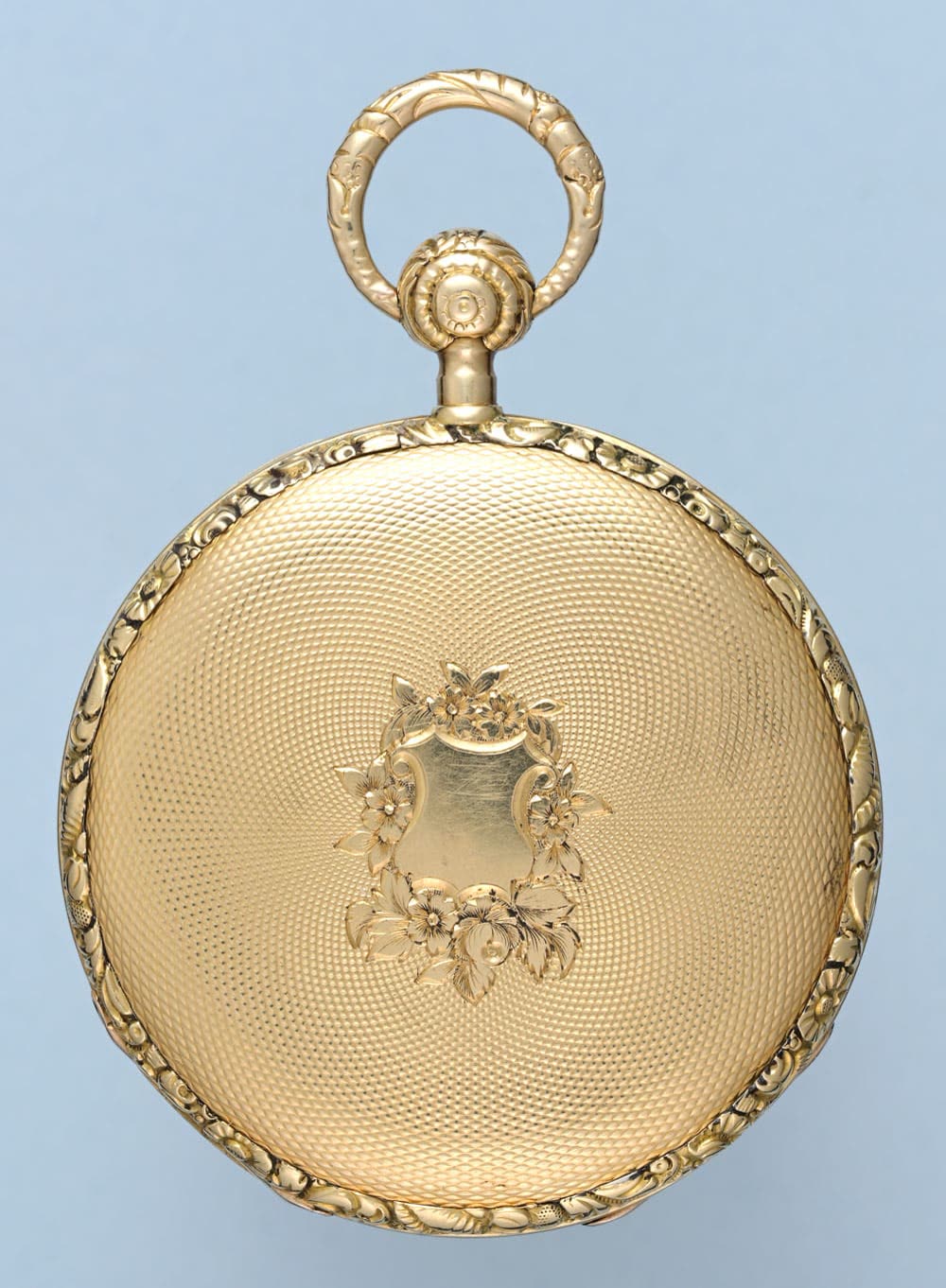
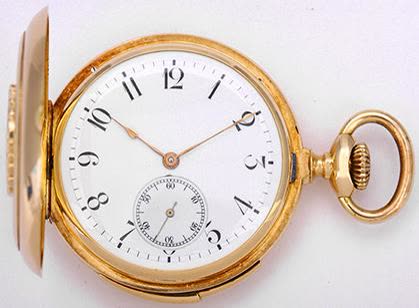
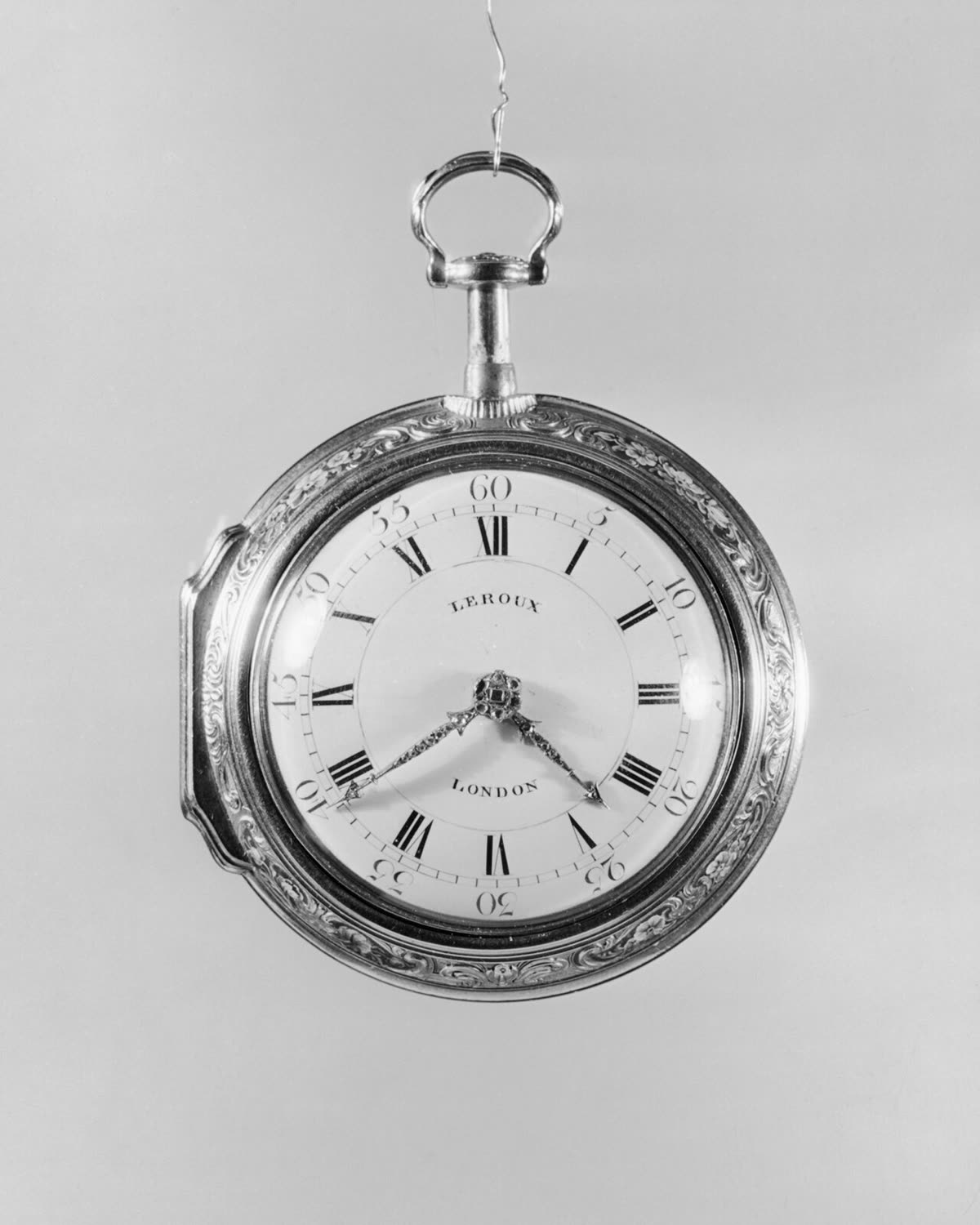
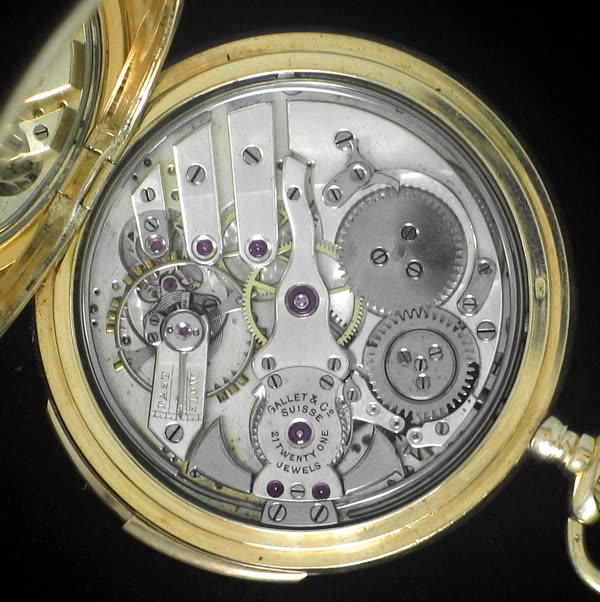
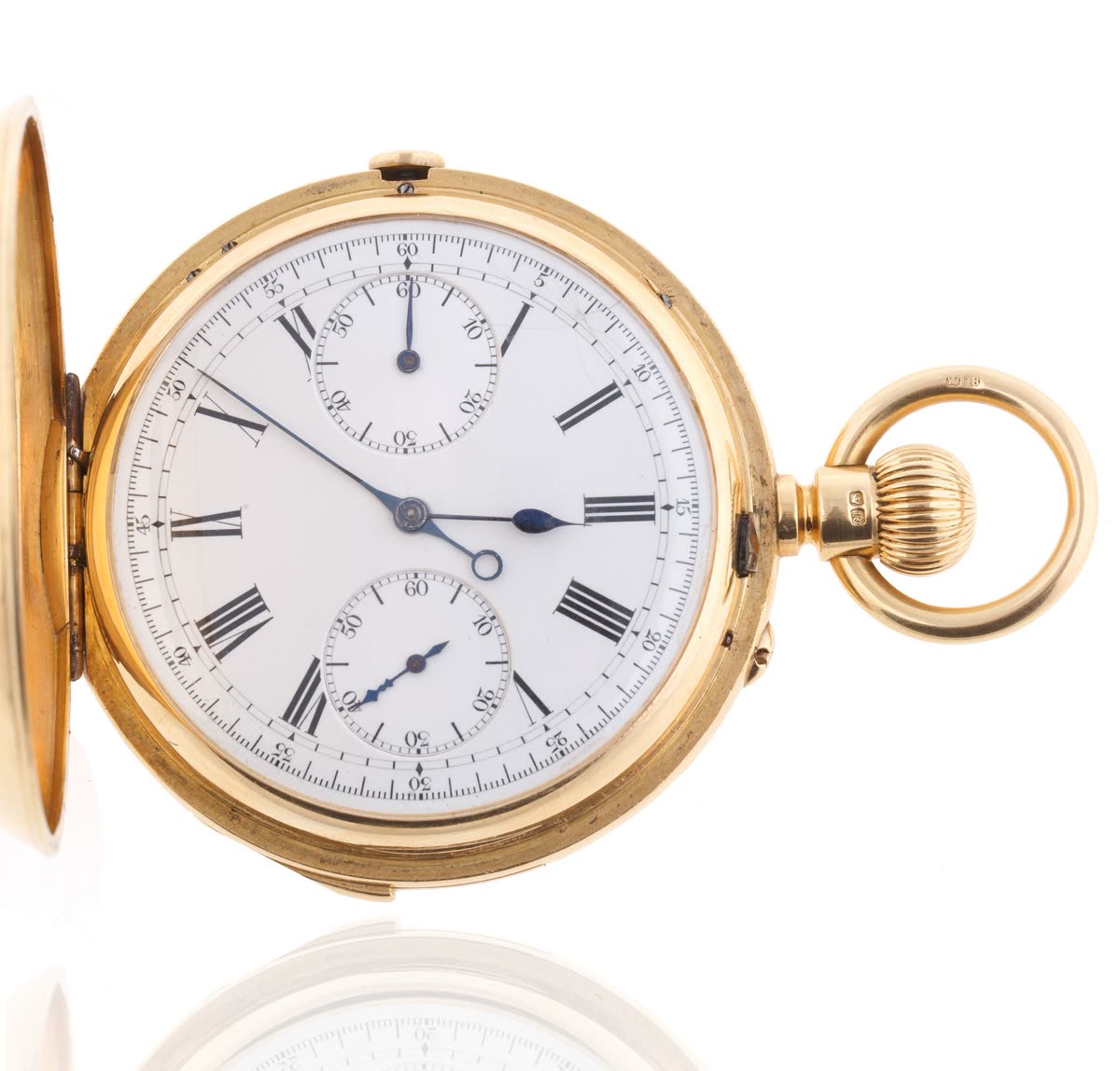
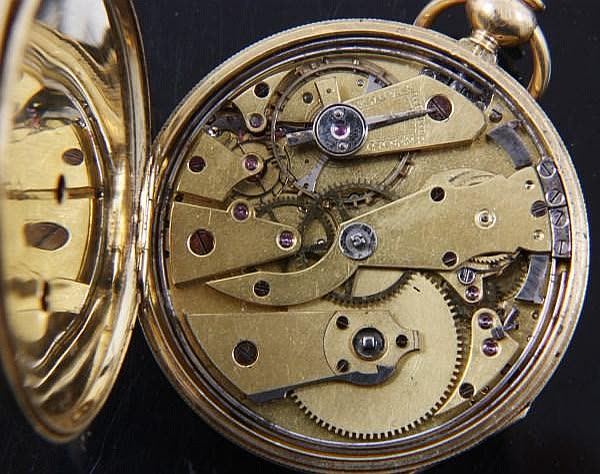
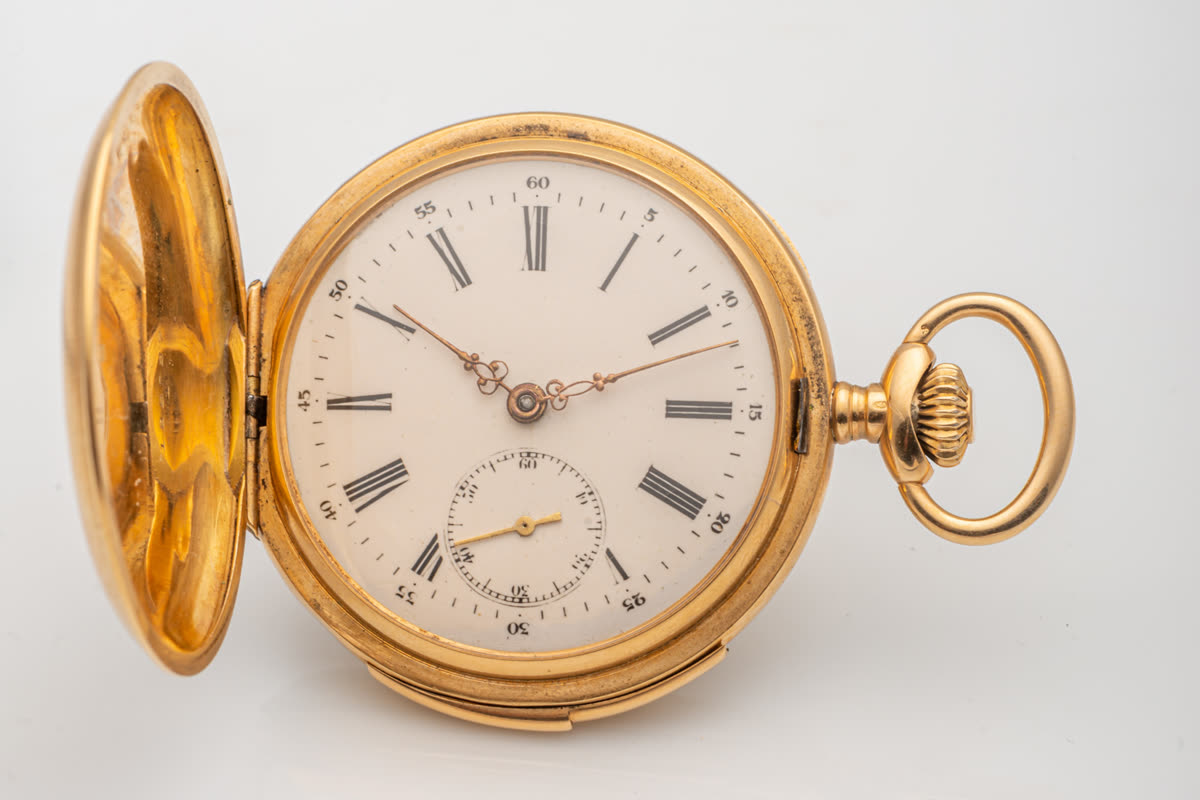
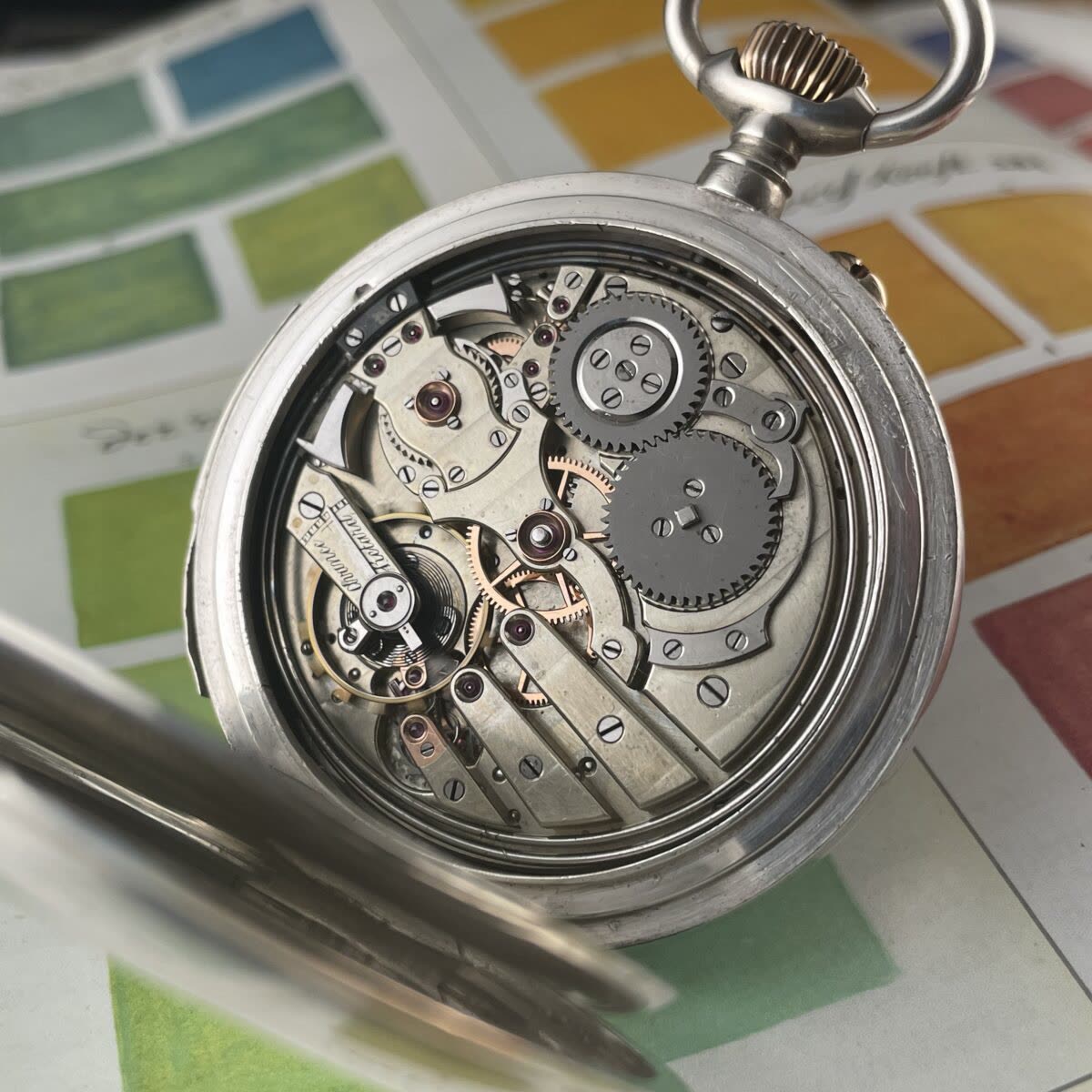
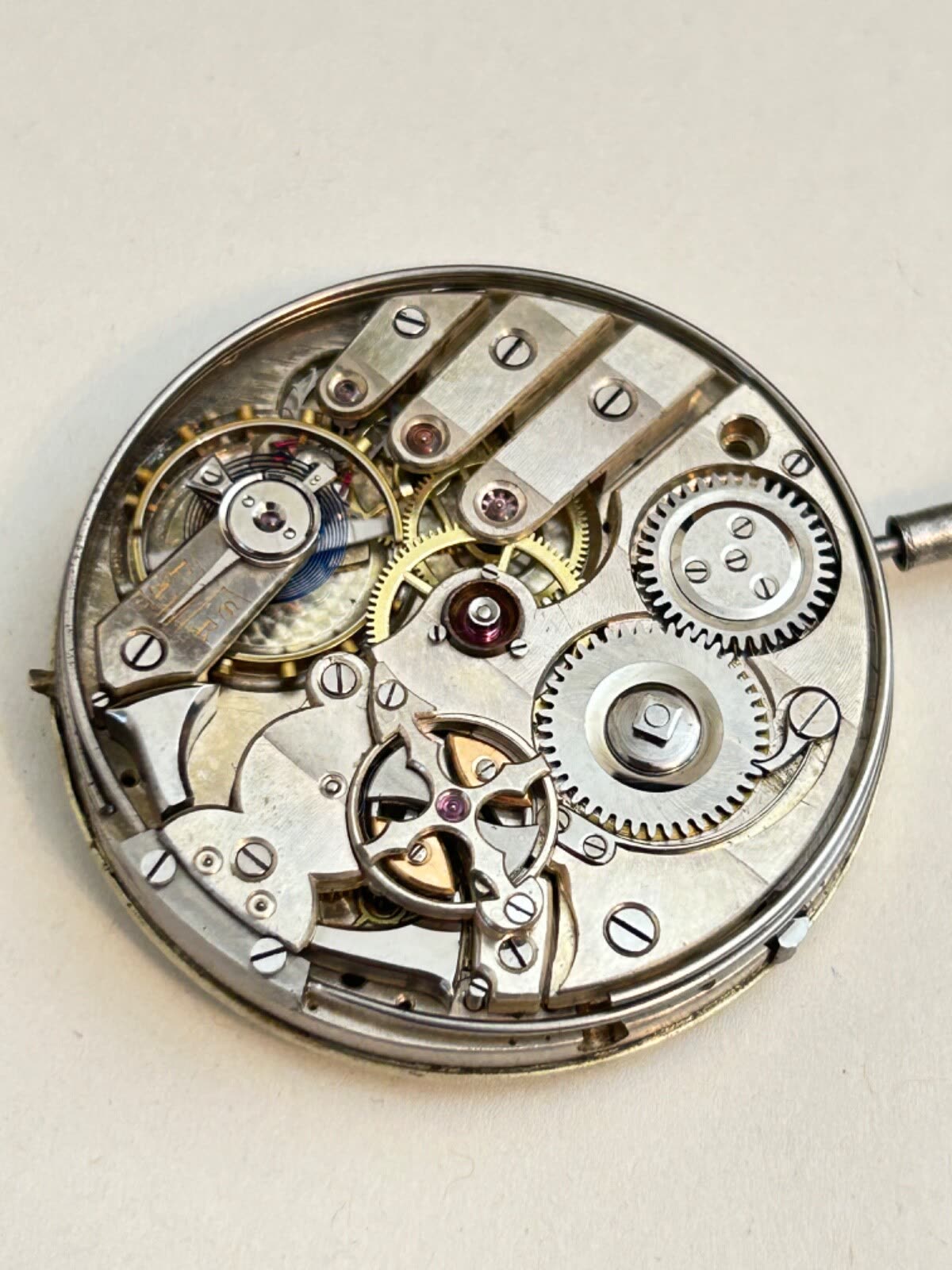
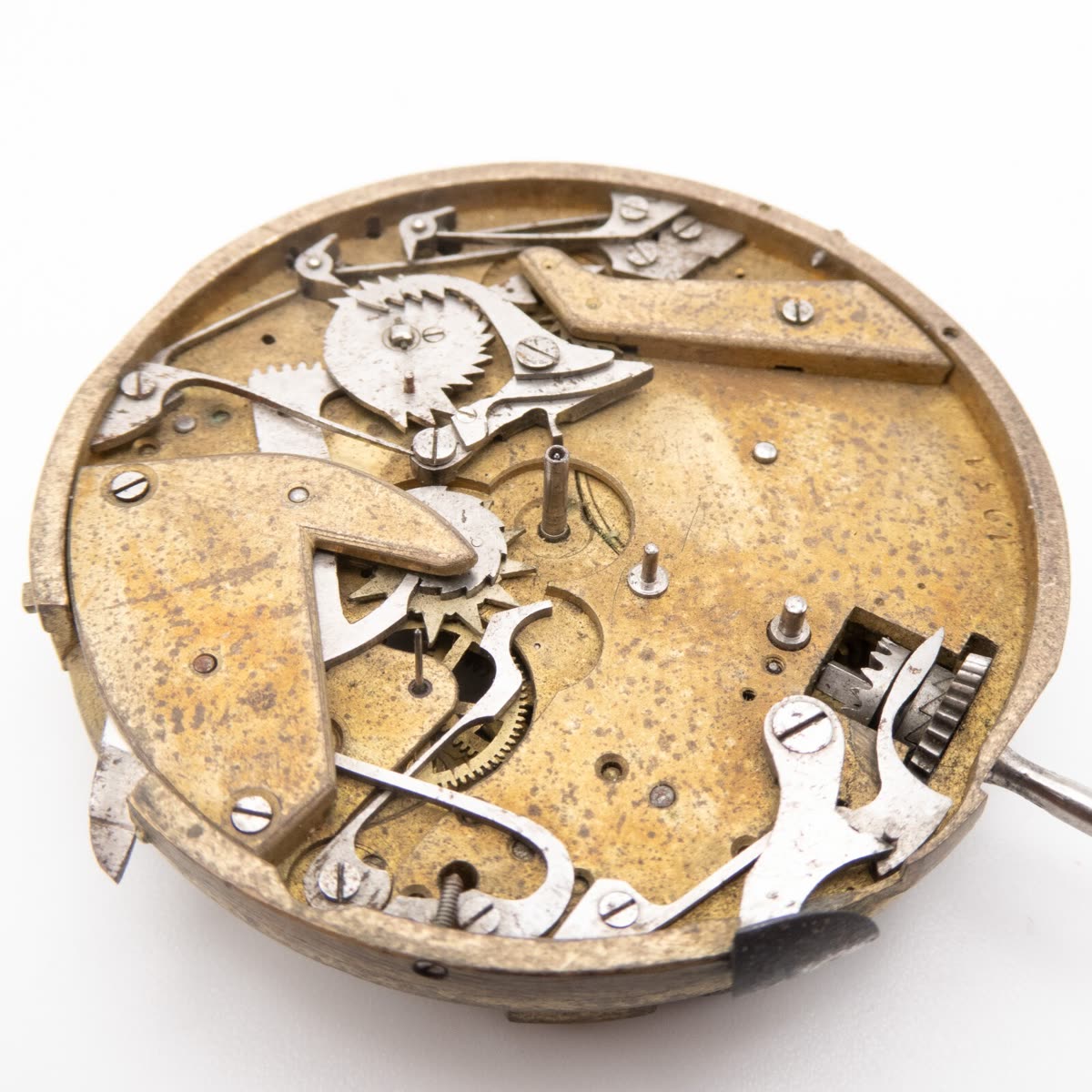
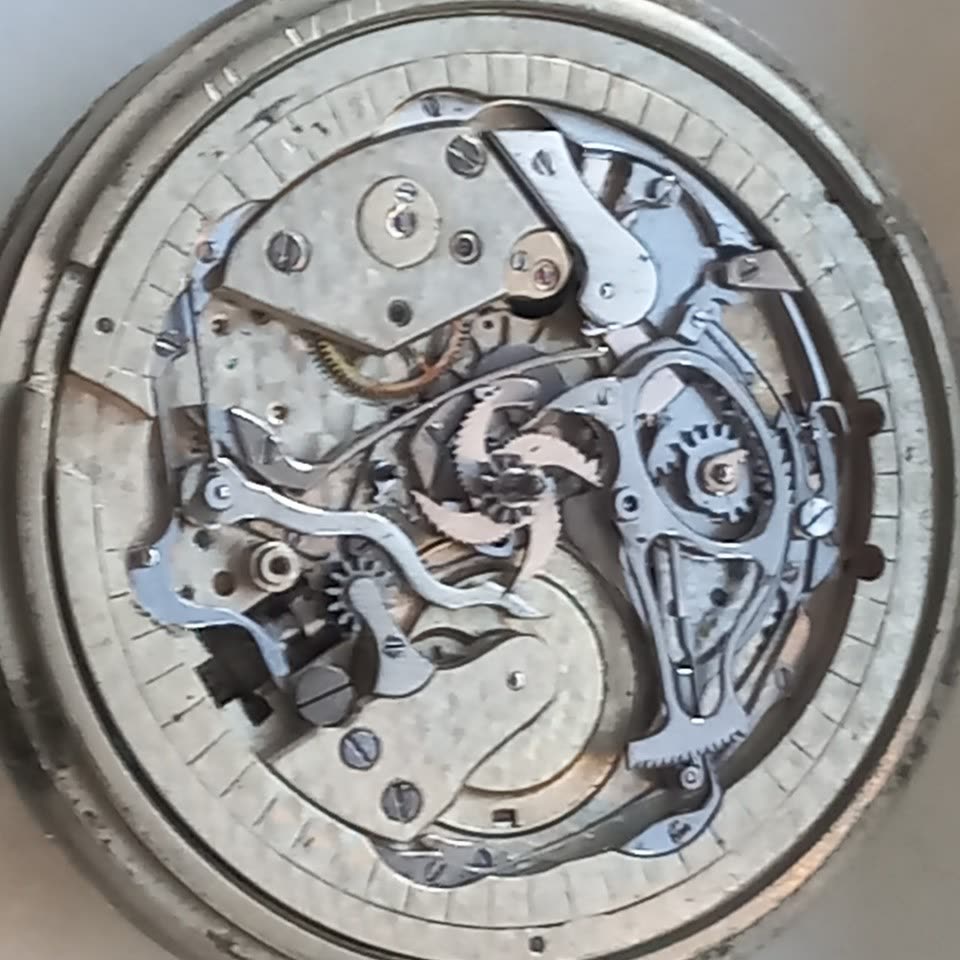
Photographs are illustrative examples of the type, not necessarily the exact object described. Verify details against the source file page.
Sources & references
- Chamberlain, P. M., It's About Time
- Attribution of the earliest repeating work remains disputed in the literature.
- https://en.wikipedia.org/wiki/Repeater_(horology)
Where sources disagree, the disagreement is stated rather than resolved silently.