
Magazine · Makers & history
Elgin Pocket Watch Models, Grades and Product Range
Elgin pocket watches are best understood through their movements, not simply the name on the dial. This guide separates named ranges, numbered grades and movement models, then explains what those distinctions reveal about materials, quality and intended use.
October 2, 2026 · 9 min read
AI-drafted from search research. Not yet editorially reviewed — check important facts against the cited sources.
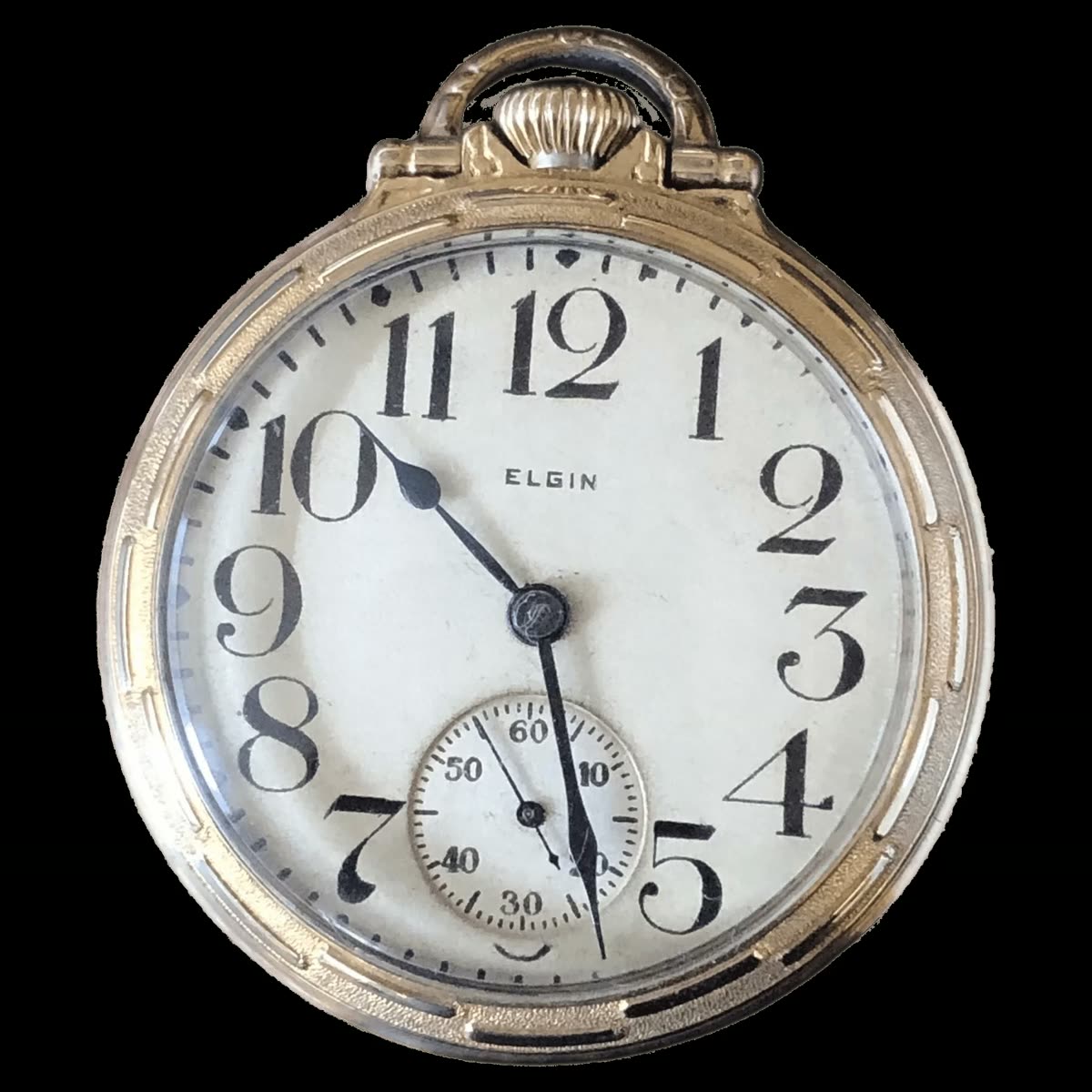
Key takeaways
- A named range such as B. W. Raymond can encompass multiple grades rather than one fixed specification.
- The movement serial number is the starting point for identifying an Elgin; the case number serves a different purpose.
- Case material does not establish movement quality, and a gold-colored case is not necessarily solid gold.
- Railroad suitability depends on the exact watch and the requirements of a particular railway and period.
- Conservation comes first: leave opening, oiling, adjustment and movement work to a qualified watchmaker.
What are the main Elgin pocket watch models?
The most useful answer is a map of Elgin’s product terminology, rather than a single list of model names. Collectors encounter named movements such as B. W. Raymond, Veritas, Father Time and G. M. Wheeler, as well as numerical grades. These labels do not all describe the same level of classification. A name may appear across different specifications and periods, while a grade identifies a more particular movement specification. The examples below provide entry points into the range; they are not an exhaustive catalogue of Elgin production. [6]
| Name or designation | What it represents | What to establish next |
|---|---|---|
| B. W. Raymond | A long-lived named movement range associated with precision timekeeping | Exact grade, size, setting system, jewel count and adjustments |
| Veritas | A named range associated with Elgin’s higher-quality production | The particular grade and its documented specifications |
| Father Time | A name encountered on higher-grade Elgin movements | The individual movement’s grade and configuration |
| G. M. Wheeler | A named Elgin movement designation | Period and grade; do not assume one specification from the name |
| Grade 291 | A numerical movement-grade designation | Serial-number match and corresponding factory specifications |
| Grade 76 | A numerical movement-grade designation | Serial-number match and corresponding factory specifications |
The Elgin B. W. Raymond record covers a name used from the 1860s through the mid-twentieth century across many grades. That breadth makes it especially important not to treat “B. W. Raymond” as one unchanging watch. Elgin Veritas belongs to the late nineteenth- and early twentieth-century story of the maker’s more ambitious production. Neither name, by itself, establishes the complete watch’s date, case material, originality or railroad acceptance. Those questions require evidence from the individual movement and its surrounding components. [6]
What is an Elgin pocket watch?
An Elgin pocket watch is a portable mechanical timekeeper associated with the Elgin National Watch Company, founded in Elgin, Illinois, in 1864. For identification, the strongest evidence is an Elgin-made movement: the mechanism containing the mainspring, wheel train, escapement and regulating organ. A dial signature is useful, but it does not independently establish what mechanism sits beneath it. Nor does an Elgin movement mean that Elgin manufactured every visible component of the assembled watch.
American pocket-watch movements and cases were often supplied through distinct manufacturing and retail arrangements. Consequently, a watch can legitimately combine an Elgin movement with a case bearing another company’s name. Later recasing is also possible, and a replacement dial or hands may complicate the picture further. The right approach is to identify the movement, case and display separately, then ask whether their combination is historically coherent. A different case-maker’s signature is not, on its own, proof that a watch is counterfeit or incorrectly assembled. [18]
What is the difference between an Elgin model, grade and serial number?
| Term | Meaning | Common mistake |
|---|---|---|
| Model | A movement design or construction family, interpreted within its size and factory classification | Treating it as the name of the complete cased watch |
| Grade | A factory specification category for a movement | Assuming a larger grade number means better quality |
| Named range | A designation such as B. W. Raymond or Veritas | Assuming every example has identical specifications |
| Size | A standardized movement-size designation | Confusing movement size with external case diameter |
| Movement serial number | The individual movement’s identifying number | Using the case number in a movement lookup |
| Case number | A number belonging to the case maker’s system | Expecting it to match the movement serial number |
A reliable description combines these categories rather than substituting one for another. “Elgin pocket watch” identifies the maker broadly; a named range narrows the field; the movement grade supplies a more specific technical identity. Size, model, jewel count and setting method then help check that identification. The Elgin Grade 291 record gives a production span of 1903–1920, while Elgin Grade 76 is recorded for 1880–1900. Those are grade-level spans, not automatic dates for an individual watch or its case. [6]
How do you identify an Elgin pocket watch model?
Begin with documentation, not intervention. Photograph the dial, hands, crown, bow and exterior case markings before any cleaning. Existing movement photographs are particularly valuable. If the movement is concealed, have a qualified watchmaker open the case and record the markings; unfamiliar backs, bezels and hinges are easily damaged. The pocket-watch identification checklist helps organize the evidence, but no checklist makes it safe to force a resistant case or probe an exposed mechanism.
- Record the movement signature and serial number exactly. Keep uncertain digits visibly uncertain instead of guessing.
- Match the movement number to published Elgin grade and serial literature, not to a table intended for case numbers.
- Check the reported size, model and grade against the movement’s visible construction.
- Record jewel count and adjustment wording where marked, and compare them with the expected specification.
- Identify the winding and setting arrangement without experimenting with an unfamiliar mechanism.
- Document case-maker marks, material statements, dial details and hands separately, then assess the assembled watch.
The crucial step is cross-checking. A serial-number result that conflicts with the movement’s architecture or clearly visible markings calls for investigation, not selective acceptance. A transcription error, an unsuitable reference table or a changed component may explain the disagreement. Likewise, pocket-watch dials provide useful evidence through their signature, seconds layout and construction, but dials can be replaced. Identification becomes persuasive when several independent observations agree, rather than when one attractive marking appears to supply the whole answer. [6,18]
What were Elgin pocket watches made of?
An Elgin pocket watch combines several materials, so the answer depends on which part is being described. The case might be solid gold, gold-filled, silver or a base-metal alloy, while the movement contains structural plates, steel working components and, where fitted, jewel bearings. Cases could be replaced during service, meaning the material surrounding a movement today is not necessarily evidence of its original retail presentation. Read the case and movement as related but distinct objects. [6,18]
| Component or description | What it means | Identification caution |
|---|---|---|
| Solid-gold case | A gold alloy throughout the principal marked case body | Record fineness and maker’s marks; color alone proves nothing |
| Gold-filled case | A bonded gold layer over a supporting base metal | Not equivalent to solid gold or simply another name for electroplating |
| Silver case | A silver alloy where established by appropriate marks or examination | A silver-colored surface may instead be another metal |
| Base-metal case | A non-precious metal or alloy case | Trade names need interpretation rather than assumptions |
| Movement | Typically brass plates with decorative finishes, steel components and jewel bearings according to grade | A bright or gold-colored finish does not establish precious-metal content |
| Dial and crystal | Dial material may be enamel or metal; crystals may have been replaced | The material and condition must be assessed on the actual watch |
Historical year guarantees on some gold-filled cases concern the case’s advertised wearing qualities, not the movement’s age, gold fineness or a present-day promise. Similarly, jewel count concerns bearings and related friction surfaces within the mechanism; it is not a description of decorative gemstones around the case. More jewels can reflect additional bearing support, but the count alone does not establish adjustment quality, condition or present accuracy. Avoid identifying any material by scratching, filing or applying household chemicals. [24]
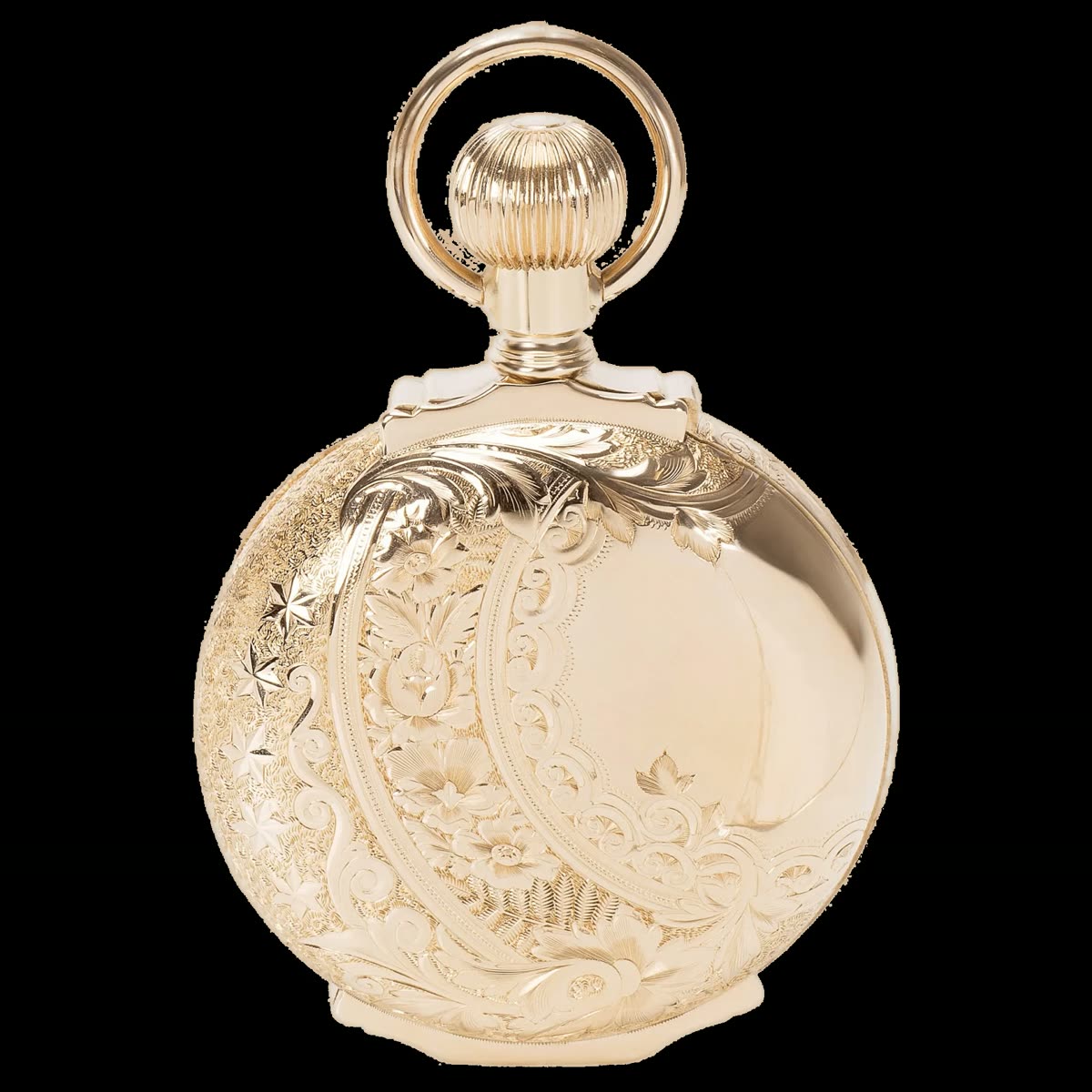
Which Elgin pocket watches were railroad watches?
Some Elgin pocket watches were made to specifications suitable for railroad time service, but “Elgin,” “B. W. Raymond” and “railroad watch” are not interchangeable descriptions. A railroad pocket watch must be understood in relation to a railway’s written requirements and the period in question. Relevant characteristics could include size, jewel count, positional adjustment, dial legibility and setting method. Acceptance was not a timeless quality bestowed on every watch within a named range. [19]
Lever setting matters because it separates hand setting from ordinary winding and reduces the possibility of accidentally moving the hands through the crown. Nevertheless, lever setting alone does not prove railroad eligibility. Distinguish three claims: a watch has railroad-style features; its exact specification met particular rules; or the individual watch is documented as having served in railroad use. The last claim requires provenance, such as credible service records, not merely a locomotive engraved on the case or a bold numerical dial. [2,19]
Are Elgin pocket watches good?
Yes—Elgin produced capable everyday watches as well as more highly specified precision movements. The useful qualification is that quality varies across the product range, and surviving condition now matters enormously. An originally excellent movement may have worn bearings, damaged parts or unsuitable previous repairs. A simpler, properly conserved example may be more satisfactory in use than an elaborate watch with unresolved faults. Judge the factory specification and the present mechanical state separately; neither the brand name nor a claim that it “runs” answers both questions.
- Design and specification: establish the grade, bearing arrangement, setting system and documented adjustment standard.
- Adjustment: distinguish adjustment for temperature or positions from merely regulating a watch to run faster or slower.
- Condition: look for corrosion, damaged screws, worn components and evidence of inappropriate replacement parts.
- Performance: a brief demonstration of ticking does not establish stable timekeeping through a full wind or in different positions.
- Serviceability: the availability and suitability of replacement components must be assessed for the particular movement.
- Historical integrity: retain coherent original material wherever possible rather than replacing parts solely for cosmetic uniformity.
How broad was Elgin’s pocket-watch product range?
Elgin’s pocket-watch production served more than one purpose: ordinary daily timekeeping, work demanding dependable accuracy, and personal presentation or formal wear. Size, thickness, finishing and case choice helped distinguish these uses. The category of dress pocket watches describes intended style and wear rather than a single Elgin grade. Likewise, an ornate case does not necessarily enclose the company’s most technically advanced movement. Exterior presentation and movement specification were connected commercially, but they should not be treated as identical measures of quality.
Open-face and hunter arrangements add another layer. An open-face case leaves the dial visible through its crystal; a hunter case has a protective front lid. Movement layout, pendant position and seconds placement should be considered together when assessing whether a casing arrangement is appropriate. A movement can physically fit a case without the resulting watch representing its original configuration. This is why a useful product description says more than “gold Elgin”: it identifies the movement and explains the case arrangement independently. [18]
How should you care for an old Elgin pocket watch?
Keep the watch dry, cushioned and protected from dust, impact and strong magnetic sources. Do not assume that a closed antique case is moisture-resistant. For exterior care, follow the limits explained in safe pocket-watch cleaning: do not immerse the assembled watch, introduce liquid around openings or attempt to clean the movement at home. A soft, dry cloth may be appropriate for a sound exterior, but loose finishes, unstable surfaces and fragile decoration need professional assessment before handling. [9,11]
What information should an Elgin pocket-watch description include?
- Maker and exact movement signature.
- Movement serial number, with uncertain digits flagged.
- Verified grade, size and model, citing the identification reference.
- Jewel count, adjustment markings and setting system.
- Case maker, material marks and open-face or hunter arrangement.
- Dial, hands, crystal and any evidence of replacements.
- Approximate production dating distinguished from inscriptions and provenance.
- Condition and service documentation, without assuming accuracy from ticking.
This evidence-led description answers the real question behind “Elgin pocket watch models”: what exactly is this watch, and where does it fit within the maker’s range? Start with the movement, interpret its name and grade together, and then evaluate the complete object. The result is more informative than a model label alone—and more honest when a date, material or original configuration remains uncertain.
Frequently asked questions
Where is the serial number on an Elgin pocket watch?
The number used for movement identification is on the movement, not the exterior case. Case numbers belong to a separate numbering system and generally cannot date an Elgin movement. If the mechanism is concealed, ask a qualified watchmaker to open the case and photograph its signature, serial number and other markings.
Does a higher Elgin grade number mean a better watch?
No. A grade number is a factory designation, not a simple ascending quality score. Compare the documented specifications, including jewel count, adjustments, construction and intended use. Present condition is a separate issue: a higher-specification movement with wear or poor repairs may perform worse than a sound, simpler example.
Are all Elgin B. W. Raymond watches railroad grade?
Do not assume railroad eligibility from the name alone. B. W. Raymond covered multiple grades over a long period. Establish the exact movement specification, then compare it with the requirements of a particular railway and date. Documented railroad service is a further claim requiring evidence about the individual watch.
How can I tell whether my Elgin pocket watch is solid gold?
Record the case-maker and material marks, then have ambiguous markings interpreted professionally. Gold-filled cases can resemble solid gold, and a gold-colored surface proves neither composition nor fineness. Do not scratch or chemically test the watch yourself. The movement’s Elgin signature does not establish the material of its surrounding case.
Can I use an antique Elgin pocket watch every day?
Possibly, but suitability depends on condition, service history and how the watch will be carried. Have a qualified watchmaker assess it before regular use. Antique pocket watches should be protected from shocks and moisture, and a watch that ticks may still need attention before sustained running is appropriate.
Do matching case and movement numbers prove an Elgin is original?
Case and movement numbers usually belong to different manufacturers’ systems, so matching numbers are not a general requirement for originality. Equally, a numerical coincidence proves little. Assess compatible construction, case fit, dial and hand configuration, wear patterns and documented history together when considering whether the assembled watch retains its earlier form.
Sources
- Published factory grade and serial literature (Hamilton, Elgin, Illinois, Waltham)
- NAWCC Bulletin, articles on recased and assembled watches
- Published railroad time-service rules and approved-watch lists (various roads)
- Railroad time-service rules for lever-setting (see 'What Makes a Railroad-Grade Watch')
- See 'What Jewel Counts Really Tell You' and 'Jewelling and the Rise of Synthetic Ruby'
- Fried, H. B., The Watch Repairer's Manual
- de Carle, D., Practical Watch Repairing