
Glossary · Mechanism
Pallet fork
The lever that carries the pallets and transmits impulse between the escape wheel and the balance in a lever escapement.
Explanation
In a Swiss lever escapement the pallet fork carries two pallet stones — entry and exit — that alternately lock and receive impulse from the escape wheel. The fork's notch engages the balance's impulse pin, so the fork both gives impulse to the balance and is unlocked by it. The fork, its staff and the guard pin form a precise, easily damaged assembly.
Geometry terms used in documentation include lock, draw, drop and lift. Draw pulls the fork against its banking to keep the train locked; drop is the small free motion as a tooth leaves a pallet. These are measured during escapement adjustment with the movement stripped to the escapement; they cannot be judged from an assembled watch's sound alone, and no safe owner-level adjustment exists.
Record pallet-stone condition, staff pivots and any documented adjustment only from service notes. A fork that has been bent, re-stoned or polished changes the escapement's behaviour and is a significant condition fact.
Sources & references
- de Carle, D., Practical Watch Repairing — technical further reading; exact procedures require calibre documentation
- Reymondin et al., The Theory of Horology — construction and terminology further reading
Where sources disagree, the disagreement is stated rather than resolved silently.
Distinctions at a glance
| Element | Function | Limit |
|---|---|---|
| Entry pallet | Locks and receives impulse first in sequence | Not interchangeable with the exit stone |
| Exit pallet | Completes the alternate locking cycle | Not a duplicate of the entry stone |
| Guard pin | Keeps the fork positioned against banking | Not an impulse element |
| Fork slot and impulse pin | Transmit impulse to the balance | Not an owner adjustment point |
What to record
- Distinguish entry and exit pallet observations.
- Keep fork condition separate from balance and hairspring condition.
- Cite service documentation for any escapement adjustment claim.
Do not attempt to move banking pins or pallet stones; escapement adjustment requires the train removed and specialist measurement.
In the object catalogue
Catalogued objects whose own source record mentions “Pallet fork”. The quoted line shows where; it is the seller’s or museum’s wording, not independent verification.
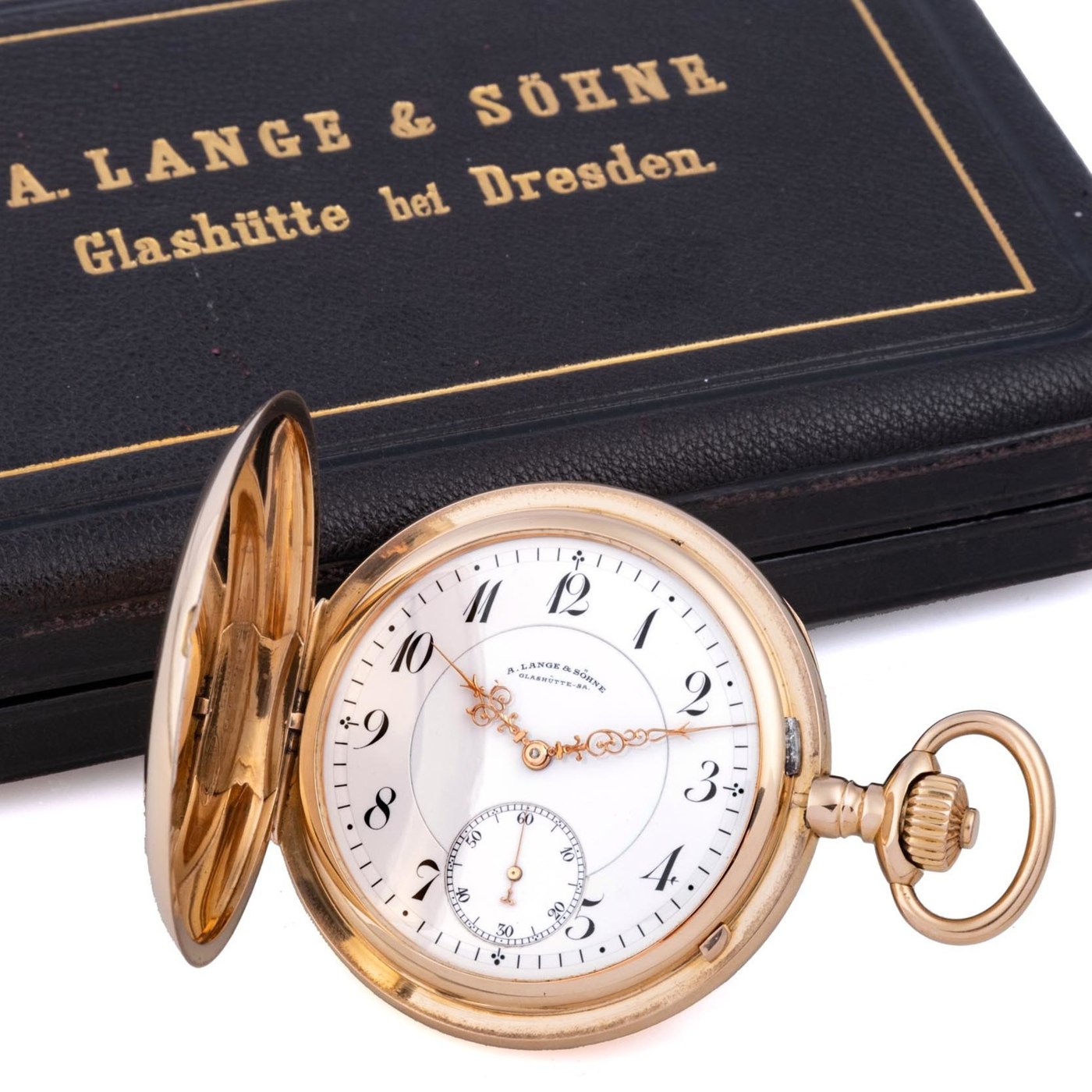
Pocket watch
A. Lange & Söhne Anchor Chronometer
“This large and heavy manual wind hunting case pocket watch, identified as an anchor chronometer by A. Lange & Söhne, dates to approximately 1890. It features a 55 mm 18k yellow …”
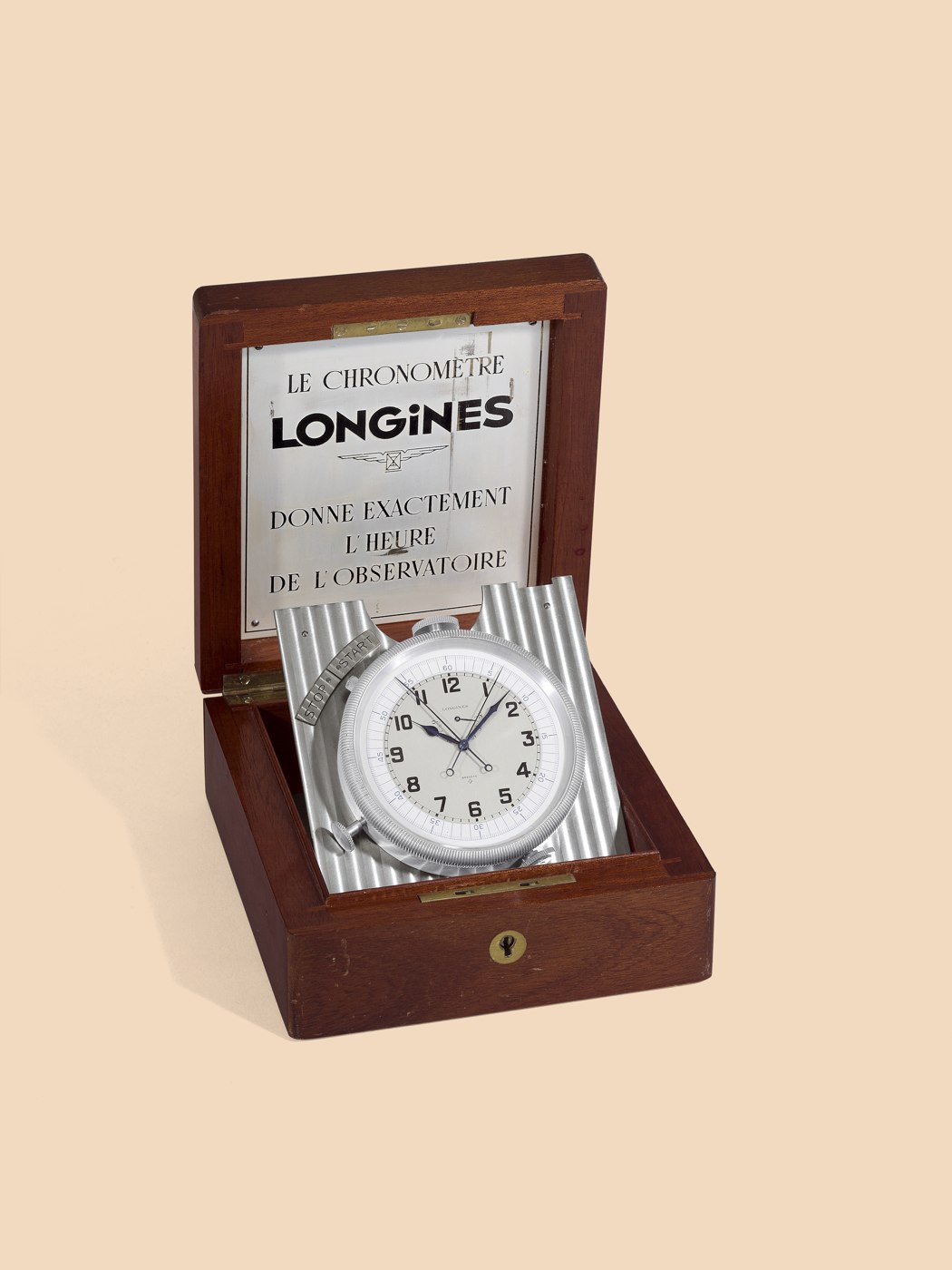
Marine chronometer
Longines L'Heure de l'Observatoire Deck Chronometer
“This Longines L'Heure de l'Observatoire is a deck chronometer dating to circa 1935. It features a split-seconds chronograph and a 36-hour power reserve indicator. The timepiece …”
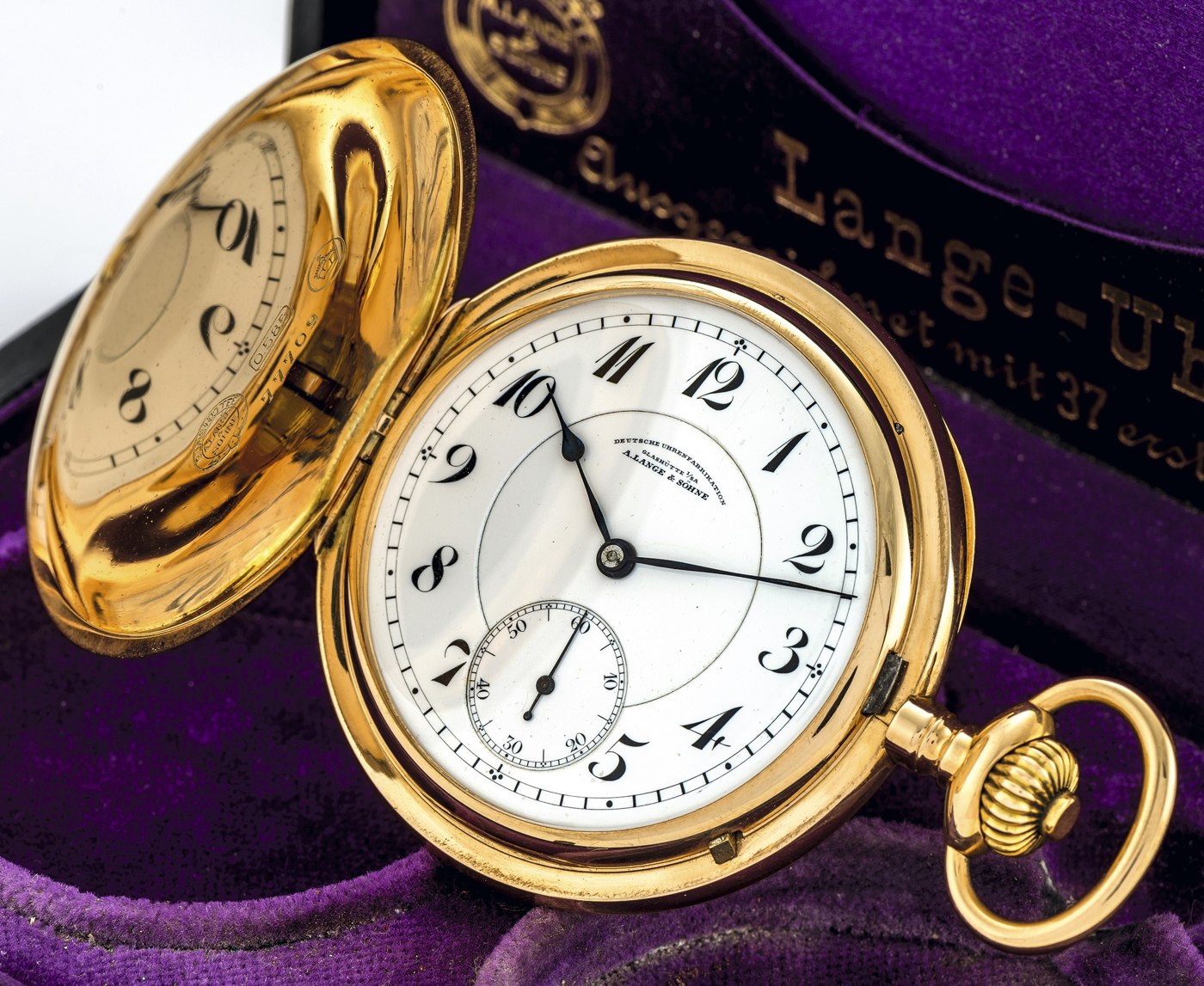
Pocket watch
A. Lange & Söhne 14K Pink Gold Hunting Cased Pocket Watch
“This 14K pink gold hunting cased pocket watch, serial number 77709, was manufactured circa 1910 by the Glashütte firm A. Lange & Söhne. The watch features a four-body bassine ca…”
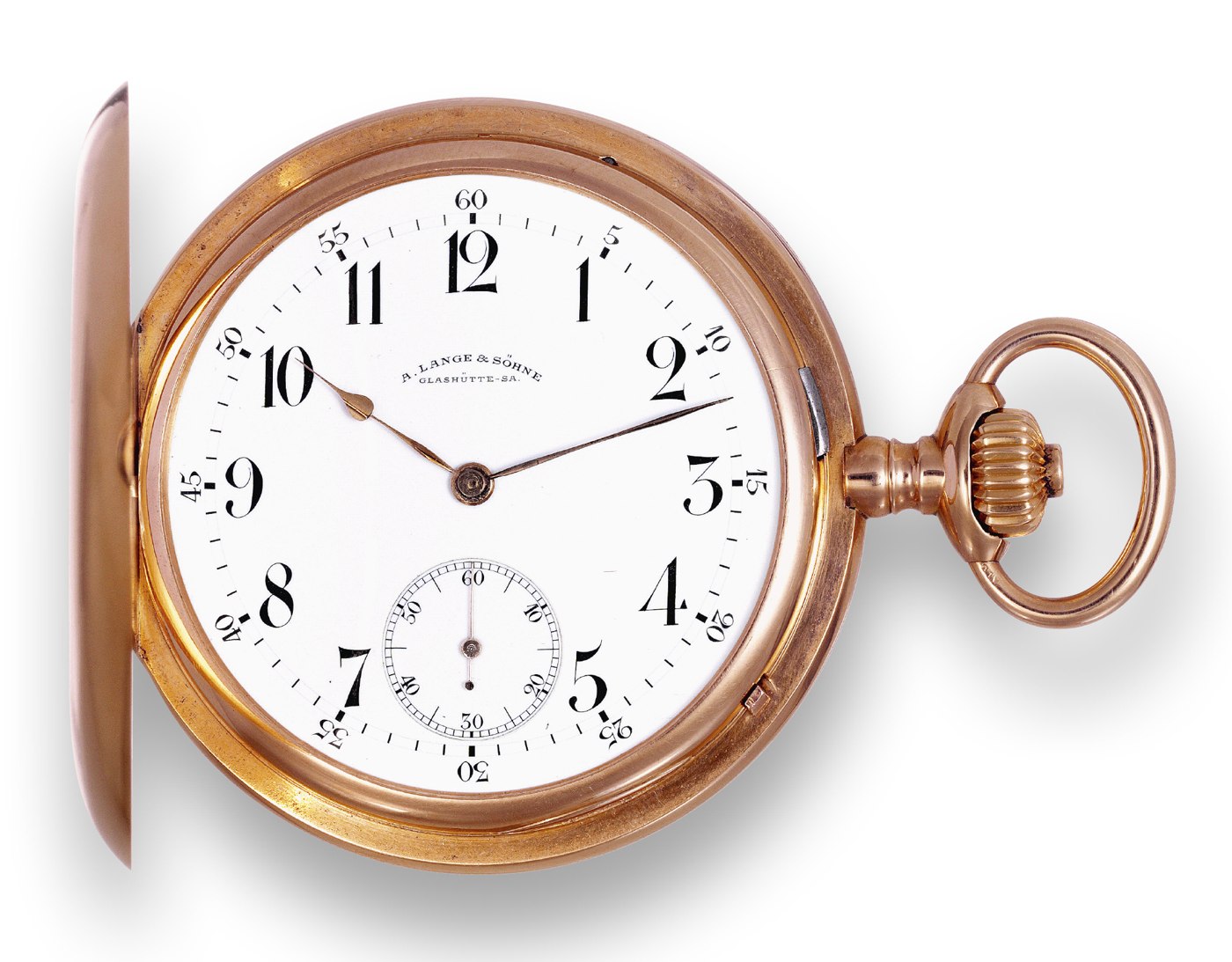
Pocket watch
A. Lange & Söhne 18K Pink Gold Hunting Cased Pocket Watch No. 63162
“This A. Lange & Söhne hunting cased pocket watch, numbered 63162, dates to circa 1910. The timepiece features a four-body 'Lucia' 18K pink gold case with a polished finish and a…”
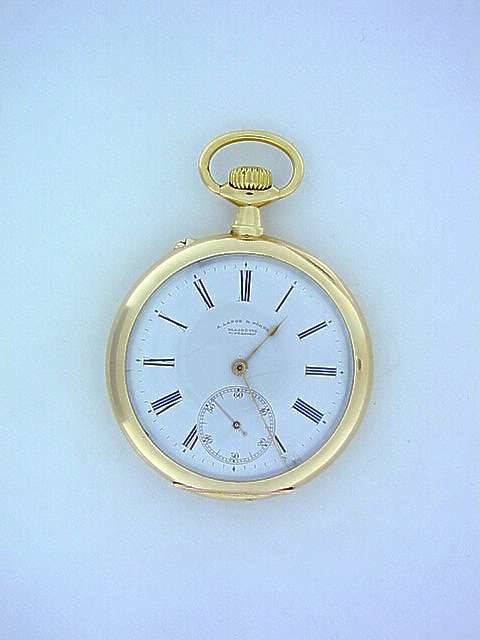
Pocket watch
A. Lange & Söhne 18K Gold Lever-Chronometer No. 58256
“This A. Lange & Söhne pocket watch, bearing movement and case number 58256, dates to circa 1906. It features a four-body 'demi-bassine' 18K gold case with an engine-turned finis…”