
Glossary · Mechanism
Endstone
An end bearing, often a cap jewel, that provides an axial contact surface for a pivot.
Explanation
An endstone provides a surface for the end of a pivot; a hole jewel supports the pivot around its sides. These functions are distinct even when both stones form one bearing assembly. Cap jewel is a common related name. The endstone need not be ruby in every historical object, and the presence of a diamond endstone does not by itself identify a maker or certify a high-performance movement.
Mounting and lubrication arrangements vary. Shock-protected balance bearings can include springs and movable settings, while earlier bearings may use fixed screwed or other settings. The visible cap does not reveal the condition of the concealed pivot tip or prove that the oil quantity is correct. A missing or damaged stone is a condition concern requiring assessment, but a photograph alone cannot establish that the pivot has already been destroyed.
Sources & references
- de Carle, D., Practical Watch Repairing — technical further reading; exact procedures require calibre documentation
- Reymondin et al., The Theory of Horology — construction and terminology further reading
Where sources disagree, the disagreement is stated rather than resolved silently.
What to record
- Separate hole-jewel support from end contact.
- Identify fixed or shock-protected mounting where documented.
- Record missing or chipped parts without assuming hidden damage.
Do not release a shock spring or remove a cap jewel to improve a photograph.
In the object catalogue
Catalogued objects whose own source record mentions “Endstone”. The quoted line shows where; it is the seller’s or museum’s wording, not independent verification.
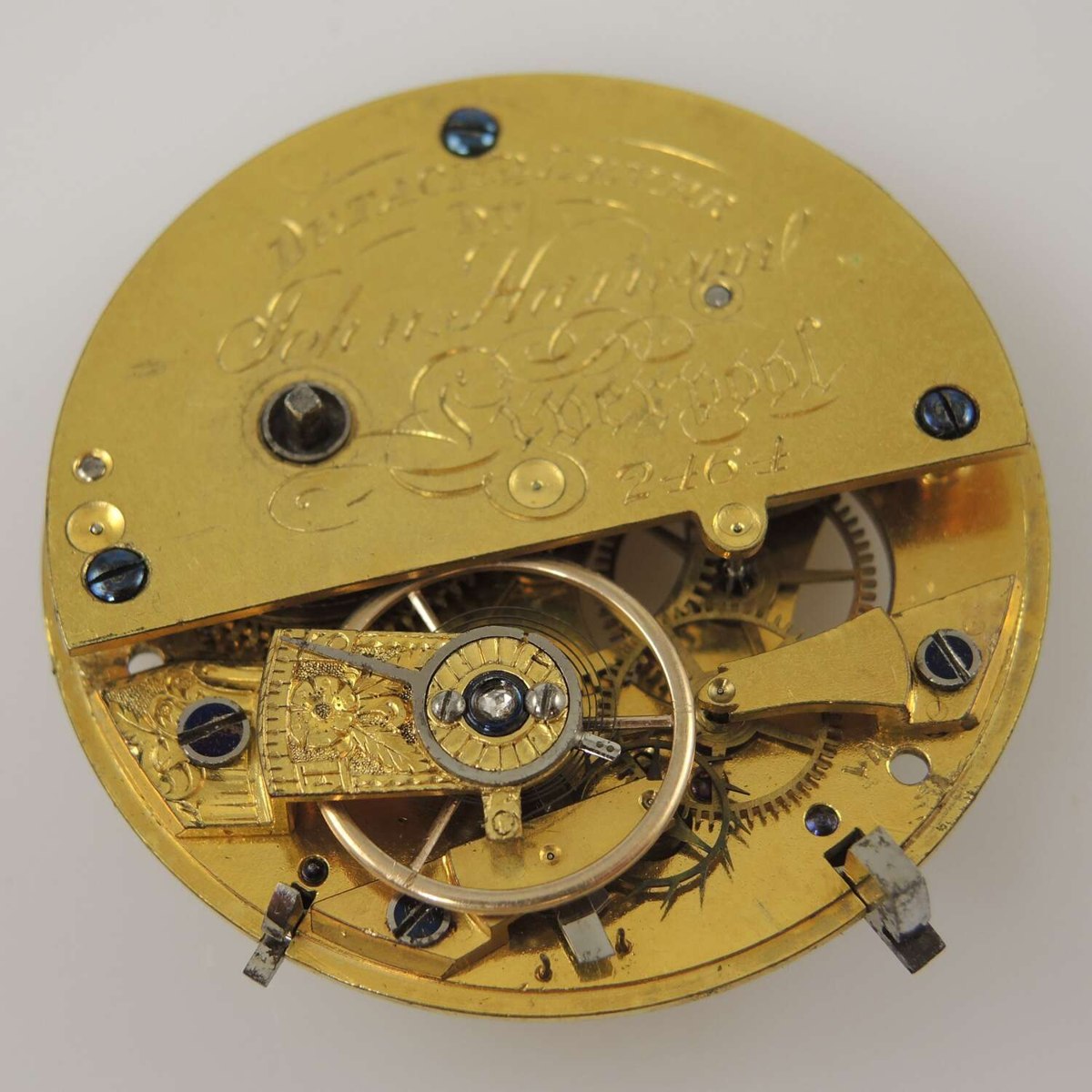
Movement
English fusee detached lever pocket watch movement by John Harrison, Liverpool
“Engraved gilt balance cock with regulator scale and jewel endstone setting”
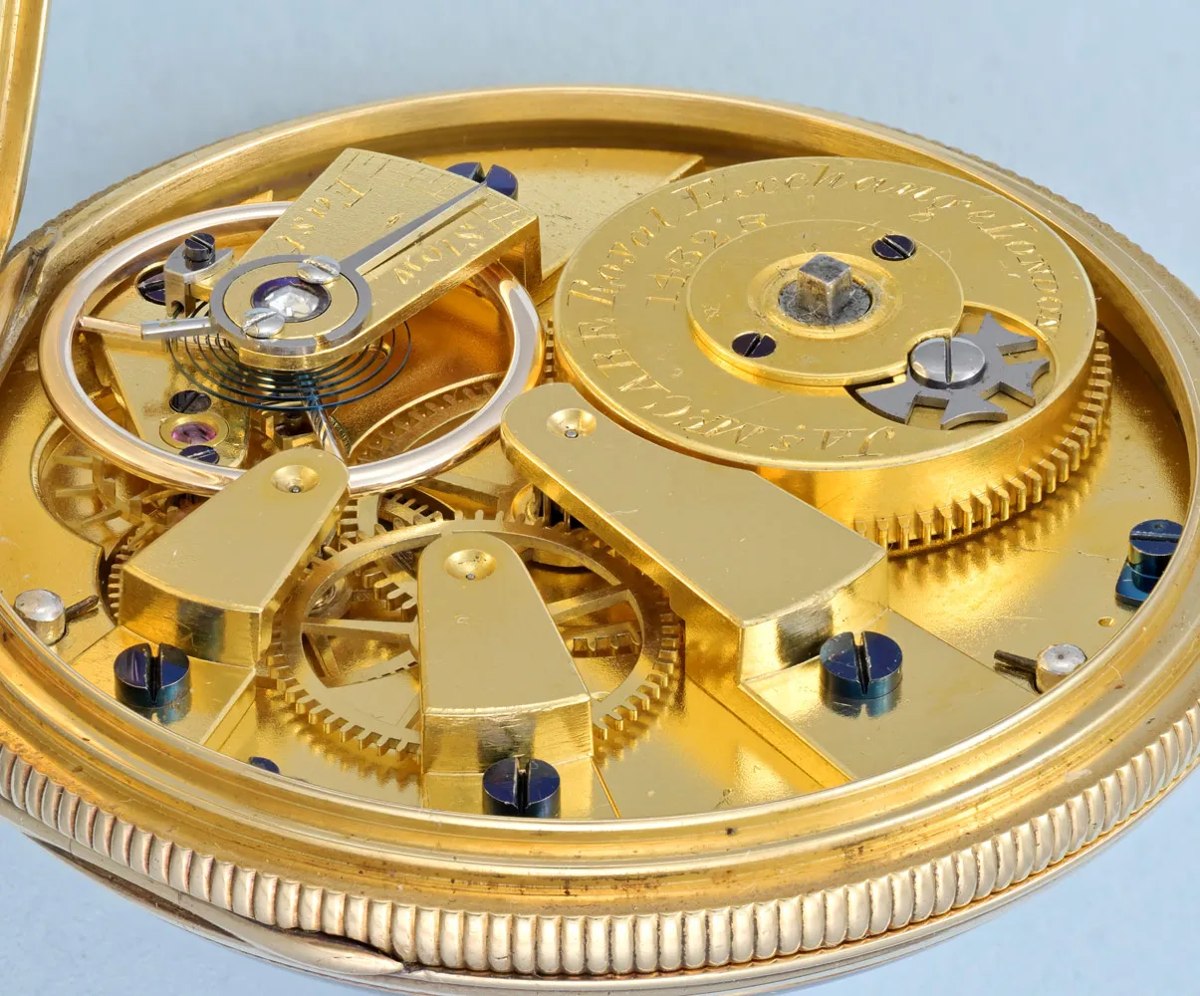
Pocket watch
James McCabe 1834 Gold Lepine Calibre Duplex Pocket Watch
“This nineteenth-century open face pocket watch features a keywind gilt Lepine calibre bar movement with a duplex escapement, crafted by James McCabe of Royal Exchange, London, a…”
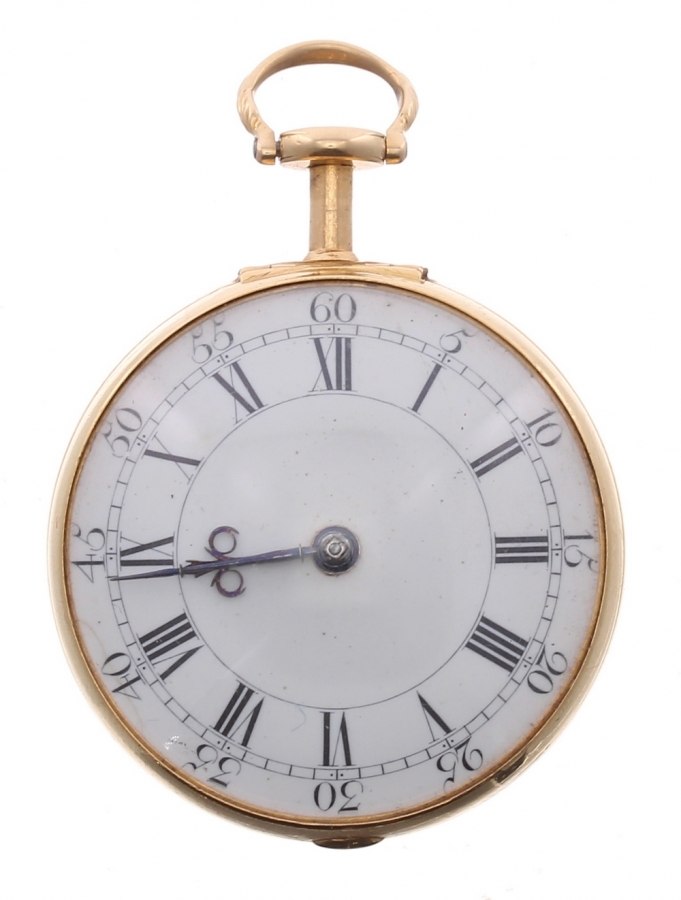
Pocket watch
Justin Vulliamy Gold Pair Cased Pocket Watch
“This 18th-century gold pair-cased pocket watch is reported by the auctioneer to date from London, 1778. The watch features a fusee cylinder movement signed 'Justin Vulliamy, Lon…”
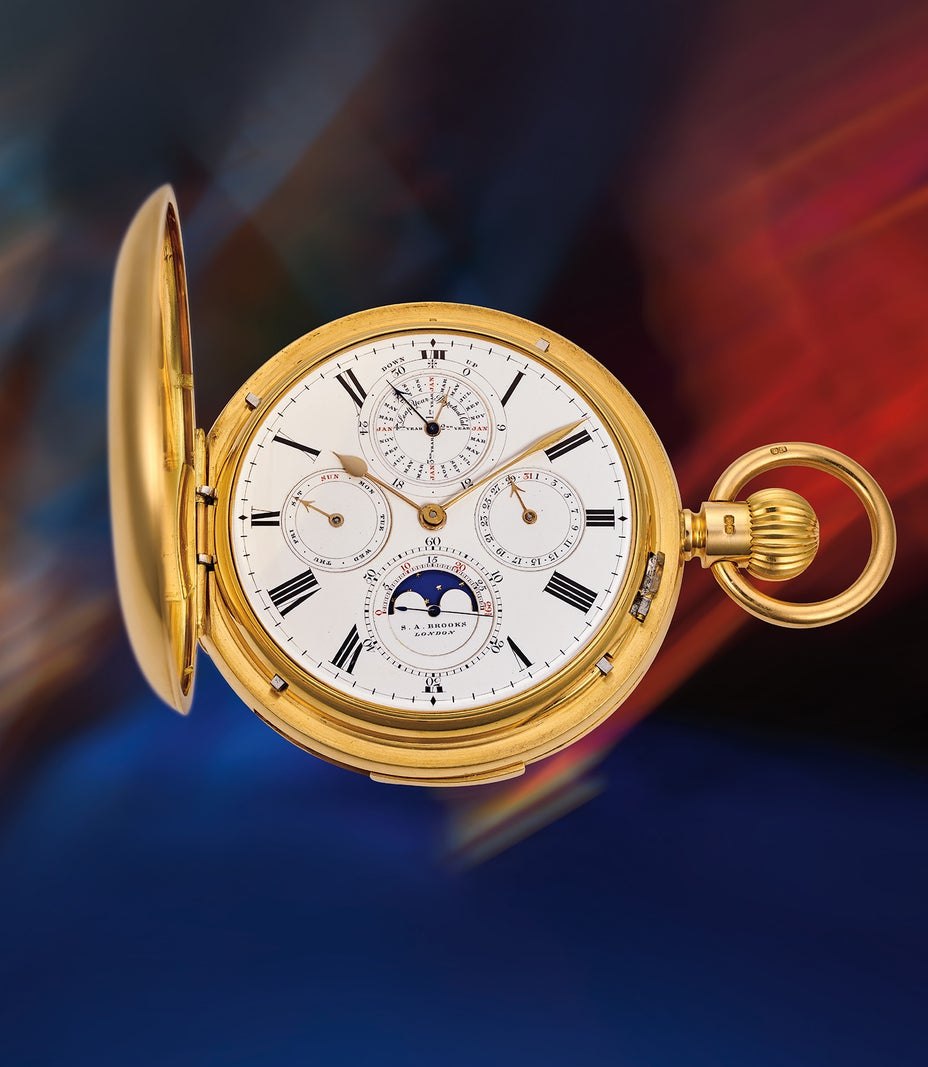
Pocket watch
Usher & Cole Minute Repeating Perpetual Calendar Pocket Watch
“According to the auction cataloguing, this 1887 hunter-cased pocket watch features a minute repeater, perpetual calendar, leap year indication, power reserve, and moon phases. T…”
Pocket watch
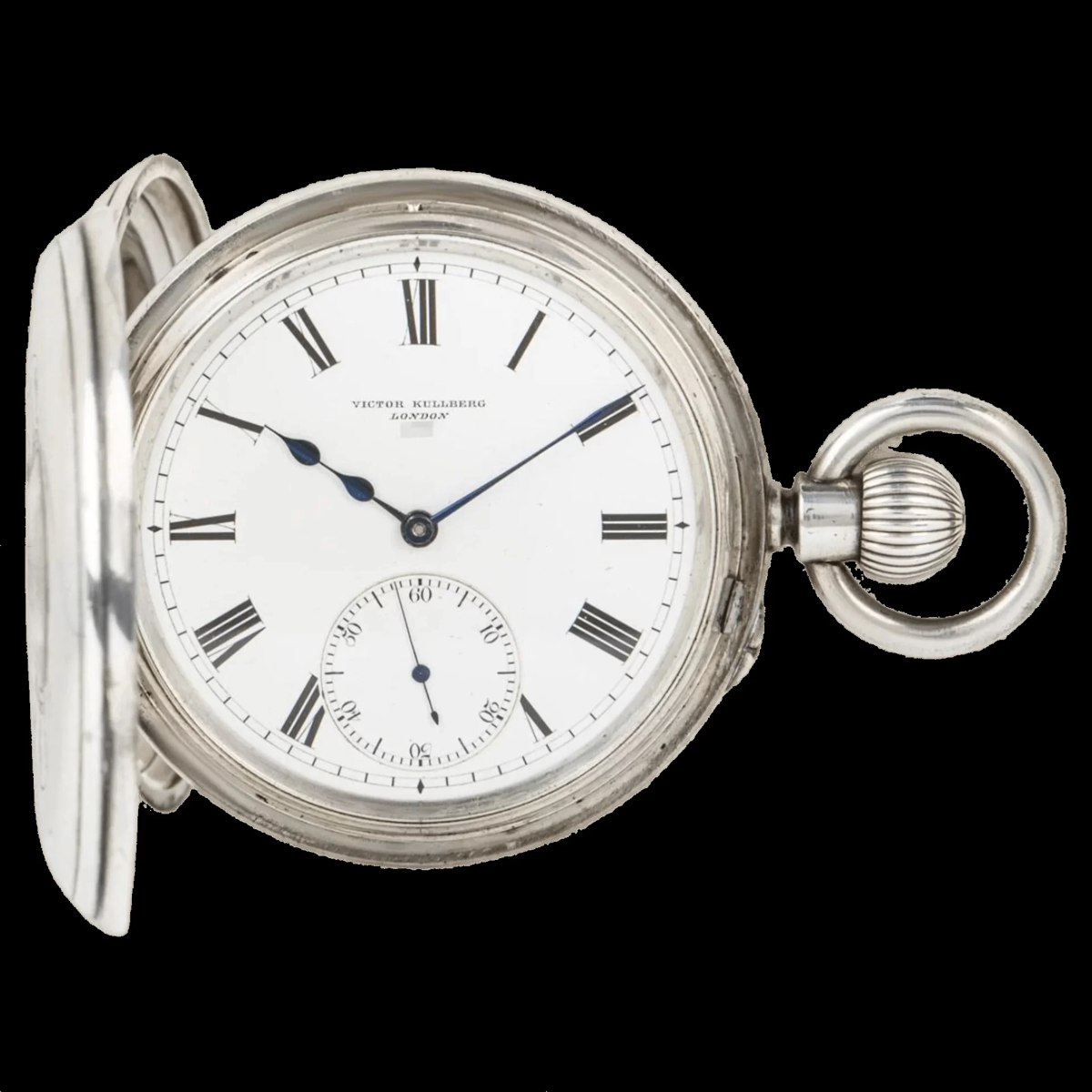
Victor Kullberg Silver Half Hunter Keyless Lever Pocket Watch
“This English silver half hunter pocket watch is attributed by the source to Victor Kullberg of London, dating to circa the 1890s. With a silver case measuring 52 mm in diameter,…”
Pocket watch
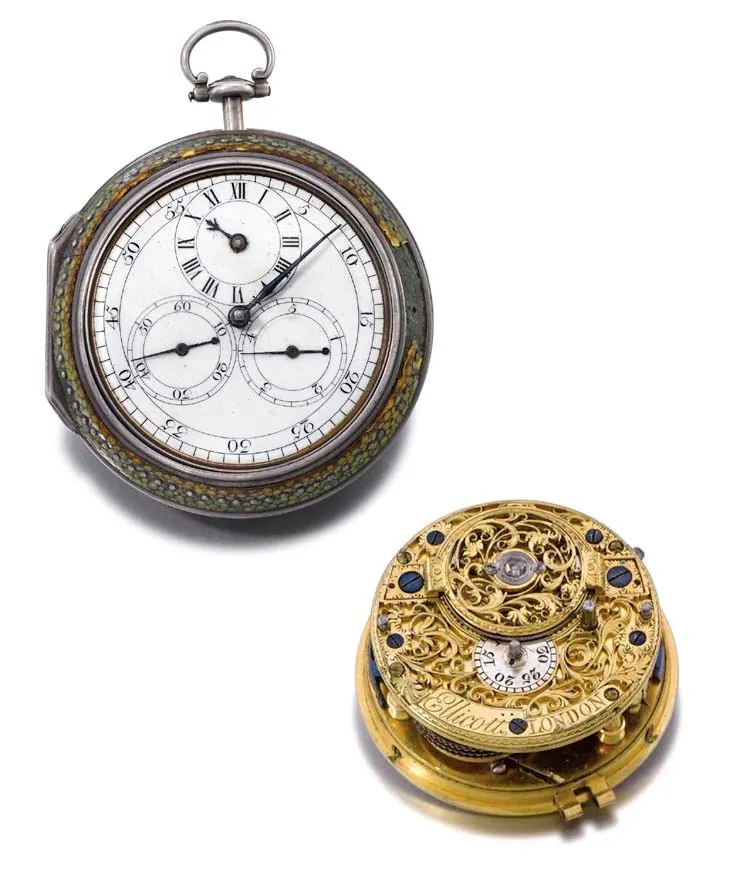
Ellicott openface cylinder pocket watch with regulator dial
“This antique silver openface pocket watch is signed by Ellicott, London, numbered 6615, and dates to circa 1770. It is powered by a gilt-finished chain fusée cylinder movement f…”