
Component record · Power
Reduction Wheel
Partially verifiedA wheel and pinion in the automatic winding train that slow the rotor's motion down and increase its torque before it reaches the ratchet wheel.
What it does
Converts the fast, light swings of the rotor into the slow, forceful rotation needed to wind the mainspring, so that many rotor turns produce a small turn of the barrel arbor.
How it works
The rotor turns easily but with little force. After the reversers have rectified its motion into one direction, a chain of one or more reduction wheels (each a large wheel driven by a small pinion) trades speed for torque, exactly as a clock's train does in reverse.
The final wheel of the reduction train meshes with the ratchet wheel on the barrel arbor. Because the slipping bridle of the mainspring protects against over-winding, the reduction train can keep running when the spring is fully wound; the spring simply slips in the barrel.
The overall ratio is chosen by the designer to balance winding speed against the force available from the rotor, so reduction wheels are calibre-specific and not interchangeable between movements.
Evolution
Early automatics used few reductions with heavy weights; later designs refined the ratios and the bearings so that lighter or smaller rotors could wind efficiently.
Known variations
- Single reduction wheel driven directly by the reversers
- Two-stage reduction trains on the automatic bridge
- Integrated reduction gearing in modular automatic units that lift off as one assembly
Identification for collectors
- Usually a pair of wheels visible beneath the rotor between the rotor pinion and the ratchet wheel
- In modular calibres they remain on the automatic bridge when it is lifted off
Common failure modes
- Worn or broken pinion leaves after heavy use
- Dirty pivots reducing winding efficiency
- Teeth damaged by a mainspring breaking under load
Photographs
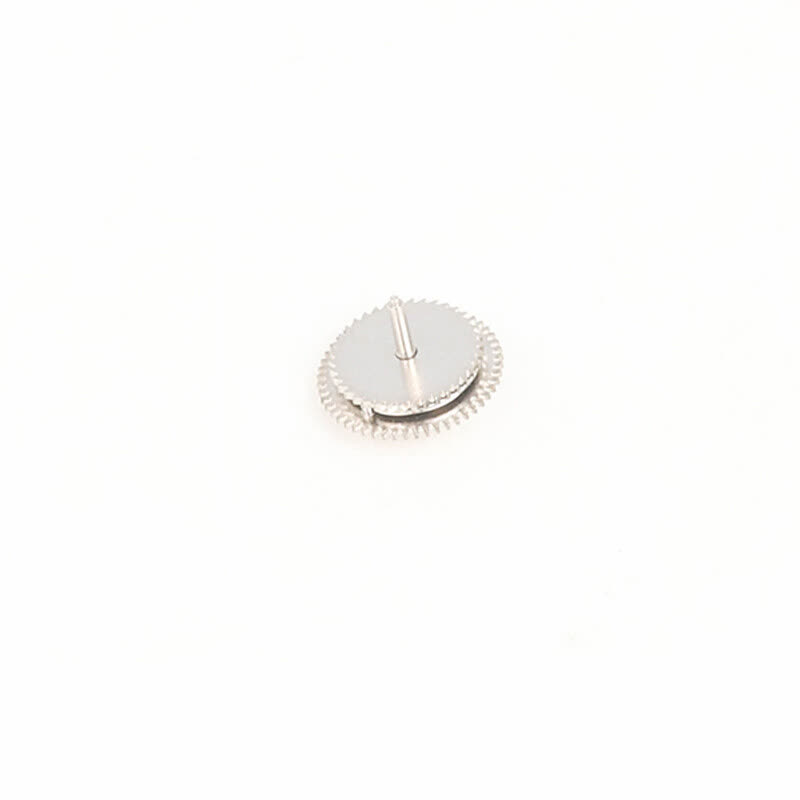
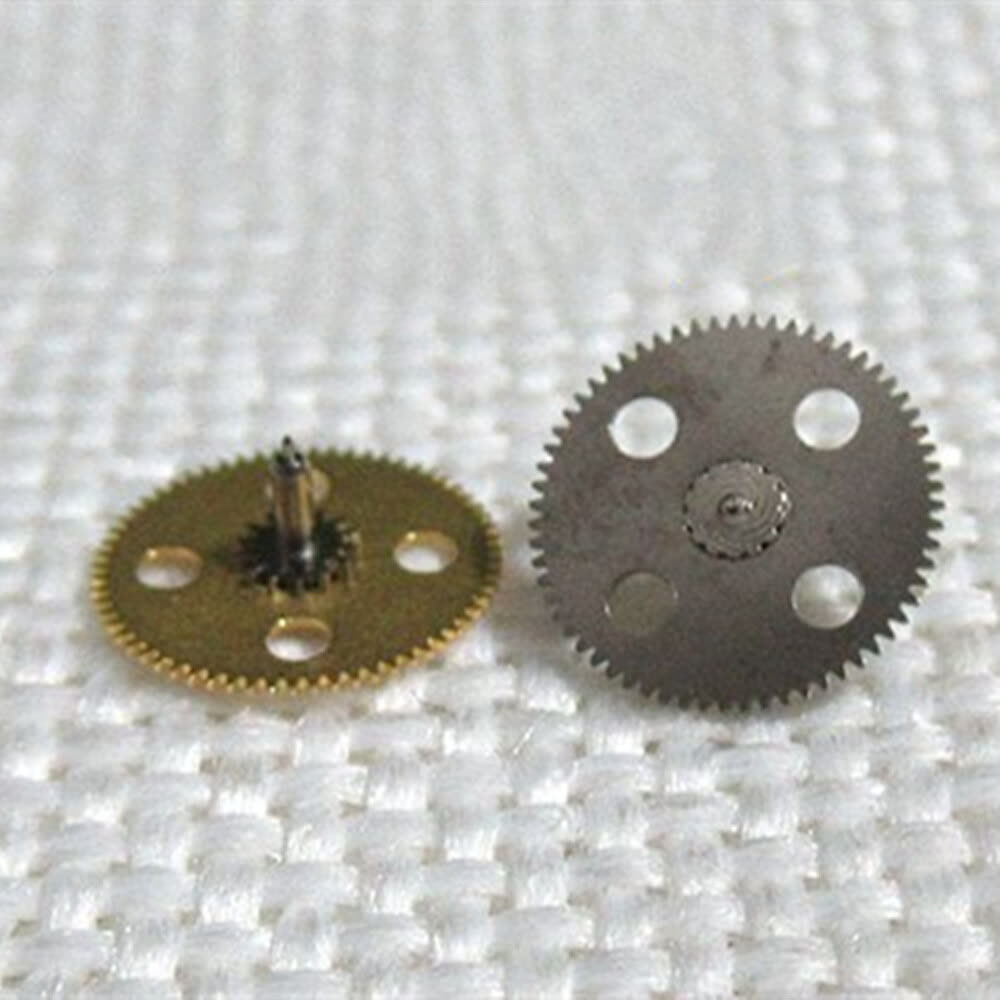
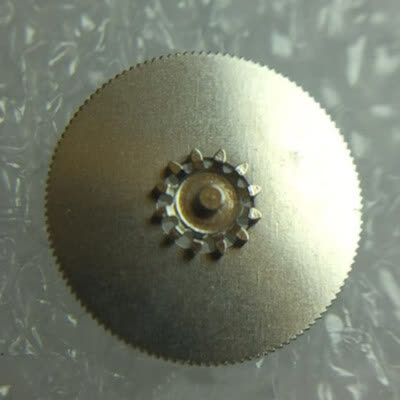
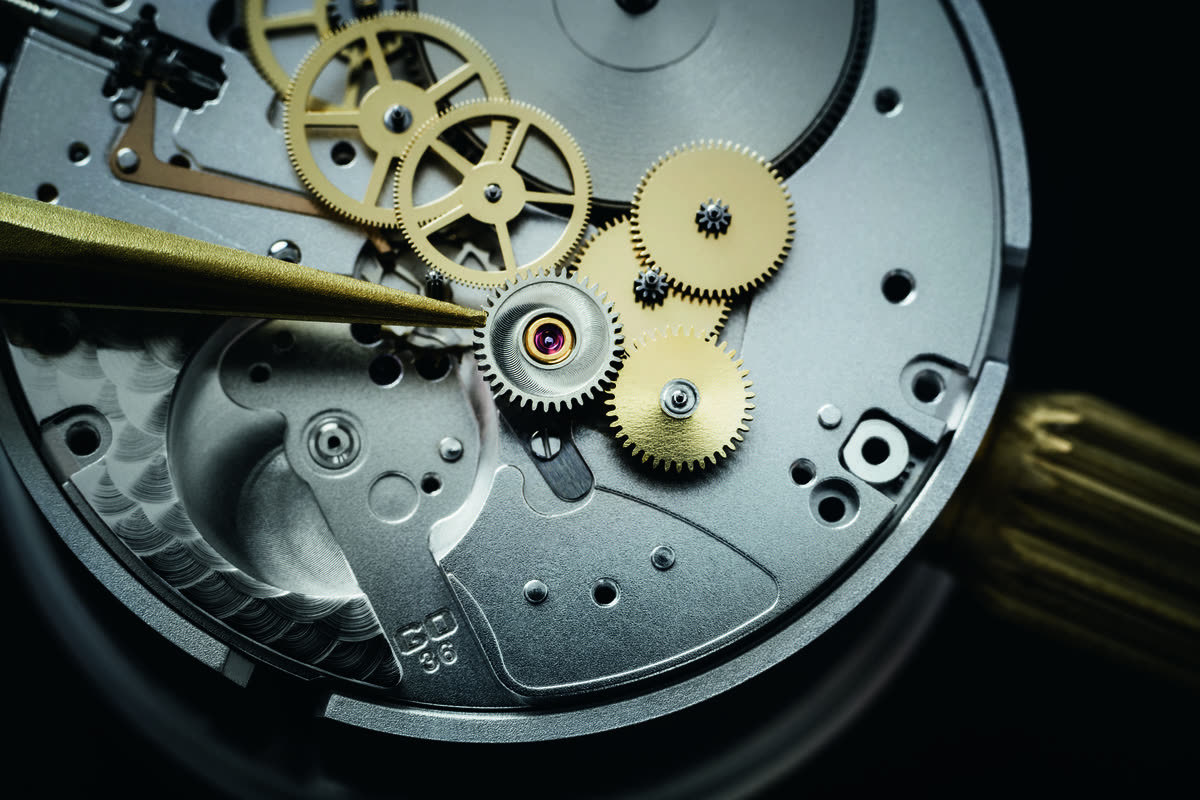
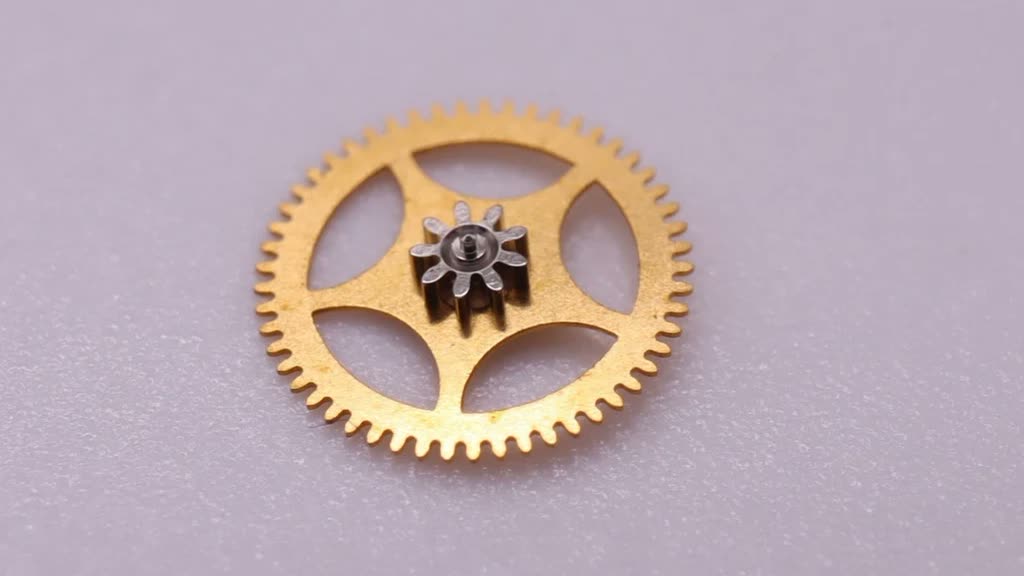
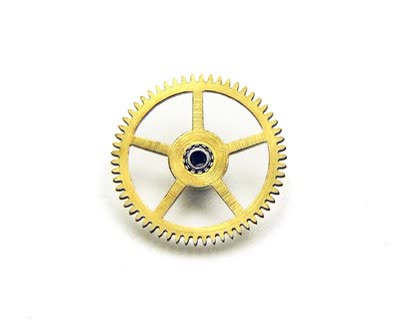
Photographs are illustrative examples of the type, not necessarily the exact object described. Verify details against the source file page.
Sources & references
- de Carle, D., Practical Watch Repairing
- de Carle, D., Watch and Clock Encyclopedia
- Fried, H. B., The Watch Repairer's Manual
- Daniels, G., Watchmaking
Where sources disagree, the disagreement is stated rather than resolved silently.