
Component record · Escapement
Pallet Cock (Pallet Bridge)
Partially verifiedThe small cock or bridge that carries the upper pivot of the pallet arbor in a lever escapement.
What it does
Holds the pallet fork at the correct height and depth relative to the escape wheel and the balance roller, with a jewelled bearing for its upper pivot.
How it works
The pallet fork works between the escape wheel and the balance roller, so its position is critical: small errors change the depth of locking on the pallet stones and the engagement of the fork horn with the impulse jewel.
The cock is located by steady pins and held by a screw. Its jewel takes the upper pivot of the pallet arbor, while the lower pivot runs in a jewel in the main plate. Some calibres combine pallet and escape-wheel pivots under one 'escapement bridge'.
The pallet cock is normally the last part fitted before the balance, and the escapement is checked for freedom and end-shake once it is in place.
Evolution
As lever watches were standardised, the pallet cock became a small separate part in most bridge calibres, while some designs integrated it into a larger escapement bridge.
Known variations
- Separate pallet cock
- Combined escapement bridge for pallet and escape wheel
- Pallet bearing in the train bridge in some layouts
Identification for collectors
- A small bridge with one jewel, sitting directly over the pallet fork and close to the balance
Common failure modes
- Overtightened screw tilting the cock and binding the pallets
- Cracked or chipped jewel
- Bent steady pins altering escapement depth
Photographs
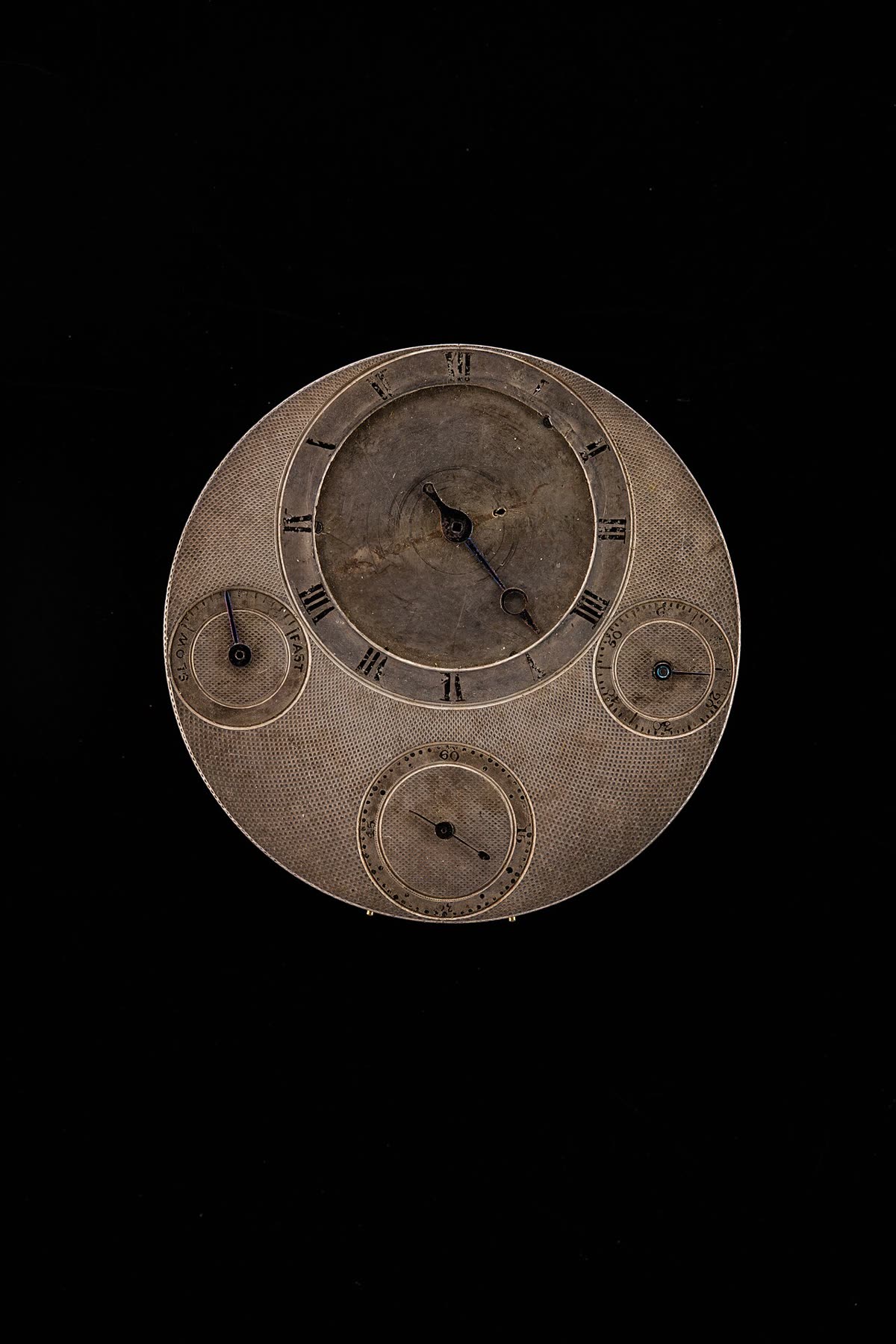
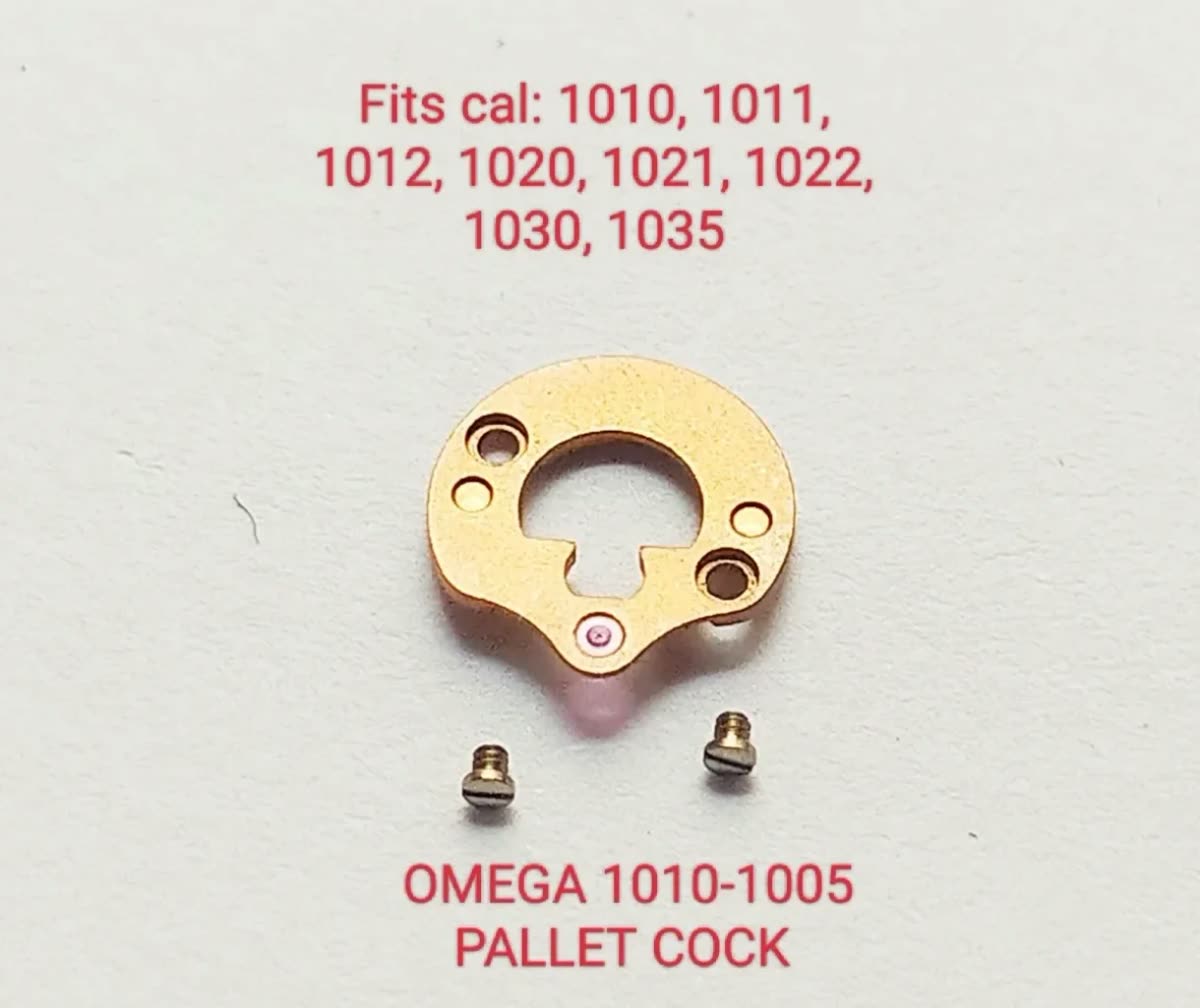
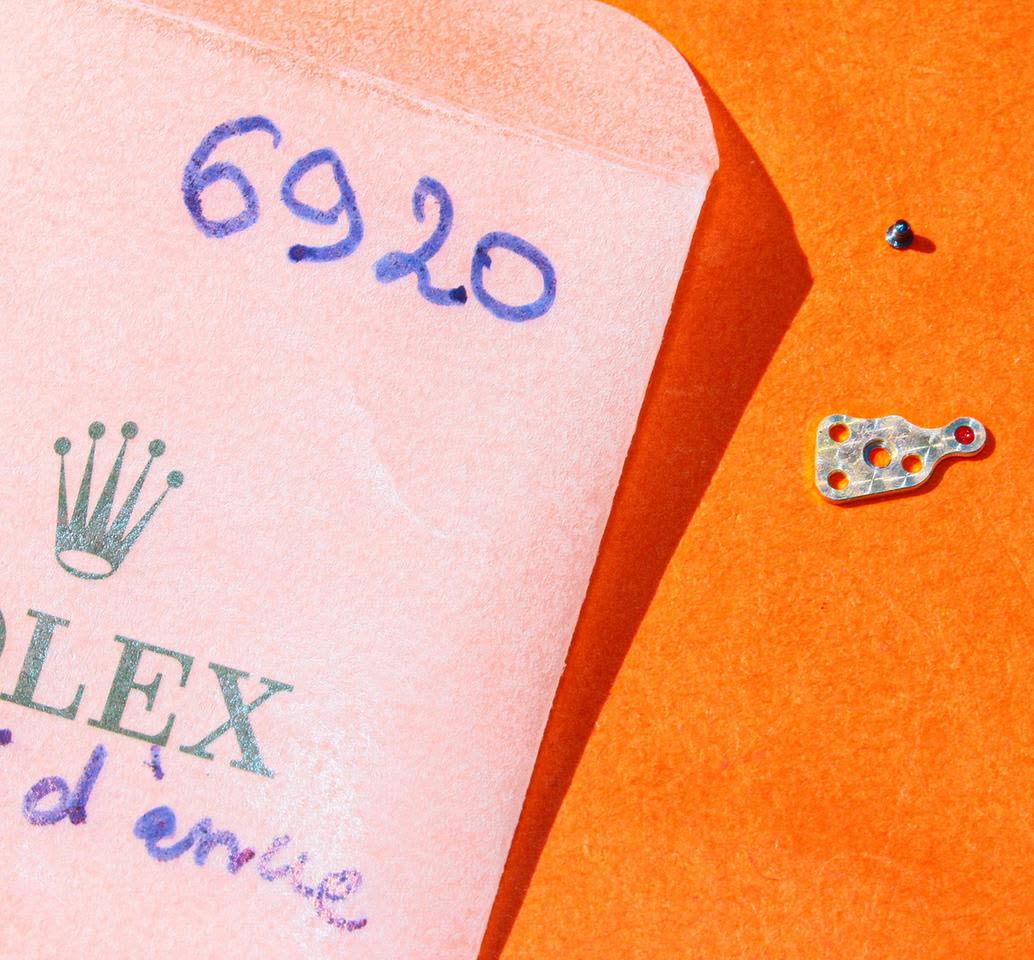
Photographs are illustrative examples of the type, not necessarily the exact object described. Verify details against the source file page.
Sources & references
- de Carle, D., Practical Watch Repairing
- de Carle, D., Watch and Clock Encyclopedia
- Fried, H. B., The Watch Repairer's Manual
- Daniels, G., Watchmaking
Where sources disagree, the disagreement is stated rather than resolved silently.