
Component record · Escapement
Pallet Arbor (Pallet Staff)
Partially verifiedThe fine steel arbor on which the pallet fork is mounted, pivoting in jewels between the main plate and the pallet cock.
What it does
Provides the axis about which the pallets rock as they lock and release the escape wheel and pass impulse to the balance.
How it works
The arbor is a press fit in the pallet body. Its pivots run in jewels top and bottom, and the fork swings through only a small angle, so the pivots are lightly loaded but must be free, polished and correctly lubricated.
Any bend in the arbor or play in the pivots alters the depth of locking and the safety action of the guard pin, so the fork must swing freely without shake between the bankings.
Replacing a pallet arbor means removing and refitting it in the fork without disturbing the stones; on most production watches the complete pallet fork is replaced instead.
Evolution
Pallet arbors became standardised parts as lever escapements were mass-produced; in modern calibres the pallet fork, stones and arbor are supplied as one assembly.
Known variations
- Plain arbor with jewelled pivots
- Arbor running in plain holes in pin-lever watches
Identification for collectors
- A fine steel arbor through the fork, visible when the pallet cock is removed
Common failure modes
- Bent or broken pivots, often from a shock
- Worn pivots in unjewelled movements
- Arbor loose in the fork
Photographs
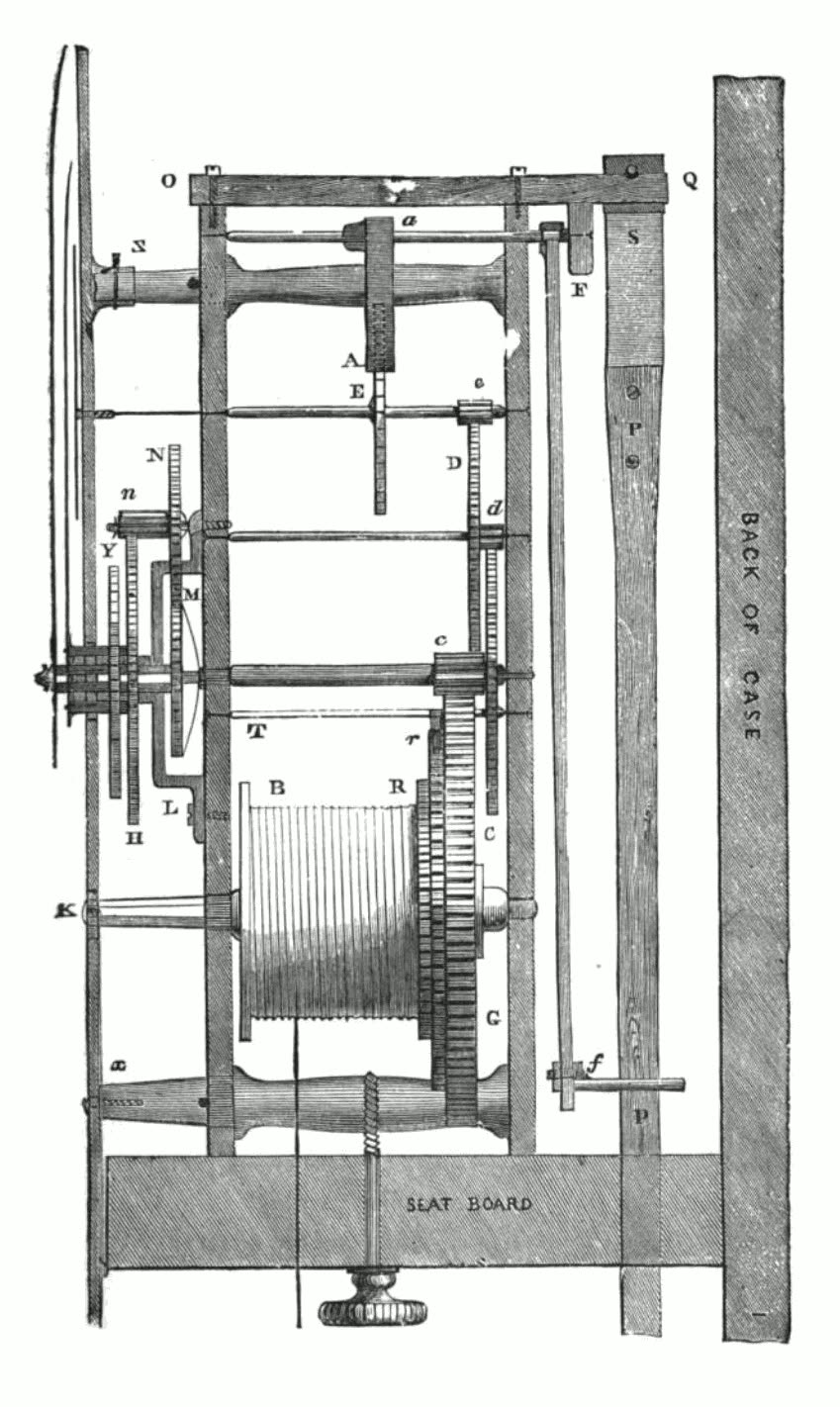

Photographs are illustrative examples of the type, not necessarily the exact object described. Verify details against the source file page.
Sources & references
- de Carle, D., Practical Watch Repairing
- de Carle, D., Watch and Clock Encyclopedia
- Fried, H. B., The Watch Repairer's Manual
- Daniels, G., Watchmaking
Where sources disagree, the disagreement is stated rather than resolved silently.