
Component record · Train
Fly (Fly Fan)
Partially verifiedAn air brake on the last, fastest arbor of a clock's striking or chiming train: a pair of thin vanes that spin as the train runs.
What it does
Regulates the speed of striking or chiming by air resistance, so that the blows follow at an even, measured pace.
How it works
As the striking train runs, the fly spins rapidly. The air resistance of its vanes rises with speed, limiting how fast the train can run.
The fly is usually held to its arbor by a light friction spring rather than fixed. When the train is stopped abruptly at the end of striking, the fly can continue to turn for a moment, preventing a shock that could bend pivots or teeth.
Wider or more steeply set vanes slow the strike; narrower vanes speed it up, which is how striking speed is adjusted.
Evolution
The simple air brake proved so effective that it has remained standard in striking and chiming clocks; watches use governors instead.
Known variations
- Fixed-vane flies
- Adjustable-vane flies
- Flies with friction springs to absorb stopping shock
Identification for collectors
- Two flat vanes on a fast arbor at the end of the strike train
Common failure modes
- Fly fixed tight on its arbor, risking bent pivots
- Fly too loose, giving a fast strike
- Bent vanes touching the plates
Photographs
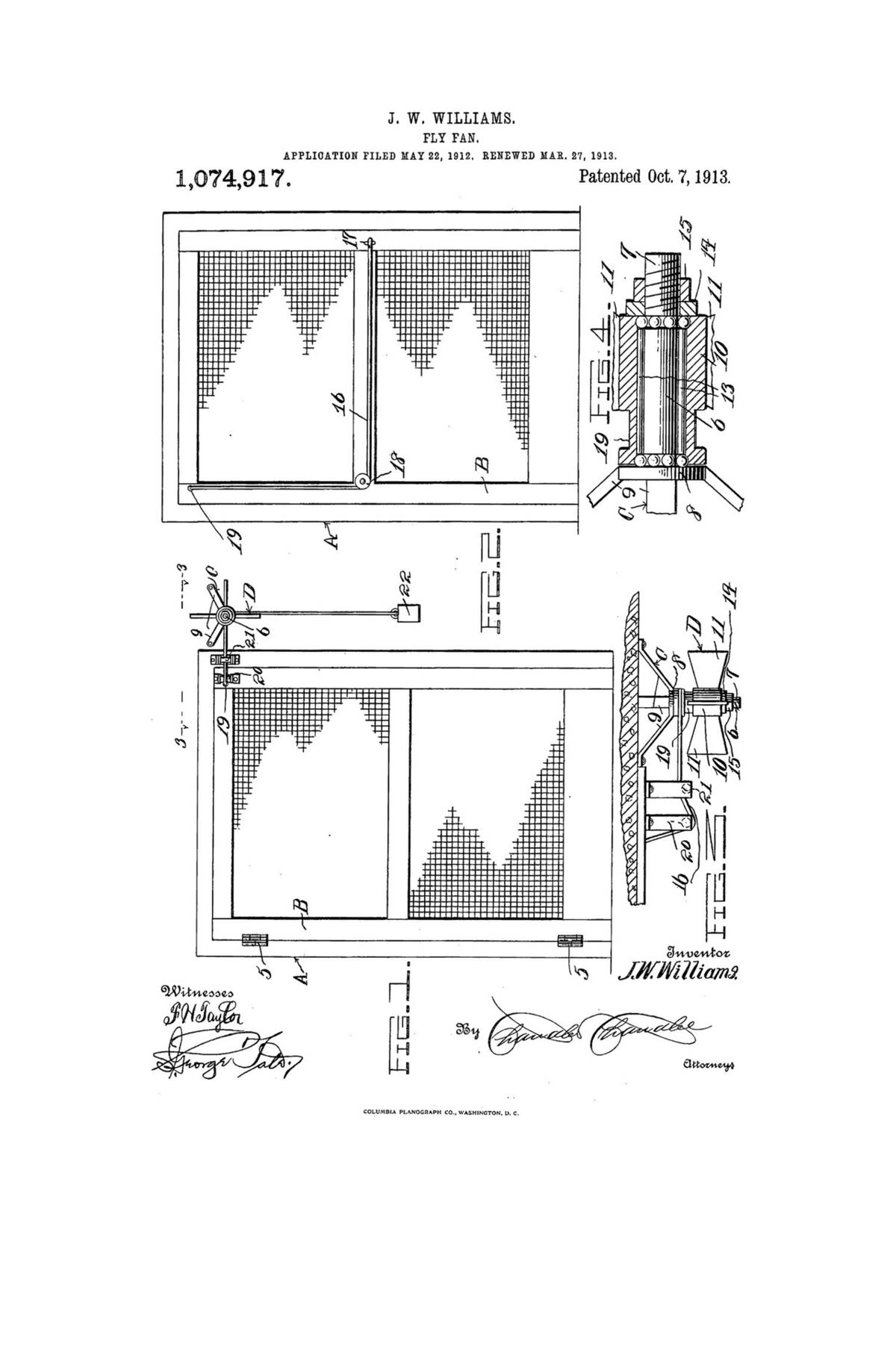
Photographs are illustrative examples of the type, not necessarily the exact object described. Verify details against the source file page.
Sources & references
- Britten, F. J., Watch and Clockmakers' Handbook, Dictionary and Guide
- de Carle, D., Practical Clock Repairing
Where sources disagree, the disagreement is stated rather than resolved silently.