
Source catalogue · individual objects
Object Catalogue
Individual objects described by auction houses, specialist dealers and collection catalogues. Attribution, dates and specifications remain source-reported unless independently established; rights clearance is pending.
Browse makers and their key pieces · Thomas Earnshaw profile
6 of 5699 objects · Page 1 of 1
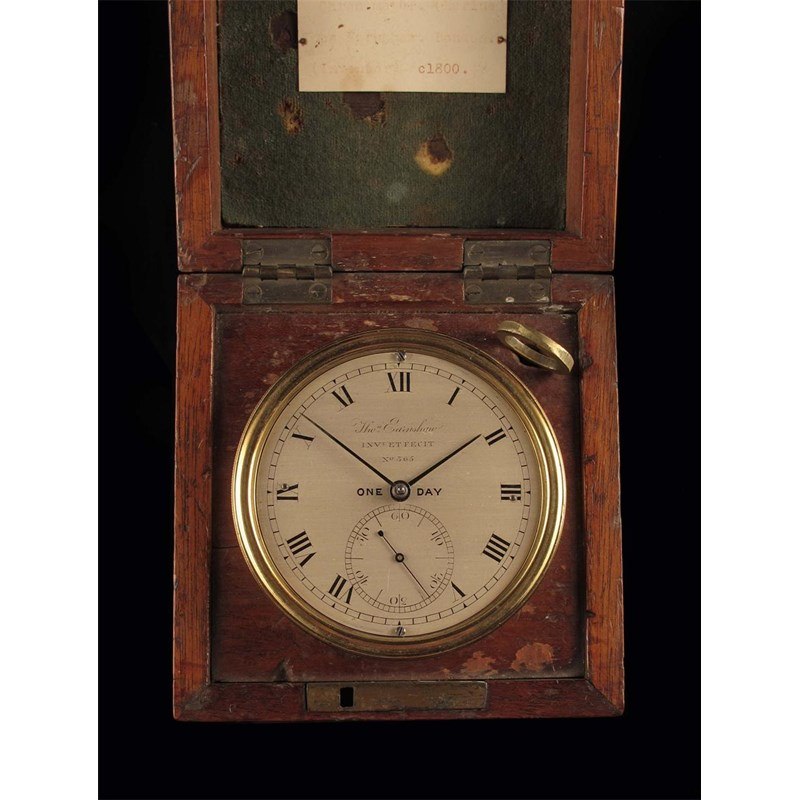
Marine chronometer · One-day marine chronometer
Thomas Earnshaw No. 365/2536 One-Day Marine Chronometer
This one-day marine chronometer by Thomas Earnshaw features a 3-inch silvered dial with Roman numerals, subsidiary seconds, plain blued steel hands, and signatures reading 'Thos. Earnshaw, INVT ET FECIT, No 365, ONE DAY'. The four-pillar movement is signed 'Thos. Earnshaw, Invt et fecit, No 365, London 2536' and incorporates an Earnshaw-type spring detent escapement, a bimetallic Z-balance with brass weights, and a helical spring. Housed in a brass bowl with a skirt counterweight, it is presented in an associated mahogany box.
Full description
www.woolleyandwallis.co.uk · 760
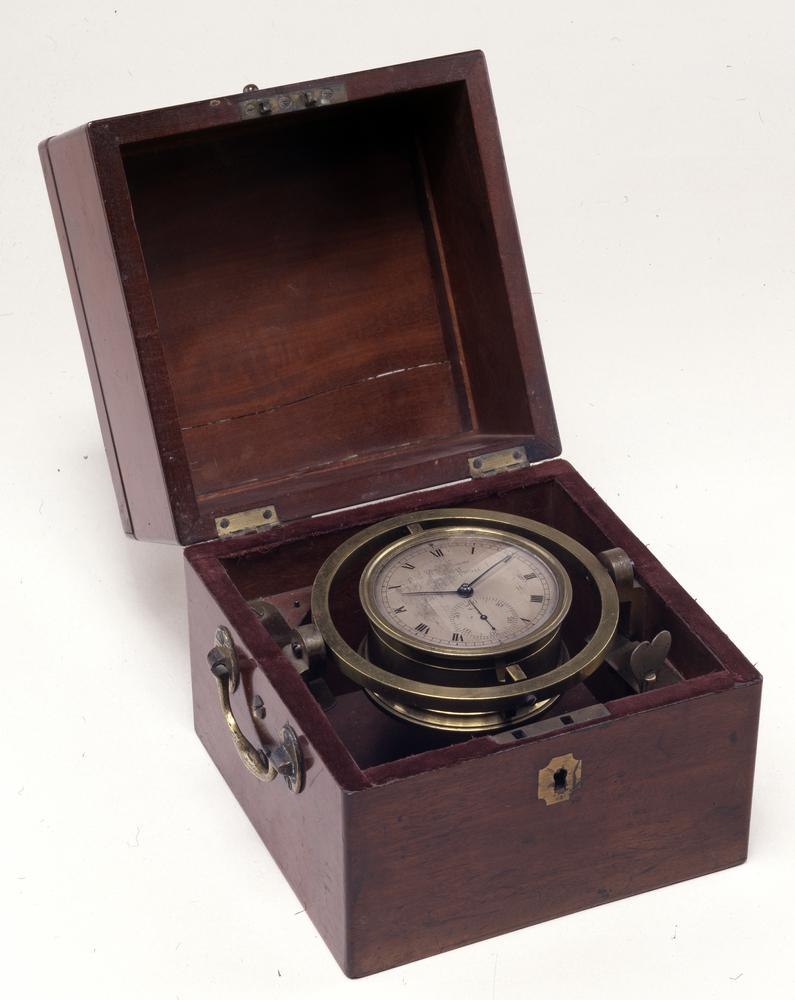
Marine chronometer · One-day marine chronometer
Thomas Earnshaw Marine Chronometer No. 245
This one-day marine chronometer by Thomas Earnshaw, dated by the British Museum to between 1790 and 1800 (and circa 1795 in catalogue comments), is built with an Earnshaw spring detent escapement. The movement is cased in a brass canister with a solid gimbal ring, set within a later mahogany outer box edged with red velvet. Its silvered dial plate is directly engraved and filled with black wax, featuring Roman numerals, blued steel hands, and a subsidiary seconds dial. Research cited in the museum record identifies its use by Captain Henry Meriton aboard the HEICS Exeter during early 19th-century voyages to China.
Full description
www.britishmuseum.org
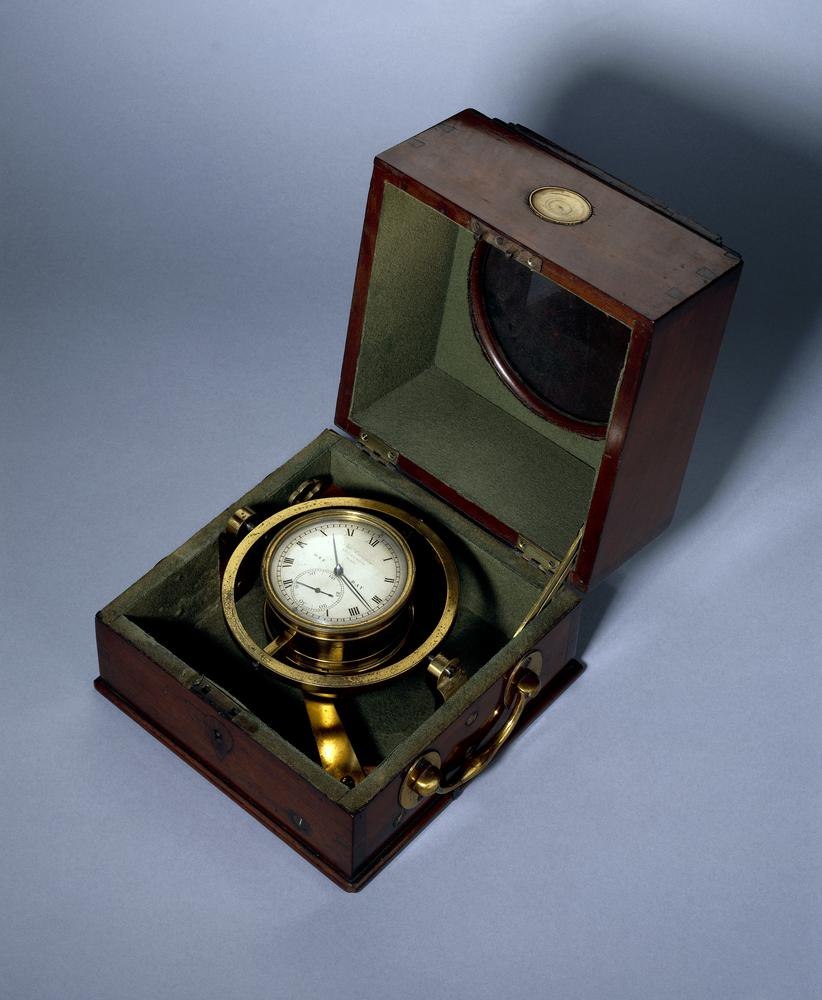
Marine chronometer · One-day marine chronometer
Thomas Earnshaw marine chronometer no. 509
This one-day marine chronometer was made around 1795 to 1805 by Thomas Earnshaw in London. Housed in a brass bowl mounted within a brass gimbal system, it sits inside a rectangular mahogany box lined with green baize. The movement features Earnshaw's spring-detent escapement, a split-bimetallic balance, a helical blued-steel balance spring, fusee, and maintaining power. The silvered brass dial displays Roman hour numerals, an outer minute ring, and a subsidiary seconds track above the VI numeral, bearing the signature 'Thos Earnshaw INVT ET FECIT NO 509 ONE DAY'. Historically, it saw service across several Royal Navy vessels, notably including HMS Beagle under Captain Robert FitzRoy.
Full description
www.britishmuseum.org
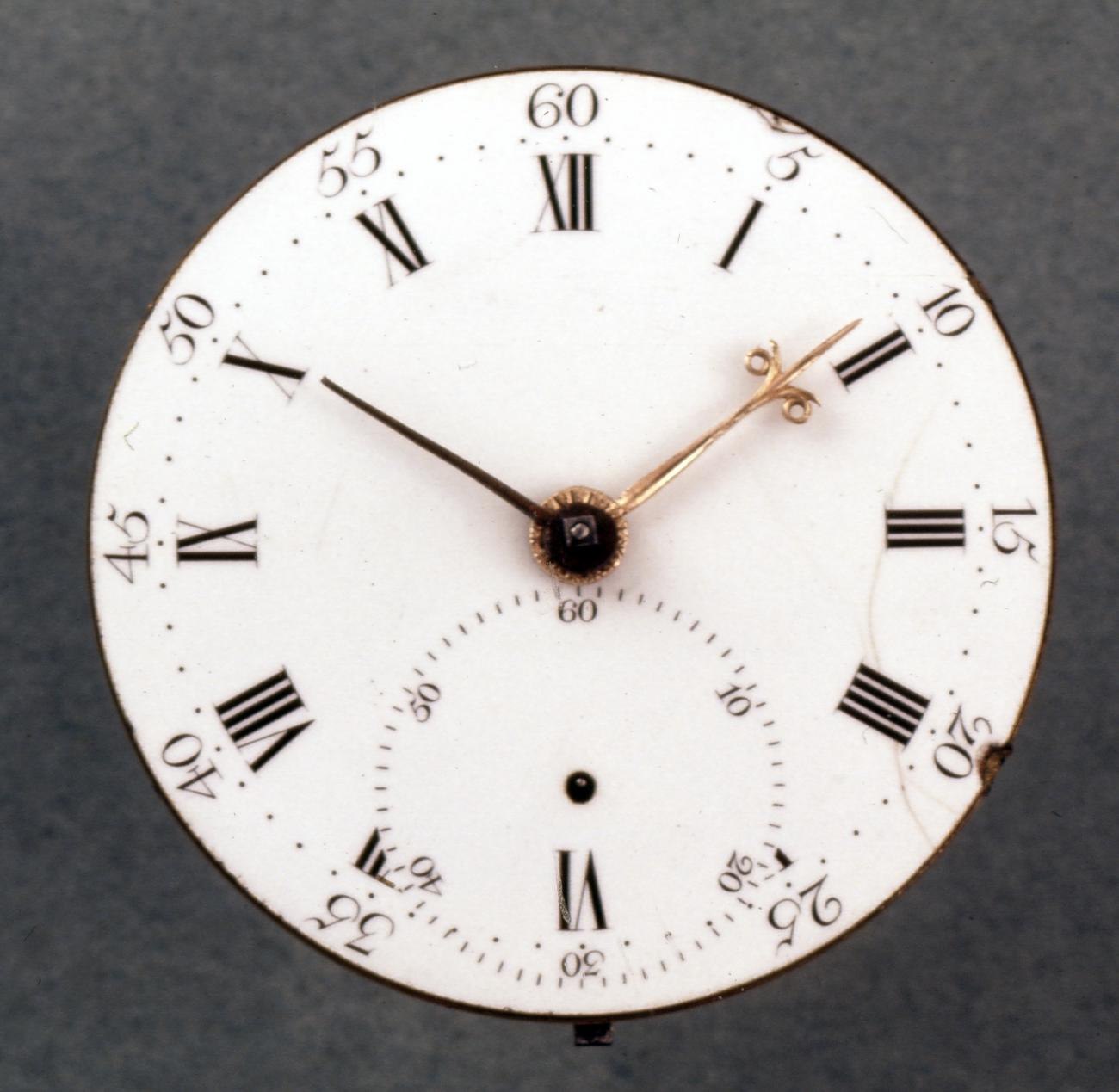
Movement · Pocket watch movement
Thomas Earnshaw Pocket-Chronometer Movement Signed Robert Tomlin
This pocket chronometer movement was constructed by Thomas Earnshaw circa 1783 and features a backplate signature reading 'Robert Tomlin Watch Maker to the King London No 1400'. Created during the licensing arrangement linked to Thomas Wright's 1783 patent, it incorporates an early version of Earnshaw's spring detent escapement. The mechanism employs a full-plate brass frame with turned pillars, maintaining power, gilded gear work, and jewelled escapement pivots. The white enamel dial features black Roman hour numerals, Arabic five-minute calibrations, and an inset subsidiary seconds register at 6 o'clock.
Full description
www.britishmuseum.org
Component · Model & teaching piece
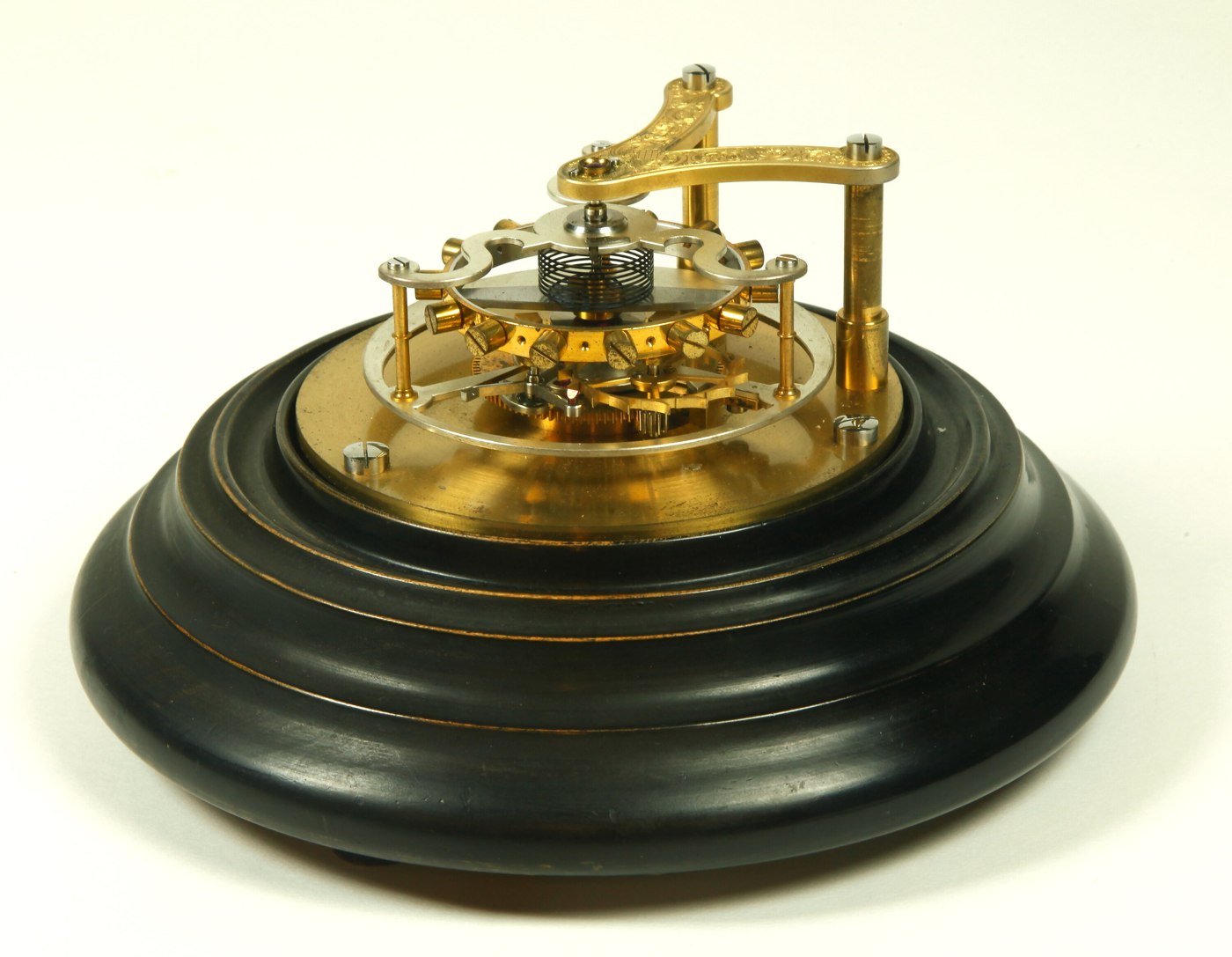
Chronometer Escapement Model
This object is an enlarged working model of a chronometer escapement, attributed to Thomas Earnshaw and dated to the late 18th century. The assembly features a metal chronometer mechanism mounted onto a circular, tiered wooden base. The model demonstrates the mechanical components of a chronometer escapement, which was historically used in portable timekeeping devices for maritime navigation and longitude determination. The construction includes jewelled pallets and an endstone. The mechanism is supported by a series of vertical pillars and a curved, decorated bridge. The model stands 10 cm high with an outside diameter of 20 cm. It was acquired by Museum Victoria through a loan and subsequent donation by Joseph Lowy in 1954.
Full description
collections.museumsvictoria.com.au · ST 23659
Pocket watch · Verge & pair-cased watch
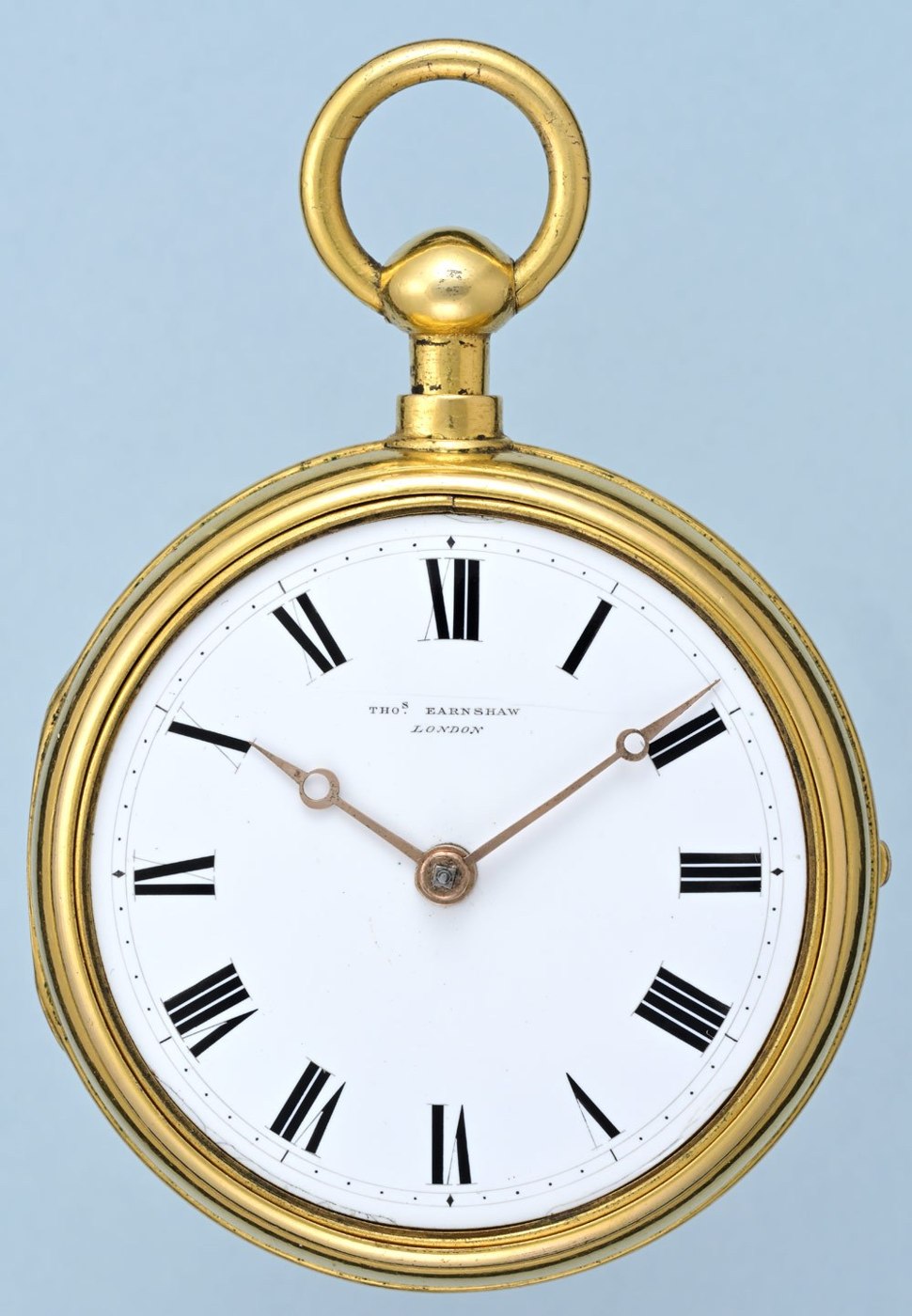
Thomas Earnshaw Gilt Pair Cased Cylinder Pocket Watch
This early 19th-century English pocket watch was produced by London-based watchmaker Thomas Earnshaw, featuring the maker's signature 'Tho Earnshaw London' and serial number 3885 on the dial and movement. The timepiece is housed in a matched pair case of gilt metal, characterized by a rounded pendant and circular bow. The dial is constructed of white enamel with black Roman numerals and Breguet-style hands. Internally, the watch utilizes a full-plate movement finished with fire gilding, incorporating a fusee and chain system. The movement includes a pierced and engraved balance cock, a silvered regulator dial, and a diamond endstone. The escapement is a steel cylinder type paired with a large steel escape wheel. A gilt dust cover with geometric cutouts protects the mechanism. The inner case features a winding aperture on the reverse.
Full description
Source listing