Maker 3 pieces 5 pieces 2 pieces 56 pieces 1 piece 2 pieces 3 pieces 6 pieces 3 pieces 2 pieces 2 pieces 2 pieces 6 pieces 4 pieces 4 pieces 2 pieces 1 piece 87 pieces 1 piece 2 pieces 7 pieces 7 pieces 3 pieces 7 pieces 1 piece 2 pieces 5 pieces 5 pieces 1 piece 61 pieces 2 pieces 1 piece 3 pieces 2 pieces 1 piece 3 pieces 10 pieces 3 pieces 5 pieces 2 pieces 2 pieces 1 piece 4 pieces 2 pieces 1 piece 19 pieces 2 pieces 5 pieces 2 pieces 7 pieces 59 pieces 44 pieces 2 pieces 1 piece 1 piece 2 pieces 9 pieces 34 pieces 5 pieces 2 pieces 4 pieces 3 pieces 4 pieces 3 pieces 4 pieces 110 pieces 2 pieces 1 piece 2 pieces 2 pieces 3 pieces 1 piece 28 pieces 9 pieces 3 pieces 5 pieces 17 pieces 2 pieces 17 pieces 1 piece 1 piece 14 pieces 7 pieces 4 pieces 1 piece 2 pieces 1 piece 7 pieces 4 pieces 1 piece 3 pieces 8 pieces 2 pieces 2 pieces 4 pieces 5 pieces 4 pieces 4 pieces 2 pieces 2 pieces 7 pieces 2 pieces 5 pieces 17 pieces 1 piece 1 piece 2 pieces 4 pieces 15 pieces 8 pieces 2 pieces 2 pieces 4 pieces 8 pieces 1 piece 4 pieces 2 pieces 4 pieces 2 pieces 2 pieces 6 pieces 1 piece 1 piece 4 pieces 81 pieces 1 piece 2 pieces 2 pieces 11 pieces 5 pieces 5 pieces 1 piece 8 pieces 2 pieces 3 pieces 4 pieces 2 pieces 2 pieces 1 piece 1 piece 1 piece 2 pieces 2 pieces 3 pieces 1 piece 7 pieces 2 pieces 2 pieces 2 pieces 17 pieces 16 pieces 8 pieces 2 pieces 8 pieces 14 pieces 12 pieces 3 pieces 8 pieces 2 pieces 1 piece 4 pieces 26 pieces 5 pieces 2 pieces 1 piece 3 pieces 3 pieces 3 pieces 2 pieces 4 pieces 7 pieces 1 piece 2 pieces 5 pieces 5 pieces 5 pieces 4 pieces 9 pieces 2 pieces 3 pieces 3 pieces 2 pieces 1 piece 2 pieces 56 pieces 7 pieces 2 pieces 2 pieces 5 pieces 10 pieces 4 pieces 4 pieces 6 pieces 2 pieces 2 pieces 5 pieces 3 pieces 5 pieces 3 pieces 41 pieces 1 piece 2 pieces 9 pieces 5 pieces 6 pieces 2 pieces 2 pieces 31 pieces 2 pieces 44 pieces 2 pieces 2 pieces 2 pieces 1 piece 2 pieces 2 pieces 2 pieces 17 pieces 2 pieces 3 pieces 81 pieces 3 pieces 9 pieces 2 pieces 12 pieces 1 piece 1 piece 3 pieces 2 pieces 1 piece 6 pieces 1 piece 1 piece 5 pieces 2 pieces 1 piece 2 pieces 2 pieces 2 pieces 5 pieces 2 pieces 3 pieces 4 pieces 8 pieces 2 pieces 8 pieces 3 pieces 1 piece 2 pieces 5 pieces 4 pieces 1 piece 2 pieces 1 piece 5 pieces 3 pieces 2 pieces 1 piece 2 pieces 4 pieces 2 pieces 5 pieces 2 pieces 9 pieces 8 pieces 1 piece 10 pieces 5 pieces 6 pieces 2 pieces 7 pieces 1 piece 5 pieces 3 pieces 5 pieces 1 piece 14 pieces 1 piece 2 pieces 4 pieces 3 pieces 6 pieces 13 pieces 5 pieces 8 pieces 5 pieces 3 pieces 58 pieces 2 pieces 2 pieces 6 pieces 2 pieces 2 pieces 1 piece 1 piece 8 pieces 2 pieces 2 pieces 4 pieces 3 pieces 2 pieces 3 pieces 3 pieces 3 pieces 2 pieces 3 pieces 2 pieces 1 piece 2 pieces 2 pieces 6 pieces 4 pieces 2 pieces 1 piece 4 pieces 3 pieces 5 pieces 1 piece 5 pieces 26 pieces 2 pieces 2 pieces 5 pieces 2 pieces 2 pieces 1 piece 3 pieces 4 pieces 3 pieces 1 piece 3 pieces 2 pieces 2 pieces 2 pieces 178 pieces 5 pieces 1 piece 4 pieces 1 piece 13 pieces 3 pieces 6 pieces 262 pieces 1 piece 9 pieces 3 pieces 2 pieces 14 pieces 2 pieces 1 piece 1 piece 1 piece 4 pieces 3 pieces 24 pieces 1 piece 1 piece 1 piece 2 pieces 6 pieces 2 pieces 5 pieces 1 piece 2 pieces 3 pieces 2 pieces 7 pieces 3 pieces 10 pieces 6 pieces 1 piece 3 pieces 2 pieces 2 pieces 2 pieces 3 pieces 1 piece 1 piece 8 pieces 4 pieces 14 pieces 3 pieces 221 pieces 2 pieces 1 piece 1 piece 9 pieces 2 pieces 10 pieces 6 pieces 2 pieces 1 piece 1 piece 1 piece 1 piece 1 piece 2 pieces 2 pieces 1 piece 30 pieces 2 pieces 2 pieces 6 pieces 8 pieces 2 pieces 1 piece 1 piece 2 pieces 14 pieces 2 pieces 1 piece 18 pieces 1 piece 7 pieces 2 pieces 2 pieces 5 pieces 1 piece 1 piece 13 pieces 2 pieces 7 pieces 3 pieces 2 pieces 6 pieces 5 pieces 3 pieces 14 pieces 1 piece 6 pieces 3 pieces 1 piece 7 pieces 10 pieces 10 pieces 5 pieces 2 pieces 4 pieces 5 pieces 13 pieces 4 pieces 11 pieces 4 pieces 2 pieces 34 pieces 10 pieces 40 pieces 2 pieces 2 pieces 1 piece 19 pieces 3 pieces 1 piece 2 pieces 1 piece 83 pieces 1 piece 7 pieces 1 piece 4 pieces 1 piece 2 pieces 9 pieces 4 pieces 2 pieces 4 pieces 2 pieces 6 pieces 2 pieces 2 pieces 5 pieces 5 pieces 7 pieces 5 pieces 1 piece 2 pieces 1 piece 1 piece 2 pieces 2 pieces 3 pieces 4 pieces 2 pieces 4 pieces 1 piece 24 pieces 8 pieces Search objects Category All categories Pocket watch Wristwatch Clock Marine chronometer Movement Component Tool Type All types Alarm pocket watch Alarm wristwatch Astrolabe Astronomical compendium Automatic wristwatch Balance, escapement & train part Box & presentation case Bracket clock Calendar & astronomical watch Calendar & moon-phase watch Carriage clock Cartel clock Case Chain, fob & chatelaine Chronograph Chronograph & split-seconds watch Clock movement Comtoise clock Cuckoo & Black Forest clock Deck watch & deck chronometer Desk clock Dial Diptych sundial Diver's watch Early watch (16th–17th century) Eight-day marine chronometer Electric clock Enamel, form & pendant watch Escapement & demonstration model GMT & world-time watch Hand-wound wristwatch Horizontal sundial Hunter-case watch Jewellery & cocktail watch Lantern clock Longcase clock Mantel clock Marine chronometer (duration not stated) Military & trench watch Military pocket watch Model & teaching piece Musical & automaton watch Mystery clock Nocturnal Novelty & automaton clock One-day marine chronometer Open-face watch Other clock Other component Other scientific instrument Other sundial Pendulum & weight Perpetual calendar watch Pilot's watch Pocket chronometer & deck watch Pocket watch movement Quadrant Quartz & electronic watch Railroad watch Regulator Renaissance table clock Repeater & striking watch Repeating watch Ring & equinoctial sundial Ship's & marine clock Skeleton clock Stopwatch & timer Torsion & atmospheric clock Tourbillon & karrusel watch Tourbillon watch Travel & alarm clock Turret & tower clock Two-day marine chronometer Verge & fusee movement Verge & pair-cased watch Wall clock Watch key & accessory Watchmaker's lathe Watchmaker's tools & bench Wristwatch movement Ébauche & unfinished movement Source All sources americanhistory.si.edu analogshift.com antique-watch.com antiques-atlas.com antiquevintageclock.com app.bellmans.co.uk ashton-blakey-antiques.com auction.gorringes.co.uk auctionet.com auctions.chiswickauctions.co.uk auctions.dreweatts.com auctions.gardinerhoulgate.co.uk auctions.luxeauctioneers.com auctions.yahoo.co.jp badgersauctions.com bid.gorringes.co.uk blog.pocketwatchdatabase.com cars.bonhams.com catalog.antiquorum.swiss chrono-shop.net clevelandart.org collection.sciencemuseumgroup.org.uk collections.museumsvictoria.com.au collections.vam.ac.uk commons.wikimedia.org cottees.co.uk craftandtailored.com data.fitzmuseum.cam.ac.uk digitaltmuseum.no drouot.com empress.cc everywatch.com freemansauction.com hindmanauctions.com huntingtoncompany.com islamicworld.britishmuseum.org jacob-zech.com justaclockcollector.com laurent-fine-watches.myshopify.com laurentfinewatches.com loupethis.com marketplace.watchcharts.com mb.nawcc.org monochrome-watches.com mroatman.wixsite.com oliverandclarke.com onlineonly.christies.com pascalkarpwatchesexpertise.com perpetual.phillips.com phillips.com rauantiques.com sammler-uhren.com secondhandhorology.com shop.analogshift.com somlo.com the-saleroom.com theclockandwatchshop.co.uk theclockworks.org thekeystone.com theodorebruceauctionsnew.connectwp.invaluable.com timed.sworder.co.uk tokeimedic.com uhrerbe.com vintageclockparts.com vintageclocks.uk vintagewatchspecialist.com watchmuseum.org westfalen.museum-digital.de wjmorrisclocks.co.uk www.1stdibs.com www.acollectedman.com www.analogshift.com www.antiques-atlas.com www.antiquesboutique.com www.appletreeauction.com www.atlam-watches.co.uk www.bidsquare.com www.bonhams.com www.britishmuseum.org www.bukowskis.com www.bulangandsons.com www.castle-paradise.cz www.catawiki.com www.cazasikes.com www.chairish.com www.christies.com www.collectorsquare.com www.comune.ceriana.im.it www.cottees.co.uk www.craftandtailored.com www.dorotheum.com www.dorsetantiqueclocks.co.uk www.dreweatts.com www.ebay.com www.fellows.co.uk www.fontainesauction.com www.gazette-drouot.com www.invaluable.com www.kimnet.ch www.langantiques.com www.laurentfinewatches.com www.lempertz.com www.liveauctioneers.com www.lyonandturnbull.com www.metmuseum.org www.mhs.ox.ac.uk www.neumeister.com www.oliverandclarke.com www.passionchrono.com www.pendulumofmayfair.co.uk www.phillips.com www.proantic.com www.propertyroom.com www.rct.uk www.reading.ac.uk www.renaissanceantiques.com www.ricardo.ch www.rijksmuseum.nl www.rmg.co.uk www.schmitt-horan.com www.secondhandhorology.com www.sellingantiques.co.uk www.si.edu www.somlo.com www.sothebys.com www.ssongwatches.com www.tennants.co.uk www.the-saleroom.com www.tobiasbirch.com www.ukclocks.com www.vintagegoldwatches.com www.watch-auctions.co.uk www.watchpro.com www.watchprosite.com www.woolleyandwallis.co.uk
Browse makers and their key pieces · Joseph Windmills profile
4 of 5699 objects · Page 1 of 1
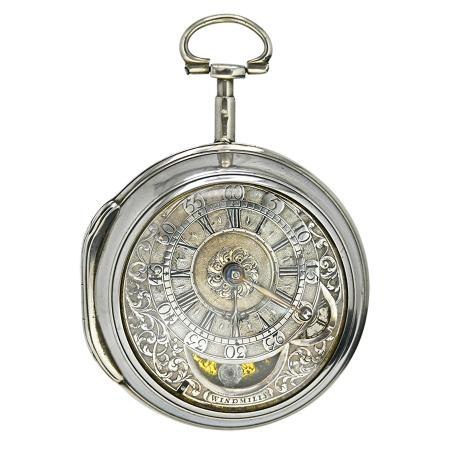
Pocket watch · Verge & pair-cased watch
English Consular Case Verge Fusée Pocket Watch by Windmills of London This early eighteenth-century English pocket watch, dated to circa 1710, is attributed to London clockmakers Joseph and Thomas Windmills. The timepiece features a sterling silver consular case designed to open from the front. According to the seller, it houses a key-wound gilt verge fusée movement with Egyptian pillars and a false pendulum, bearing number 2273 on an engraved back plate. The champlevé-style silver dial displays Roman hour numerals and an outer Arabic minute ring against foliate engraving, with an aperture displaying the false pendulum above a cartouche signed 'WINDMILLS'.
Full description
www.renaissanceantiques.com · DKRO EMAR119
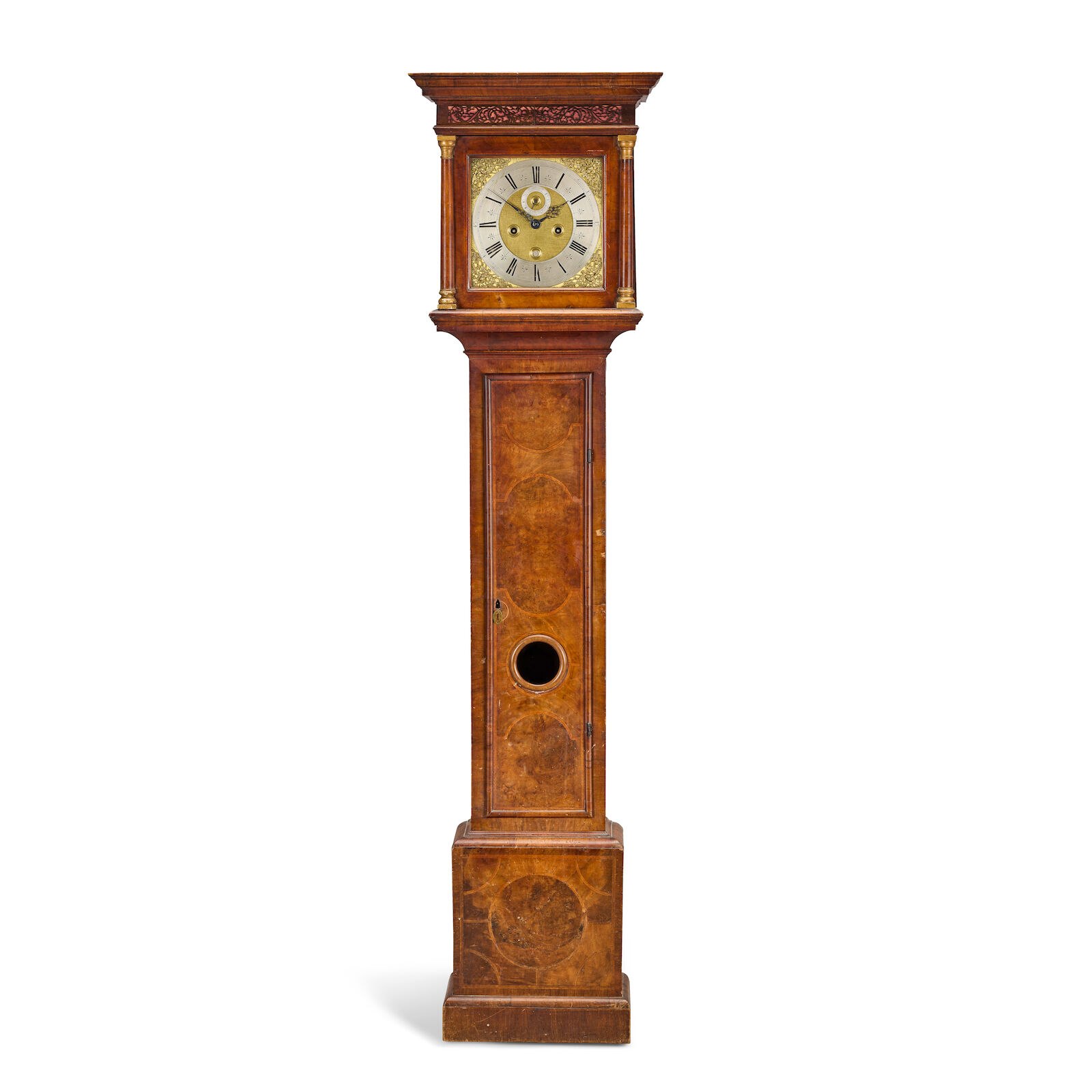
Clock · Longcase clock
A late 17th century walnut longcase clock, Joseph Windmills Attributed to Joseph Windmills of London, this late seventeenth-century English longcase clock stands two metres tall in a walnut case. The square-topped hood features a moulded cornice set above turned columns and concave throat moulding. The long trunk door displays feather-banded decoration, D-moulded edges, and inlaid burr walnut panels surrounding a circular pendulum lenticle. The eleven-inch square brass dial includes cherub spandrels, foliate scroll engraving, a silvered chapter ring with cruciform half-hour markers, a subsidiary seconds dial, and a date aperture. According to the source, the internal mechanism incorporates five knopped and finned latched pillars with an anchor escapement striking on an inside countwheel bell.
Full description
www.bonhams.com · 394
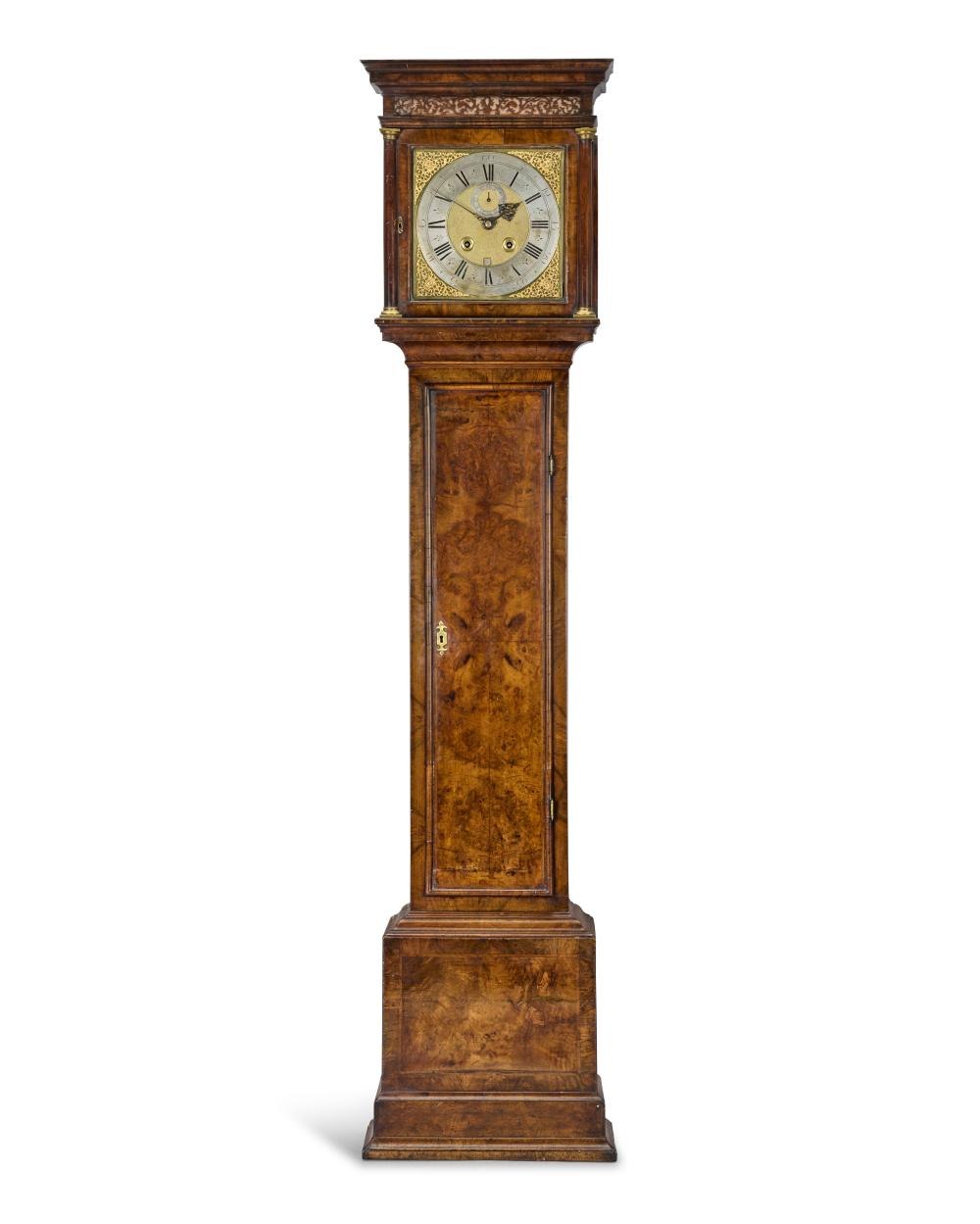
Clock · Longcase clock
Walnut Veneered Longcase Clock by Joseph Windmills This early 18th-century longcase clock is attributed to the London maker Joseph Windmills. Housed in a walnut veneered case, the clock features a moulded top with a pierced sound fret backed by silk, situated above turned pillars with gilt capitals. The trunk includes a concave throat moulding and a D-moulded, quarter-veneered door, supported by a crossbanded base and double plinth. The 12-inch square brass dial displays cast and gilt spandrels surrounding a silvered chapter ring with Roman numerals and Arabic five-minute markers. The matted dial center incorporates a subsidiary seconds dial and a date aperture, complemented by blued steel hands. The month-going movement is constructed with five knopped pillars and an anchor escapement, utilizing an outside countwheel to strike the hours on a bell. The clock measures 2.21 meters in height and is supplied with a pair of brass-clad weights and a brass-clad pendulum.
Full description
www.invaluable.com · 92
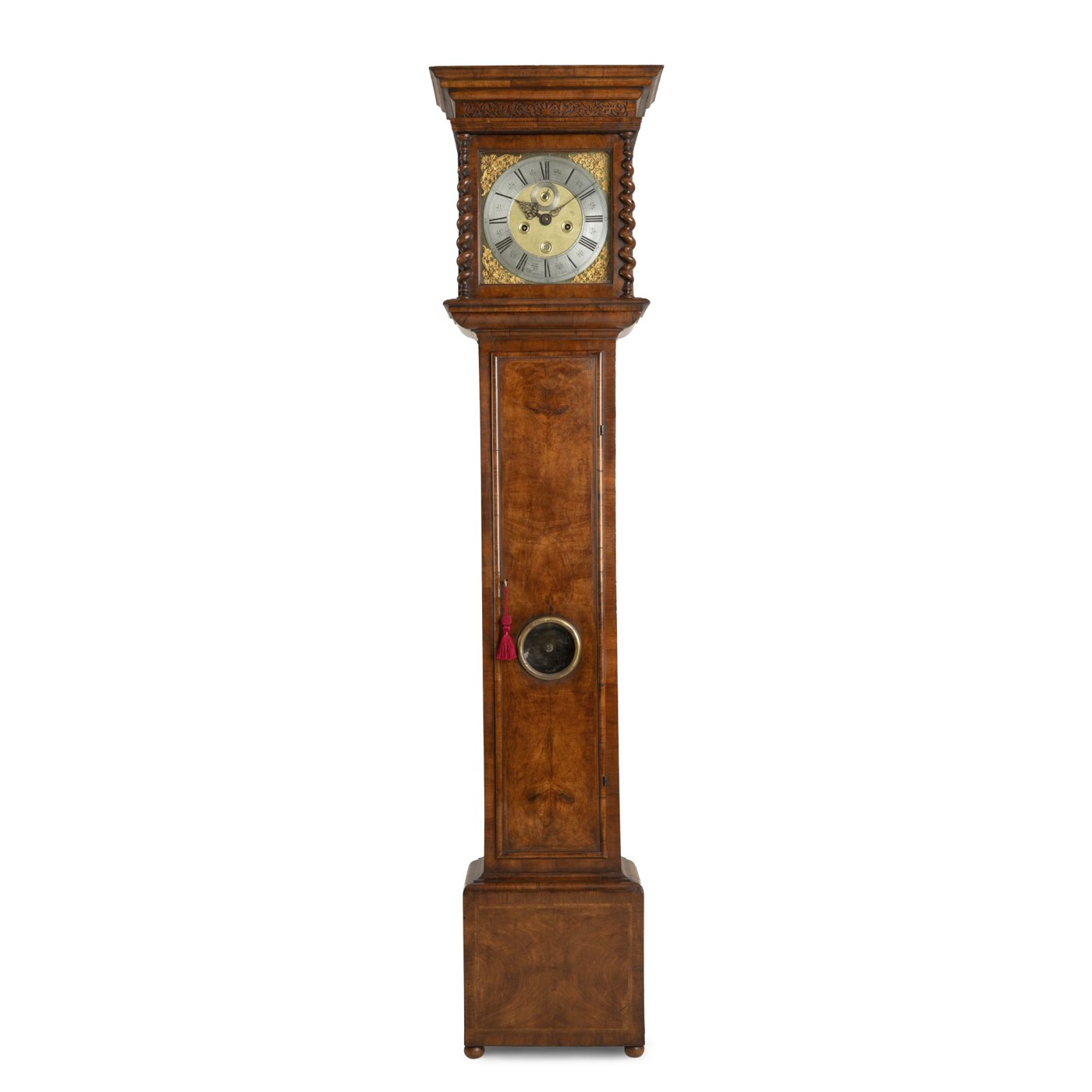
Clock · Longcase clock
Burr Walnut 8-Day Longcase Clock by Joseph Windmills This 8-day longcase clock is attributed to the maker Joseph Windmills of London, dated circa 1695. The movement is weight-driven with an anchor escapement, six latched knopped pillars, and an inside count-wheel striking system. It is secured to the case via a bracket on the backboard. The dial is a 10 ¾-inch square brass plate with winged cherub head spandrels, a silvered chapter ring, a matted center, a subsidiary seconds dial, and a date aperture. The oak case features figured burr walnut veneers, with the trunk door containing a gilt brass lenticle. The hood is topped with a cross-grain walnut cornice moulding and a sound fret, flanked by barley-twist columns with wooden capitals and bases. The sides of the trunk are panelled with book-matched and crossbanded veneers. The piece is approximately 206 cm tall.
Full description
www.dorsetantiqueclocks.co.uk
1 / 1