Maker 3 pieces 5 pieces 2 pieces 56 pieces 1 piece 2 pieces 3 pieces 6 pieces 3 pieces 2 pieces 2 pieces 2 pieces 6 pieces 4 pieces 4 pieces 2 pieces 1 piece 87 pieces 1 piece 2 pieces 7 pieces 7 pieces 3 pieces 7 pieces 1 piece 2 pieces 5 pieces 5 pieces 1 piece 61 pieces 2 pieces 1 piece 3 pieces 2 pieces 1 piece 3 pieces 10 pieces 3 pieces 5 pieces 2 pieces 2 pieces 1 piece 4 pieces 2 pieces 1 piece 19 pieces 2 pieces 5 pieces 2 pieces 7 pieces 59 pieces 44 pieces 2 pieces 1 piece 1 piece 2 pieces 9 pieces 34 pieces 5 pieces 2 pieces 4 pieces 3 pieces 4 pieces 3 pieces 4 pieces 110 pieces 2 pieces 1 piece 2 pieces 2 pieces 3 pieces 1 piece 28 pieces 9 pieces 3 pieces 5 pieces 17 pieces 2 pieces 17 pieces 1 piece 1 piece 14 pieces 7 pieces 4 pieces 1 piece 2 pieces 1 piece 7 pieces 4 pieces 1 piece 3 pieces 8 pieces 2 pieces 2 pieces 4 pieces 5 pieces 4 pieces 4 pieces 2 pieces 2 pieces 7 pieces 2 pieces 5 pieces 17 pieces 1 piece 1 piece 2 pieces 4 pieces 15 pieces 8 pieces 2 pieces 2 pieces 4 pieces 8 pieces 1 piece 4 pieces 2 pieces 4 pieces 2 pieces 2 pieces 6 pieces 1 piece 1 piece 4 pieces 81 pieces 1 piece 2 pieces 2 pieces 11 pieces 5 pieces 5 pieces 1 piece 8 pieces 2 pieces 3 pieces 4 pieces 2 pieces 2 pieces 1 piece 1 piece 1 piece 2 pieces 2 pieces 3 pieces 1 piece 7 pieces 2 pieces 2 pieces 2 pieces 17 pieces 16 pieces 8 pieces 2 pieces 8 pieces 14 pieces 12 pieces 3 pieces 8 pieces 2 pieces 1 piece 4 pieces 26 pieces 5 pieces 2 pieces 1 piece 3 pieces 3 pieces 3 pieces 2 pieces 4 pieces 7 pieces 1 piece 2 pieces 5 pieces 5 pieces 5 pieces 4 pieces 9 pieces 2 pieces 3 pieces 3 pieces 2 pieces 1 piece 2 pieces 56 pieces 7 pieces 2 pieces 2 pieces 5 pieces 10 pieces 4 pieces 4 pieces 6 pieces 2 pieces 2 pieces 5 pieces 3 pieces 5 pieces 3 pieces 41 pieces 1 piece 2 pieces 9 pieces 5 pieces 6 pieces 2 pieces 2 pieces 31 pieces 2 pieces 44 pieces 2 pieces 2 pieces 2 pieces 1 piece 2 pieces 2 pieces 2 pieces 17 pieces 2 pieces 3 pieces 81 pieces 3 pieces 9 pieces 2 pieces 12 pieces 1 piece 1 piece 3 pieces 2 pieces 1 piece 6 pieces 1 piece 1 piece 5 pieces 2 pieces 1 piece 2 pieces 2 pieces 2 pieces 5 pieces 2 pieces 3 pieces 4 pieces 8 pieces 2 pieces 8 pieces 3 pieces 1 piece 2 pieces 5 pieces 4 pieces 1 piece 2 pieces 1 piece 5 pieces 3 pieces 2 pieces 1 piece 2 pieces 4 pieces 2 pieces 5 pieces 2 pieces 9 pieces 8 pieces 1 piece 10 pieces 5 pieces 6 pieces 2 pieces 7 pieces 1 piece 5 pieces 3 pieces 5 pieces 1 piece 14 pieces 1 piece 2 pieces 4 pieces 3 pieces 6 pieces 13 pieces 5 pieces 8 pieces 5 pieces 3 pieces 58 pieces 2 pieces 2 pieces 6 pieces 2 pieces 2 pieces 1 piece 1 piece 8 pieces 2 pieces 2 pieces 4 pieces 3 pieces 2 pieces 3 pieces 3 pieces 3 pieces 2 pieces 3 pieces 2 pieces 1 piece 2 pieces 2 pieces 6 pieces 4 pieces 2 pieces 1 piece 4 pieces 3 pieces 5 pieces 1 piece 5 pieces 26 pieces 2 pieces 2 pieces 5 pieces 2 pieces 2 pieces 1 piece 3 pieces 4 pieces 3 pieces 1 piece 3 pieces 2 pieces 2 pieces 2 pieces 178 pieces 5 pieces 1 piece 4 pieces 1 piece 13 pieces 3 pieces 6 pieces 262 pieces 1 piece 9 pieces 3 pieces 2 pieces 14 pieces 2 pieces 1 piece 1 piece 1 piece 4 pieces 3 pieces 24 pieces 1 piece 1 piece 1 piece 2 pieces 6 pieces 2 pieces 5 pieces 1 piece 2 pieces 3 pieces 2 pieces 7 pieces 3 pieces 10 pieces 6 pieces 1 piece 3 pieces 2 pieces 2 pieces 2 pieces 3 pieces 1 piece 1 piece 8 pieces 4 pieces 14 pieces 3 pieces 221 pieces 2 pieces 1 piece 1 piece 9 pieces 2 pieces 10 pieces 6 pieces 2 pieces 1 piece 1 piece 1 piece 1 piece 1 piece 2 pieces 2 pieces 1 piece 30 pieces 2 pieces 2 pieces 6 pieces 8 pieces 2 pieces 1 piece 1 piece 2 pieces 14 pieces 2 pieces 1 piece 18 pieces 1 piece 7 pieces 2 pieces 2 pieces 5 pieces 1 piece 1 piece 13 pieces 2 pieces 7 pieces 3 pieces 2 pieces 6 pieces 5 pieces 3 pieces 14 pieces 1 piece 6 pieces 3 pieces 1 piece 7 pieces 10 pieces 10 pieces 5 pieces 2 pieces 4 pieces 5 pieces 13 pieces 4 pieces 11 pieces 4 pieces 2 pieces 34 pieces 10 pieces 40 pieces 2 pieces 2 pieces 1 piece 19 pieces 3 pieces 1 piece 2 pieces 1 piece 83 pieces 1 piece 7 pieces 1 piece 4 pieces 1 piece 2 pieces 9 pieces 4 pieces 2 pieces 4 pieces 2 pieces 6 pieces 2 pieces 2 pieces 5 pieces 5 pieces 7 pieces 5 pieces 1 piece 2 pieces 1 piece 1 piece 2 pieces 2 pieces 3 pieces 4 pieces 2 pieces 4 pieces 1 piece 24 pieces 8 pieces Search objects Category All categories Pocket watch Wristwatch Clock Marine chronometer Movement Component Tool Type All types Alarm pocket watch Alarm wristwatch Astrolabe Astronomical compendium Automatic wristwatch Balance, escapement & train part Box & presentation case Bracket clock Calendar & astronomical watch Calendar & moon-phase watch Carriage clock Cartel clock Case Chain, fob & chatelaine Chronograph Chronograph & split-seconds watch Clock movement Comtoise clock Cuckoo & Black Forest clock Deck watch & deck chronometer Desk clock Dial Diptych sundial Diver's watch Early watch (16th–17th century) Eight-day marine chronometer Electric clock Enamel, form & pendant watch Escapement & demonstration model GMT & world-time watch Hand-wound wristwatch Horizontal sundial Hunter-case watch Jewellery & cocktail watch Lantern clock Longcase clock Mantel clock Marine chronometer (duration not stated) Military & trench watch Military pocket watch Model & teaching piece Musical & automaton watch Mystery clock Nocturnal Novelty & automaton clock One-day marine chronometer Open-face watch Other clock Other component Other scientific instrument Other sundial Pendulum & weight Perpetual calendar watch Pilot's watch Pocket chronometer & deck watch Pocket watch movement Quadrant Quartz & electronic watch Railroad watch Regulator Renaissance table clock Repeater & striking watch Repeating watch Ring & equinoctial sundial Ship's & marine clock Skeleton clock Stopwatch & timer Torsion & atmospheric clock Tourbillon & karrusel watch Tourbillon watch Travel & alarm clock Turret & tower clock Two-day marine chronometer Verge & fusee movement Verge & pair-cased watch Wall clock Watch key & accessory Watchmaker's lathe Watchmaker's tools & bench Wristwatch movement Ébauche & unfinished movement Source All sources americanhistory.si.edu analogshift.com antique-watch.com antiques-atlas.com antiquevintageclock.com app.bellmans.co.uk ashton-blakey-antiques.com auction.gorringes.co.uk auctionet.com auctions.chiswickauctions.co.uk auctions.dreweatts.com auctions.gardinerhoulgate.co.uk auctions.luxeauctioneers.com auctions.yahoo.co.jp badgersauctions.com bid.gorringes.co.uk blog.pocketwatchdatabase.com cars.bonhams.com catalog.antiquorum.swiss chrono-shop.net clevelandart.org collection.sciencemuseumgroup.org.uk collections.museumsvictoria.com.au collections.vam.ac.uk commons.wikimedia.org cottees.co.uk craftandtailored.com data.fitzmuseum.cam.ac.uk digitaltmuseum.no drouot.com empress.cc everywatch.com freemansauction.com hindmanauctions.com huntingtoncompany.com islamicworld.britishmuseum.org jacob-zech.com justaclockcollector.com laurent-fine-watches.myshopify.com laurentfinewatches.com loupethis.com marketplace.watchcharts.com mb.nawcc.org monochrome-watches.com mroatman.wixsite.com oliverandclarke.com onlineonly.christies.com pascalkarpwatchesexpertise.com perpetual.phillips.com phillips.com rauantiques.com sammler-uhren.com secondhandhorology.com shop.analogshift.com somlo.com the-saleroom.com theclockandwatchshop.co.uk theclockworks.org thekeystone.com theodorebruceauctionsnew.connectwp.invaluable.com timed.sworder.co.uk tokeimedic.com uhrerbe.com vintageclockparts.com vintageclocks.uk vintagewatchspecialist.com watchmuseum.org westfalen.museum-digital.de wjmorrisclocks.co.uk www.1stdibs.com www.acollectedman.com www.analogshift.com www.antiques-atlas.com www.antiquesboutique.com www.appletreeauction.com www.atlam-watches.co.uk www.bidsquare.com www.bonhams.com www.britishmuseum.org www.bukowskis.com www.bulangandsons.com www.castle-paradise.cz www.catawiki.com www.cazasikes.com www.chairish.com www.christies.com www.collectorsquare.com www.comune.ceriana.im.it www.cottees.co.uk www.craftandtailored.com www.dorotheum.com www.dorsetantiqueclocks.co.uk www.dreweatts.com www.ebay.com www.fellows.co.uk www.fontainesauction.com www.gazette-drouot.com www.invaluable.com www.kimnet.ch www.langantiques.com www.laurentfinewatches.com www.lempertz.com www.liveauctioneers.com www.lyonandturnbull.com www.metmuseum.org www.mhs.ox.ac.uk www.neumeister.com www.oliverandclarke.com www.passionchrono.com www.pendulumofmayfair.co.uk www.phillips.com www.proantic.com www.propertyroom.com www.rct.uk www.reading.ac.uk www.renaissanceantiques.com www.ricardo.ch www.rijksmuseum.nl www.rmg.co.uk www.schmitt-horan.com www.secondhandhorology.com www.sellingantiques.co.uk www.si.edu www.somlo.com www.sothebys.com www.ssongwatches.com www.tennants.co.uk www.the-saleroom.com www.tobiasbirch.com www.ukclocks.com www.vintagegoldwatches.com www.watch-auctions.co.uk www.watchpro.com www.watchprosite.com www.woolleyandwallis.co.uk
Browse makers and their key pieces · James Cox profile
3 of 5699 objects · Page 1 of 1
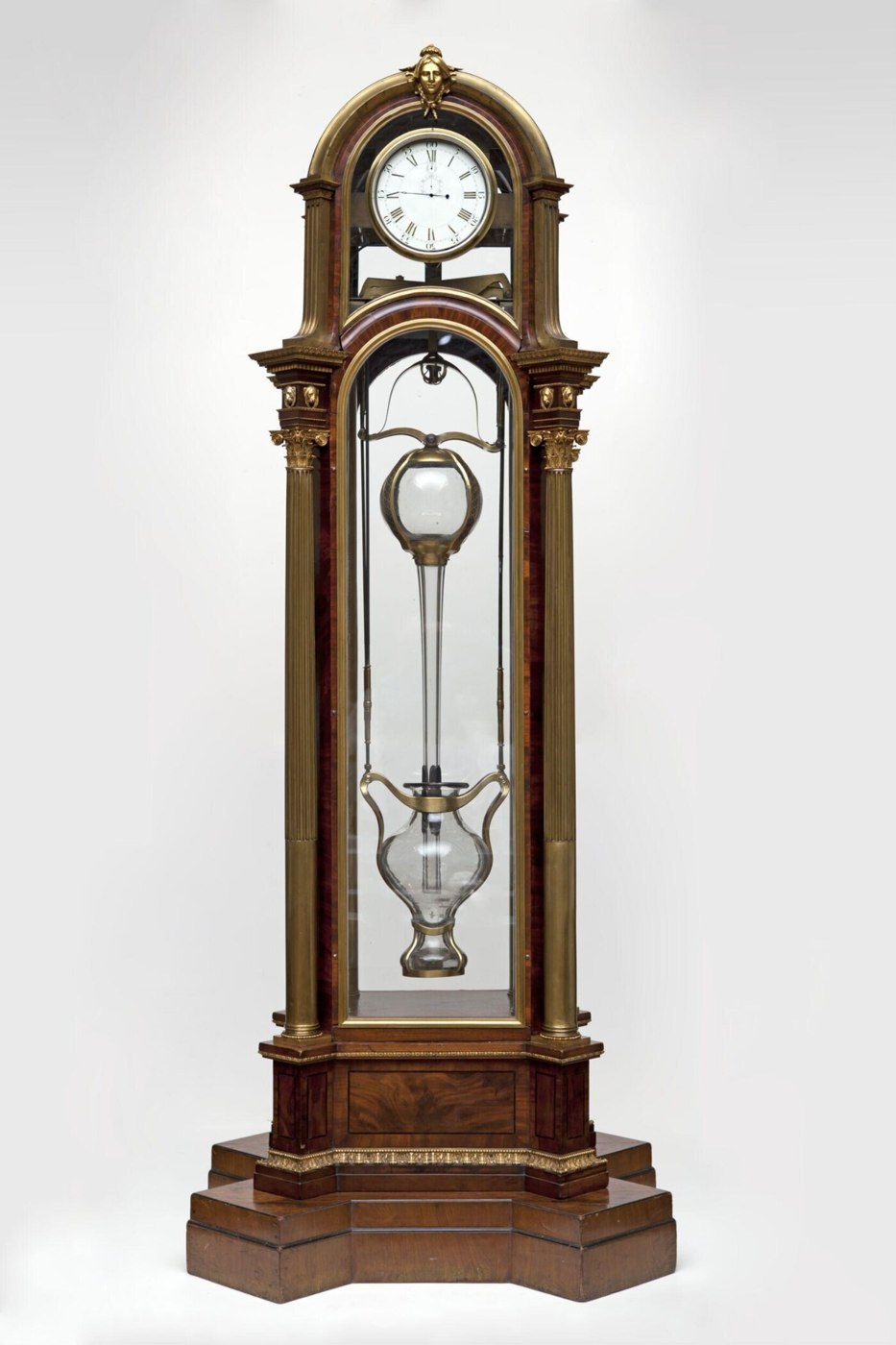
Clock · Longcase clock
Longcase clock This longcase clock, dating to approximately 1760, was created by James Cox with later modifications attributed to Thomas Weeks. The clock is housed in a mahogany case with ormolu mounts, featuring glass panels on all four sides to expose the movement and barometer mechanism. The hood is topped with arched glazing and adorned with brass Corinthian columns and gilded lion’s head mounts. The clock operates via a dead-beat escapement and a bar-balance. It is powered by a unique atmospheric pressure-driven mechanism, utilizing approximately 68 kilograms of mercury contained within a barometer bowl and tube system. This arrangement drives the clock continuously. The object is inscribed "Weeks Royal Museum 1806" on the brass straps holding the barometer bowl. The clock was formerly part of Cox's Mechanical Museum in London and represents an attempt to create a perpetual motion timekeeper, later modified during its residency in Thomas Weeks's Royal Mechanical Museum between 1796 and 1837.
Full description
collections.vam.ac.uk · W.20:1 to 3-1961
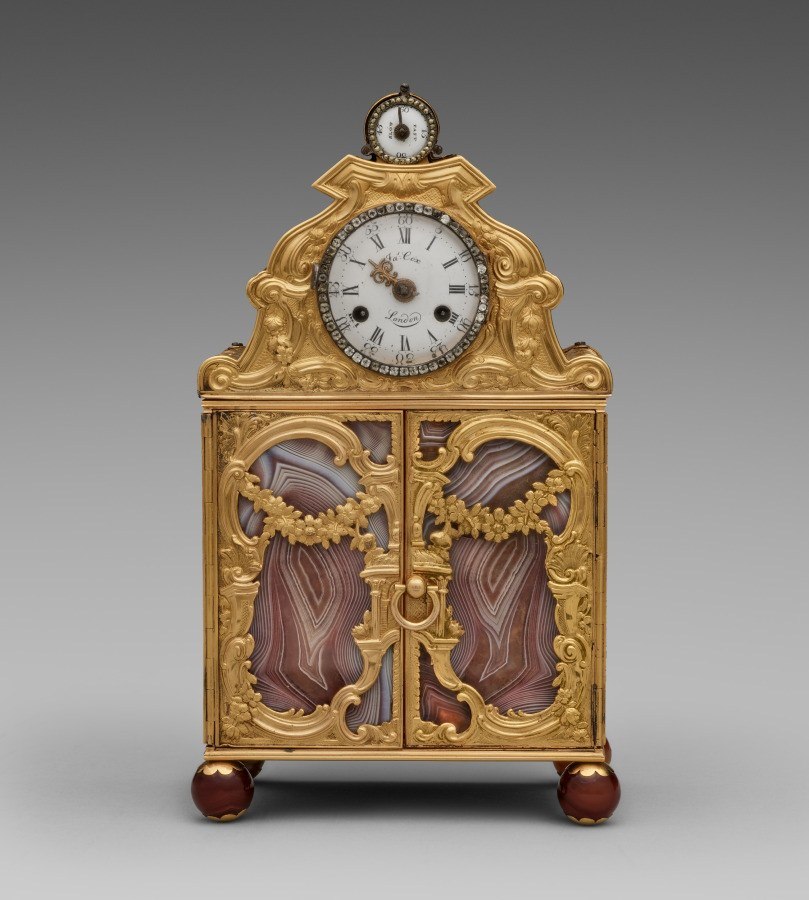
Clock · Renaissance table clock
Cabinet Clock This miniature cabinet clock is attributed to the London goldsmith James Cox and dates to circa 1770–1775. The object features a highly ornate gold case construction measuring 16.5 x 8.9 cm, with two doors faced with panels of agate set within elaborate gilded scrolling frames. The primary white enamel dial is surrounded by a border of stones or paste, displaying Roman numerals for the hours and Arabic numerals for the minutes, signed 'Ja: Cox' and 'London'. A smaller secondary dial, similarly bordered, is mounted at the apex of the case. The doors of the lower cabinet section open to reveal two small interior drawers designed to hold the winding keys for the timepiece mechanism. Although this example was produced by a maker known for integrating mechanical musical devices, the current object no longer contains such a mechanism.
Full description
clevelandart.org · 2009.77
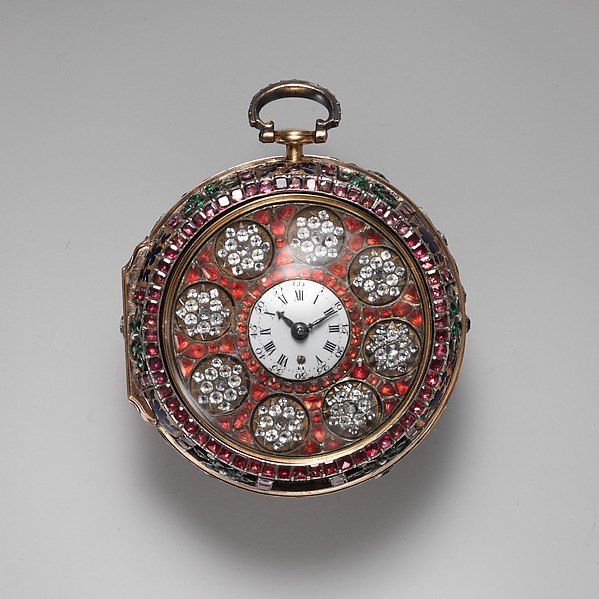
Pocket watch · Musical & automaton watch
Pair-case automaton watch by James Cox This pair-case automaton watch, dated circa 1770 and attributed to James Cox, is a horological piece currently held in the collection of The Metropolitan Museum of Art. The object features an outer gold case decorated with enamel and set with gemstones and paste jewels. The white enamel dial is surrounded by a frame embedded with paste jewels, which houses eight spinning star-shaped rosettes that move when the mechanism is activated. The inner watch movement, which bears the serial number 1393, is constructed with a verge escapement and includes a diamond end-stone. While such automaton mechanisms were integrated into pieces designed for potential export to China and India, historical records suggest that similar items may also have been produced for English patrons and sold through lottery or auction during the late 18th century.
Full description
Source listing · 1977.436.4a, b
1 / 1