
Source catalogue · individual objects
Object Catalogue
Individual objects described by auction houses, specialist dealers and collection catalogues. Attribution, dates and specifications remain source-reported unless independently established; rights clearance is pending.
Browse makers and their key pieces · Edward East profile
6 of 5699 objects · Page 1 of 1
Clock · Longcase clock
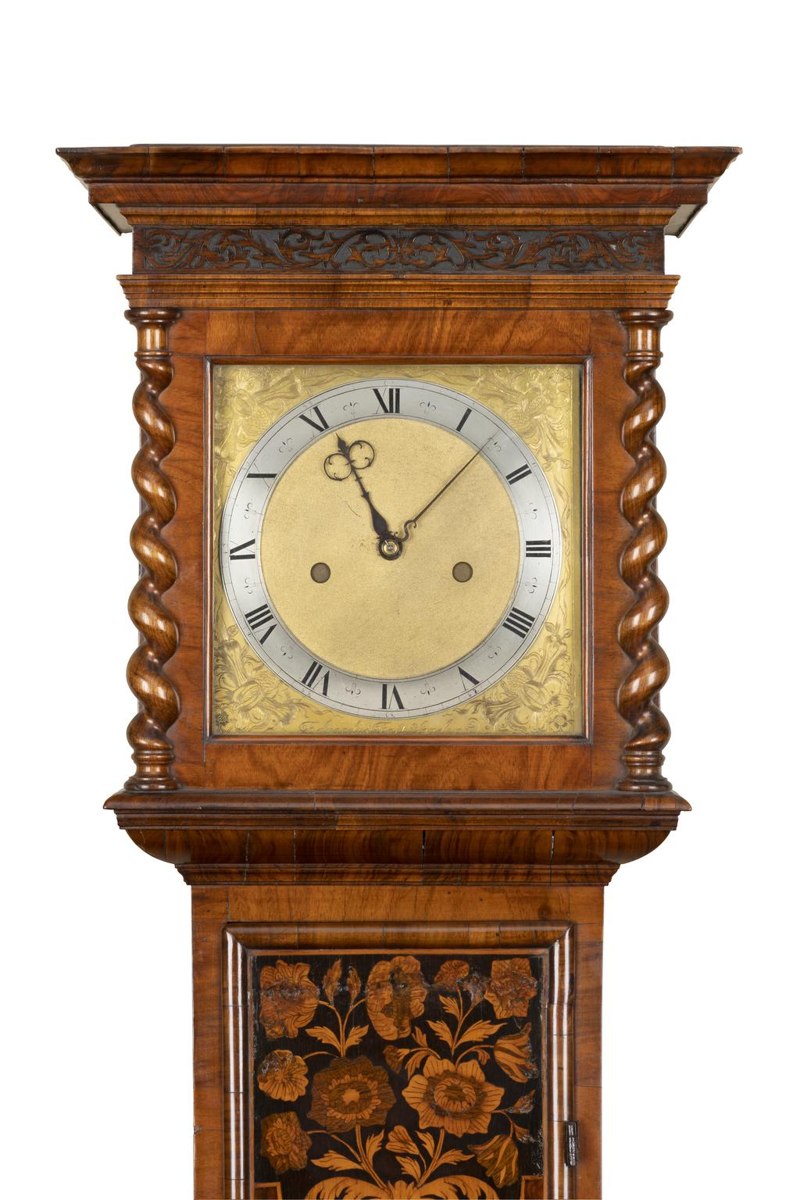
Eight-Day Longcase Clock by Edward East in a Later Marquetry Case
This eight-day striking longcase clock combines an earlier movement by London maker Edward East dating to circa 1675 with an altered oak case veneered in walnut and floral marquetry dating to circa 1685. The 9¼-inch brass dial features engraved corner spandrels, a matted centre, two winding arbors, and a narrow silvered chapter ring marked with Roman hour numerals and Arabic minute numbers at five-minute intervals. The dial is signed 'Edwardus East Londini'. The source reports a two-train movement equipped with an anchor escapement, count-wheel striking, and bolt-and-shutter maintaining power.
Full description
collection.sciencemuseumgroup.org.uk · L2015-3429
Clock · Bracket clock
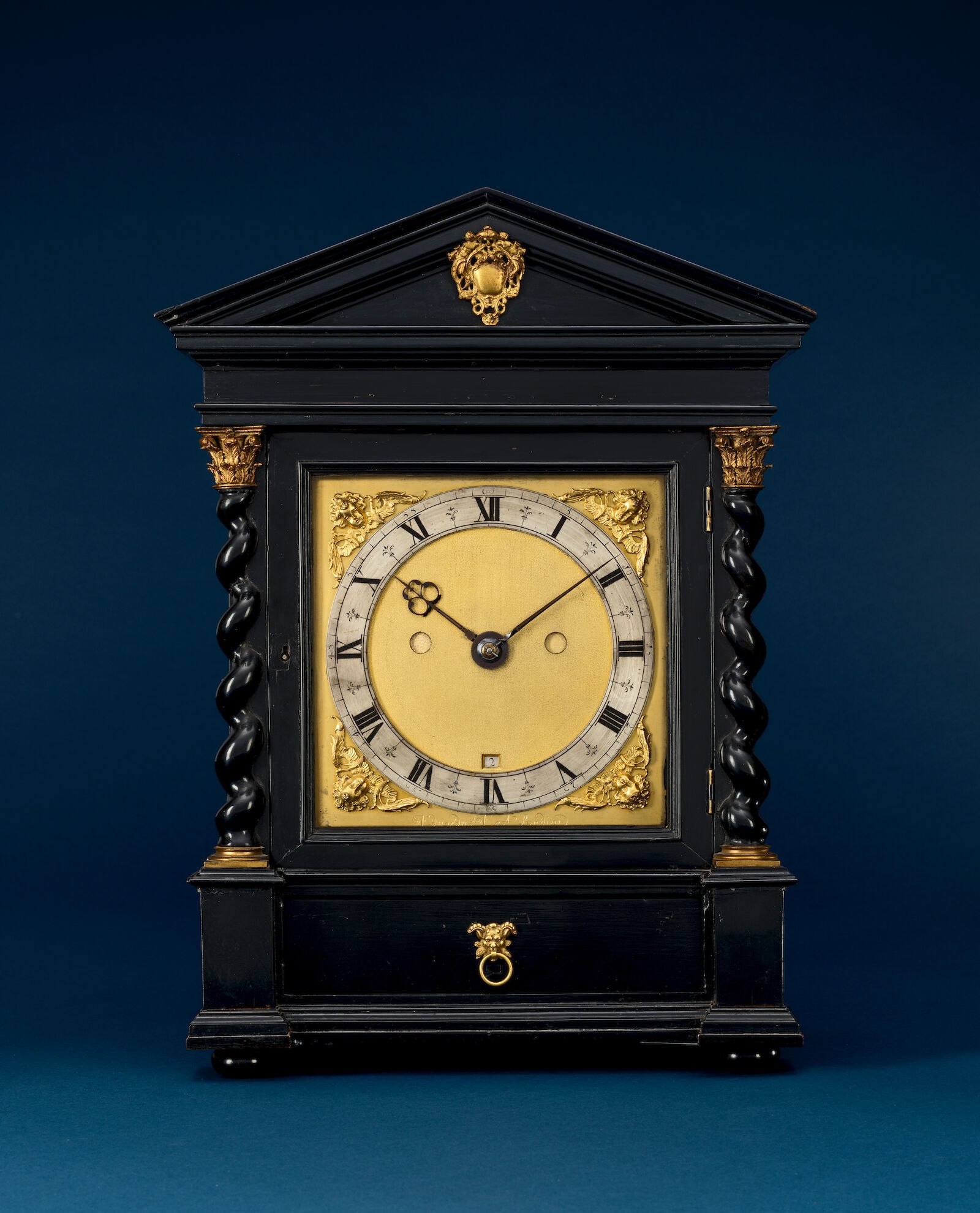
Architectural ebony table clock, Edward East, attributed to Samuel Knibb
This architectural ebony table clock dates from the third quarter of the 17th century and features a dial signed 'Eduardus East Londini', with the movement attributed by the source to Samuel Knibb. The case is surmounted by a triangular pediment with a cast gilt mount in the tympanum, supported by spirally twisted Corinthian columns above an inverted breakfront base containing a lower drawer with a Pan mask ring pull. The 8-inch gilt-brass dial features cast cherub-head spandrels, a silvered chapter ring with Roman hours and Arabic minutes, a date aperture above six o'clock, and maintaining power shutters. The twin-fusee movement is reported to have nine latched pillars, a verge escapement, and an engraved floral backplate.
Full description
www.bonhams.com · 75
Clock · Longcase clock
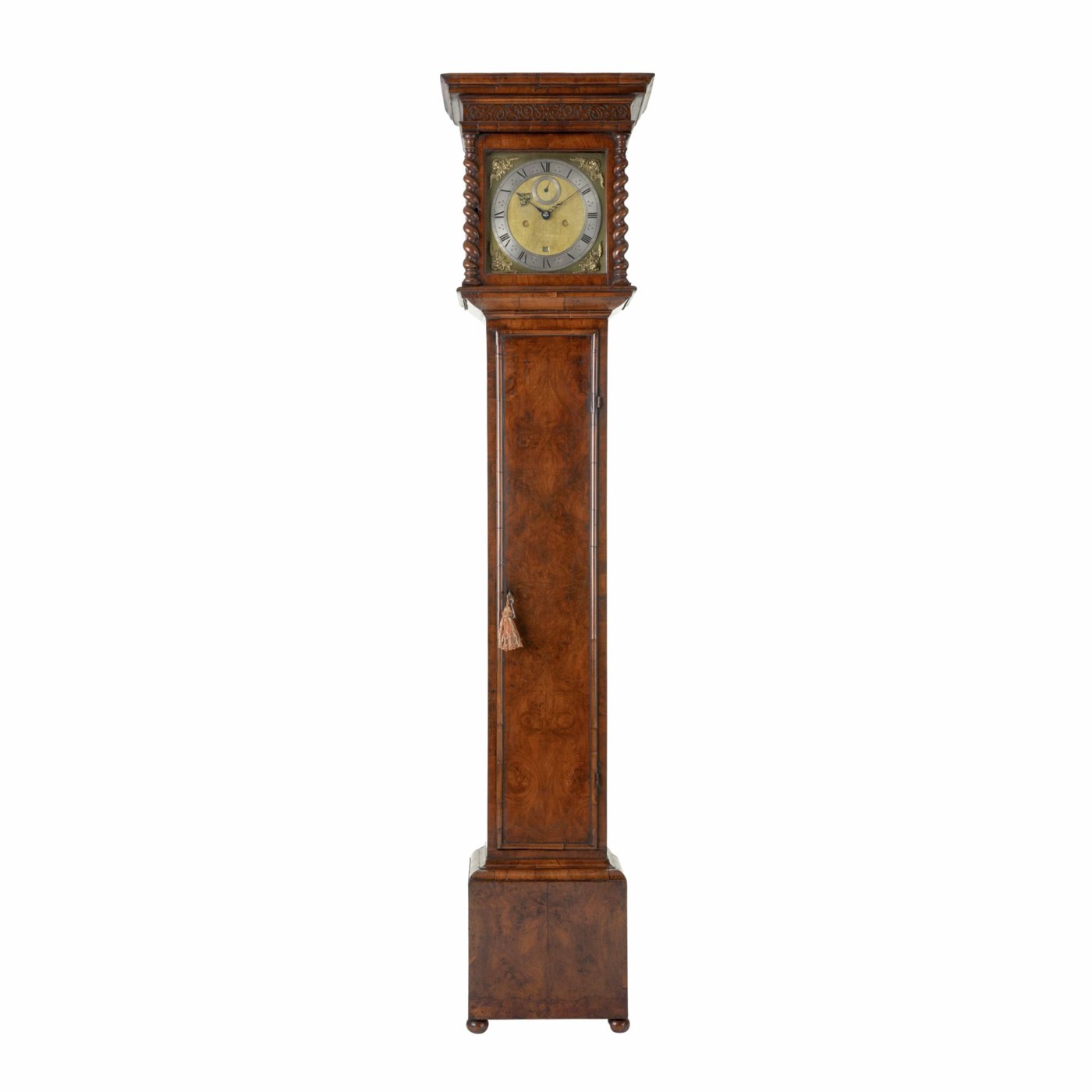
Walnut longcase clock by Edward East
This longcase clock is attributed to Edward East and dated to circa 1685. The timepiece is housed in a walnut-veneered case featuring a sliding hood with an overhanging cornice. The hood displays three-quarter and quarter barley twist columns finished with gilt-brass Corinthian-style capitals and bases. The trunk incorporates a long door with bookmatched walnut veneers, bordered by half-round moulding, leading down to a base with three upright veneered panels resting on a plinth. The 10-inch square brass dial is signed "Eduardus East Londini" along the lower edge and includes cherub-head spandrels at the corners. It features a silvered Roman chapter ring with Arabic numerals and trident half-hour indicators, and a matted centre with a subsidiary seconds dial. The movement employs five pillars and an anchor escapement with bolt-and-shutter maintaining power, alongside an external countwheel strike mechanism.
Full description
www.dorsetantiqueclocks.co.uk
Clock · Longcase clock
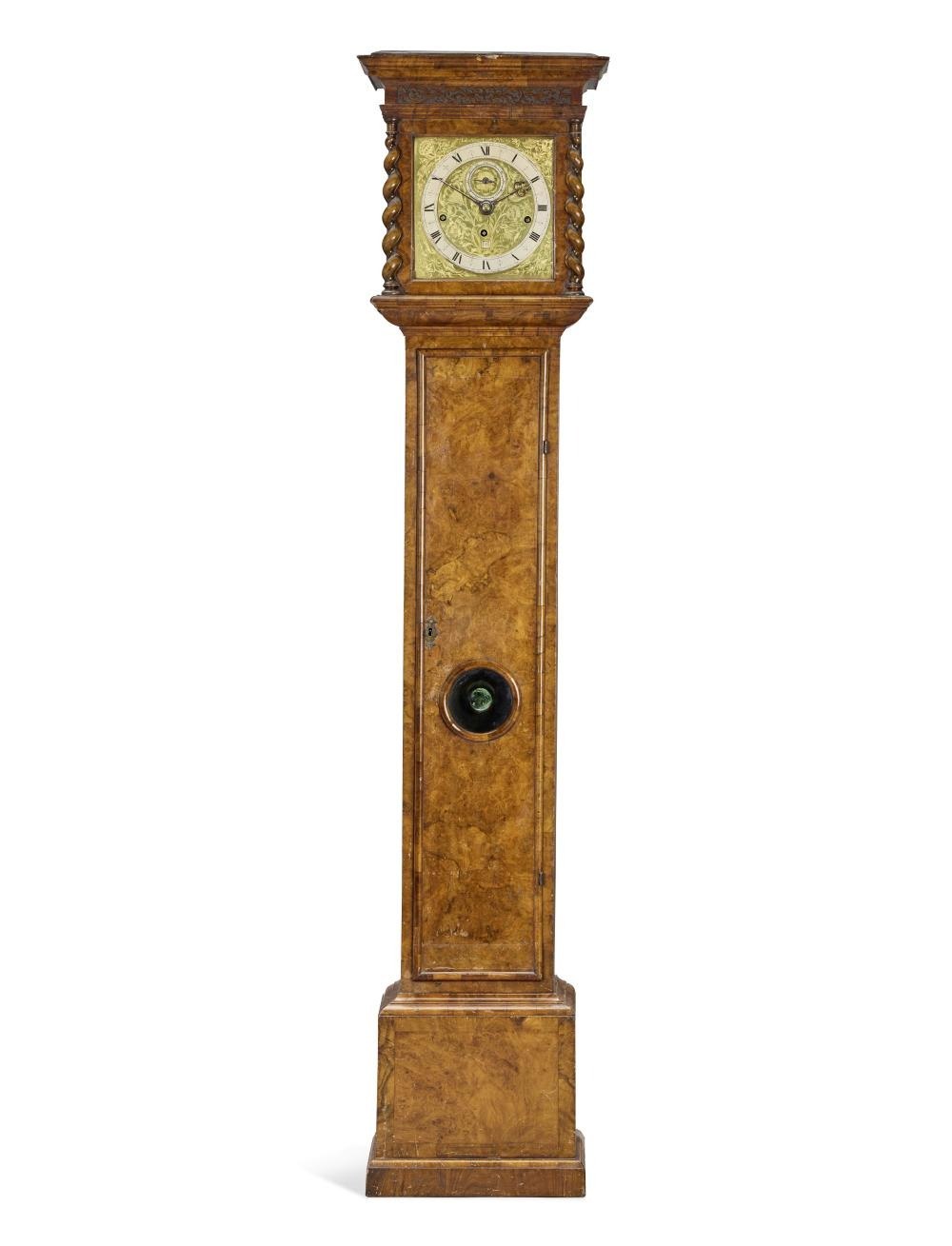
Edward East Walnut Longcase Clock
This longcase clock, attributed to Edward East of London, dates to the third quarter of the 17th century. The clock is constructed in walnut, featuring a flat-topped case with a pierced sound fret and twisted columns flanking the dial. The trunk door includes a large circular lenticle and a brass escutcheon. The 10-inch brass dial displays a silvered chapter ring with Roman numerals, fleur-de-lys markers, and Arabic five-minute divisions. The centre is engraved with tulip and still life motifs. The movement is a substantial three-train mechanism featuring eleven latched, turned knopped pillars and split plates. It includes a quarter-striking system using an external countwheel on a nest of six bells, with a separate countwheel for the hours on an additional bell. The escapement has been modified to an anchor configuration. The total height is recorded as 198 cm.
Full description
Source listing · 201086677
Clock · Bracket clock
Table or bracket clock by Edward East
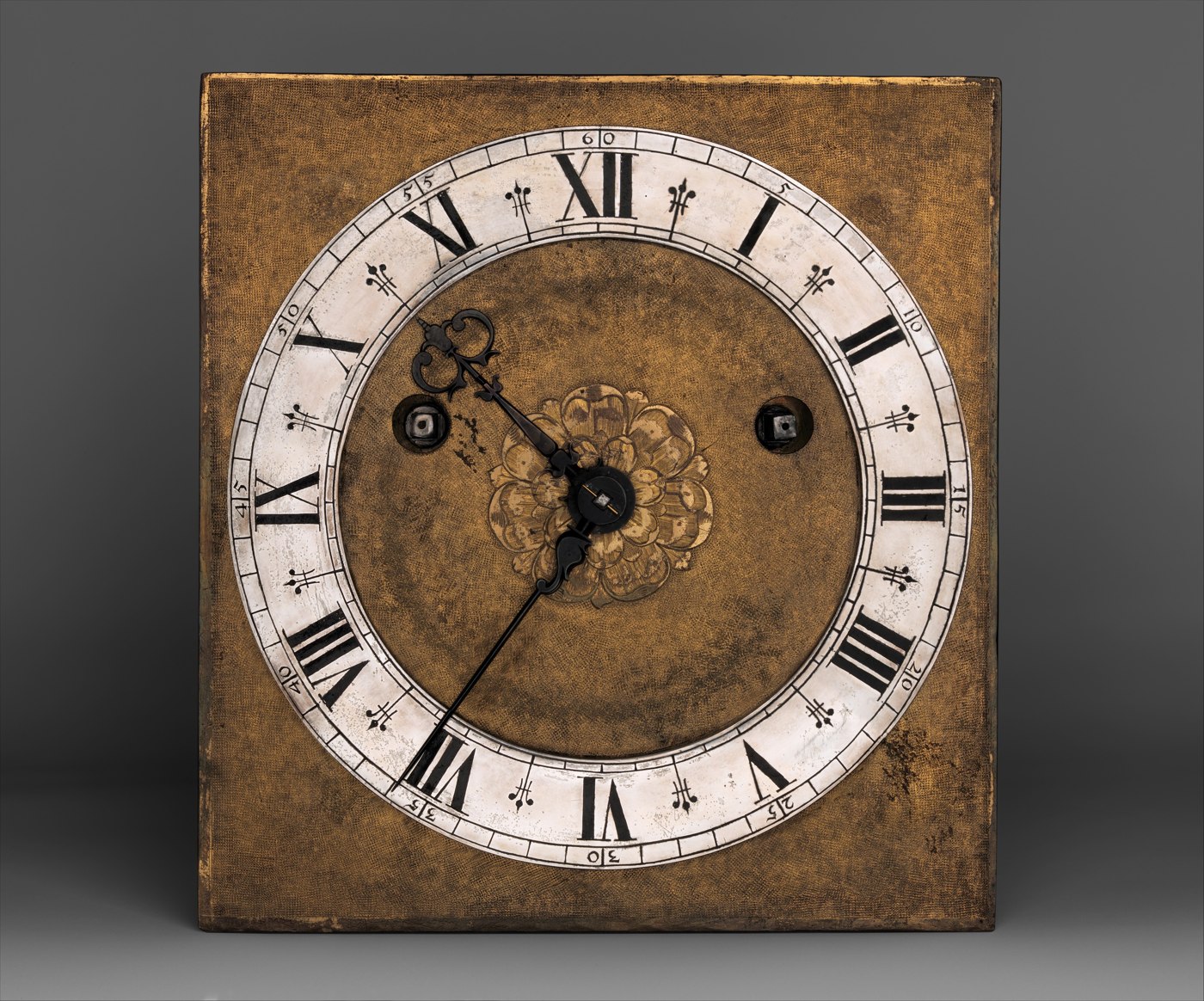
This table or bracket clock was created by the London-based clockmaker Edward East (1602–1697) circa 1665. The object measures 14 9/16 by 11 11/16 by 6 1/4 inches. Its construction incorporates a case fashioned from ebonized fruitwood and rosewood, accented with ebony moldings. The dial is composed of gilded brass and silver. The internal mechanism is constructed primarily from brass and steel, as indicated by the museum's technical records. The clock features a prominent signature on the back plate, which reads 'Eduardus East Londini'. It was donated to the Metropolitan Museum of Art by Irwin Untermyer in 1964. The timepiece reflects the materials and construction methods associated with East's output in the mid-17th century, featuring a dial plate measuring 8 5/8 by 8 inches.
Full description
Source listing · 64.101.860
Pocket watch · Enamel, form & pendant watch
Edward East Gourd-Shaped Watch
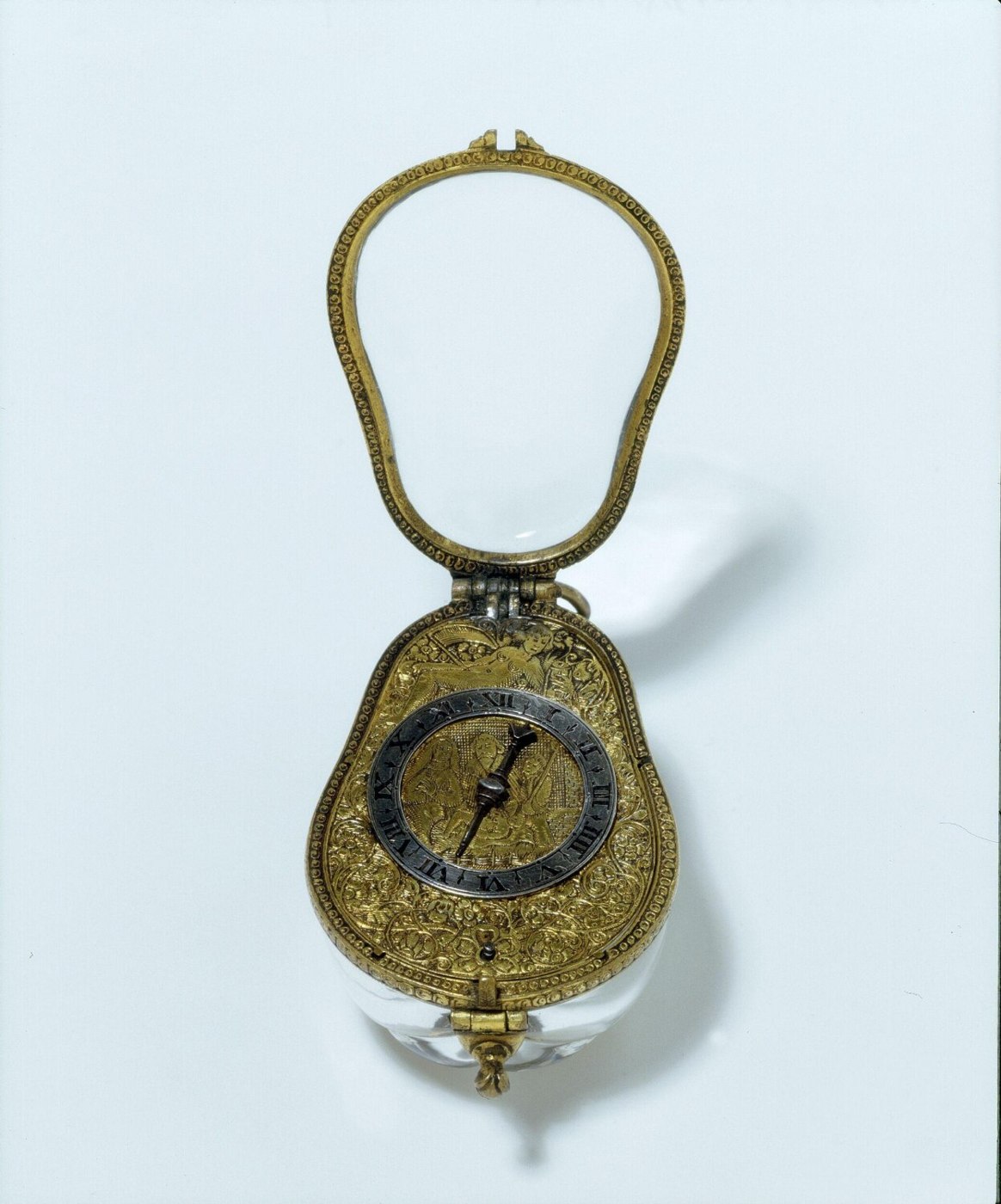
This gourd-shaped pocket watch is attributed to the London maker Edward East, dating to circa 1635. It features a distinct case fashioned from rock crystal mounted in gilt brass. The watch displays a gilt-brass dial, which is engraved with a depiction of the Nativity at its center and a nude figure of Time holding a scythe and an hourglass above the hour ring. The silver hour ring features black enamel-inlaid numerals. Internally, the movement incorporates a verge escapement and a gut-driven fusee mechanism to regulate mainspring power, with the movement plates secured by baluster pillars. This timepiece measures 5.1 cm in height, 3 cm in width, and 2.3 cm in depth.
Full description
collections.vam.ac.uk · M.360-1927