
Construction and Functionality
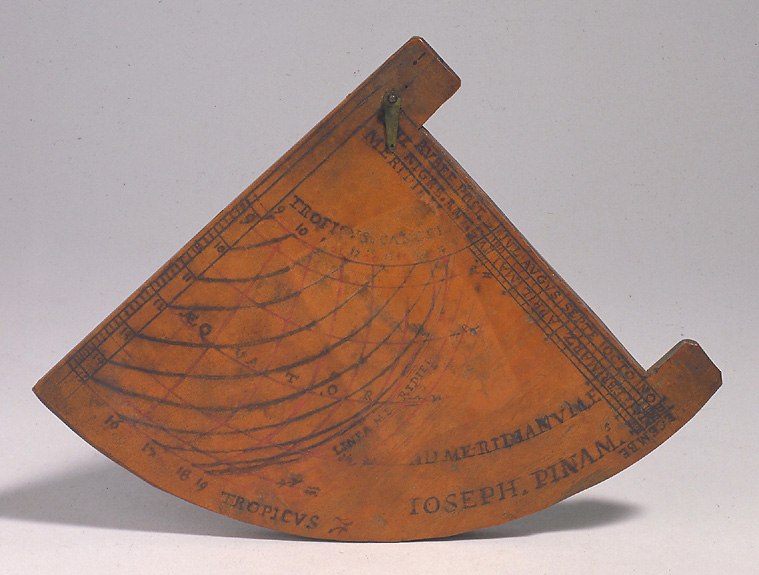
The quadrant is fabricated from wood with a 102 mm radius. The device is designed to measure the height of the sun to indicate the time. The sighting mechanism consists of blocks at each end of the edge, with the upper block drilled to allow a spot of light to strike a brass point set at the center. Originally, a plumb-line was attached to a brass eye that could swivel around a central pin, though this component is now absent from the instrument.
Operation of the device required tilting the quadrant while observing the sun through the sighting edge to allow the height to be read from the hour lines. A specific calendar scale is inscribed along the edge, which provides readings to a five-day interval.
Evidence for this section
- “The instrument could be used to tell the time, by measuring the height of the sun.”
- “The quadrant was tilted while the sun was being observed through it, allowing its height to be displayed.”
- “The sighting edge has blocks at each end the upper being drilled through the centre so that a spot of light may fall on a brass point set at the centre of the other.”