
Skip to content
The Encyclopedia of Horology

Clock · Pendulum clock

Schöner Pendulum Clock

Partially verified

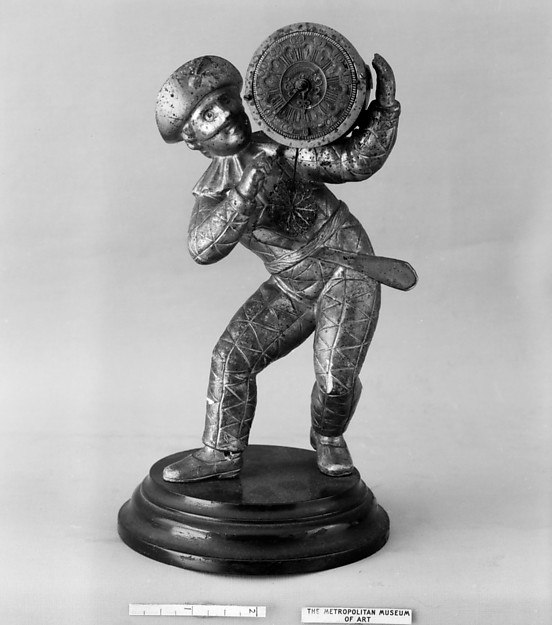
This pendulum clock, held by The Metropolitan Museum of Art (accession number 00.12.7), is attributed to the maker Schöner and dated to the 18th century. The object is a figural clock constructed from brass, silver, and wood, with components of the wood base carved and gilded. It measures 8 1/2 inches (21.6 cm) in height, with a dial diameter of 1 5/8 inches (4.1 cm). The clock features a figurative design, where the timekeeping dial is integrated into the composition, held by a character figure supported by a circular base. The piece is held within the museum's Department of European Sculpture and Decorative Arts. The documentation provides a broad geographical attribution of German or Swiss origin and identifies the piece by its museum accession number. As a specific museum-held object, further scholarly research is required to verify the maker attribution and the context of the wider type to which this clock belongs.

The 18th-century Schöner pendulum clock, a figural piece held by The Metropolitan Museum of Art.
The 18th-century Schöner pendulum clock, a figural piece held by The Metropolitan Museum of Art. — The Metropolitan Museum of Art, New York. Rights pending — permission not yet requested. Original source

Catalogue identity

Source
orbiscollectibles.com
Category
Clock · Pendulum clock
Maker / attribution
Schöner
Reference
Not recorded
Catalogue / lot identifier
00.12.7
Source-reported date
18th century
Source-reported place
German or Swiss

Source-reported attribution and specifications are not independent authentication. A listing does not establish present ownership, current display, availability or permission to reproduce.

Object description

Physical Composition and Design

The pendulum clock is an 18th-century horological object featuring a complex, mixed-material construction. According to the museum documentation, the primary materials utilized in the assembly include brass and silver, incorporated alongside wood elements. Portions of the wooden components are specifically noted as having been carved and gilded, providing decorative detail to the base and supporting structure of the object.

The clock is designed as a figurative piece, standing at a total height of 21.6 centimeters. The dial is relatively small, measuring 4.1 centimeters in diameter, and is held by the sculptural figure.

Evidence for this section
  • “Brass, silver; wood carved and gilded; wood”
  • “2 in. (21.6 cm); Diameter (dial): 1 5/8 in. (4.1 cm)”

Maker Attribution and Origin

The object is attributed to the clockmaker Schöner. While the maker is identified by name, the historical documentation remains limited regarding specific biographical details of the individual. The geographical origin of the piece is ascribed to either Germany or Switzerland, based on the records maintained by the holding institution.

The attribution remains a subject of the museum's internal classification within the Department of European Sculpture and Decorative Arts. Orbis Collectibles indicates that while this specific object is documented, its status as a representative of a wider typological category has not been independently verified by external horological references, necessitating further research into the attribution.

Evidence for this section
  • “Clockmaker: Schöner”

Museum Provenance and Documentation

This pendulum clock is currently held by The Metropolitan Museum of Art in New York under the accession number 00.12.7. This identifier serves as the primary method for cataloguing the object within the museum's collection records. The provenance information provided is limited to this formal museum accession.

The documentation provided through The Metropolitan Museum of Art Collection Online ensures the object is recorded within a recognized institutional framework. Despite this, the record cautions that additional research is required to fully contextualize the object's maker and historical manufacturing background within the broader scope of 18th-century clockmaking practices.

Evidence for this section
  • “The Metropolitan Museum of Art holds this object as 00.12.7”

Open research questions

  • Can specific comparative examples by the maker Schöner be identified in other collections to verify the attribution?
  • What is the mechanical movement configuration concealed within the sculptural body of the clock?

Source evidence

Recorded claims and source quotations for Schöner Pendulum Clock
FieldSource-reported valueSource quotation
MakerSchöner“Clockmaker: Schöner”
Date18th century“18th century”
CountryGerman or Swiss“German or Swiss”
Height8 1/2 in. (21.6 cm)“Height: 8 1/2 in. (21.6 cm)”
Dial Diameter1 5/8 in. (4.1 cm)“Diameter (dial): 1 5/8 in. (4.1 cm)”
MaterialsBrass, silver; wood carved and gilded; wood“Brass, silver; wood carved and gilded; wood”
Accession Number00.12.7“00.12.7”
CollectionThe Metropolitan Museum of Art“The Metropolitan Museum of Art”

Visible details

  • The clock is integrated into a full-body figural sculpture.
  • The dial features Roman numerals.
  • The figure stands on a circular base.
  • The sculpture appears to be composed of metal and wood elements.

Research qualifications

  • The maker attribution to Schöner is subject to further verification.
  • The cultural attribution to Germany or Switzerland remains broad and requires additional horological evidence.

Photograph identity and source facts were screened before import; rights clearance remains pending.

Consulted source

Pendulum clock

Reviewed 2026-11-02 · Record f6d59125a3

Terms in this record

Glossary explanations for terms named in this object’s record.