Skip to content
The Encyclopedia of Horology

Clock · Mantel clock

Oak cased mantle clock

Partially verified

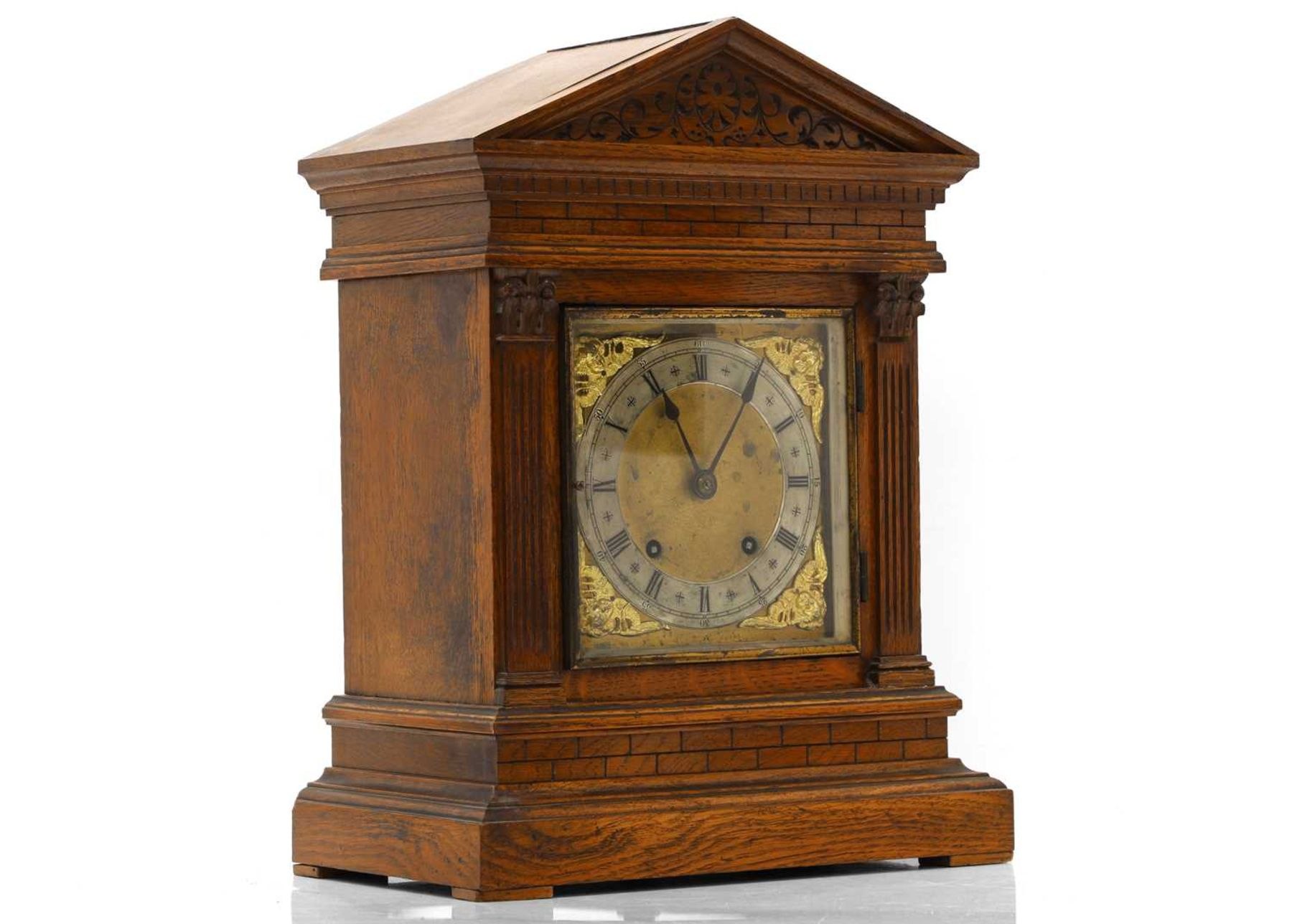
This architectural oak-cased mantle clock is dated to circa 1900. It features a pediment top adorned with carved scrollwork decoration, set above brickwork-pattern carved friezes and flanked by fluted pilasters on the case front. The square dial face is fitted with ornate pierced corner spandrels framing a silvered chapter ring with Roman numerals and two winding holes. According to the auction report, the clock is powered by a twin fusee movement that strikes the quarters. The case measures 31 cm wide, 18.5 cm deep, and 41.5 cm high, and includes a key and pendulum.

Oak-cased mantle clock with architectural pediment and silvered chapter ring, c. 1900
Oak-cased mantle clock with architectural pediment and silvered chapter ring, c. 1900 — Sworders. Rights pending — permission not yet requested. Original source

Catalogue identity

Source
timed.sworder.co.uk
Category
Clock · Mantel clock
Form
Mantle clock
Maker / attribution
Not established
Reference
Not recorded
Catalogue / lot identifier
202
Source-reported date
c. 1900
Source-reported place
Not established

Source-reported attribution and specifications are not independent authentication. A listing does not establish present ownership, current display, availability or permission to reproduce.

Object description

Identity and Architectural Case Construction

This mantle clock is described in the auction catalogue as featuring an architectural oak case dating to circa 1900. It measures 31 cm wide, 18.5 cm deep, and 41.5 cm high.

Visual observations record that the architectural oak case has a pediment top carved with scrollwork and brickwork friezes, and is flanked on the front by fluted pilasters topped with carved capitals. The auctioneer's condition report notes knocks and dents to the case, a misaligned foot, historic repairs, and the top section coming apart.

Evidence for this section
  • “An oak cased mantle clock C.1900”
  • “with an architectural case”
  • “31cm wide, 18.5cm deep, 41.5cm high”
  • “Architectural oak case with a pediment top carved with scrollwork and brickwork friezes”
  • “Front flanked by fluted pilasters topped with carved capitals”
  • “Knocks and dents to the case and the top section coming apart - see images. One foot is misaligned.”
  • “Historic repairs to the case.”

Dial and Visual Features

The face is catalogued with a silvered chapter ring marked with Roman numerals. Existing visual observations record a square dial with cast decorative gilt spandrels in the corners framing the silvered chapter ring.

Two winding apertures are visible on the dial. The auction source does not record any maker's signature, trademark, or inscription on the dial plate.

Evidence for this section
  • “with a silvered chapter ring and Roman numerals”
  • “Square dial with cast decorative gilt spandrels in the corners framing a silvered chapter ring with Roman numerals”
  • “Two winding apertures visible on the dial”

Reported Movement and Operating Condition

The clock is listed as having a twin fusee movement striking the quarters, with a key and pendulum present with the lot.

The auctioneer's condition report notes that the movement 'does wind, tick and strike', though 'the strike is slightly later than the hands show.' The saleroom expressly states that full working order is not guaranteed and suggests a full service or inspection by an expert after purchase.

Evidence for this section
  • “with a twin fusee movement striking the quarters”
  • “Key and pendulum present.”
  • “Does wind, tick and strike. The strike is slightly later than the hands show.”
  • “We cannot guarantee the full working order of this item and would suggest a full service or inspection by an expert after purchase.”

Open research questions

  • Are there any maker stamps, serial numbers, or trademarks on the back plate of the movement or interior of the case?
  • What chime configuration (such as coiled gongs, bells, or a ting-tang arrangement) is utilised for the quarter strike?
  • What repair method is needed to correct the separating top case section and misaligned foot?

Source evidence

Recorded claims and source quotations for Oak cased mantle clock
FieldSource-reported valueSource quotation
Case material and dateOak case, circa 1900“An oak cased mantle clock C.1900”
Movement descriptionTwin fusee movement striking the quarters“with a twin fusee movement striking the quarters”
Dial descriptionSilvered chapter ring with Roman numerals“with a silvered chapter ring and Roman numerals”
Dimensions31 cm wide, 18.5 cm deep, 41.5 cm high“31cm wide, 18.5cm deep, 41.5cm high”
Included accessoriesKey and pendulum present“Key and pendulum present.”
Reported mechanical testWinds, ticks, and strikes, with the strike sounding slightly later than the hands indicate“Does wind, tick and strike. The strike is slightly later than the hands show.”

Visible details

  • Architectural oak case with a pediment top carved with scrollwork and brickwork friezes
  • Front flanked by fluted pilasters topped with carved capitals
  • Square dial with cast decorative gilt spandrels in the corners framing a silvered chapter ring with Roman numerals
  • Two winding apertures visible on the dial

Research qualifications

  • Source report notes knocks, dents, a separating top section, a misaligned foot, and historic repairs to the case.
  • Auctioneer reports the clock winds, ticks, and strikes, but the strike sounds slightly later than the hands indicate.
  • No maker or signature is catalogued.
  • Full working order is not guaranteed by the saleroom.

Photograph identity and source facts were screened before import; rights clearance remains pending.

Consulted source

An oak cased mantle clock C.1900

Reviewed 2026-10-21 · Record 2e3978bd8c

Terms in this record

Glossary explanations for terms named in this object’s record.