
Skip to content
The Encyclopedia of Horology

Movement · Stem-wind stem-set pocket watch movement

New York Watch Company Springfield Movement #324

Partially verified

This antique pocket watch movement, serial number 324, is documented by the source as an early 19-jewel Springfield model manufactured circa 1869 by the New York Watch Company. The uncased movement illustrates the early implementation of Oliver P. Rice and James H. Gerry's patented shifting sleeve stem-wind and stem-set mechanism, granted on June 9, 1868 under U.S. Patent #78693. According to patent records and source commentary, the design engaged winding in one position and setting when the winding arbor was slightly withdrawn.

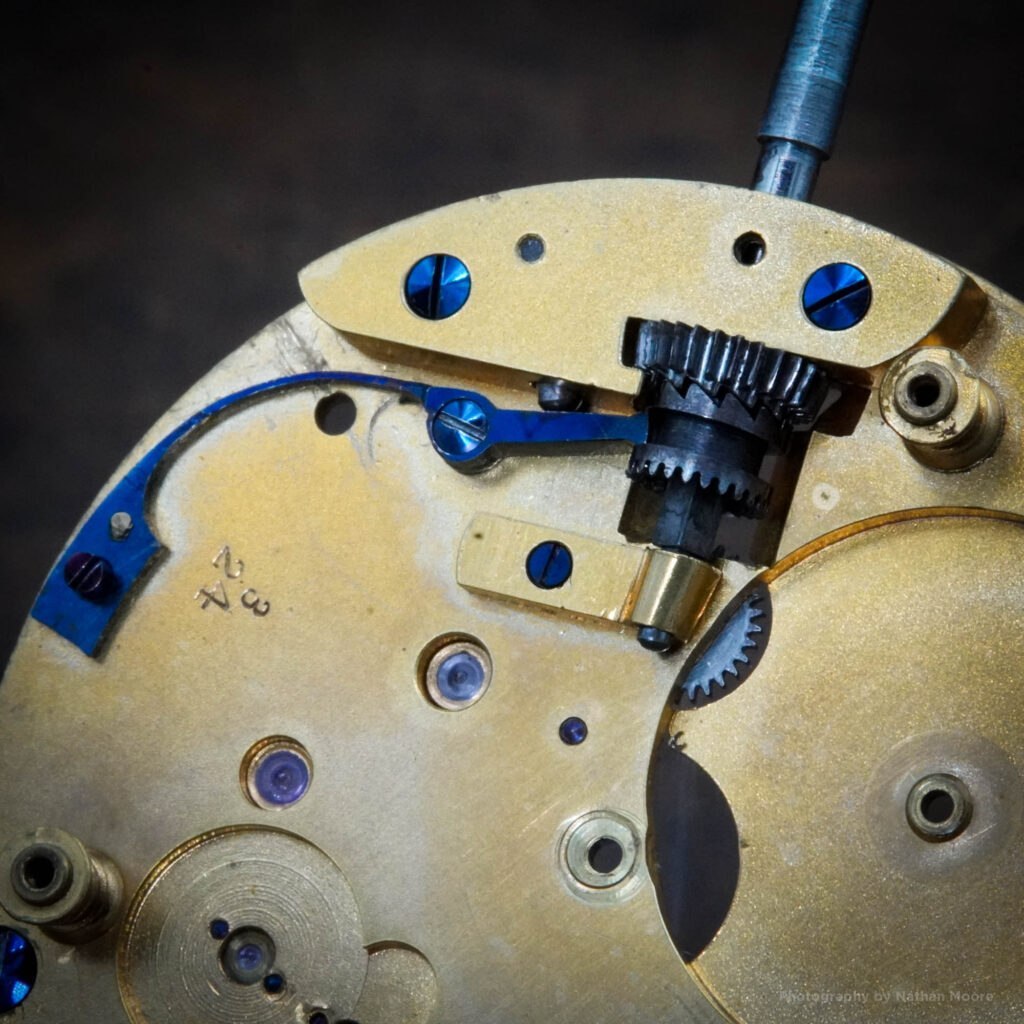
Plate view of New York Watch Company Springfield movement serial #324 showing the Rice and Gerry patented shifting sleeve mechanism.
Plate view of New York Watch Company Springfield movement serial #324 showing the Rice and Gerry patented shifting sleeve mechanism. — Nathan Moore. Rights pending — permission not yet requested. Original source

Catalogue identity

Source
blog.pocketwatchdatabase.com
Category
Movement · Stem-wind stem-set pocket watch movement
Maker / attribution
New York Watch Company
Reference
Not recorded
Catalogue / lot identifier
Source URL identifies the listing
Source-reported date
c. 1869
Country
United States
Source-reported serial
324

Source-reported attribution and specifications are not independent authentication. A listing does not establish present ownership, current display, availability or permission to reproduce.

Object description

Object Identity and Historical Dating

The subject movement is identified in source documentation as "New York Watch Company Springfield Movement #324, c.1869". The source describes this design as an early 19-jewel "Springfield" movement manufactured at the New York Watch Company.

According to the source, this patented design was used by the New York Watch Company for "a year or two" before being adapted for stem-wind and stem-set movements introduced by E. Howard & Co. around 1869.

Evidence for this section
  • “New York Watch Company Springfield Movement #324, c.1869”
  • “produce the early 19-Jewel “Springfield” movements manufactured at the New York Watch Company.”
  • “While this patented design was only used by the New York Watch Company for a year or two”

Visible Plate Construction and Markings

Visual inspection of the uncased movement shows a frosted gilt plate stamped with serial number "324". Jeweled pivot holes are set into the frosted brass plate.

The mechanism features a blued steel shifting lever spring and screws securing the winding-setting assembly, along with a shifting sleeve pinion and winding gear mounted on a steel winding arbor.

Evidence for this section
  • “Frosted gilt plate stamped with serial number '324'.”
  • “Jeweled pivot holes visible set into the frosted brass plate.”
  • “Blued steel shifting lever spring and screws securing the winding-setting mechanism.”
  • “Shifting sleeve pinion and winding gear mounted on a steel winding arbor.”

Patented Stem Mechanism Design

The movement incorporates a variation of the mechanism patented by Oliver P. Rice and James H. Gerry under U.S. Patent #78693, granted on June 9, 1868.

The patent application explains that the watch "may be wound, when the winding-arbor is in one position, and by slightly withdrawing the winding-arbor from the stem of the watch, the winding-gear is disengaged, and the gear engaged for setting the hands."

Evidence for this section
  • “Oliver P. Rice & James H. Gerry’s patent granted on June 9, 1868”
  • “U.S. Patent #78693”
  • ““The nature of our invention consists in the construction and arrangement of the several parts of a stem-winding and setting watch, whereby the watch may be wound, when the winding-arbor is in one position, and by slightly withdrawing the winding-arbor from the stem of the watch, the winding-gear is disengaged, and the gear engaged for setting the hands.””

Open research questions

  • What markings or signatures, if any, are engraved on the hidden pillar plates or lower movement surfaces not documented in this source?
  • What original case style, dial design, and hands were paired with movement #324 upon its production circa 1869?

Source evidence

Recorded claims and source quotations for New York Watch Company Springfield Movement #324
FieldSource-reported valueSource quotation
Object IdentificationNew York Watch Company Springfield Movement #324, c.1869“New York Watch Company Springfield Movement #324, c.1869”
Jewel Count and ModelEarly 19-Jewel Springfield movement“produce the early 19-Jewel “Springfield” movements manufactured at the New York Watch Company.”
Patent AttributionOliver P. Rice & James H. Gerry patent granted June 9, 1868“Oliver P. Rice & James H. Gerry’s patent granted on June 9, 1868”
Patent NumberU.S. Patent #78693“U.S. Patent #78693”
Patent Grant DateJune 9, 1868“Oliver P. Rice & James H. Gerry’s patent granted on June 9, 1868”
Patent Publication ReferenceApril 18, 1868“Scientific American, April 18. 1868”

Visible details

  • Frosted gilt plate stamped with serial number '324'.
  • Blued steel shifting lever spring and screws securing the winding-setting mechanism.
  • Shifting sleeve pinion and winding gear mounted on a steel winding arbor.
  • Jeweled pivot holes visible set into the frosted brass plate.

Research qualifications

  • Movement is shown uncased and partially stripped without dial, hands, or case.
  • Historical claims regarding patent precedence and production dates are reported from the source article and historical patent documentation.

Photograph identity and source facts were screened before import; rights clearance remains pending.

Terms in this record

Glossary explanations for terms named in this object’s record.