
Skip to content
The Encyclopedia of Horology

Tool · Latin-inscribed astrolabe

Late 14th Century European Astrolabe

Partially verified

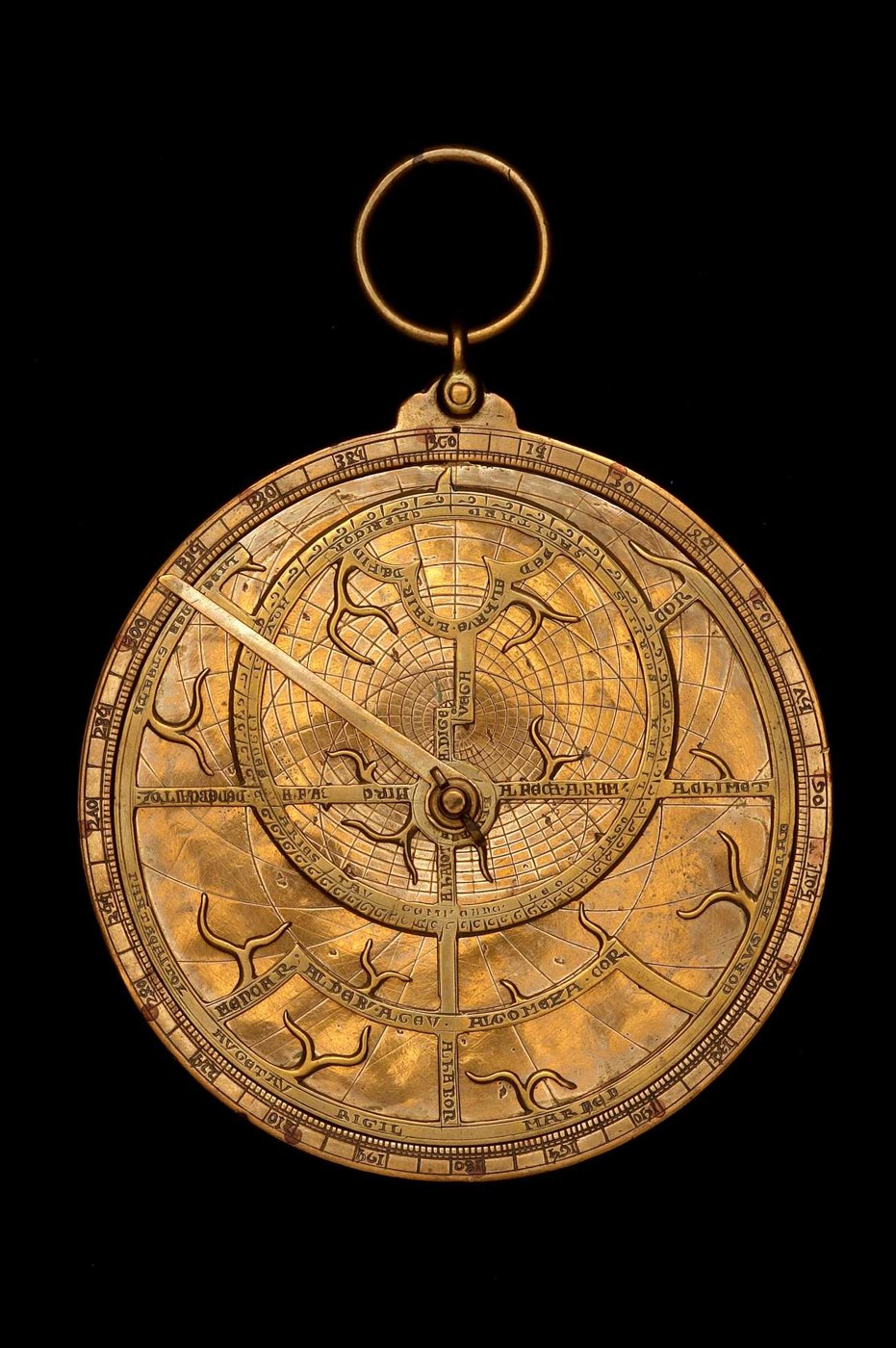
This brass planispheric astrolabe, inventory number 36338, is attributed to Europe and dates to the late 14th century. The instrument features a three-lobed throne with an integrated base, a simple round-section ring, and an omega-type shackle. The mater and limb are constructed from two pieces, soldered and riveted together. The rete, of the indicator-line type, is secured by a pin and wedge and displays 33 stars marked with flamant pointers. The zodiacal labels on the rete include Aries through Pisces. The back of the astrolabe is engraved with six distinct scales, including degree, zodiacal signs, calendar, unequal hours, and a shadow square. The womb area contains two coats of arms, one of which appears unfinished. Acquired in 1957, the instrument was presented to the History of Science Museum by J. A. Billmeir, having been previously obtained from the Paris-based collector and dealer Nicolas Landau.

Front view of the 14th-century astrolabe showing the rete, pin, and graduated limb.
Front view of the 14th-century astrolabe showing the rete, pin, and graduated limb. — History of Science Museum, University of Oxford. Rights pending — permission not yet requested. Original source

Catalogue identity

Source
www.mhs.ox.ac.uk
Category
Tool · Latin-inscribed astrolabe
Maker / attribution
Not established
Reference
36338
Catalogue / lot identifier
36338
Source-reported date
late 14th century
Source-reported place
Europe

Source-reported attribution and specifications are not independent authentication. A listing does not establish present ownership, current display, availability or permission to reproduce.

Object description

Construction and Layout

The astrolabe is manufactured from brass and follows a standard European configuration for the period. The mater and limb are joined via soldering and riveting. The throne is fashioned in a three-lobed style, integrated with the base, and holds a simple circular-section ring and an omega-shaped shackle.

The instrument includes an alidade and a pointer, both described as counter-changed and original. The alidade is rigid and double-ended, featuring single sights and pinholes for astronomical observation.

Evidence for this section
  • “The mater and limb are of two pieces, soldered and riveted construction.”
  • “The throne is of the three-lobed type made of brass attached with integrated base”
  • “Shackle of the omega type (i.e. Ω-shaped shackle).”

Rete and Astronomical Calibration

The rete uses the indicator-line design and is fixed in place with a pin and wedge. It features 33 distinct stars, each indicated by a flamant pointer. The ecliptic scale is graduated from 0 to 30 degrees.

The zodiacal signs are engraved in Latin, including names such as ARIES, TAV, and GEMI'.

Evidence for this section
  • “The rete is of the indicator-line (fullsrc=+refoil) type.”
  • “There are numerous construction marks on the back of the rete, including the names of some of the signs in a cursive script.”
  • “There are 33 stars on the rete marked with flamant pointers.”

Scales and Provenance

The reverse of the mater is etched with six scales: degree, zodiacal signs, calendar, unequal hours, and a shadow square. Two coats of arms are present within the womb area; one is finished, while the other is described as crudely engraved and unfinished.

The astrolabe was acquired in 1957 as part of a donation from J. A. Billmeir. Historical records indicate that Billmeir acquired the piece from the Parisian dealer Nicolas Landau between 1955 and 1957. The coat of arms remains unidentified.

Evidence for this section
  • “The back contains 6 scales of the following types: Degree; Zodiacal signs; Calendar; Unequal hours; Shadow square.”
  • “The womb bears two coats of arms. The two insignias are similar. One is crudely engraved and unfinished.”
  • “Billmeir bought it from Nicolas Landau, a collector and dealer of Paris, during the period 1955-57.”

Open research questions

  • What is the identity of the family or institution represented by the coats of arms in the womb?
  • Do the cursive construction marks on the rete provide clues to the regional linguistic origin of the maker?

Source evidence

Recorded claims and source quotations for Late 14th Century European Astrolabe
FieldSource-reported valueSource quotation
Inventory number36338“Inventory no. 36338”
MaterialBrass“Material Brass”
DateLate 14th century“Date late 14th century”
Throne typeThree-lobed“The throne is of the three-lobed type”
Rete star count33“There are 33 stars on the rete”
Acquisition sourceJ. A. Billmeir“Presented by J. A. Billmeir in 1957”
Provenance historyPurchased from Nicolas Landau“Billmeir bought it from Nicolas Landau, a collector and dealer of Paris, during the period 1955-57.”

Visible details

  • The rete features multiple construction marks and cursive script on the reverse side.
  • The alidade is double-ended and counter-changed with rigid, single-sight construction.
  • The mater womb contains two coats of arms, with one being crudely engraved.

Research qualifications

  • The coats of arms engraved in the mater have not been identified.
  • The exact workshop or specific place of manufacture within Europe is unknown.

Photograph identity and source facts were screened before import; rights clearance remains pending.

Consulted source

Astrolabe, inventory 36338 (Europe, late 14th century)

Reviewed 2026-10-26 · Record dfbd680f99

Terms in this record

Glossary explanations for terms named in this object’s record.