
Skip to content
The Encyclopedia of Horology

Tool · Sundial

Egyptian Merkhet

Partially verified

This Merkhet is an ancient Egyptian timekeeping and surveying instrument dating to 600 BCE. The object is constructed from bronze and features hieroglyphic text inlaid with electrum metal. It is designed for use in conjunction with a plumb bob to establish a vertical reference for timekeeping or architectural layout. The instrument, which measures 25 mm by 93 mm by 22 mm, functions by observing the passage of celestial bodies across the north-south meridian at night or tracking the sun during the day. It has been fitted with a replica plumb bob, an addition the source identifies as occurring during the early twentieth century.

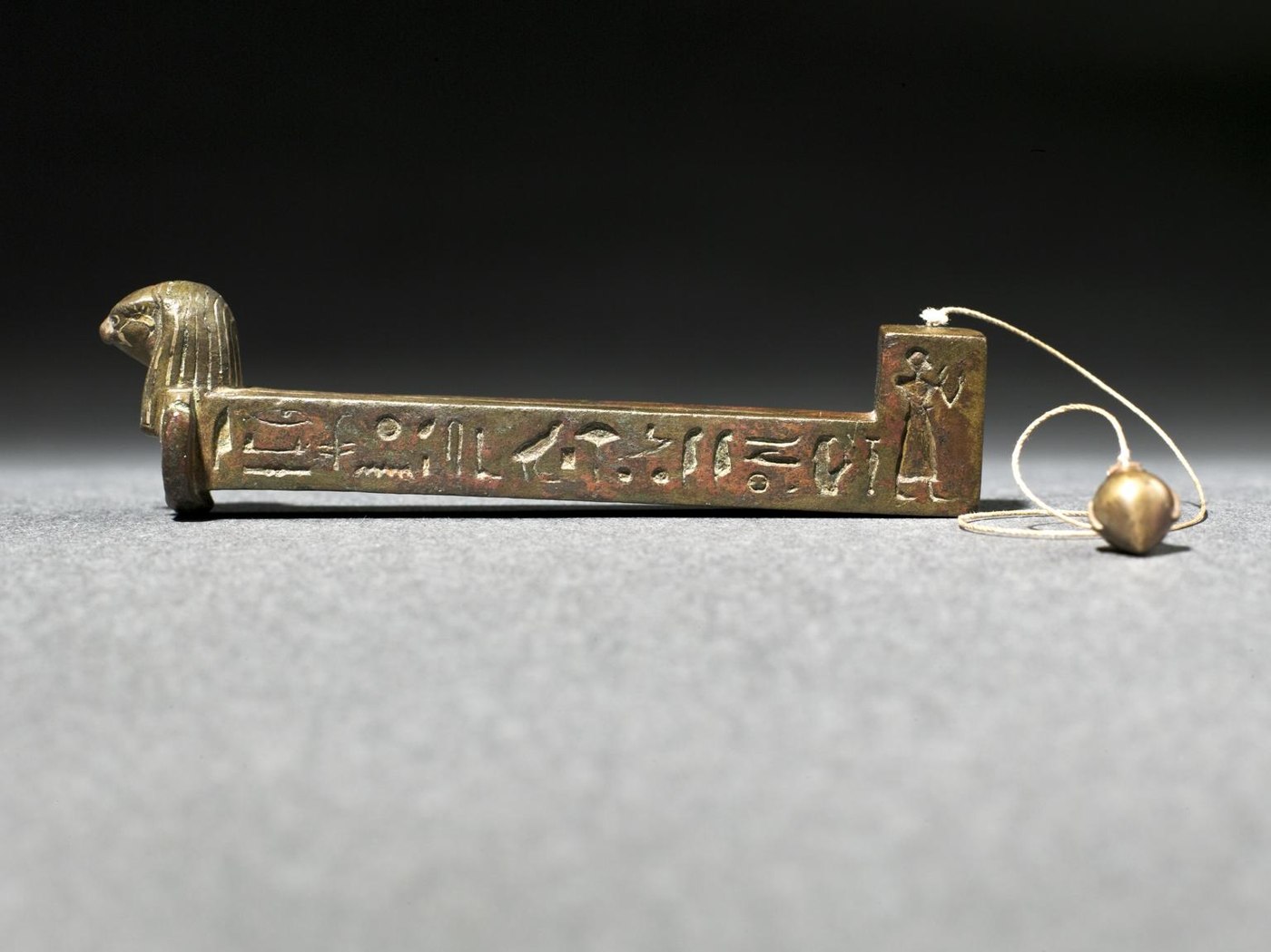
A profile view of the Egyptian Merkhet, showing the bronze bar, hieroglyphic inscriptions, and the attached plumb line.
A profile view of the Egyptian Merkhet, showing the bronze bar, hieroglyphic inscriptions, and the attached plumb line. — Science Museum Group. Rights pending — permission not yet requested. Original source

Catalogue identity

Source
collection.sciencemuseumgroup.org.uk
Category
Tool · Sundial
Maker / attribution
Unknown maker
Reference
Not recorded
Catalogue / lot identifier
1929-585
Source-reported date
600 BCE
Source-reported place
Ancient Egypt

Source-reported attribution and specifications are not independent authentication. A listing does not establish present ownership, current display, availability or permission to reproduce.

Object description

Construction and Materials

The Merkhet is a small, portable tool fabricated from bronze. The primary body consists of a linear bar featuring an upright section at one end, which is adorned with a sculptural head element. The construction integrates decorative elements through the inlay of electrum metal, which fills the recessed hieroglyphic characters inscribed along the sides of the bar.

The device serves as a physical support for a plumb line. While the original plumb line is no longer present in its entirety, the device currently includes a cord and weight assembly. This component is recorded by the museum as a replica rather than an original ancient fitting, with this modification attributed to the early twentieth century.

Evidence for this section
  • “Made in bronze with hieroglyphic text inlaid with electrum metal.”
  • “The device has been fitted with a replica plumb bob, probably at some point during the early twentieth century.”

Inscriptions and Identity

The bronze surface is covered in hieroglyphic inscriptions that denote the original ownership of the instrument. The text identifies the owner as Bes, the son of Khonsirtis. He is described as an astronomer priest serving the god Horus of Edfu, a city located in Upper Egypt.

The inscriptions provide context for the tool's intended use. By identifying the owner as an astronomer priest, the text confirms that the Merkhet was used by specialists tasked with tracking celestial phenomena.

Evidence for this section
  • “The hieroglyphic inscription indicates that this instrument was the property of Bes, son of Khonsirtis (Khensardais var.), an astronomer priest of the god, Horus of Edfu in Upper Egypt.”

Operational Utility

The Merkhet functioned as a multi-purpose tool for timekeeping and surveying. As a timekeeping instrument, it allowed the user to determine the progression of hours during daylight by the sun. At night, it was employed by observing the transit of specific stars across the north-south meridian. This method relied on the plumb line to create a perfectly vertical reference, facilitating precise observation.

Beyond its application in observational astronomy, the tool was used as a surveying device. The same principles of verticality used to track stars allowed for the alignment of architectural structures.

Evidence for this section
  • “As a timekeeping instrument, it would have been used to determine the hours by the sun during the day and by onserving the passage of selected stars across the north-south meridian during the night.”
  • “As a surveying instrument, it would have been used to layout axes of buildings.”

Open research questions

  • What is the physical nature of the 'replica' plumb bob weight, and what material was used for the twentieth-century cord?
  • Are there other known instances of Merkhets with identical electrum inlay techniques surviving in other collections?

Source evidence

Recorded claims and source quotations for Egyptian Merkhet
FieldSource-reported valueSource quotation
Accession Number1929-585“1929-585”
MaterialBronze and electrum“Made in bronze with hieroglyphic text inlaid with electrum metal.”
Dimensions25 mm x 93 mm x 22 mm“overall: 25 mm x 93 mm x 22 mm”
OriginAncient Egypt“Ancient Egypt; Egypt”
FunctionTimekeeping and surveying“Merkhet, a timekeeping and surveying instrument”
OwnershipBes, son of Khonsirtis“the property of Bes, son of Khonsirtis (Khensardais var.), an astronomer priest of the god, Horus of Edfu in Upper Egypt.”
Component StatusReplica plumb bob“The device has been fitted with a replica plumb bob, probably at some point during the early twentieth century.”

Visible details

  • Hieroglyphic inscriptions are visible along the length of the bronze bar.
  • One end of the object features a decorative, sculpted head component.
  • A cord and small metal weight are attached to the device.
  • The bar is rectangular in section with a raised end-piece.

Research qualifications

  • The plumb bob is identified as a replica, likely added in the early twentieth century.
  • The specific identity of the owner, Bes, is derived from the hieroglyphic inscription.

Photograph identity and source facts were screened before import; rights clearance remains pending.

Consulted source

Egyptian Merkhet

Reviewed 2026-10-26 · Record 14384150d9

Terms in this record

Glossary explanations for terms named in this object’s record.