
Case and Aesthetic Features
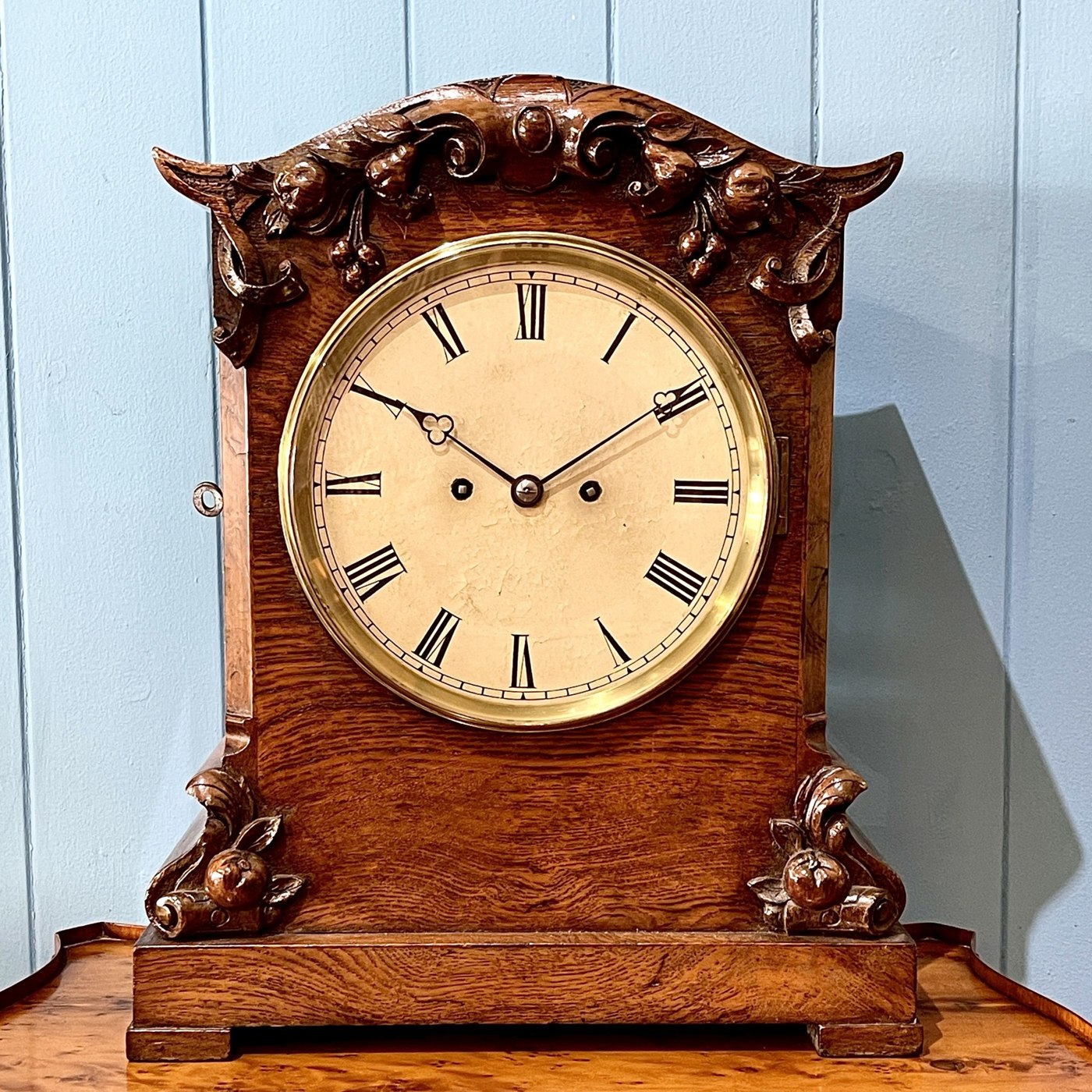
The clock is housed in an oak case characterized by its Early Victorian stylistic elements, specifically those dating to approximately 1840. The silhouette is defined by a serpentine-shaped top which acts as a focal point for the elaborate hand-carved ornamentation. This carving incorporates fruit and leaf motifs that frame a central cartouche.
Similar decorative carvings are repeated at the base of the clock, creating visual symmetry. Practicality is integrated into the design through the inclusion of bevelled glass panels located on both side profiles and the rear access door, intended to allow inspection of the mechanical movement housed within.
Evidence for this section
- “بدنهای از جنس چوب بلوط مرغوب”
- “تاج منحنی مارپیچی (serpentine) بالای قاب با کندهکاریهای دستساز به شکل میوهها و شاخوبرگ در اطراف یک کتیبه یا ترنج مرکزی تزیین شده است”