
Skip to content
The Encyclopedia of Horology

Tool · Latin-inscribed astrolabe

Brass astrolabe by Jean Fusoris

Partially verified

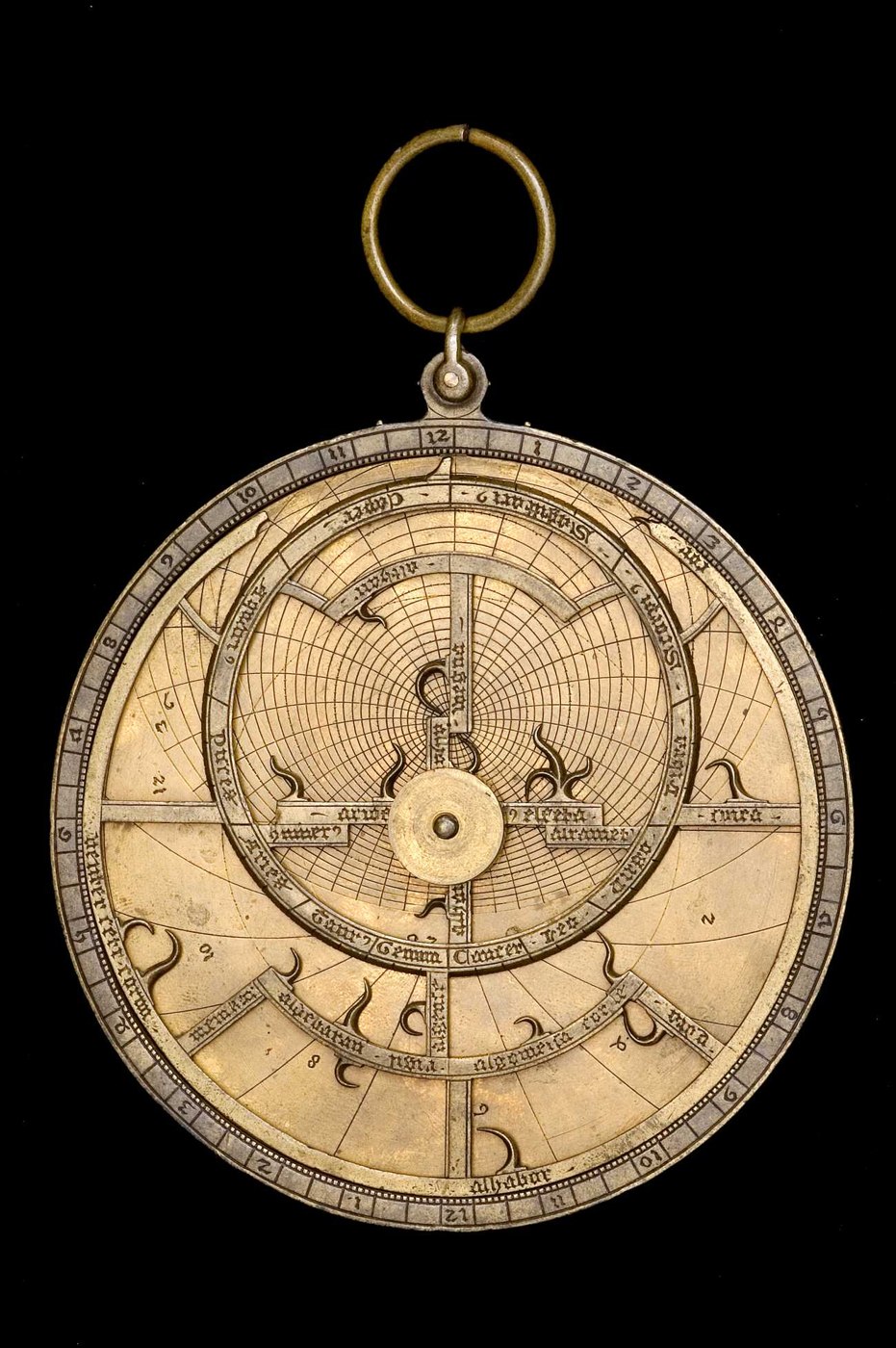
This brass planispheric astrolabe is attributed to Jean Fusoris, Paris, dating to approximately 1400. It features an omega-type shackle, a ring with a round cross-section, and a simple-type throne decorated with single raised lines. The mater and limb comprise two soldered pieces, with the limb scale marked for equal hours. The back of the instrument contains five circular or arc-based scales, including degrees, zodiacal signs, a calendar, unequal hours, and a central shadow square. The rete is of the indicator-line full type, displaying 21 stars with flamant pointers and zodiacal inscriptions; it is secured by a central nut and bolt. The instrument includes four plates for varying latitudes and a double-ended, counter-changed alidade featuring inverted Gothic-style tips. Acquired in 1957 via a gift from J. A. Billmeir, it was previously recorded in the collection of Claude Fry.

Front view of the brass astrolabe showing the rete, star pointers, and ecliptic scale.
Front view of the brass astrolabe showing the rete, star pointers, and ecliptic scale. — History of Science Museum, University of Oxford. Rights pending — permission not yet requested. Original source

Catalogue identity

Source
www.mhs.ox.ac.uk
Category
Tool · Latin-inscribed astrolabe
Maker / attribution
Jean Fusoris
Reference
53801
Catalogue / lot identifier
1957-84/175B
Source-reported date
ca. 1400
Source-reported place
Paris

Source-reported attribution and specifications are not independent authentication. A listing does not establish present ownership, current display, availability or permission to reproduce.

Object description

Construction and Design

The instrument is constructed primarily of brass and follows a traditional planispheric design. It features a simple throne with an integrated base, characterized by single raised lines on both sides, which supports a round-sectioned ring. The mater and limb are joined via soldered construction, with the limb scale calibrated for equal hours in a concentric circular arrangement.

The device includes four plates with latitude ranges between 42° and 52°. The back face provides comprehensive astronomical information through five distinct scales: degree, zodiacal signs, calendar, unequal hours, and a central shadow square. The alidade is a double-ended, counter-changed component featuring inverted Gothic-style tips.

Evidence for this section
  • “The throne is of the simple type made of brass attached with integrated base”
  • “The mater and limb are of two pieces, soldered construction.”
  • “The back contains 5 scales of the following types: Degree; Zodiacal signs; Calendar; Unequal hours; Shadow square.”

Rete and Astronomical Features

The rete is an indicator-line full type that features 21 stars, each indicated by a flamant pointer. The zodiac is inscribed with specific Latin-derived labels. The rete exhibits four engraved dots along the lower edge of the central opening. The ecliptic scale is marked on the rete with a 0-30 degree range.

The instrument is secured by a central nut and bolt assembly. The womb section contains four notable dots placed above the central hole. Measurements are provided for mediation and declination for all 21 stars, including notable stars such as Aldebaran, Sirius, and Arcturus, using standardized pointers.

Evidence for this section
  • “The rete is of the indicator-line (full) type.”
  • “The rete contains 21 stars.”
  • “there are four conspicuous dots just above the central hole.”

Provenance and Attribution

This astrolabe is attributed to the workshop of Jean Fusoris in Paris. The attribution is supported by stylistic similarities between the rete's design and other instruments known to originate from the Fusoris workshop. The object entered the current collection in 1957 following a gift from J. A. Billmeir.

The object's provenance is traced back to the collection of Claude Fry. Records indicate that Billmeir acquired the astrolabe through a London auction at Sotheby's on March 14, 1957, where it was designated as lot 146. It is currently catalogued under the accession number 1957-84/175B.

Evidence for this section
  • “This rete resembles those from Jean Fusoris's workshop.”
  • “Presented by J. A. Billmeir in 1957”
  • “Billmeir bought it at Sotheby's, London, on 14 March 1957 (lot 146).”

Open research questions

  • Determine the origin of the four dots engraved on the womb and the back of the rete.
  • Investigate the exact nature of the damage to the suspension ring and its impact on the astrolabe's original assembly.

Source evidence

Recorded claims and source quotations for Brass astrolabe by Jean Fusoris
FieldSource-reported valueSource quotation
MakerJean Fusoris“Maker Jean Fusoris”
Dateca. 1400“Date ca. 1400”
MaterialBrass“Material Brass”
Inventory number53801“Inventory no. 53801”
PlaceParis“Place Paris”
Stars21 stars“The rete contains 21 stars.”
Latitudes42°0' to 52°0'“There are 4 plates with latitudes ranging from 42°0' to 52°0' .”

Visible details

  • Omega-shaped shackle
  • Rete contains 21 stars with flamant pointers
  • Double-ended counter-changed alidade
  • Four conspicuous dots located above the central hole on the womb

Research qualifications

  • The ring may have been soldered but has broken apart
  • The identification as a Fusoris product is based on stylistic resemblance to items from his workshop

Photograph identity and source facts were screened before import; rights clearance remains pending.

Consulted source

Astrolabe, inventory 53801 (Paris, ca. 1400)

Reviewed 2026-10-26 · Record 7f46b3b306

Terms in this record

Glossary explanations for terms named in this object’s record.