
Skip to content
The Encyclopedia of Horology

Tool · Latin-inscribed astrolabe

Brass Astrolabe

Partially verified

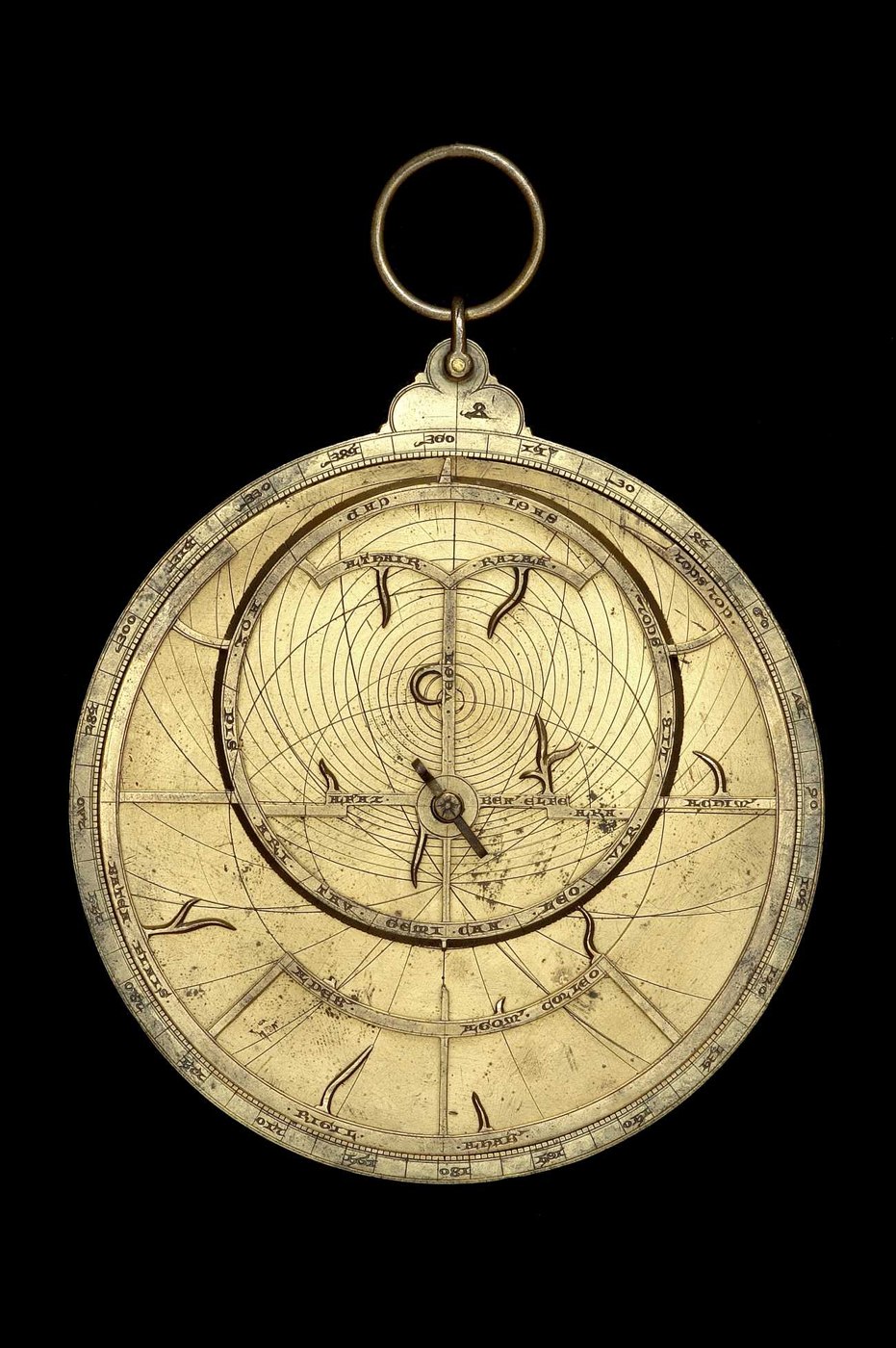
This brass astrolabe, inventory number 54330, is dated to the late 14th or early 15th century and is attributed to Paris. The instrument features a three-lobed throne with an integrated base and an omega-type shackle. Its construction includes a two-piece soldered mater and limb. The back displays five distinct scales, including degree, zodiacal signs, calendar, unequal hours, and a shadow square. The rete, attached via a pin and wedge, accommodates 17 stars marked with flamant pointers and an ecliptic scale. It includes four plates for latitudes ranging from 38° to 60°. The double-ended alidade is counter-changed. The front of the throne is engraved with a gothic 4 or similar mark. Formerly part of the Henri Michel collection, the object was acquired by the History of Science Museum in Oxford via the Billmeir Collection in 1957.

Front view of the brass astrolabe, showing the rete and the engraved mark on the throne.
Front view of the brass astrolabe, showing the rete and the engraved mark on the throne. — History of Science Museum, University of Oxford. Rights pending — permission not yet requested. Original source

Catalogue identity

Source
www.mhs.ox.ac.uk
Category
Tool · Latin-inscribed astrolabe
Maker / attribution
Not established
Reference
Not recorded
Catalogue / lot identifier
54330
Source-reported date
late 14th or early 15th century
Source-reported place
France

Source-reported attribution and specifications are not independent authentication. A listing does not establish present ownership, current display, availability or permission to reproduce.

Object description

Construction and Component Details

The instrument is fabricated from brass and features a three-lobed throne with an integrated base. The ring attached to the throne is of a simple, round cross-section, while the shackle is of the omega type. The mater and limb are constructed from two soldered pieces, with the limb featuring a concentric degree scale numbered every 15 degrees.

The rete is designed with an indicator-line structure and a broken meridian band below the ecliptic. It features 17 stars, each indicated by a flamant pointer, and is fixed using a pin and wedge mechanism. The device includes four distinct plates with latitudes varying between 38° and 60°.

Evidence for this section
  • “The throne is of the three-lobed type made of brass attached with integrated base”
  • “The mater and limb are of two pieces, soldered construction.”
  • “The rete contains 17 stars.”

Scales and Engravings

The back of the astrolabe is equipped with five functional scales for astronomical calculation: a degree scale, a zodiacal signs scale, a calendar scale, a scale for unequal hours, and a shadow square. The zodiacal signs are divided into 10-degree increments, and the calendar follows a month-based cycle.

A small mark resembling a gothic 4 or a monogram is engraved on the throne. Additionally, an inscription 'PIS' is found on the plate corresponding to 49° latitude.

Evidence for this section
  • “The back contains 5 scales of the following types: Degree; Zodiacal signs; Calendar; Unequal hours; Shadow square.”
  • “A gothic 4 (or a monogram apparently including a 4) has been engraved on the front of the throne.”
  • “the plate for latitude 49° has the inscription 'PIS' with a horizontal bar through the P. Such a bar usually indicates a suspension or abbreviation, so the most likely reading is Paris”

Provenance and Historical Context

This astrolabe entered the museum's collection in 1957 as a gift from J.A. Billmeir, who had previously acquired it as part of the collection of Henri Michel from Brussels. The historical associations of the instrument have been a subject of scholarly curiosity, particularly concerning the potential original ownership.

Beyond its probable Parisian origins, the existence of a specific latitude plate for 51° 40' indicates that the instrument may have been utilized or owned in the Netherlands, Germany, or Oxford, suggesting a history of movement across European centers of learning.

Evidence for this section
  • “Presented by J.A. Billmeir in 1957”
  • “Billmeir acquired it with the collection of Henri Michel, of Brussels, which he purchased about 1950.”
  • “there is one plate for the very specific latitude of 51° 40'. That would suggest an original owner in the Netherlands or Germany - or of course in Oxford.”

Open research questions

  • What is the specific significance of the gothic numeral 4 engraved on the throne?
  • Does the plate for 51° 40' latitude provide evidence of the instrument being used in a specific university setting?

Source evidence

Recorded claims and source quotations for Brass Astrolabe
FieldSource-reported valueSource quotation
Inventory Number54330“Inventory no. 54330”
MaterialBrass“Material Brass”
Datelate 14th or early 15th century“Date late 14th or early 15th century”
Place of ManufactureParis (?)“Place Paris (?)”
Throne typeThree-lobed“The throne is of the three-lobed type”
Number of stars on rete17“The rete contains 17 stars.”
AcquisitionPresented by J.A. Billmeir in 1957“Presented by J.A. Billmeir in 1957”

Visible details

  • Engraved gothic numeral 4 or monogram on the throne
  • Flamant pointers used to indicate stars on the rete
  • Inscription PIS on the 49° latitude plate
  • Double-ended counter-changed alidade

Research qualifications

  • The nature of the mark on the throne (monogram, maker's mark, or symbol) remains unidentified
  • The interpretation of the PIS inscription as a name (Thomas de Pisan) is contested by the museum

Photograph identity and source facts were screened before import; rights clearance remains pending.

Consulted source

Astrolabe, inventory 54330 (Paris (?), late 14th or early 15th)

Reviewed 2026-10-26 · Record b3b05133fe

Terms in this record

Glossary explanations for terms named in this object’s record.