
Skip to content
The Encyclopedia of Horology

Tool · Latin-inscribed astrolabe

Brass Astrolabe

Partially verified

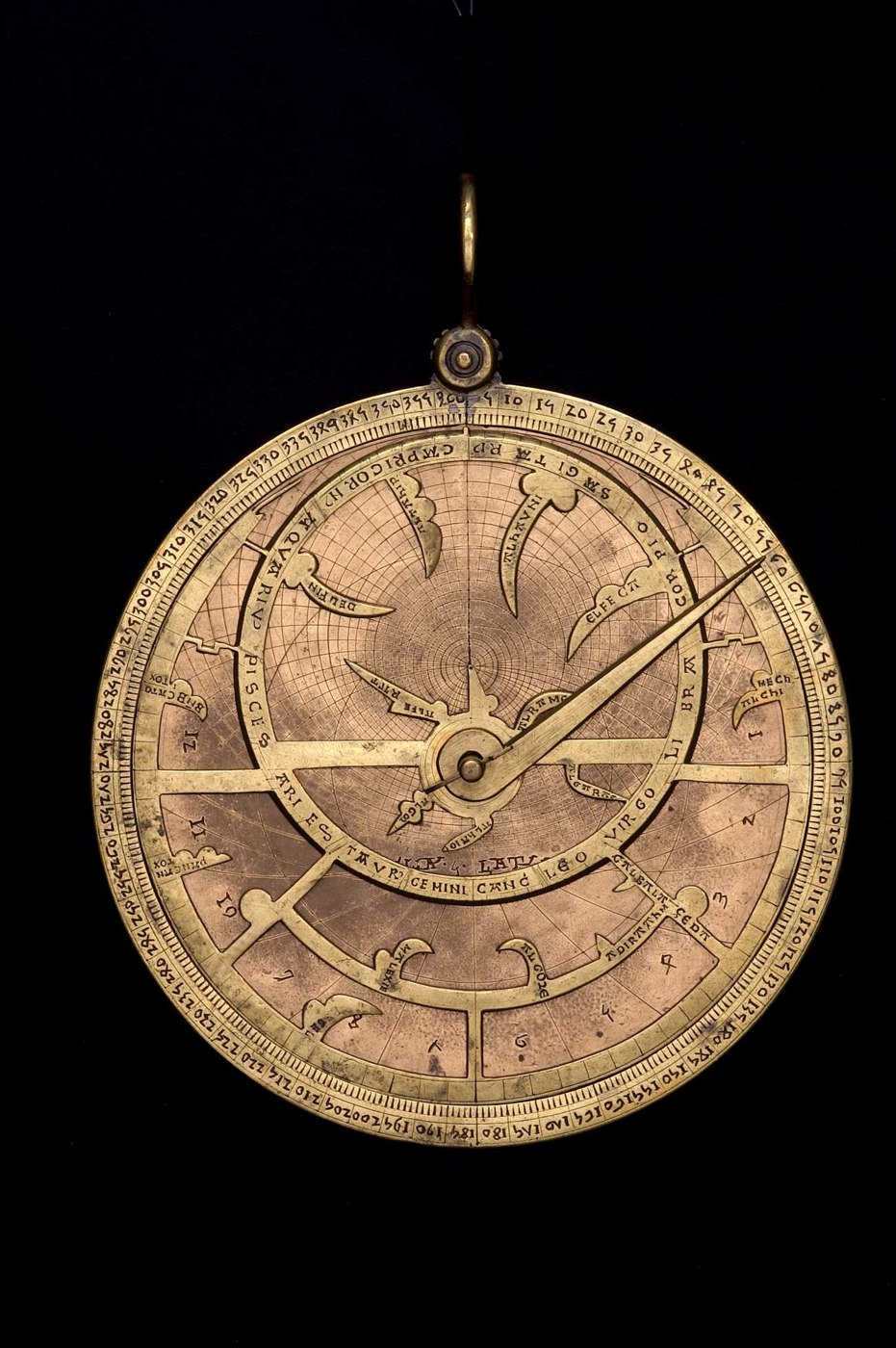
This brass astrolabe (inventory number 43504) is dated to circa 1260 and is attributed to a possible Spanish origin. The instrument features a simple throne with a filleted edge, an omega-shaped shackle, and a mater with an integrated limb of two-piece soldered construction. It is equipped with five plates covering latitudes from 12° to 48°. The rete, of an indicator-line type, displays 20 star positions marked with dagger pointers and a labeled zodiac. The back of the instrument contains four distinct scales: a degree scale, zodiacal signs, a calendar, and a shadow square. The alidade is double-ended and counter-changed, although one of its two sighting vanes is broken. The device is currently held in the collection of the History of Science Museum in Oxford, having been presented by Lewis Evans in 1924, who reportedly purchased it in Venice in 1899.

Full view of the astrolabe front, showing the rete and limb scales.
Full view of the astrolabe front, showing the rete and limb scales. — History of Science Museum, University of Oxford. Rights pending — permission not yet requested. Original source

Catalogue identity

Source
www.mhs.ox.ac.uk
Category
Tool · Latin-inscribed astrolabe
Maker / attribution
Not established
Reference
Not recorded
Catalogue / lot identifier
43504
Source-reported date
ca. 1260
Source-reported place
Spain (?)

Source-reported attribution and specifications are not independent authentication. A listing does not establish present ownership, current display, availability or permission to reproduce.

Object description

Structural Composition and Components

The instrument is constructed from brass, featuring a two-piece mater and limb joined via soldered construction. The throne is categorized as a simple type with a filleted edge and is paired with an omega-shaped shackle. The instrument utilizes a pin and horse assembly to secure the rete to the central axis.

The rete follows an indicator-line or simple style, populated with 20 star locations, each marked by a dagger pointer. There are five accompanying plates provided for the instrument, accommodating latitudes ranging from 12°0' to 48°0'. Both the pointer and the alidade are described as original examples, with both being counter-changed in their design. The alidade is rigid and double-ended, though its current condition is incomplete due to a broken sighting vane.

Evidence for this section
  • “The mater and limb are of two pieces, soldered construction.”
  • “The rete contains 20 stars.”
  • “Double-ended, counter-changed. One of the two sighting vanes has broken off.”

Scales and Astronomical Layout

The back of the astrolabe incorporates four distinct functional scales for calculation. These consist of a degree scale ranging from 0 to 90 degrees, a zodiacal scale divided into 30-degree segments, a calendar scale representing the days of the year, and a shadow square measuring 0 to 12 fingers.

The limb of the mater features a circular, concentric degree scale ranging from 0 to 360 degrees, marked at five-degree intervals. On the rete, the ecliptic is defined with a scale ranging from 0 to 30 degrees, while a degree scale corresponds to the equator of the tropic of Capricorn. The zodiacal signs are inscribed in a sequence beginning with Aries and ending with Pisces.

Evidence for this section
  • “The back contains 4 scales of the following types: Degree; Zodiacal signs; Calendar; Shadow square.”
  • “The zodiac on the rete is labelled: ARIES , TAVR 9 , GEMINI , CANC’ , LEO , VIRGO , LI BRA , SCORP PI O , SA GI TA RI 9 , CAPRICOR N 9 , AQVA RIV 9 , PISCES.”

Provenance and History

The astrolabe was accessioned by the History of Science Museum in 1924 following its presentation by Lewis Evans. Historical records indicate that Evans acquired the piece in Venice in 1899.

Examination of the object suggests historical intervention. It is believed that an owner circa 1400 may have re-engraved certain elements of the instrument, indicating a long period of use or maintenance after its initial manufacture in the 13th century.

Evidence for this section
  • “Presented by Lewis Evans in 1924”
  • “Evans bought it in Venice in 1899.”
  • “An early owner, perhaps about 1400, has had (or begun to have) parts of it re-engraved.”

Open research questions

  • What specific elements of the engraving are attributed to the re-work circa 1400?
  • Can the provenance be traced back further than the 1899 purchase in Venice?

Source evidence

Recorded claims and source quotations for Brass Astrolabe
FieldSource-reported valueSource quotation
MaterialBrass“Material Brass”
Inventory number43504“Inventory no. 43504”
Dateca. 1260“Date ca. 1260”
Place of originSpain (?)“Place Spain (?)”
Star count20“There are 20 stars on the rete”
Number of plates5“There are 5 plates”
ProvenancePresented by Lewis Evans in 1924“Presented by Lewis Evans in 1924”
Purchased date1899“Evans bought it in Venice in 1899.”

Visible details

  • Omega-shaped shackle
  • Dagger-style star pointers on the rete
  • One sighting vane missing from the alidade
  • Filleted edge on the throne

Research qualifications

  • The exact origin remains uncertain, noted as Spain (?)
  • The extent to which 14th-century re-engraving affected original components is not fully specified

Photograph identity and source facts were screened before import; rights clearance remains pending.

Consulted source

Astrolabe, inventory 43504 (Spain (?), ca. 1260)

Reviewed 2026-10-26 · Record b13fefae45

Terms in this record

Glossary explanations for terms named in this object’s record.