
Skip to content
The Encyclopedia of Horology

Tool · Latin-inscribed astrolabe

Brass Astrolabe

Partially verified

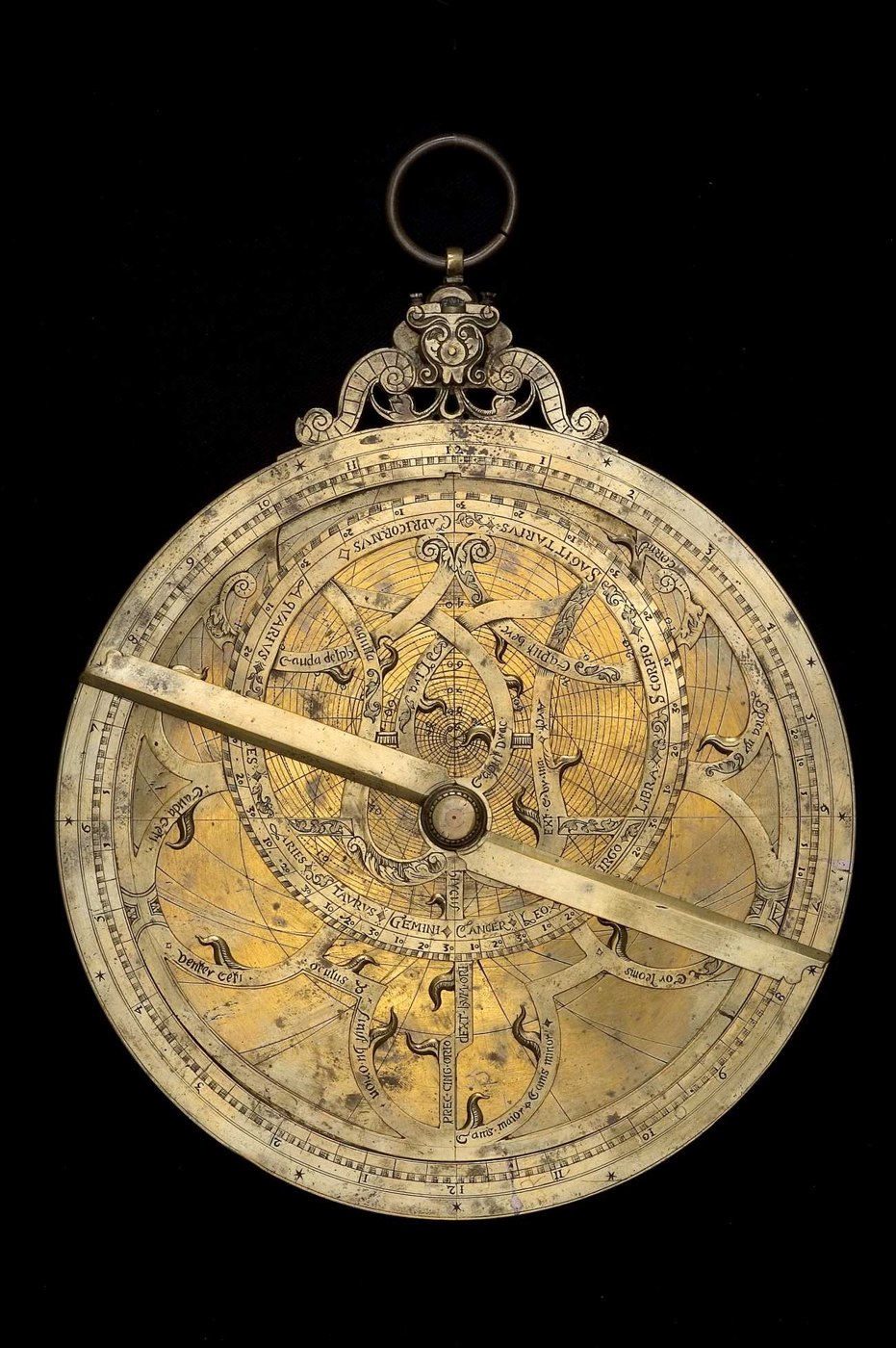
This brass astrolabe (inventory 41409) is an instrument dating to approximately 1560, attributed to French manufacture. The object features a mater and limb of riveted, two-piece construction. The engraved throne incorporates s-shaped scrollwork supports and an integrated base, connecting to a simple ring of round cross-section via an eye-bolt type shackle. The rete is of the arsenius type, containing 21 stars marked with flamant-style pointers and an ecliptic band. The back of the instrument includes five distinct scales, including degree, zodiacal, calendar, and a shadow square. Accessories include a single-ended, counter-changed rule and an alidade with rigid, double-sight design. The instrument was presented to the History of Science Museum by Lewis Evans in 1924, having been acquired in Venice in 1899.

Front view of the brass astrolabe showing the rete, scales, and alidade.
Front view of the brass astrolabe showing the rete, scales, and alidade. — History of Science Museum, University of Oxford. Rights pending — permission not yet requested. Original source

Catalogue identity

Source
www.mhs.ox.ac.uk
Category
Tool · Latin-inscribed astrolabe
Maker / attribution
Not established
Reference
Not recorded
Catalogue / lot identifier
41409
Source-reported date
ca. 1560
Source-reported place
France

Source-reported attribution and specifications are not independent authentication. A listing does not establish present ownership, current display, availability or permission to reproduce.

Object description

Structural Design and Throne

The astrolabe is constructed primarily of brass, utilizing a two-piece, riveted assembly for the mater and limb. The instrument is suspended by a simple, round cross-section ring attached via an eye-bolt type shackle.

The throne is designed with engraved details, featuring s-shaped scrollwork supports and an integrated base.

Evidence for this section
  • “The mater and limb are of two pieces, riveted construction.”
  • “The throne is of the engraved type made of brass with s-shaped scroll work support(s)”

Rete and Celestial Mapping

The instrument includes a remarkably thin rete of the arsenius type, which includes an ecliptic band containing a tulip design within the strapwork. It features 21 stars, each marked with a flamant pointer.

The zodiacal labels on the rete represent the standard cycle, spanning from Aries through Pisces, with divisions marked every 10 degrees. The rete is secured to the instrument using a central nut and bolt assembly connected to the alidade.

Evidence for this section
  • “The rete is of the arsenius type.”
  • “the attempt to incorporate a tulip into the strapwork within the ecliptic band.”

Scales and Instrumentation

The back of the instrument displays five functional scales including degree measurements, zodiacal signs, a calendar, and a shadow square. The degree scale is calibrated from 0 to 90 in the upper quadrants.

The instrument is accompanied by a single-ended, counter-changed rule and a matching alidade. The alidade is of a rigid design featuring double sights for astronomical observation, confirming the functional nature of the piece.

Evidence for this section
  • “The back contains 5 scales of the following types: Degree; Zodiacal signs; Calendar; Shadow square.”

Open research questions

  • What is the specific artisan or workshop responsible for the arsenius-type rete?
  • Does the Venetian purchase indicate earlier provenance or trade routes for this French-made instrument?

Source evidence

Recorded claims and source quotations for Brass Astrolabe
FieldSource-reported valueSource quotation
Inventory Number41409“Inventory number: 41409”
Dateca. 1560“Date ca. 1560”
MaterialBrass“Material Brass”
ProvenancePresented by Lewis Evans in 1924“Presented by Lewis Evans in 1924”
Rete TypeArsenius“The rete is of the arsenius type.”
Star Count21“The rete contains 21 stars.”
Acquisition Date1899“Evans bought it in Venice in 1899.”

Visible details

  • S-shaped scrollwork throne
  • Flamant star pointers
  • Five scales on the instrument back
  • Single-ended, counter-changed alidade

Research qualifications

  • Specific maker is unrecorded
  • Exact regional attribution within France is not specified

Photograph identity and source facts were screened before import; rights clearance remains pending.

Consulted source

Astrolabe, inventory 41409 (France, ca. 1560)

Reviewed 2026-10-26 · Record a8b2640e0b

Terms in this record

Glossary explanations for terms named in this object’s record.