
Skip to content
The Encyclopedia of Horology

Clock · Automaton clock

Automaton Clock in the Shape of a Lion

Partially verified

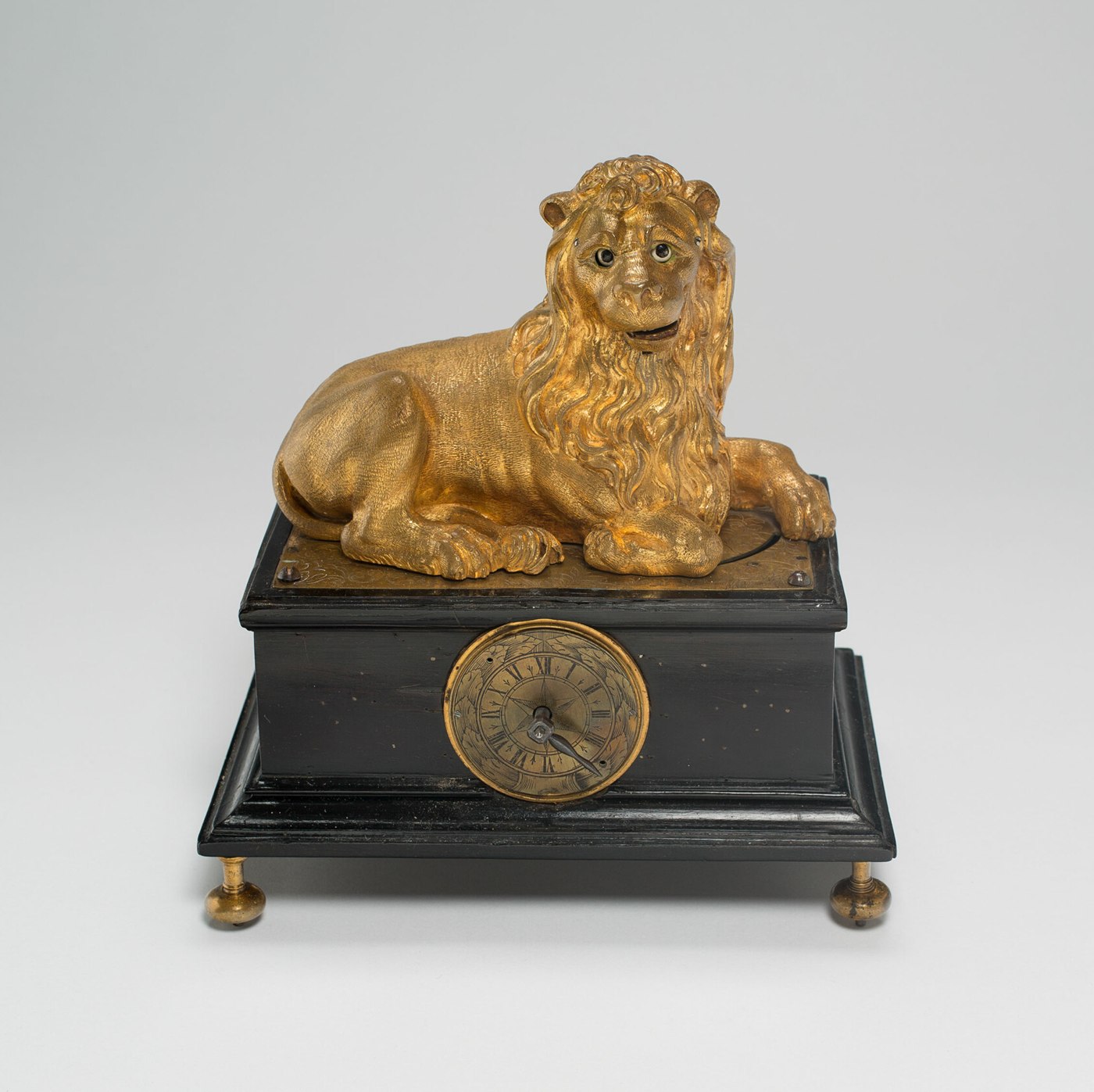
This automaton clock in the shape of a lion is a timepiece produced around 1630 in Augsburg, Germany. The object comprises a sculpted recumbent lion figure positioned atop a rectangular base. The base is constructed from ebony and is raised on small turned feet, with the clock dial integrated into the front face. The lion is executed in gilt bronze, featuring detailed casting and chasing of the mane and fur. A round dial, featuring engraved metalwork and marked chapter rings, sits centrally on the front of the ebony plinth. The clock measures 20.3 by 12.7 by 22.9 cm. This specific item is held within the collection of the Art Institute of Chicago under the accession number 1990.194.2, serving as a primary example of decorative horological work from the early 17th century that incorporates both clockwork mechanics and sculptural automaton elements into its overall composition.

Frontal view of the gilt bronze lion automaton clock, showing the ebony base and integrated circular dial.
Frontal view of the gilt bronze lion automaton clock, showing the ebony base and integrated circular dial. — Art Institute of Chicago. Rights pending — permission not yet requested. Original source

Catalogue identity

Source
orbiscollectibles.com
Category
Clock · Automaton clock
Maker / attribution
Not established
Reference
Not recorded
Catalogue / lot identifier
1990.194.2
Source-reported date
c. 1630
Source-reported place
Germany

Source-reported attribution and specifications are not independent authentication. A listing does not establish present ownership, current display, availability or permission to reproduce.

Object description

Structural Design and Materials

The base is fashioned from ebony, a dense, dark wood that provides a visual foundation for the figure above. The base is rectilinear in form, elevated on turned feet that elevate the entire ensemble. The dial is integrated into the front of this dark structure, allowing the mechanical face to remain visible without overwhelming the sculptural intent of the piece.

The lion is cast in bronze and treated with a gilded finish. The surface of the metal is chased to create a textured mane and coat, providing a reflective quality that distinguishes the figure from the matte, dark ebony base.

Evidence for this section
  • “The object features a rectangular molded base elevated on turned feet, supporting a sculpted recumbent lion on its upper surface.”
  • “The clock is constructed from gilt bronze, ebony, and metal.”
  • “The lion figure atop the base is cast and chased with a textured mane and coat, exhibiting a gilded finish that contrasts with the dark ebony housing beneath.”

Horological Components

The timekeeping function of the object is contained within the rectangular ebony housing. A circular dial is mounted on the front face, displaying the chapter rings and hands. The area surrounding the dial is decorated with engraved or etched metalwork, which frames the time display against the dark wood of the base. This arrangement prioritizes the display of the time while ensuring the mechanism remains secondary to the overall sculptural form of the lion figure.

While the clock is categorized as an automaton, the primary view shows the dial structure clearly. The dial itself acts as the interface for the movement housed within the lower section of the object.

Evidence for this section
  • “A round clock dial is mounted on the front face of the lower plinth, featuring hands and marked chapter rings surrounded by engraved or etched metalwork.”

Documentation and Attribution

The object is recorded as part of the collection of the Art Institute of Chicago under accession number 1990.194.2. The provenance and historical context provided attribute the manufacture of the piece to Augsburg, Germany, around 1630.

The record serves to identify the specific specimen, documenting its physical characteristics and historical dating. As an item from the Art Institute of Chicago, the data reflects institutional documentation of the piece. The focus remains on the identification of the object and its physical presentation, supported by standard museum registration protocols that confirm its identity as an automaton clock of this specific type.

Evidence for this section
  • “Automaton Clock in the Shape of a Lion”
  • “This automaton clock in the shape of a lion is a decorative timepiece produced around 1630 in Augsburg, Germany.”
  • “Museum object number 1990.194.2”

Open research questions

  • What is the specific nature of the automaton movement housed within the base?
  • Are there any identifiable maker's marks or stamps located on the underside or internal plates of the base?

Source evidence

Recorded claims and source quotations for Automaton Clock in the Shape of a Lion
FieldSource-reported valueSource quotation
Maker locationAugsburg, Germany“produced around 1630 in Augsburg, Germany”
Accession number1990.194.2“1990.194.2”
Dimensions20.3 x 12.7 x 22.9 cm“20.3 × 12.7 × 22.9 cm (8 × 5 × 9 in.)”
MaterialsGilt bronze, ebony, and metal“Gilt bronze, ebony, and metal”
Datec. 1630“c. 1630”

Visible details

  • Recumbent lion figure with defined fur texture
  • Ebony housing with four turned feet
  • Round clock dial with central hand mount
  • Contrast between gilt bronze and black wood finishes

Research qualifications

  • The exact maker is not explicitly identified in the provided record
  • Automaton functions are not described in detail beyond the clock's title

Photograph identity and source facts were screened before import; rights clearance remains pending.

Consulted source

Automaton Clock in the Shape of a Lion

Reviewed 2026-11-02 · Record 0cec4b7cd5

Terms in this record

Glossary explanations for terms named in this object’s record.