
Skip to content
The Encyclopedia of Horology

Tool · Latin-inscribed astrolabe

Astrolabe and Equatorium

Partially verified

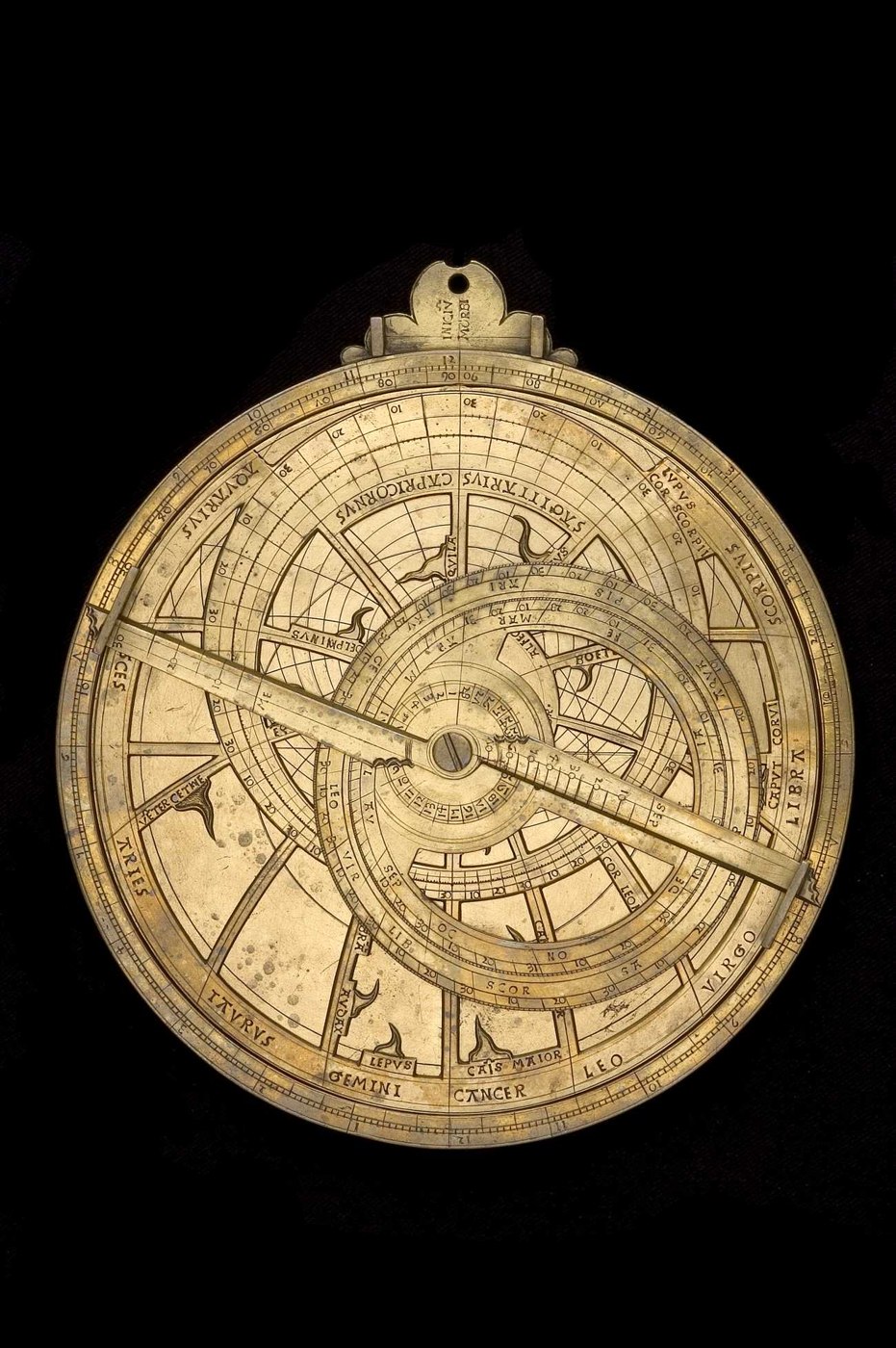
This brass astrolabe (inventory 49847) dates to the late 15th century and is attributed to France. It serves as both an astrolabe and an equatorium, featuring a three-piece construction with a mater and limbs for both functions. The instrument includes three plates with latitudes from 45° to 48°, a rete containing 29 stars, and a double-ended counter-changed alidade. The instrument was presented to the History of Science Museum by J. A. Billmeir in 1957.

Front view of the brass astrolabe showing the rete, zodiacal markings, and the five-lobed throne at the top.
Front view of the brass astrolabe showing the rete, zodiacal markings, and the five-lobed throne at the top. — History of Science Museum, University of Oxford. Rights pending — permission not yet requested. Original source

Catalogue identity

Source
www.mhs.ox.ac.uk
Category
Tool · Latin-inscribed astrolabe
Maker / attribution
Not established
Reference
Not recorded
Catalogue / lot identifier
49847
Source-reported date
late 15th century
Source-reported place
France (?)

Source-reported attribution and specifications are not independent authentication. A listing does not establish present ownership, current display, availability or permission to reproduce.

Object description

Construction and Design

The instrument is constructed from brass and incorporates both astrolabe and equatorium functions within a three-piece mater and limb assembly. The mater is riveted to the womb plate and the back equatorium limb, which also integrates the front astrolabe limb. The throne is a five-lobed design with an integrated base; the front bears the Latin inscription "INICIV MORBI," while the rear is marked with two roughly scratched arrows for orientation.

The instrument includes three separate plates, each covering a latitude range from 45° to 48°. The rete contains 29 stars and displays the zodiacal signs in Latin. The assembly is held together by a nut and bolt, the latter of which is considered a replacement. Additional components include a double-ended counter-changed alidade and a single-ended counter-changed rule for use with the equatorium.

Evidence for this section
  • “The mater and limb are of three pieces construction.”
  • “The throne is of the five-lobed type made of brass attached with integrated base made of brass”
  • “The rete is attached using a nut & bolt. The bolt looks to be a replacement.”

Functional Capabilities

The front of the instrument functions as an astrolabe, featuring a womb plate marked with faint circles and quadrant-dividing lines. It is possible these were intended to support engraved tables or projections similar to those on the plates. The limb scales include equal hours (1-12) and a degree scale (0-90).

The back of the instrument functions as an equatorium, designed to indicate planetary positions within the zodiac. The limb features a zodiacal scale. The associated rule remains incomplete, as one sighting vane is marked for pinholes but has not been pierced. The alidade remains rigid and includes two sighting vanes, although the instrument overall shows signs of incomplete finishing in its components.

Evidence for this section
  • “The front (astrolabe) limb, which is riveted to the womb plate and the back (equatorium) limb.”
  • “This rule is to be used with the equatorium and indicates the planetary position within the zodiac, engraved on the limb.”
  • “The rule was not completed; one of the sighting vanes was marked for pinholes but never pierced.”

Provenance and History

The object was acquired by the History of Science Museum in 1957, having been presented by J. A. Billmeir, who purchased the piece between 1955 and 1957. Prior to this, it was held by the d'Hauteville family of Salon-de-Provence.

The technical specifications of the plates, specifically the data for latitude 45°, suggest the instrument was intended for use in southern France or northern Italy.

Evidence for this section
  • “Presented by J. A. Billmeir in 1957”
  • “It was formerly the property of the d'Hauteville family of Salon-de-Provence.”
  • “The plate and other data for latitude 45° suggest that it was made for use in southern France or northern Italy; while the inscriptions suggest that its original owner required it primarily for astrological use in connection with medicine.”

Open research questions

  • What is the specific nature of the faint circles in the womb and how do they correlate to planetary tables?
  • Are there similar 15th-century astrolabes with the 'INICIV MORBI' inscription that identify a specific medical-astrological tradition?

Source evidence

Recorded claims and source quotations for Astrolabe and Equatorium
FieldSource-reported valueSource quotation
Inventory Number49847“Inventory number: 49847”
MaterialBrass“Material Brass”
Datelate 15th century“Date late 15th century”
Place of originFrance (?)“Place France (?)”
Throne stylefive-lobed“The throne is of the five-lobed type”
AcquisitionPresented by J. A. Billmeir in 1957“Presented by J. A. Billmeir in 1957”
InscriptionINICIV MORBI“INICIV MORBI”
Rete stars29“The rete contains 29 stars.”
ProvenanceFormerly the property of the d'Hauteville family“It was formerly the property of the d'Hauteville family of Salon-de-Provence.”

Visible details

  • Five-lobed throne with integrated base
  • Front of throne inscribed with 'INICIV MORBI'
  • Three plates provided for latitudes 45°-48°
  • Rete features labels for zodiacal signs in Latin

Research qualifications

  • Maker and precise date of manufacture are not definitively established
  • The bolt for the rete is identified as a likely replacement

Photograph identity and source facts were screened before import; rights clearance remains pending.

Consulted source

Astrolabe, inventory 49847 (France (?), late 15th century)

Reviewed 2026-10-26 · Record 250df06431

Terms in this record

Glossary explanations for terms named in this object’s record.