
England · 1955
The Caesium Atomic Clock
VerifiedAtomic time replaced the earth's rotation as the standard; radio time signals derived from atomic clocks now set radio-controlled clocks and watches automatically.
Essen and Parry's clock of 1955 at the National Physical Laboratory, Teddington, measured time by a change of state in caesium atoms and was accurate to about a second in 300 years, about 30 times better than the quartz clocks of the 1930s.
Background
The caesium atomic clock was developed at the National Physical Laboratory in England by physicists Louis Essen and Jack Parry. According to the Science Museum Group, this invention was the first successful atomic clock, addressing the limitations of existing timekeepers. The device functioned by measuring the resonant frequency of caesium atoms to track time more accurately than traditional astronomical observations.
The development drew upon Essen's previous work with quartz crystal oscillators and microwave cavity resonance. This technology was significant because it allowed atomic time to serve as an international standard, replacing the reliance on the Earth's rotation.
Written from the sources listed under Sources (makers, museums, auction houses and specialist publications are paraphrased, not reproduced); each statement was checked against the cited text, and claims a maker makes about its own work are attributed to it.
How it works
- The clock operates by monitoring the specific frequencies required for transitions between quantised energy levels of atoms.
- The system utilizes the unperturbed ground-state hyperfine transition frequency of the caesium-133 atom.
Later history
- Following research at the National Physical Laboratory, the SI second was defined in 1967 based on the vibrations of the caesium-133 atom.
- The National Radio Company commercially produced the Atomichron during the 1950s.
Impact on watchmaking
- Science Museum — Holds the 1955 Essen–Parry caesium clock, which it describes as the first successful atomic clock.
- The Radio-Controlled Wristwatch — How atomic time reached the wrist.
- Atomic clock — Glossary entry on atomic clocks.
How to verify this yourself
Check the cited museum record or maker's archive first; for patented work, confirm the number and date from the specification itself (Espacenet covers most European, US and Japanese patents) rather than from secondary retellings.
Manufacturers known to have used it
- National time laboratories worldwide
Related photographs
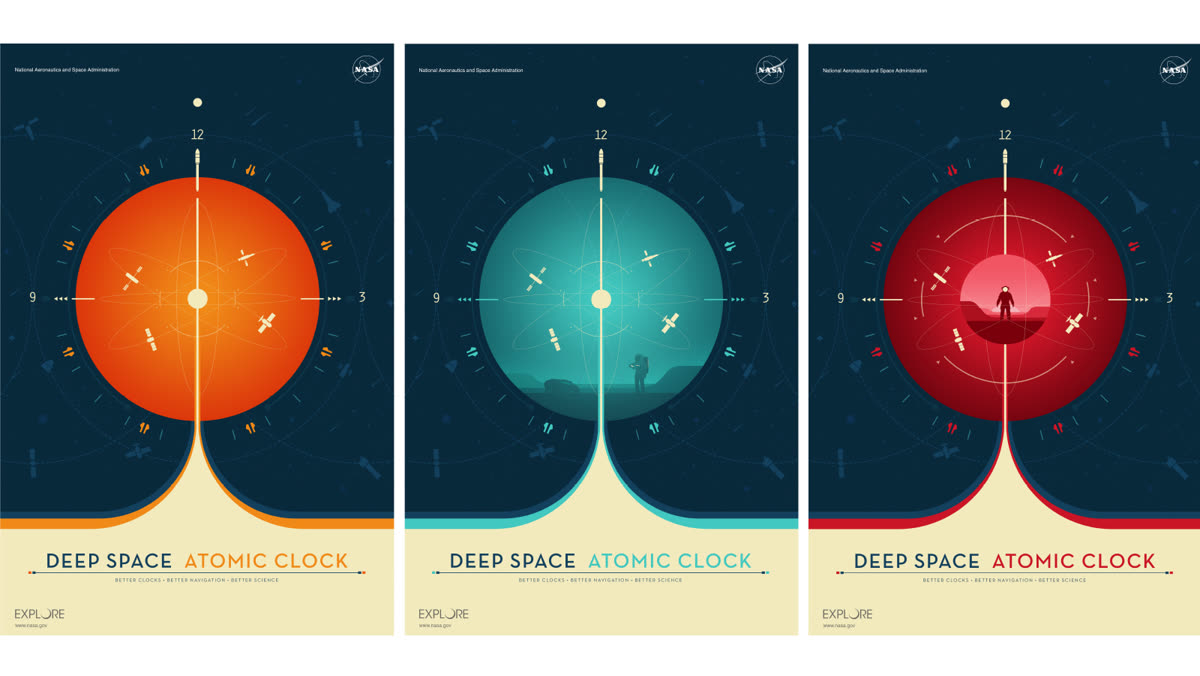
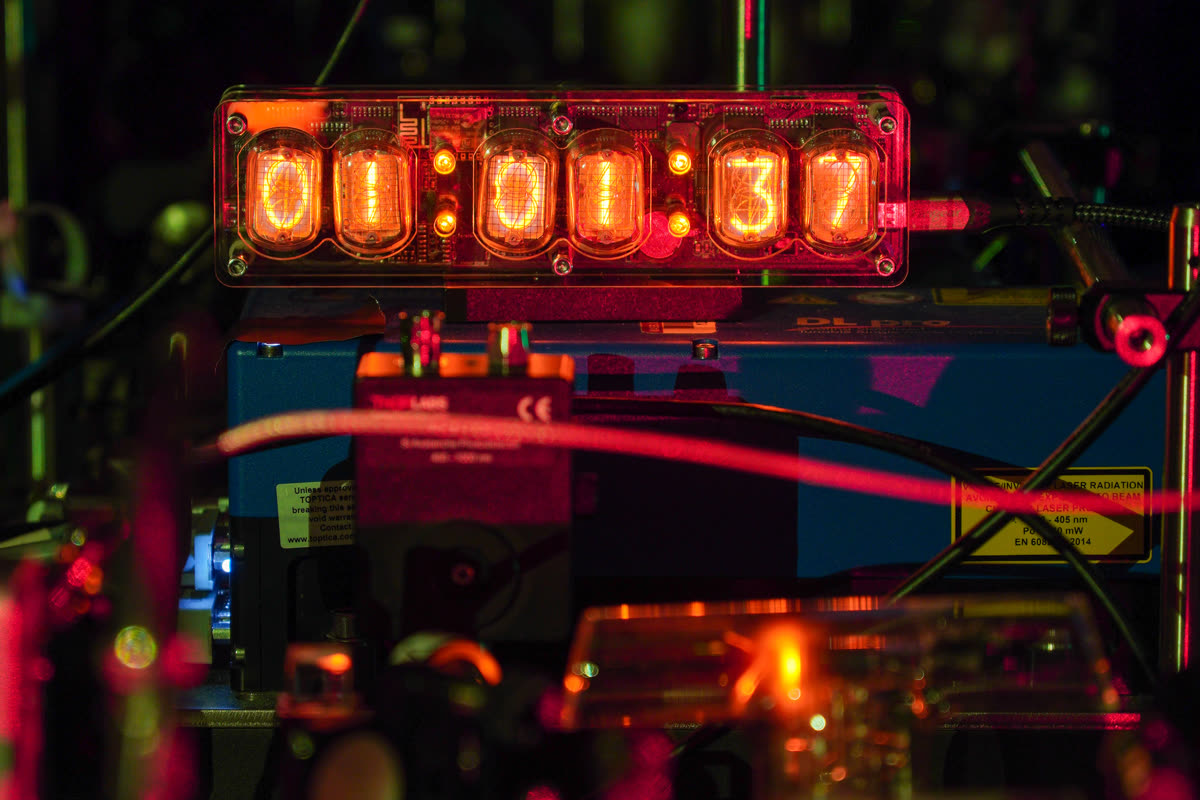
No confidently matched photograph of this subject has been found yet. These photographs show a closely related record, and are not examples of the type described on this page.
Sources & references
- Atomic clock, Wikipedia (English), retrieved 2026-11-02 (text CC BY-SA 4.0)
- Louis Essen, Wikipedia (English), retrieved 2026-11-02 (text CC BY-SA 4.0)
- Caesium Atomic Clock, 1955, Science Museum Group, retrieved 2026-11-02 (paraphrased; text © the publisher)
- What is a leap second?, National Physical Laboratory, retrieved 2026-11-02 (paraphrased; text © the publisher)
- Science Museum Group, Caesium Atomic Clock, 1955 (object record)
- National Physical Laboratory, What is a leap second?
- Wikipedia, Atomic clock; Louis Essen (revisions cited below)
Where sources disagree, the disagreement is stated rather than resolved silently.