
Magazine · Movements & mechanisms
How Automatic Watches Work: The Definitive Guide to Self-Winding
An automatic watch is a mechanical marvel that harnesses the kinetic energy of your wrist to maintain a constant power supply. By integrating a rotating weight into the movement, these timepieces eliminate the need for daily manual winding or a battery.
November 23, 2026 · 5 min read
AI-drafted from search research. Not yet editorially reviewed — check important facts against the cited sources.
Key takeaways
- Automatic watches are purely mechanical and do not contain batteries.
- The oscillating rotor is the defining component of an automatic movement.
- Movement efficiency is often optimized via bi-directional winding systems.
- Proper care involves regular service and avoiding moisture ingress.
- Mechanical precision requires a stable environment and periodic professional lubrication.
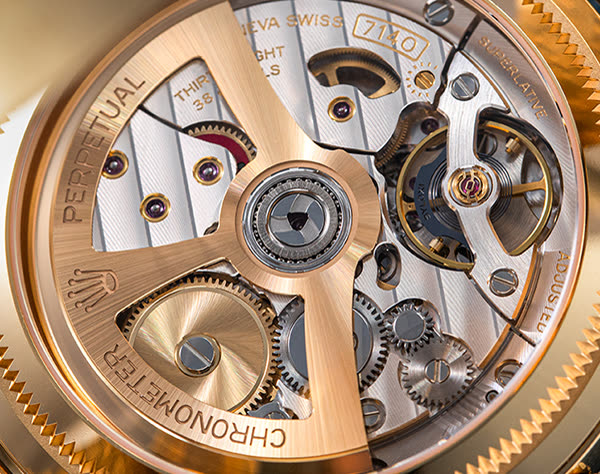
At the heart of the debate between manual and automatic timepieces lies a simple difference in energy management. While a manual watch relies on the user to turn the crown, an automatic winding (self-winding) movement utilizes a weighted rotor that pivots freely on its axis. As the wearer moves their arm, gravity and inertia cause this rotor to swing, exerting torque through a series of reduction gears. These gears amplify the rotation, eventually winding the mainspring within the barrel, which then powers the gear train. This elegant cycle ensures that as long as the watch is worn, it remains powered, effectively automating a process that once required constant user intervention.
How do automatic watches work without a battery?
Many newcomers to horology often ask if an automatic watch is battery-powered. The answer is a definitive no. An automatic watch is a mechanical system, meaning it operates entirely through physical components like gears, springs, and levers, rather than electronic circuits or a power cell (battery). In a quartz watch, a battery provides an electrical pulse to a quartz crystal; in an automatic watch, potential energy is stored in a metal strip—the mainspring. As this spring slowly uncoils, it delivers a steady flow of energy through the movement's train. Because it functions on mechanical physics alone, it never needs the electrochemical replacement required by digital or quartz watches.
The Slipping Clutch Mechanism
The Evolution of the Rotor: From Perpetuelle to Modernity
The pursuit of the 'perpetual' watch is as old as mechanical timekeeping itself. Early attempts at self-winding mechanisms date back to the c. 1780s, when Abraham-Louis Perrelet experimented with oscillating weights for pocket watches. Unlike the modern wrist-worn rotor, these early versions were often bulky and required significant movement to wind effectively. Throughout the 19th and early 20th centuries, inventors experimented with bumper (wig-wag) winding systems, where a semicircular weight would strike a buffer spring, oscillating back and forth to add tension to the spring. It was not until the mass adoption of the wristwatch that the 360-degree rotating rotor became the standard, eventually dominating the mid-20th-century market.
The efficiency of these systems was revolutionized by the introduction of bi-directional winding. In older unidirectional models, the rotor only wound the mainspring while spinning in one direction, often spinning freely—and uselessly—in the other. Modern bi-directional systems use ingenious reverser wheels or pawl-based clutches to ensure that regardless of which way the rotor swings, the energy is consistently transferred to the mainspring. This makes the watch significantly more efficient for wearers with sedentary lifestyles, as even minor wrist movements contribute to the power reserve.
Energy Transmission
Keyless Works and Manual Interaction
Even with an automatic system, the watch remains a keyless works device, meaning you can still use the crown to wind it manually if it has been stationary for an extended period. The winding stem connects to the winding pinion and the clutch, allowing the user to override the automatic mechanism safely. This is particularly useful for 'starting' a watch after a weekend in the watch box. It is essential, however, to understand that automatic vs manual watches share the same underlying physics of the mainspring; the difference is purely in the secondary charging method provided by the rotor.
Conservation and Care: Maintaining Your Movement
To keep an automatic watch in peak condition, regular movement is the best maintenance. If a watch is worn in rotation, consider the use of a watch winder, though it is not strictly necessary for most modern movements. Be wary of magnetic fields—smartphones, speakers, and induction stovetops can magnetize the hairspring, causing the watch to gain or lose time rapidly. Should your watch show signs of erratic behavior, a full service—involving disassembly, ultrasonic cleaning, and fresh lubrication—is the standard for conservation.
How do you recognize an automatic movement?
Identifying a movement requires a systematic approach Reading an Unknown Movement. When inspecting a watch, look for the rotor. If you can see through a display caseback, the rotor is obvious—it is the large, usually semicircular weight that covers a significant portion of the movement. If the caseback is solid, a 'sweeping' second hand is often a clue, though not a guarantee, as quartz watches can also be designed with sweeping hands. The most definitive check is checking the case back markings or the manufacturer's Movement Encyclopedia record for the specific calibre number.
| Feature | Automatic | Manual |
|---|---|---|
| Power Source | Kinetic Rotor | Manual Crown |
| Daily Winding | Unnecessary (if worn) | Required Daily |
| Movement Height | Usually Thicker | Usually Thinner |
| Complexity | Higher | Lower |
The Reversing Wheel System
How can you assess the efficiency of an automatic winding system?
Evaluating an automatic movement requires observing the relationship between the rotor's kinetic input and the energy stored in the barrel. A movement that fails to reach a full power reserve after moderate physical activity suggests an issue with the transmission train or the mainspring's slipping clutch.
| Feature | What it suggests | What to check next |
|---|---|---|
| Rotor play | Loose bearings or worn pivot | Check endshake and jewel integrity |
| Incomplete wind | Sliding clutch slipping prematurely | Inspect barrel wall lubrication |
| Excessive noise | Dry or damaged reversing wheels | Verify lubrication on gear teeth |
| Manual wind resistance | Winding mechanism engagement | Test keyless works interaction |
What to record during examination
- Document the presence of any rotor-to-case-back contact marks.
- Record the rotation direction of the rotor (uni-directional or bi-directional).
- Note the duration of audible winding noise during rotor oscillation.
- Photograph the condition of the rotor post or central bearing.
- Measure the 'power reserve' achieved after a fixed number of controlled swings.
- List all visible markings on the winding bridge or reversing wheels.
Common Questions About Automatic Watches
Frequently asked questions
Why does my automatic watch stop despite daily wear?
This often occurs if the wearer's activity level is insufficient to overcome the friction of the winding train or if the watch has a very long power reserve requirement. Alternatively, it may indicate a 'slipping' mainspring that is releasing tension prematurely due to incorrect barrel wall friction or a worn gear in the automatic bridge. A professional watchmaker can measure the torque output to verify if the movement is truly reaching its design potential.
Can I manually wind an automatic watch regularly?
While most automatic movements permit manual winding, it is generally intended as a supplement to jump-start the watch after it has stopped. Frequent manual winding can cause excessive wear on the keyless works and reversing wheels in certain movement designs. Ideally, allow the kinetic rotor to handle the vast majority of the winding process to preserve the life of the internal gear teeth and winding bridge components.
Sources
- de Carle, D., Practical Watch Repairing — winding, keyless work and inspection
- de Carle, D., Practical Watch Repairing — jewelling and movement construction
- Daniels, G., Watchmaking — movement construction
- de Carle, D., Practical Watch Repairing — inspection and faults
- Daniels, G., Watchmaking — movement construction and lubrication
- de Carle, D., Practical Watch Repairing — inspection, cleaning and servicing