
Glossary · Mechanism
Setting lever
A selector actuated by the stem in common keyless works; not the same part as the yoke or sliding clutch.
Explanation
In a common pull-stem keyless system, the setting lever responds to axial movement of the stem. It controls the selector arrangement, typically through the yoke and associated springs, so the sliding clutch engages winding or setting gearing. The yoke is a lever acting on the clutch groove; it is not another name for the clutch itself. Stem retention and position control vary by calibre.
Lever-set pocket watches also use an external setting control, often beneath the bezel. That external lever is a different construction context from the dial-side pull-stem selector. A photograph labelled setting lever must state which is shown. A stem that pulls out or fails to switch modes can have several causes; it does not establish a broken setting lever without examination. Compare the exact technical drawing and preserve observed symptoms separately from diagnosis.
Sources & references
- de Carle, D., Practical Watch Repairing — technical further reading; exact procedures require calibre documentation
- Reymondin et al., The Theory of Horology — construction and terminology further reading
Where sources disagree, the disagreement is stated rather than resolved silently.
What to record
- State whether the subject is pull-stem or external lever setting.
- Distinguish setting lever, yoke and sliding clutch.
- Record stem-retention symptoms without naming an unexamined failed part.
Do not loosen a stem-retaining screw or force the stem without calibre-specific instructions.
In the object catalogue
Catalogued objects whose own source record mentions “Setting lever”. The quoted line shows where; it is the seller’s or museum’s wording, not independent verification.
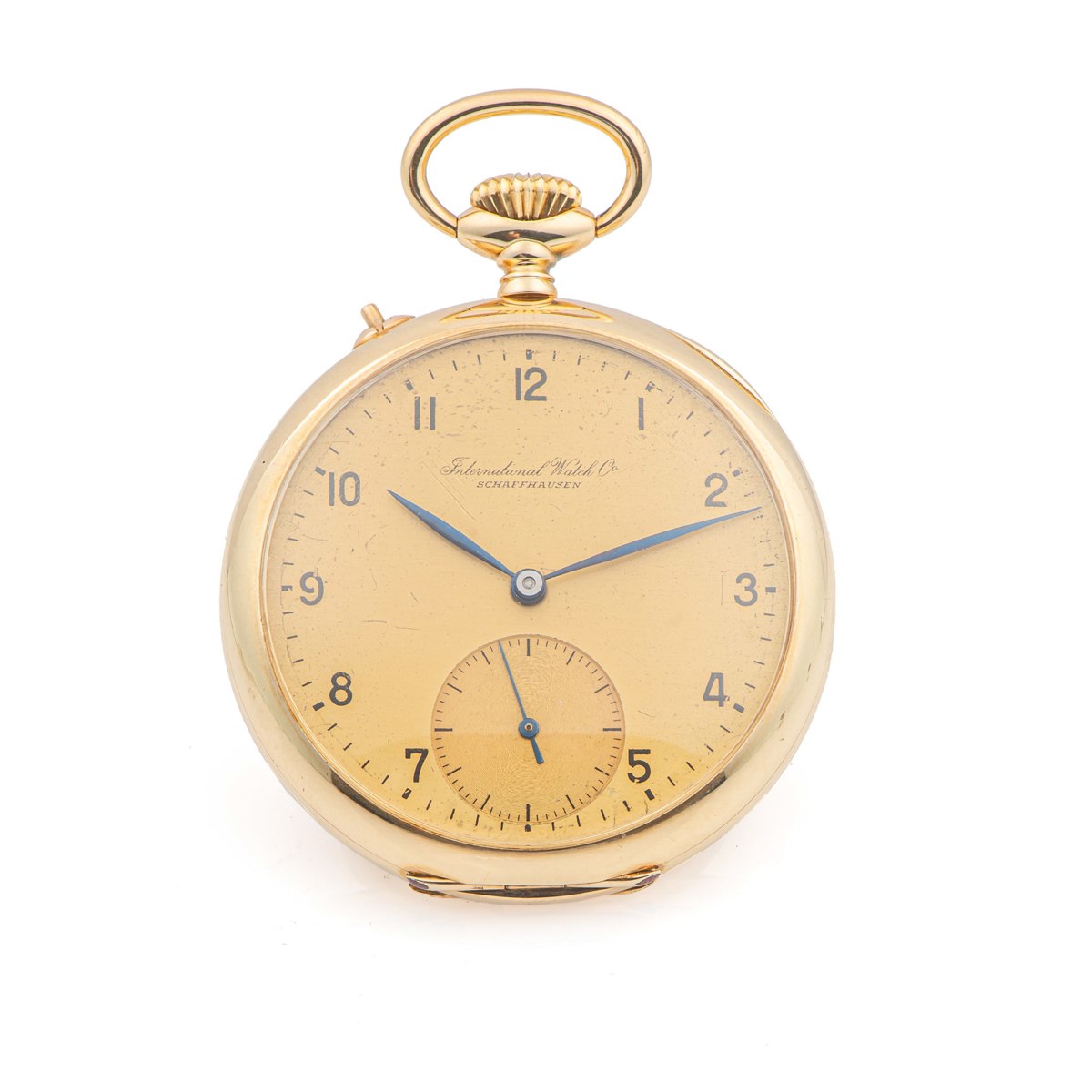
Pocket watch
International Watch Co. 14K yellow gold open-face pocket watch
“Crown positioned at 12 o'clock inside a rounded bow, with a setting lever/pin projection near 11 o'clock”
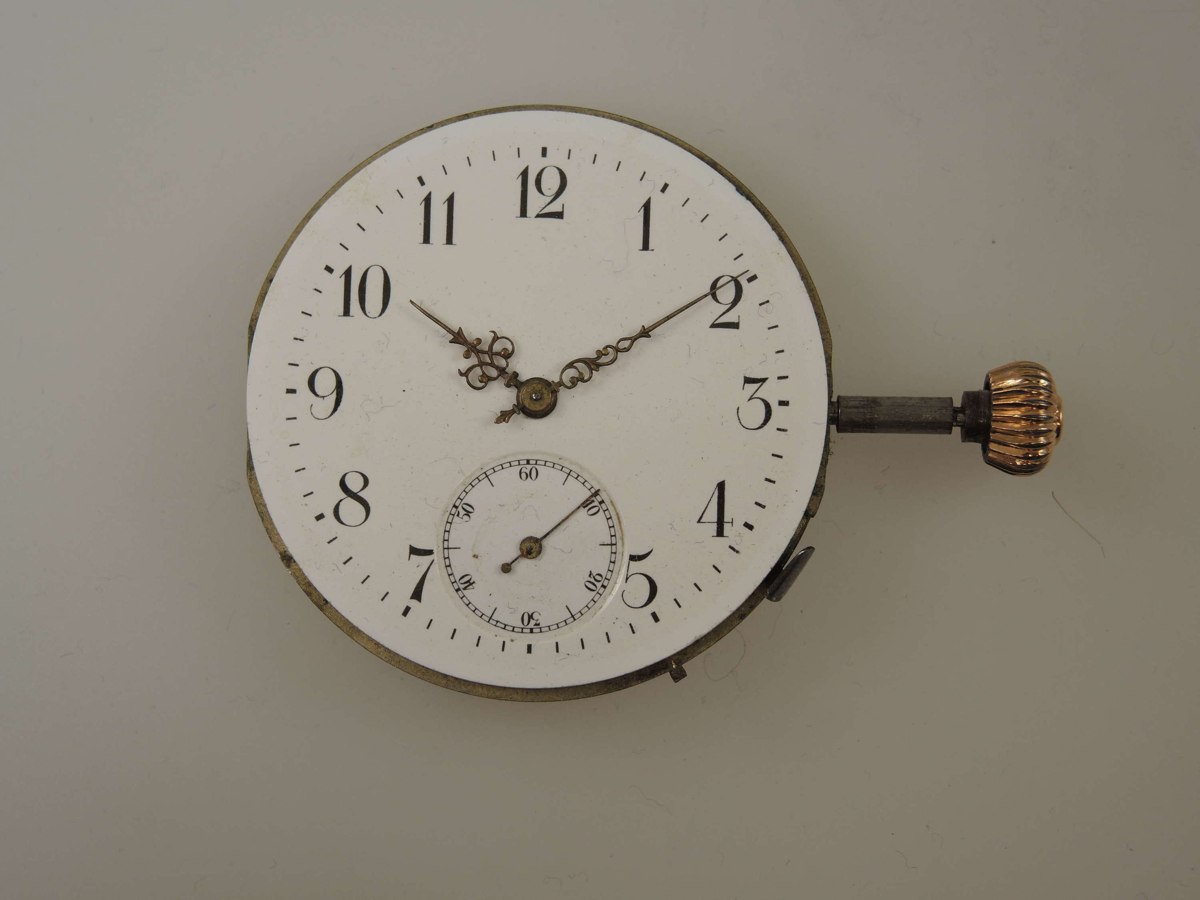
Movement
Swiss hunter pocket watch movement, circa 1890
“Setting lever protruding from the edge between the 4 and 5 o'clock positions.”
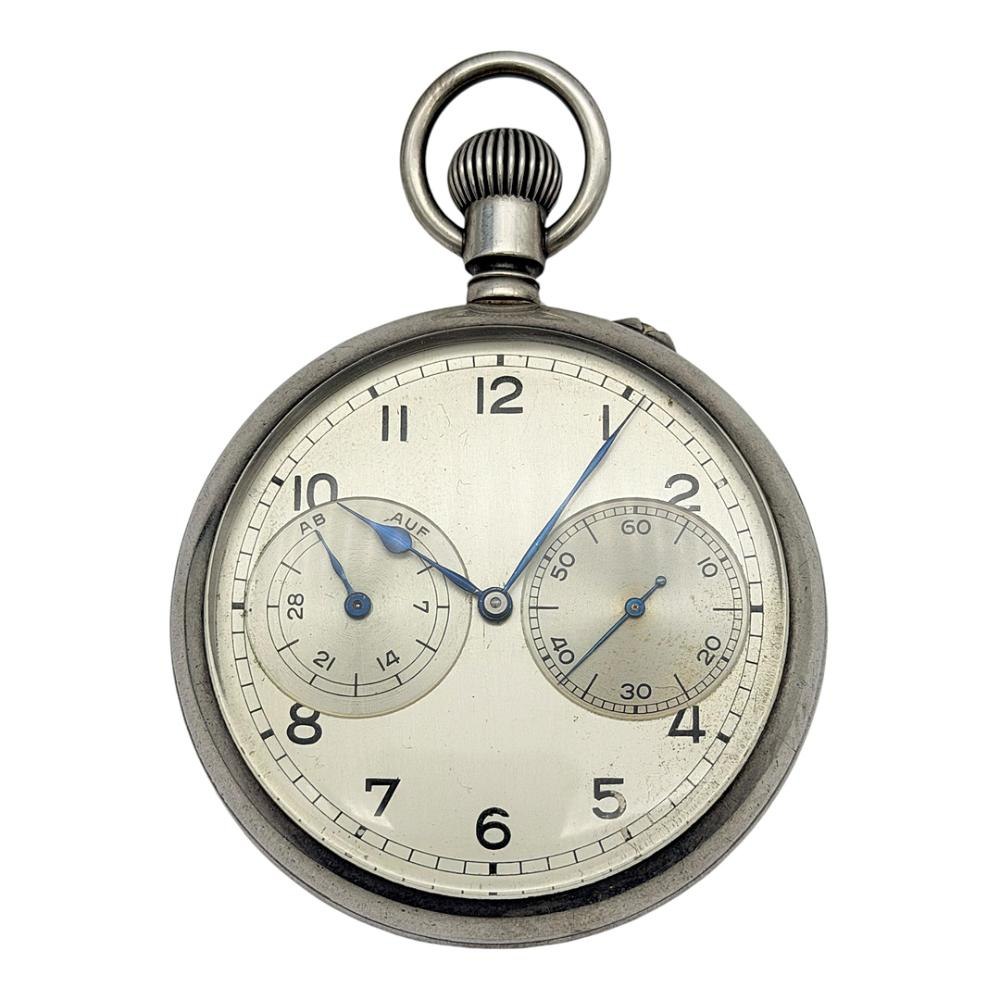
Pocket watch
A. Lange & Söhne Glashütte Kriegsmarine deck watch
“This open-face Lépine pocket watch was produced around 1944 by A. Lange & Söhne as a deck watch for the German Kriegsmarine, according to auction records. Housed in a 60 mm plai…”

Pocket watch
Louis Audemars Russian Imperial Presentation Pocket Watch No. 14062
“Gold setting levers for the calendar are positioned beneath the bezel”
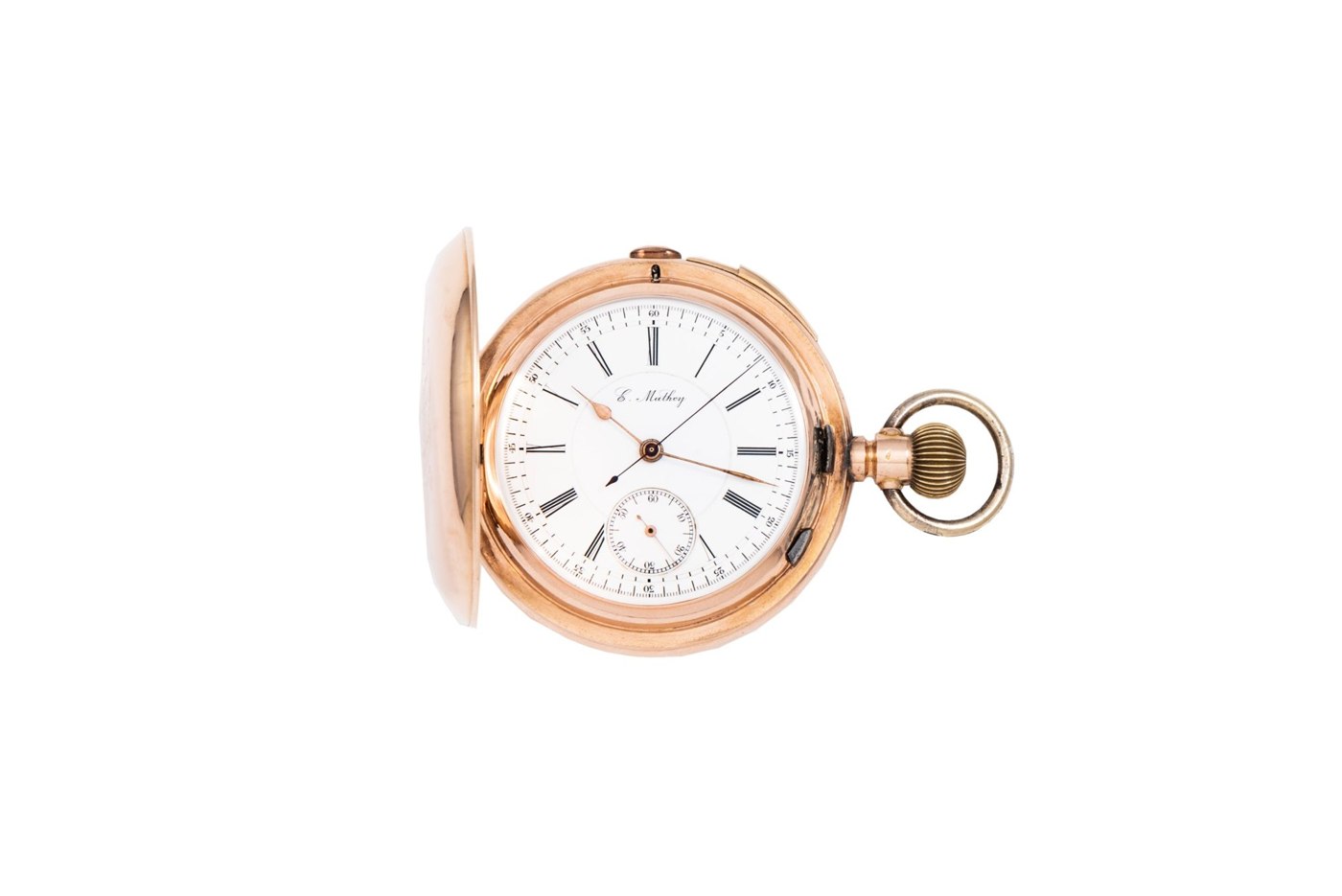
Pocket watch
E. Mathey Tissot & Cie. Minute Repeater Stopwatch
“The watch features a 55mm yellow gold hunter case. The exterior cover displays an engraved monogram 'HB'. The white enamel dial is configured with spade-style blue steel hands, …”