
Glossary · Mechanism
Co-axial escapement
A three-level escapement using radial impulse to reduce sliding friction compared with the lever escapement.
Explanation
The co-axial escapement, invented by George Daniels and industrialised by Omega from 1999, impulses the balance radially through a two-tier co-axial escape wheel and its pinion, largely replacing the sliding friction of the Swiss lever with rolling contact. The aim is longer service intervals and stable rate over time. It is often described as the first new escapement in over two centuries to reach mass production in over two centuries.
In the object catalogue
Catalogued objects whose own source record mentions “Co-axial escapement”. The quoted line shows where; it is the seller’s or museum’s wording, not independent verification.
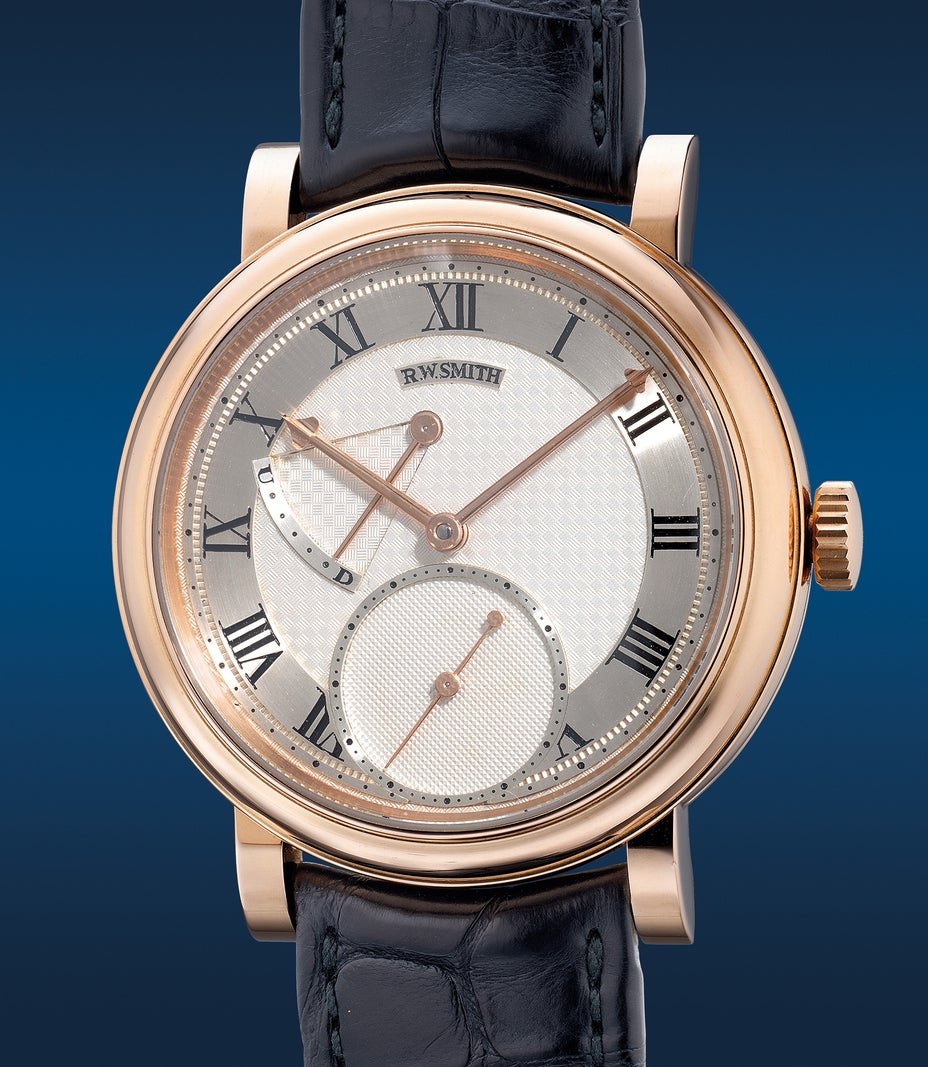
Wristwatch
Roger Smith Series 2 Pink Gold Wristwatch
“Dating to 2011, this Roger Smith Series 2 wristwatch is housed in a 40mm 18K pink gold case mounted on a black crocodile leather strap. The silvered dial features intricate engi…”
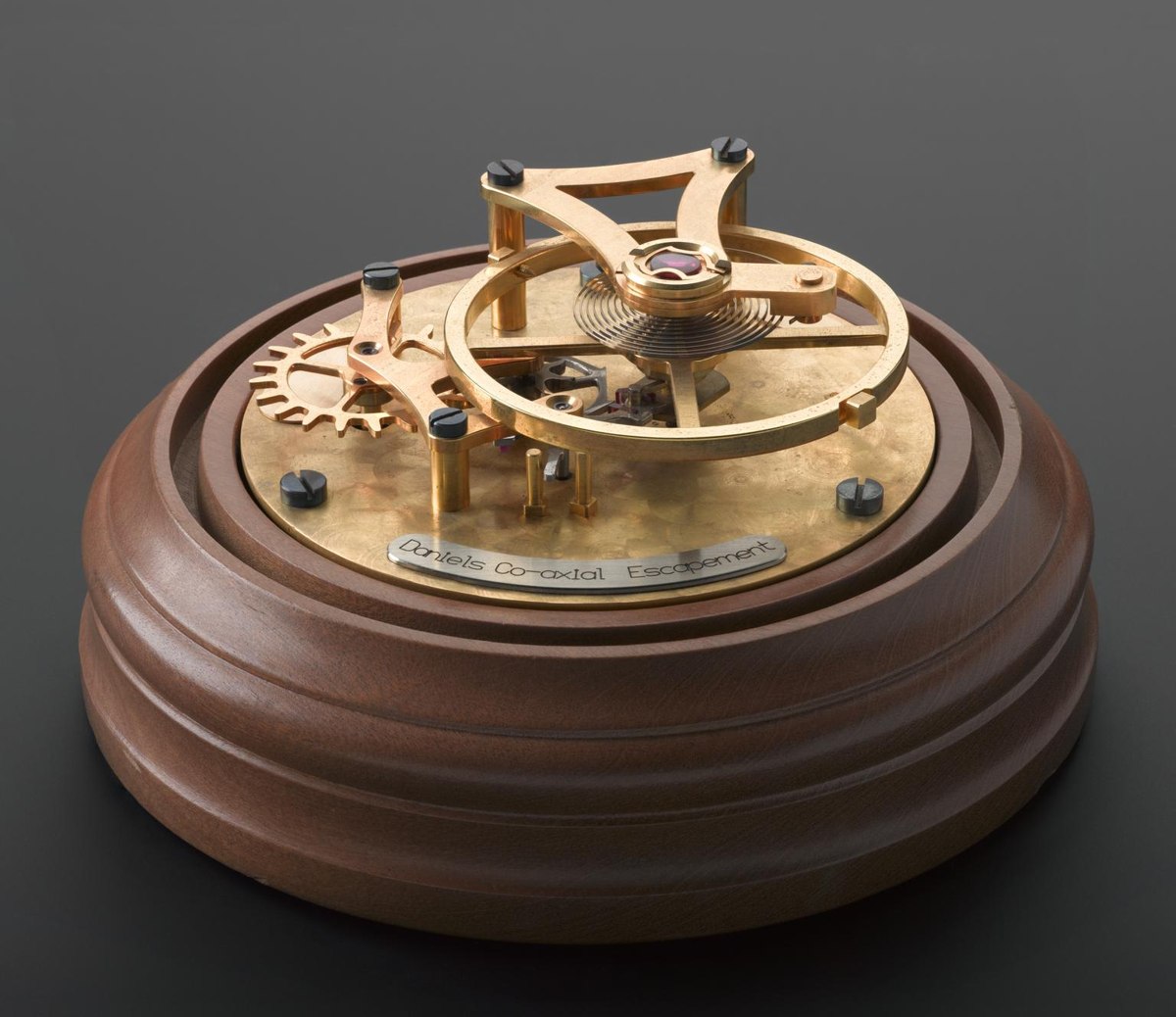
Component
Model of co-axial escapement
“Model of co-axial escapement”
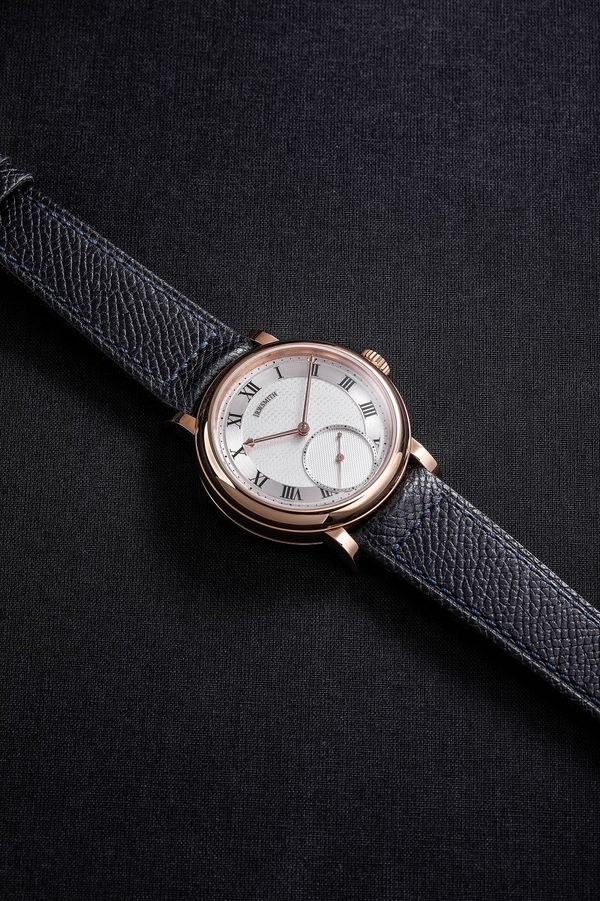
Wristwatch
Roger Smith Series 1 in pink gold, Number 1
“According to interview text published by Phillips, this pink gold wristwatch is Lot 101, identified as the very first round-cased Series 1 produced to incorporate Roger W. Smith…”
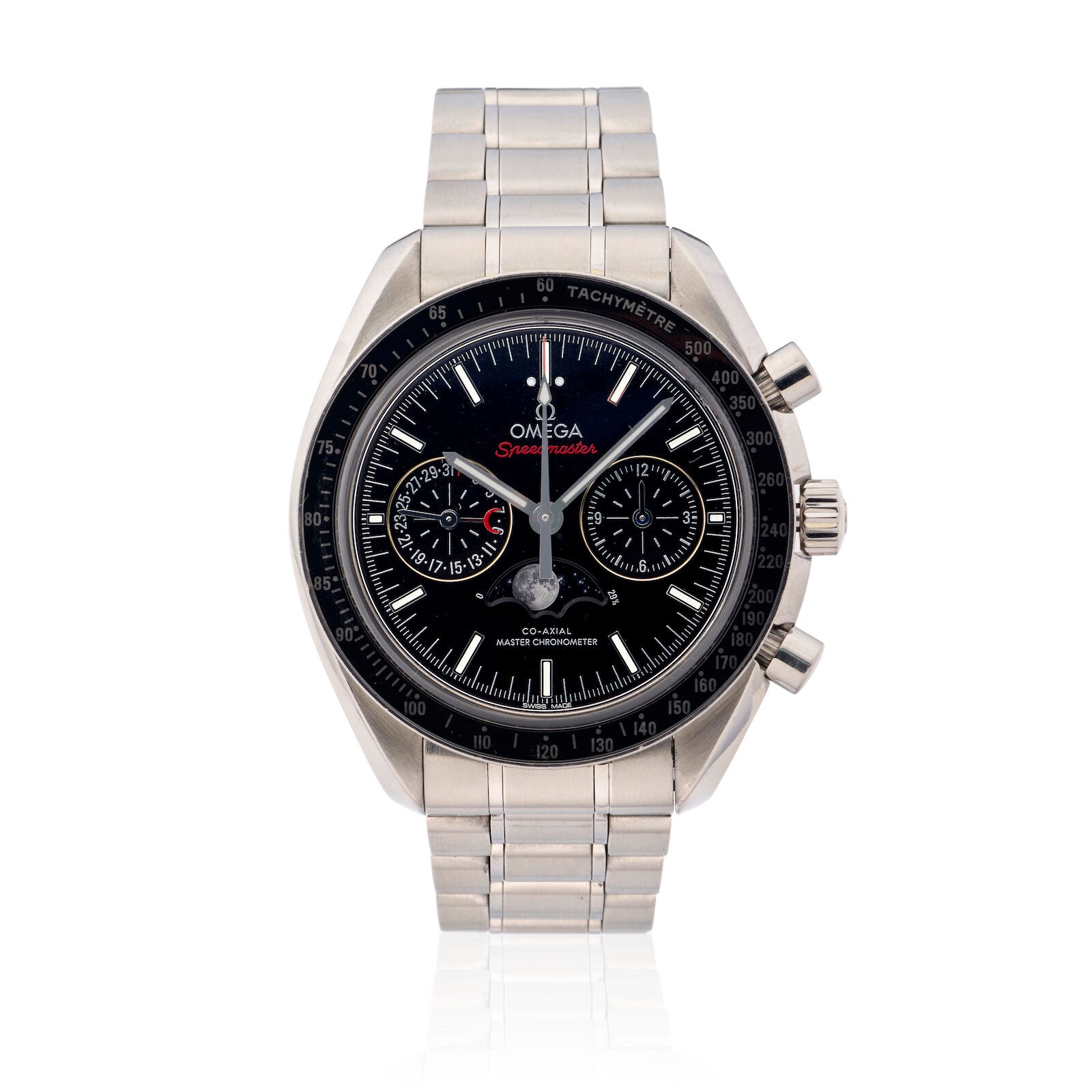
Wristwatch
Omega Speedmaster Moonphase Ref. 304.30.44.52.01.001
“This stainless steel Omega Speedmaster Moonphase wristwatch, reference 304.30.44.52.01.001, is housed in a 44mm brushed and polished tonneau-form case with a screw-down exhibiti…”
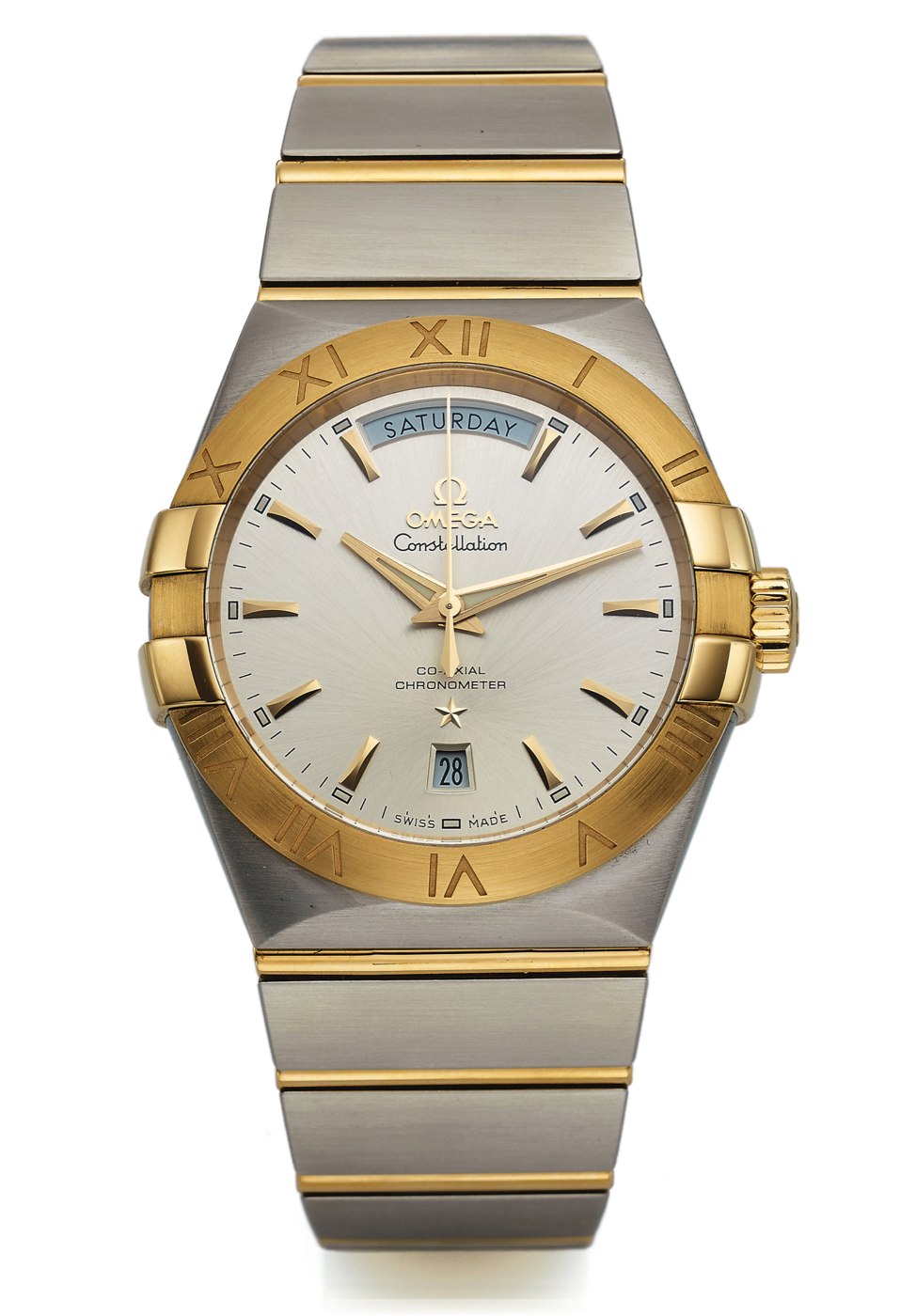
Wristwatch
Omega Constellation Co-Axial Chronometer Ref. SI14
“This Omega Constellation wristwatch, produced circa 2010, features a two-body case constructed from a combination of stainless steel and 18K yellow gold. It is fitted with an in…”
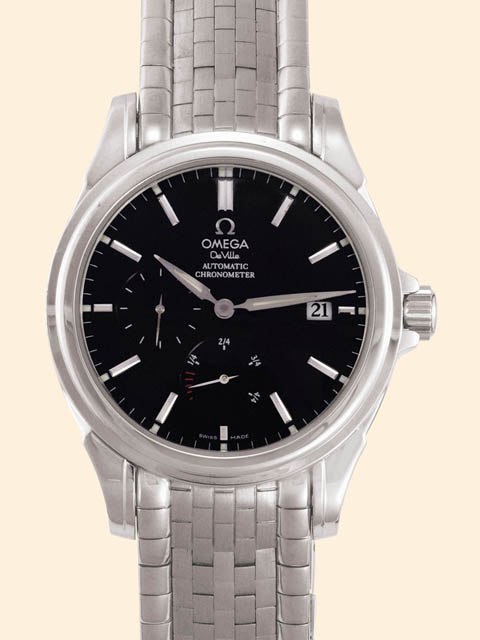
Wristwatch
Omega DeVille Co-Axial Réserve de Marche
“This Omega DeVille Co-Axial Réserve de Marche, catalogued as lot 67, is a self-winding chronometer wristwatch featuring a 44-hour power reserve indicator. The watch is construct…”