
Glossary · Regulation
Auxiliary compensation
Extra devices correcting a balance's middle-temperature error.
Explanation
Auxiliary compensation is any extra device added to a compensation balance to reduce middle temperature error, mainly in marine and observatory chronometers of the 19th century. Many designs were patented, often acting only above or below a certain temperature. They were difficult to adjust and were made unnecessary in most uses by low-temperature-coefficient alloys and, for the highest precision, nickel-steel balances such as the Guillaume balance.
In the object catalogue
Catalogued objects whose own source record mentions “Auxiliary compensation”. The quoted line shows where; it is the seller’s or museum’s wording, not independent verification.
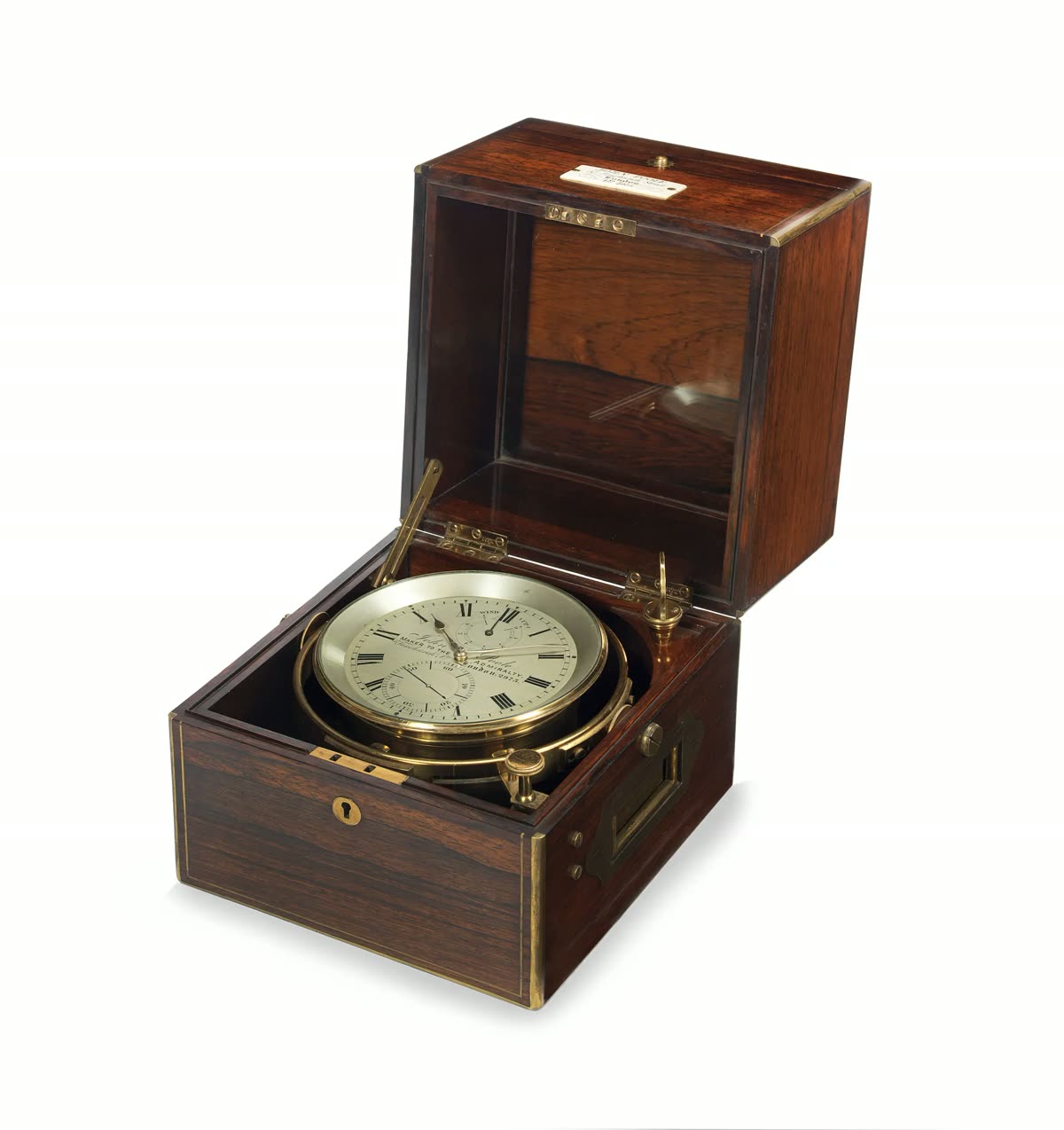
Marine chronometer
John Poole Eight-Day Marine Chronometer No. 2975
“According to the auction catalog, this eight-day marine chronometer by John Poole features an Earnshaw-type detent escapement mounted on a subframe with a blued steel helical sp…”
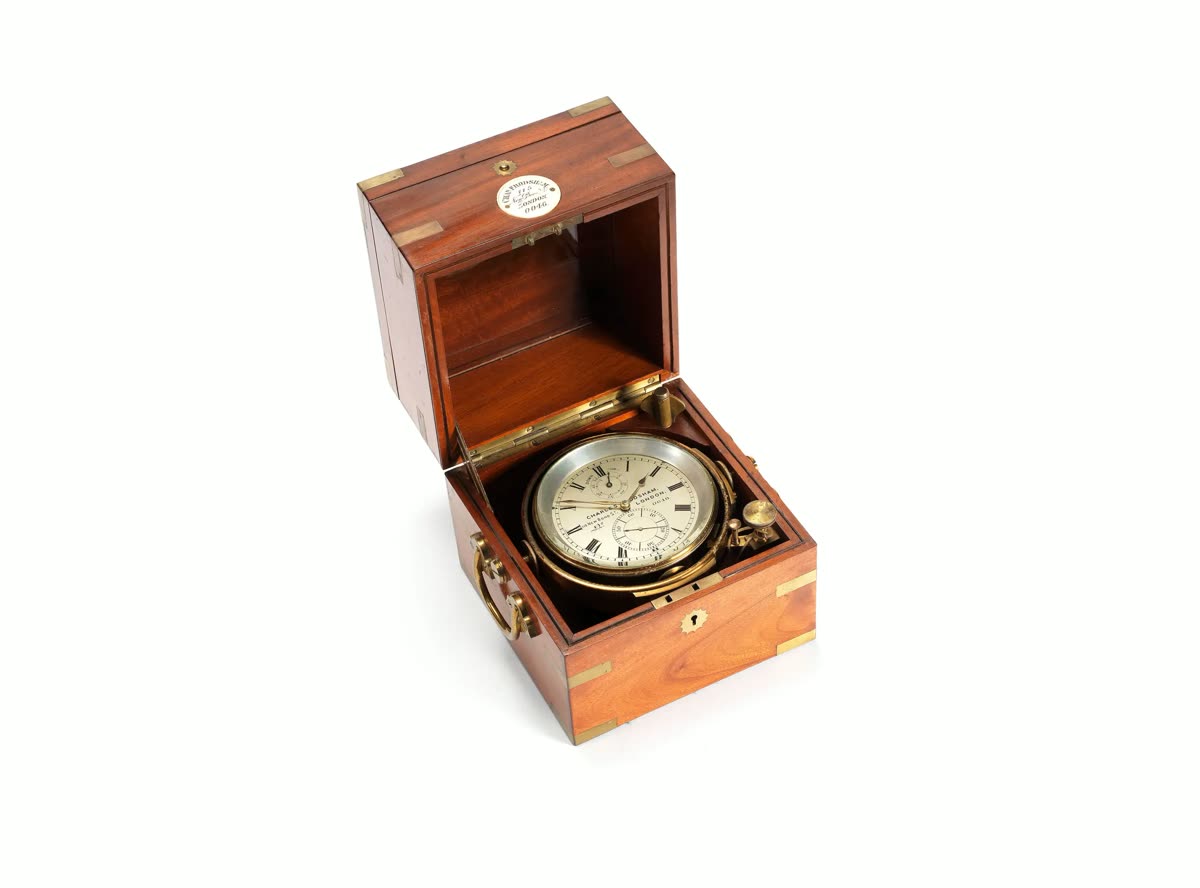
Marine chronometer
Charles Frodsham two-day marine chronometer No. 0040
“This late nineteenth-century marine chronometer is attributed by the source to Charles Frodsham, 15 New Bond Street, London, and marked No. 0040. The instrument features a four-…”
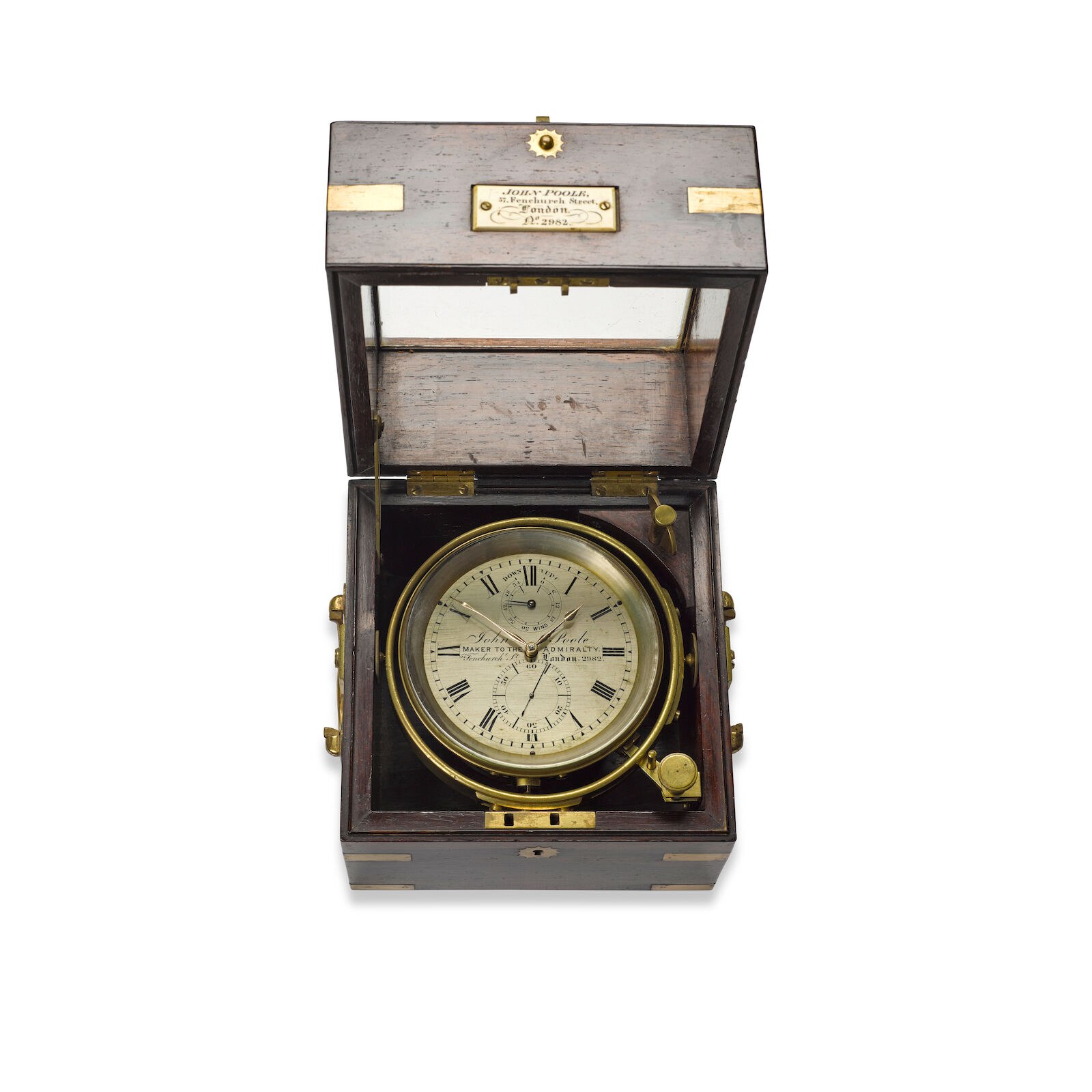
Marine chronometer
A Boxed Two-Day Marine Chronometer with Auxiliary Compensation, John Poole, No. 2982
“A Boxed Two-Day Marine Chronometer with Auxiliary Compensation, John Poole, No. 2982”
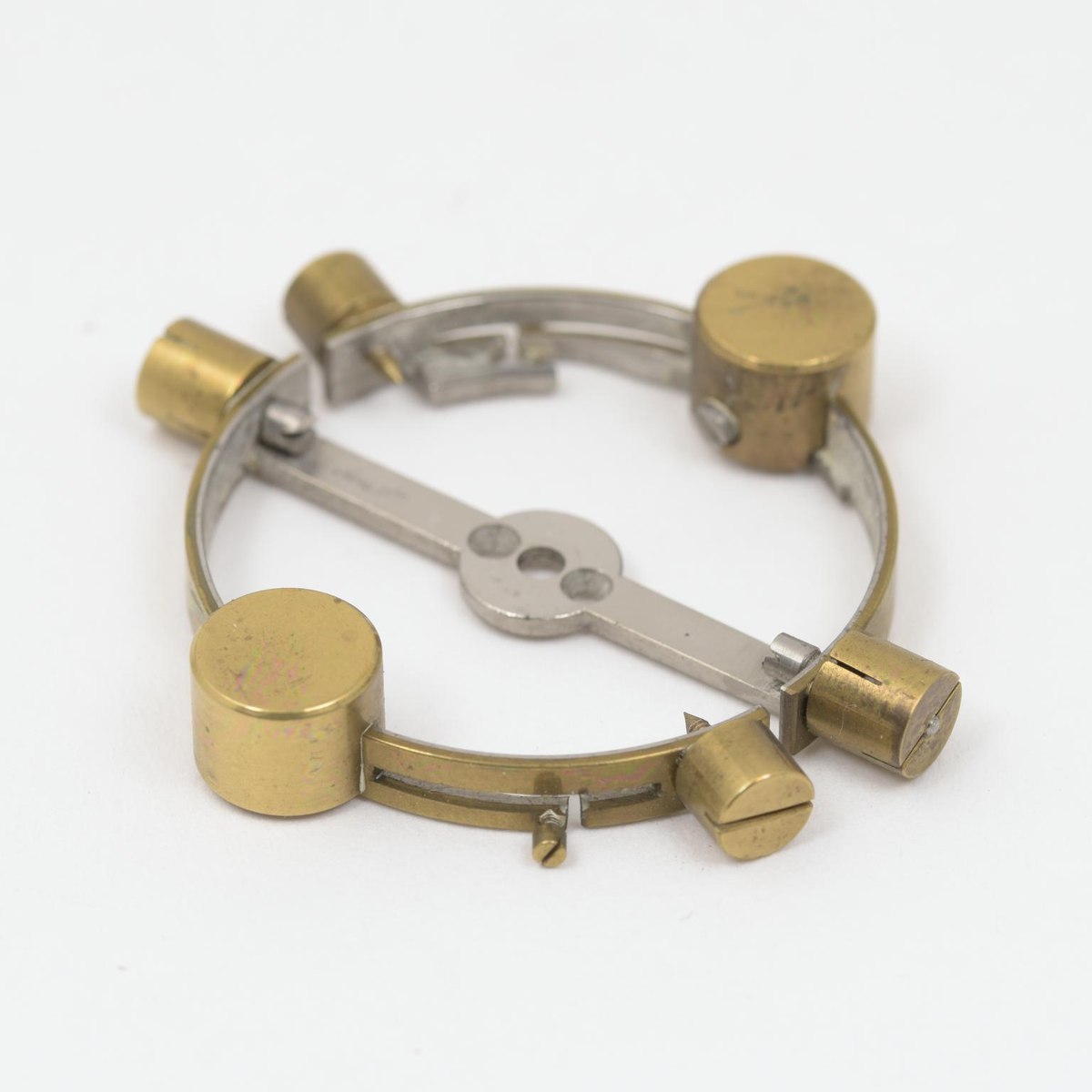
Component
Compensation balance with Kullberg's auxiliary
“This chronometer compensation balance with Kullberg's auxiliary compensation is preserved in the Science Museum Group collection under object number 1929-71, credited to maker T…”