
Component record · Regulation
Suspension Block (Chops)
Partially verifiedThe block or pair of clamping plates (chops) that grips the top of a clock's pendulum suspension spring and hangs it from the back cock or bracket.
What it does
Fixes the point from which the pendulum swings, so the pendulum's effective length and the rate of the clock stay constant.
How it works
The suspension spring's upper end is clamped between the chops, which rest in a slot in the back cock with a pin through them. The pendulum flexes the spring just below the chops, so their lower edge defines the top of the pendulum's working length.
Chops must be square to the plates and grip the spring firmly. A crooked or loose block makes the pendulum wobble or twist, causing irregular rate and an uneven beat.
In French clocks the Brocot suspension, devised by Achille Brocot, lets the chops be raised or lowered by a small key from the dial side, adjusting the pendulum's length without stopping the clock.
Evolution
Simple fixed chops remained usual in English clocks, while adjustable suspensions spread in French production of the nineteenth century.
Known variations
- Fixed chops with a pin
- Brocot adjustable suspension
- Suspension blocks on separate brackets in regulators
Identification for collectors
- A small arbor or square above the twelve on French dials usually indicates a Brocot suspension
Common failure modes
- Loose chops letting the spring twist
- Worn or bent suspension pin
- Worn Brocot adjusting thread
Photographs
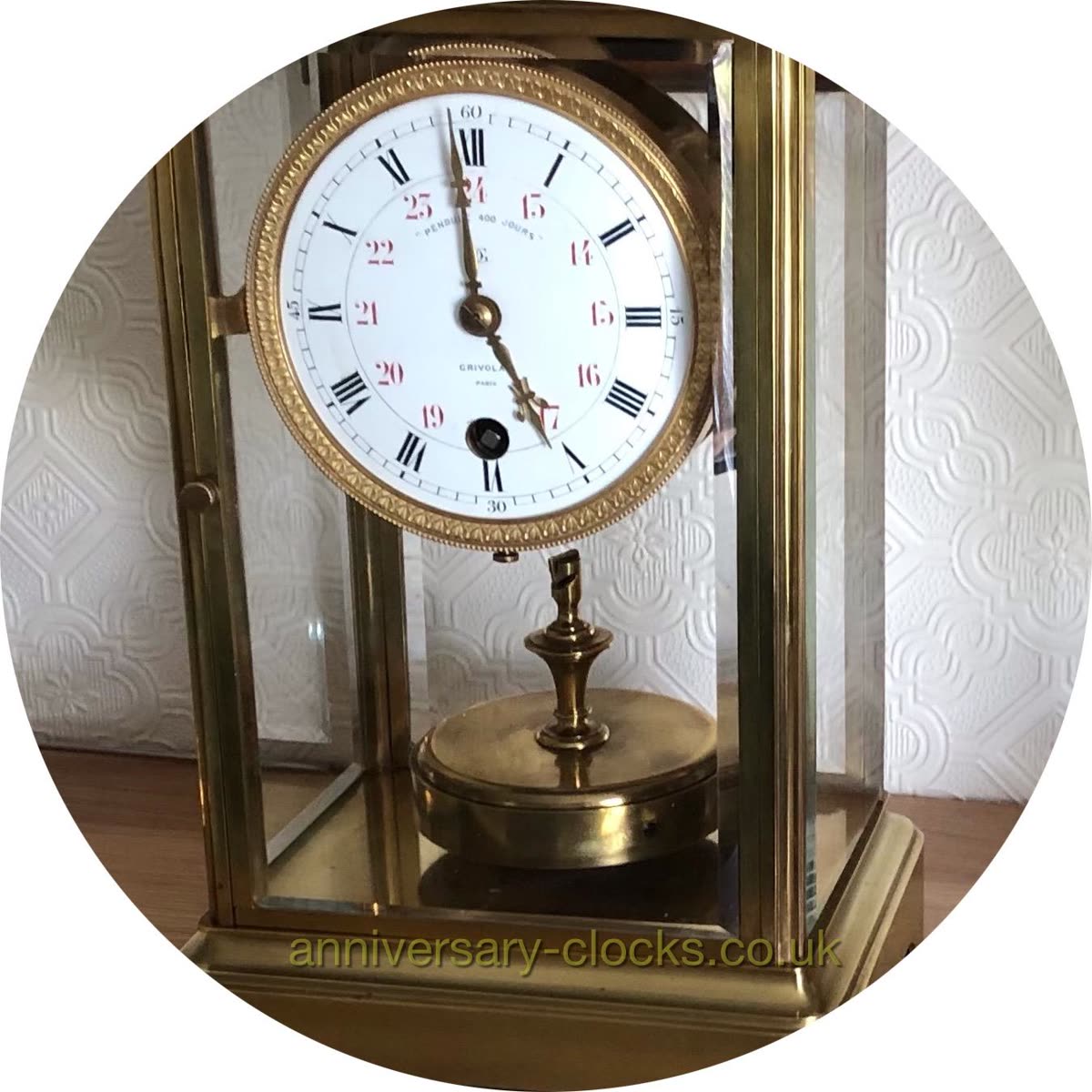
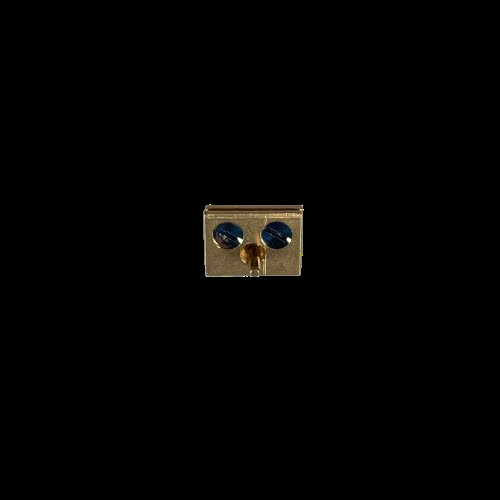
Photographs are illustrative examples of the type, not necessarily the exact object described. Verify details against the source file page.
Sources & references
- Britten, F. J., Watch and Clockmakers' Handbook, Dictionary and Guide
- de Carle, D., Practical Clock Repairing
Where sources disagree, the disagreement is stated rather than resolved silently.