
Component record · Power
Rotor Bearing
Partially verifiedThe bearing on which the oscillating weight (rotor) of a self-winding watch turns, either a plain bearing on a central post or a ball bearing.
What it does
Lets the heavy rotor swing freely with the smallest possible friction while holding it on its axis, so that small wrist movements are converted into winding.
How it works
A plain bearing places the rotor on a central post or arbor, sometimes jewelled, with a screw or clip holding it in place. It is simple, but the rotor's mass acting on a small bearing means wear shows as play, and play lets the rotor touch the bridge or the case back.
A ball bearing puts a ring of small balls between inner and outer races. Eterna's 1948 design was influential enough that the company's logo of five dots refers to the balls of its rotor bearing. Ball bearings tolerate the rotor's weight better and spin more freely, which improves winding efficiency.
Whatever the type, the rotor must spin freely, without catching, and with only slight axial play. The bearing is normally serviced or replaced as a unit rather than repaired.
Evolution
Plain bearings dominated the first generations of rotor automatics. From the 1950s ball bearings spread through Swiss and later Japanese calibres, and peripheral or micro-rotor designs developed their own bearing arrangements at the rim of the weight.
Known variations
- Plain central bearing on a post or arbor
- Ball-bearing rotor, with steel or ceramic balls
- Peripheral rotors running on rollers or a track at the movement's edge
Identification for collectors
- A circular rub mark inside the case back, or on the rotor's underside, is the classic sign of a worn rotor bearing
- Rotor play can be felt by gently moving the rim of the weight up and down with the case back off
- A grinding or scraping sound when the watch is moved points to a dry or damaged bearing
Common failure modes
- Wear producing rotor wobble and rubbing against the bridge or case back
- Dirty or dry ball bearing causing noise and poor winding
- Loose rotor screw or retaining clip
- Damage from a rotor knocked by a shock, bending its arbor or cracking a race
Photographs
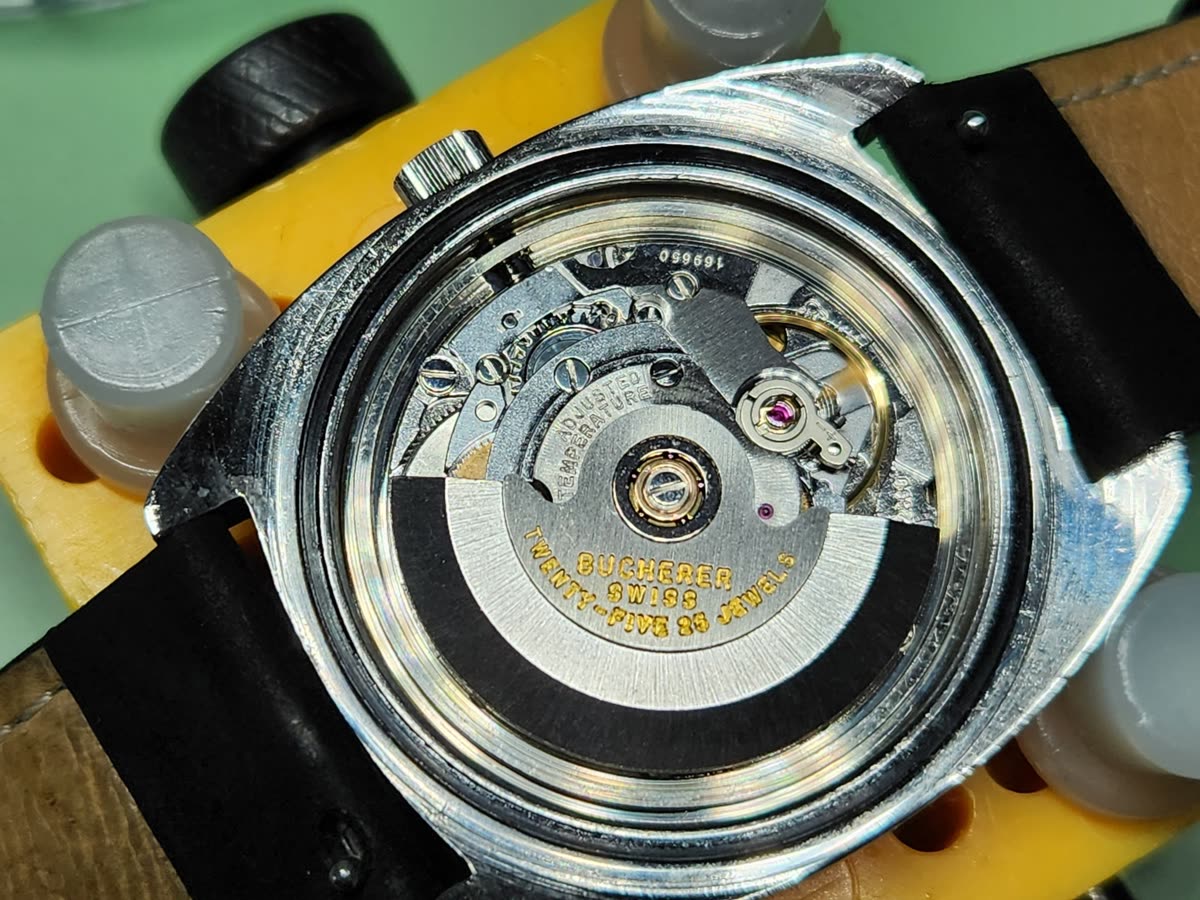
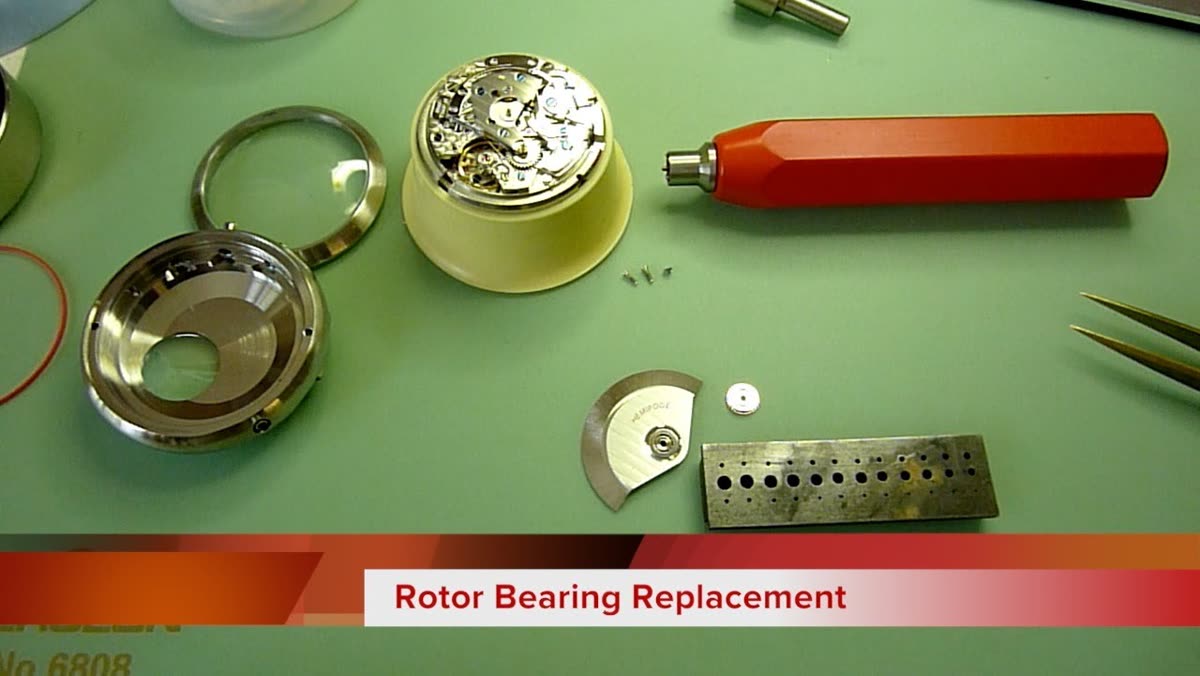
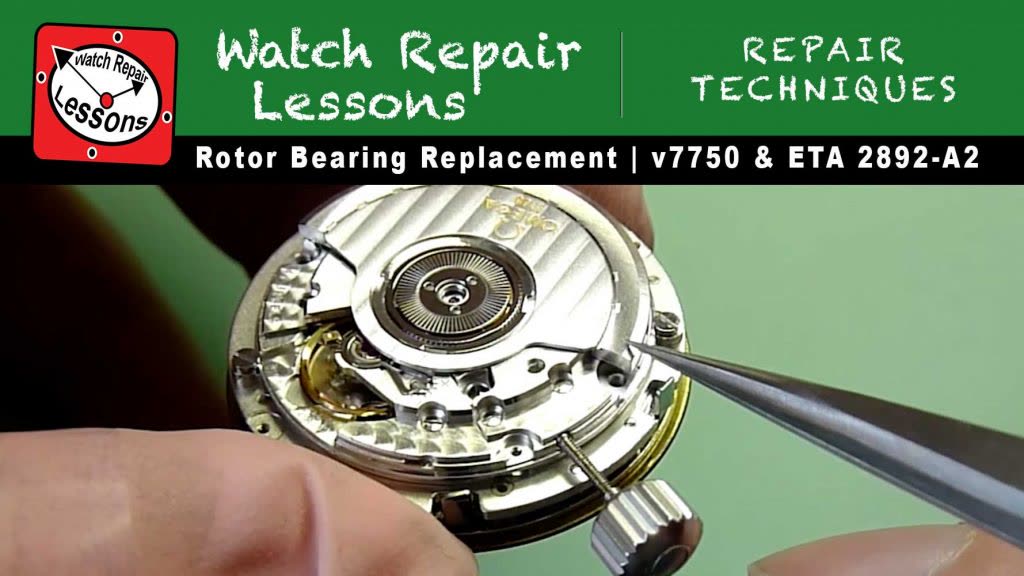
Photographs are illustrative examples of the type, not necessarily the exact object described. Verify details against the source file page.
Sources & references
- de Carle, D., Practical Watch Repairing
- de Carle, D., Watch and Clock Encyclopedia
- Fried, H. B., The Watch Repairer's Manual
- Daniels, G., Watchmaking
Where sources disagree, the disagreement is stated rather than resolved silently.