
Component record · Dial & hands
Clock Dial Plate
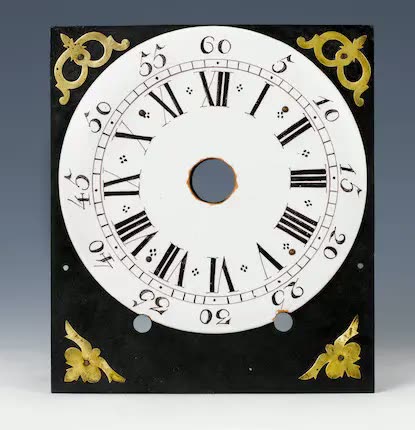
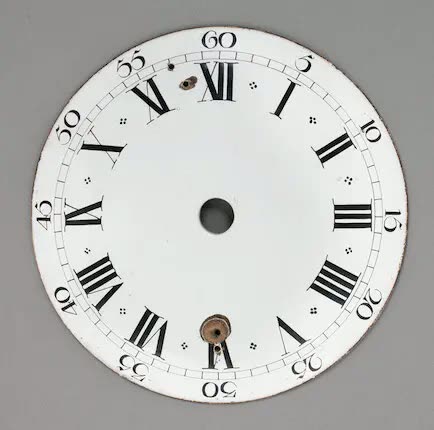
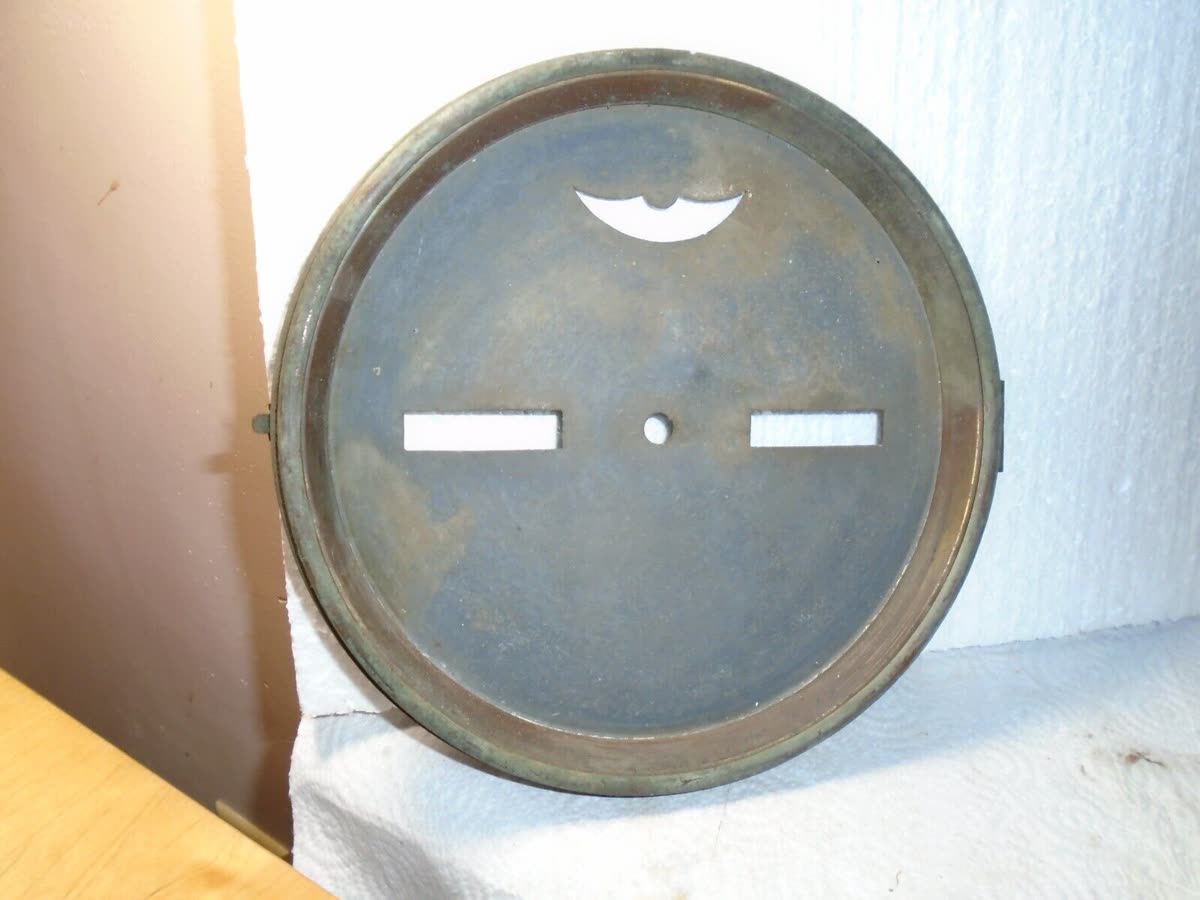
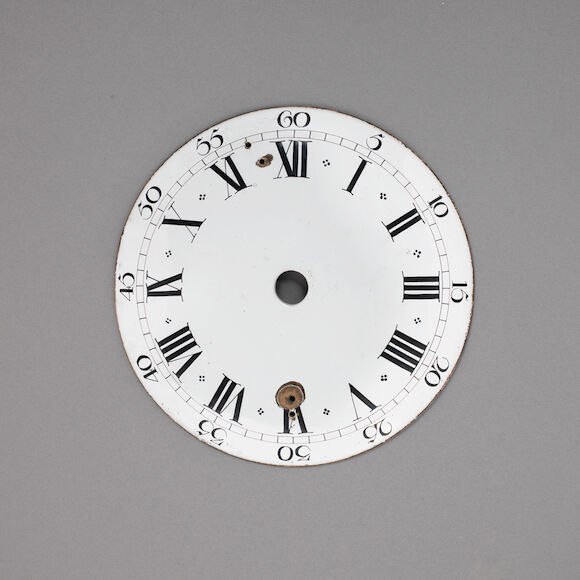
Partially verifiedThe dial of a clock, either a brass plate with an applied chapter ring and spandrels or a painted iron (white) dial, fixed to the movement by dial feet.
What it does
Carries the time indications and the openings for the winding squares, calendar and seconds, and gives the clock much of its appearance.
How it works
A brass dial has separate parts: a silvered chapter ring, cast corner spandrels and sometimes a matted centre, screwed or pinned to the dial plate.
Painted dials were made by specialist dial makers, many in Birmingham, and supplied to clockmakers who added their names. They were often fitted with a false plate between dial and movement, and false plates stamped with the dial maker's name help date the dial.
Dial feet must line up with holes in the front plate (or false plate). Spare or plugged holes can show that a dial and movement were not originally together.
Evolution
Brass dials gave way in many British provincial clocks to painted dials in the late eighteenth century; arched dials, moon dials and painted scenes followed fashion.
Known variations
- Square and arched brass dials
- Painted (white) dials
- Silvered one-piece brass dials
Identification for collectors
- Check the dial feet against the front plate for 'marriages' of dial and movement
- Dial makers' names on false plates are useful dating evidence for painted dials
Common failure modes
- Flaking or overpainted painted dials
- Worn silvering on chapter rings
- Loose or missing dial feet pins
Photographs
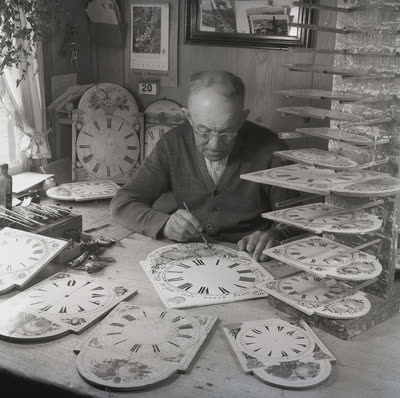
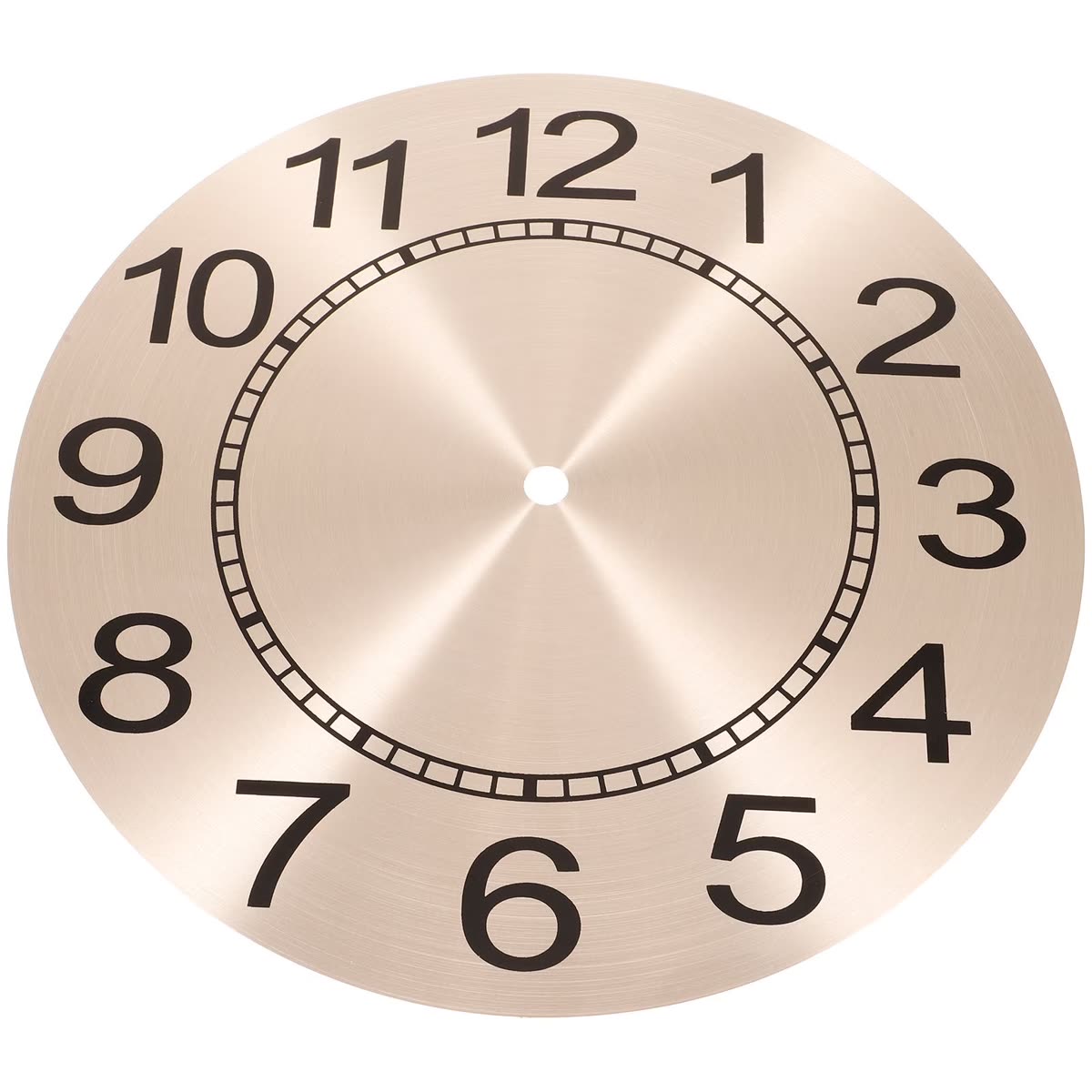
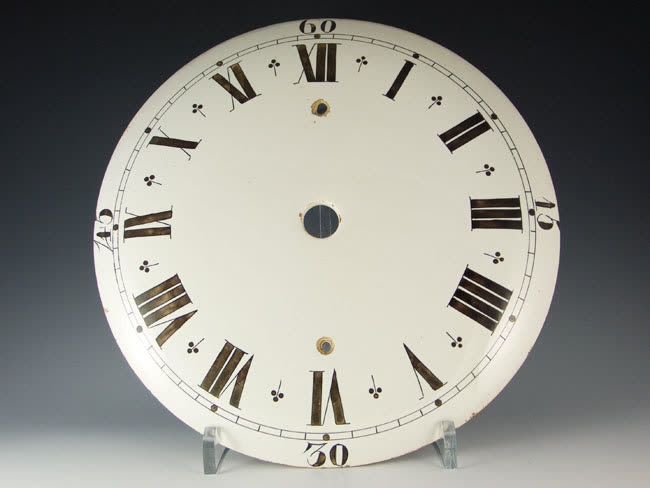
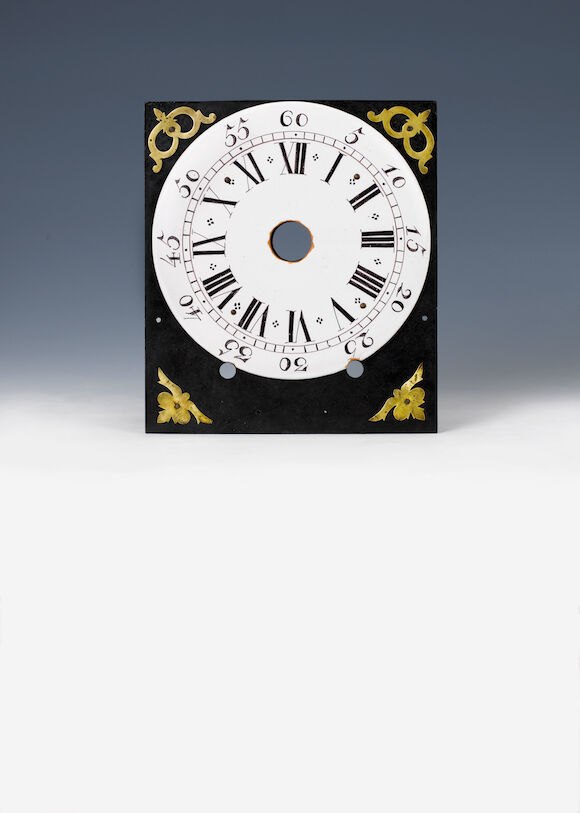
Photographs are illustrative examples of the type, not necessarily the exact object described. Verify details against the source file page.
Sources & references
- Britten, F. J., Watch and Clockmakers' Handbook, Dictionary and Guide
- de Carle, D., Practical Clock Repairing
- Loomes, B., White Dial Clocks
Where sources disagree, the disagreement is stated rather than resolved silently.