
Component record · Train
Column Wheel and Column-Wheel Screw
Partially verifiedThe castellated control wheel of a column-wheel chronograph, with ratchet teeth below and a ring of columns above, held on its post by a cap screw.
What it does
Coordinates starting, stopping and resetting: as it turns step by step, its columns lift or drop the coupling, brake and hammer levers in sequence.
How it works
Each press of the start/stop pusher makes the operating lever's pawl advance the ratchet teeth at the base of the wheel by one step, and a jumper holds it there. The levers rest against the wheel with their beaks either on top of a column or dropped into a gap between columns.
On one step the coupling lever drops into a gap and the chronograph starts while the brake and hammer are held off; on the next step the positions reverse and the chronograph stops. The reset hammer is only free to act in the stopped position.
The cap screw holds the wheel on its post with a little end-shake. It must be secure but not tight: a wheel clamped by its screw will not turn, and a loose one can lift so that the levers miss their columns.
Evolution
Cam-controlled systems were developed as a cheaper alternative in the twentieth century; column wheels remain a mark of traditional construction in many modern chronographs.
Known variations
- Six-, seven- or eight-column wheels, depending on the calibre
- Plain or decorated cap screws
Identification for collectors
- A small turret-like wheel among the chronograph levers, visible through display backs
- A crisp, light pusher feel is often associated with well-adjusted column-wheel chronographs
Common failure modes
- Worn column faces or ratchet teeth
- Loose cap screw letting the wheel lift
- Weak jumper causing mis-indexing
Photographs
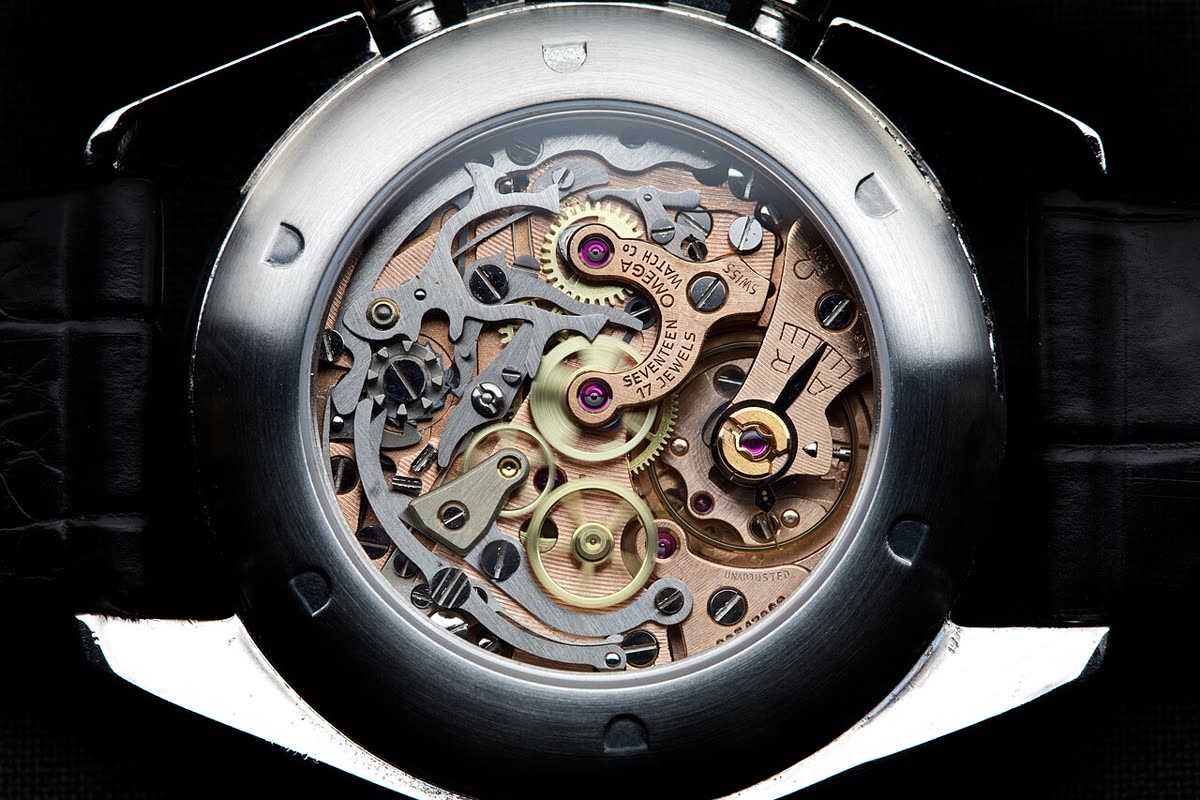
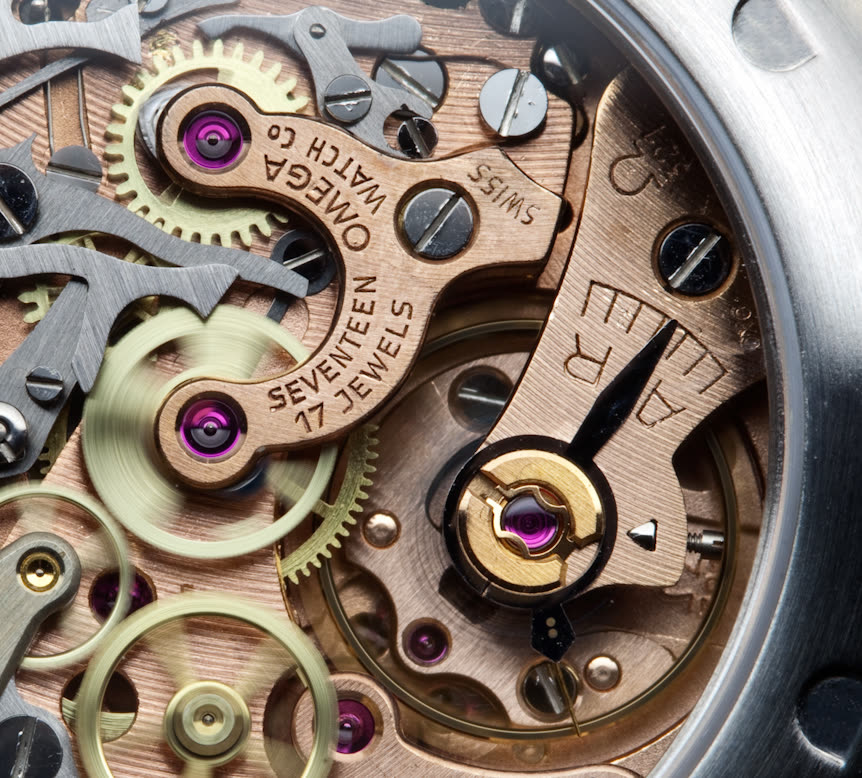
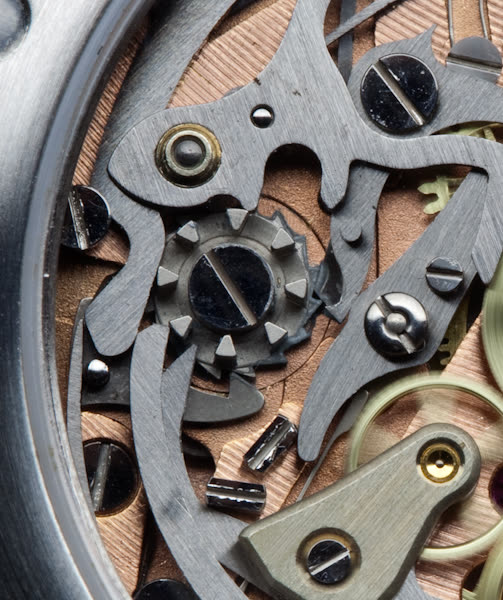
Photographs are illustrative examples of the type, not necessarily the exact object described. Verify details against the source file page.
Sources & references
- Fried, H. B., The Watch Repairer's Manual
- de Carle, D., Watch and Clock Encyclopedia
- Reymondin, C.-A., et al., The Theory of Horology (Swiss Federation of Technical Colleges)
Where sources disagree, the disagreement is stated rather than resolved silently.