
Component record · Keyless work
Barrel Bridge
Partially verifiedThe bridge that carries the upper pivot of the mainspring barrel arbor, and usually the ratchet wheel and crown wheel of the winding work.
What it does
Holds the barrel in position and supports the winding wheels through which the crown winds the mainspring.
How it works
The ratchet wheel is screwed to the barrel arbor on top of the bridge, and the crown wheel turns on the bridge beside it. When the crown is turned, the winding pinion drives the crown wheel, which drives the ratchet wheel and winds the spring; the click holds what has been wound.
The crown-wheel screw is often left-hand threaded so that it tightens rather than loosens under the wheel's rotation; watchmakers check before trying to undo it.
Before removing the barrel bridge, the mainspring must be let down by releasing the click while controlling the crown, so that stored energy does not damage the train.
Evolution
Barrel bridges grew in size and decorative importance in bridge calibres, where they display the ratchet and crown wheels.
Known variations
- Separate barrel bridge
- Combined barrel and train bridge
- Three-quarter plates covering the barrel
Identification for collectors
- The bridge carrying the large ratchet wheel and the smaller crown wheel
Common failure modes
- Stripped or damaged crown-wheel screw
- Worn click spring or click
- Damage from removing the bridge with the spring wound
Photographs
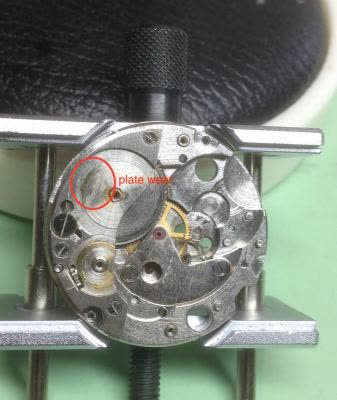
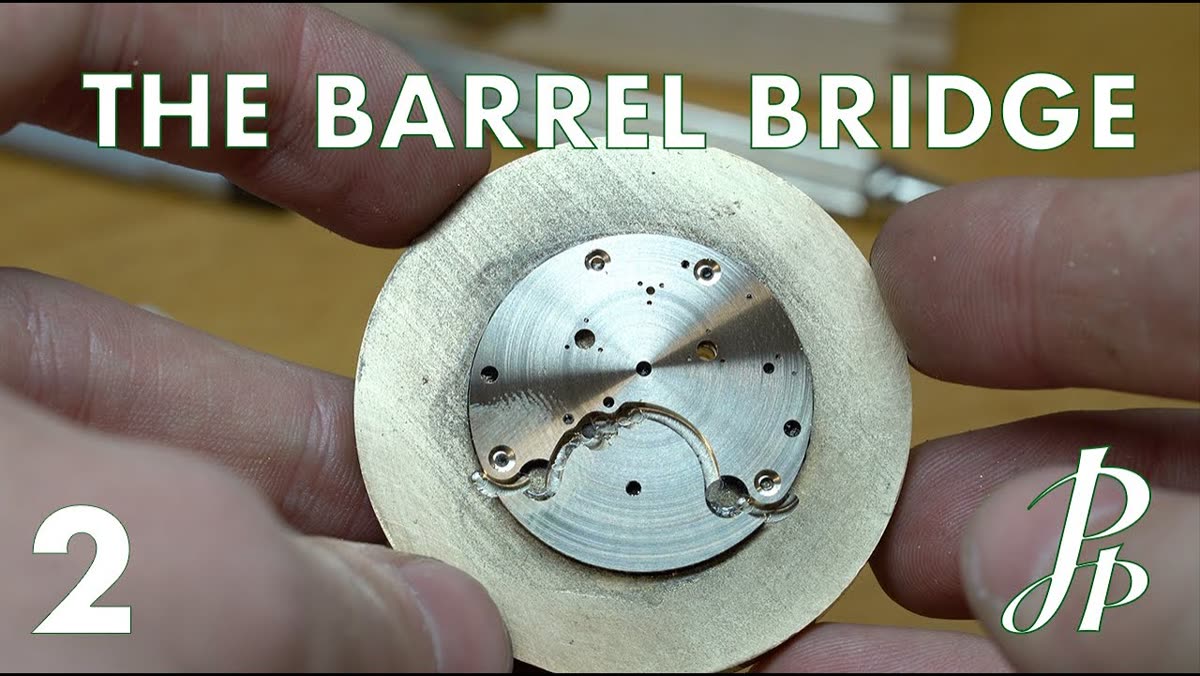
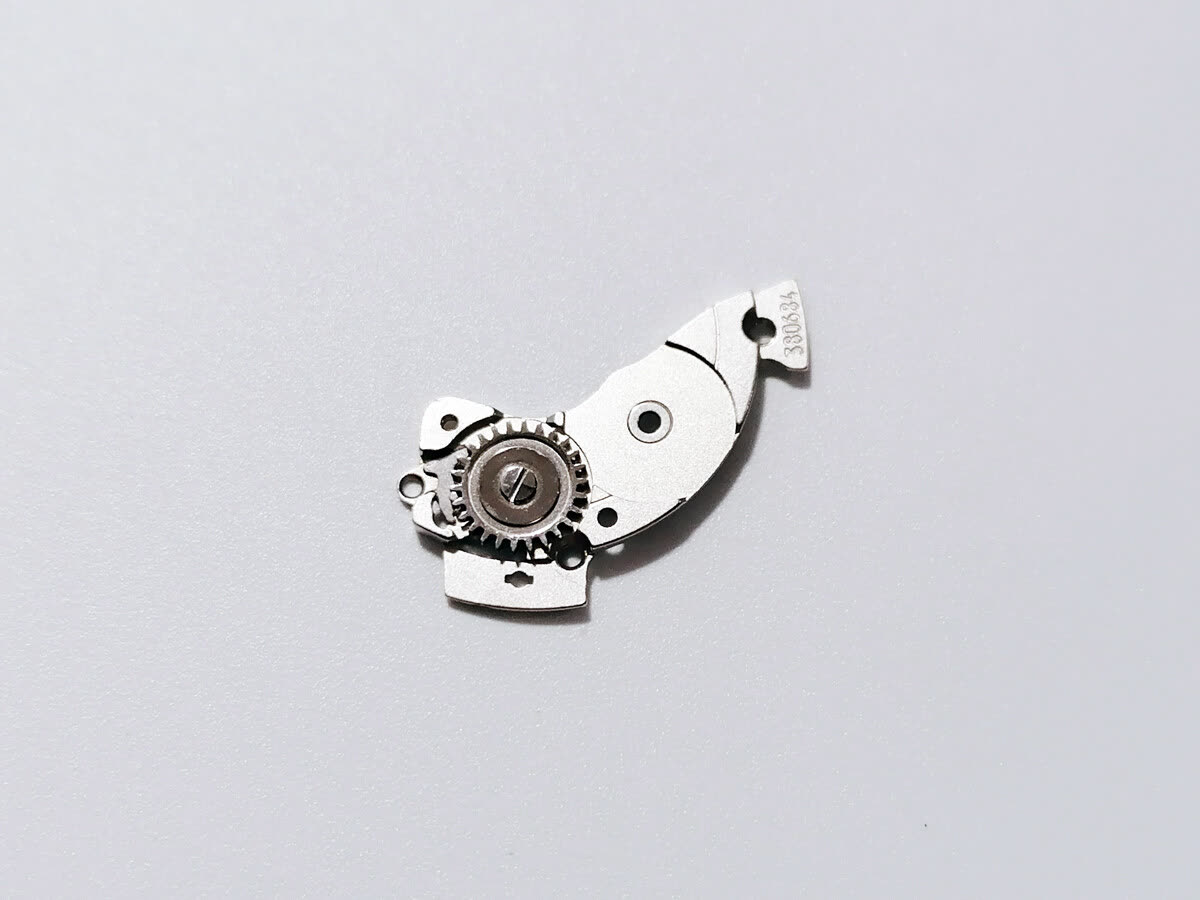
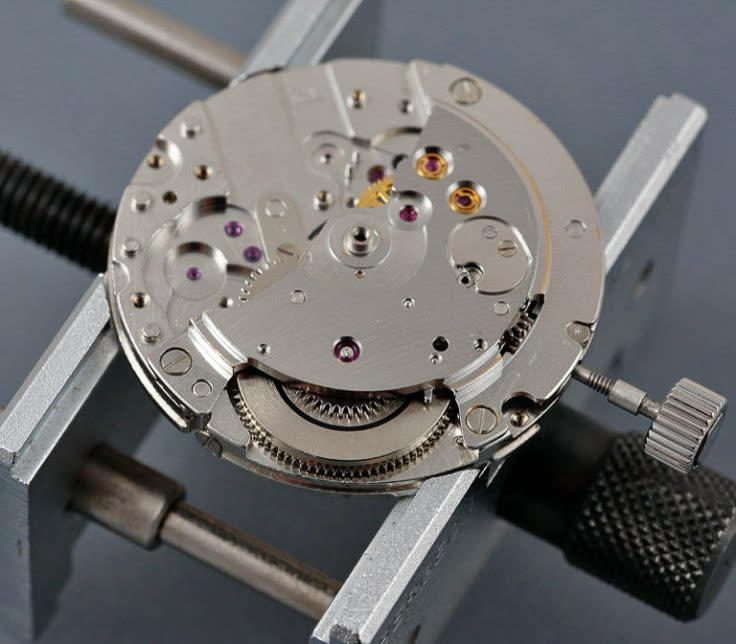
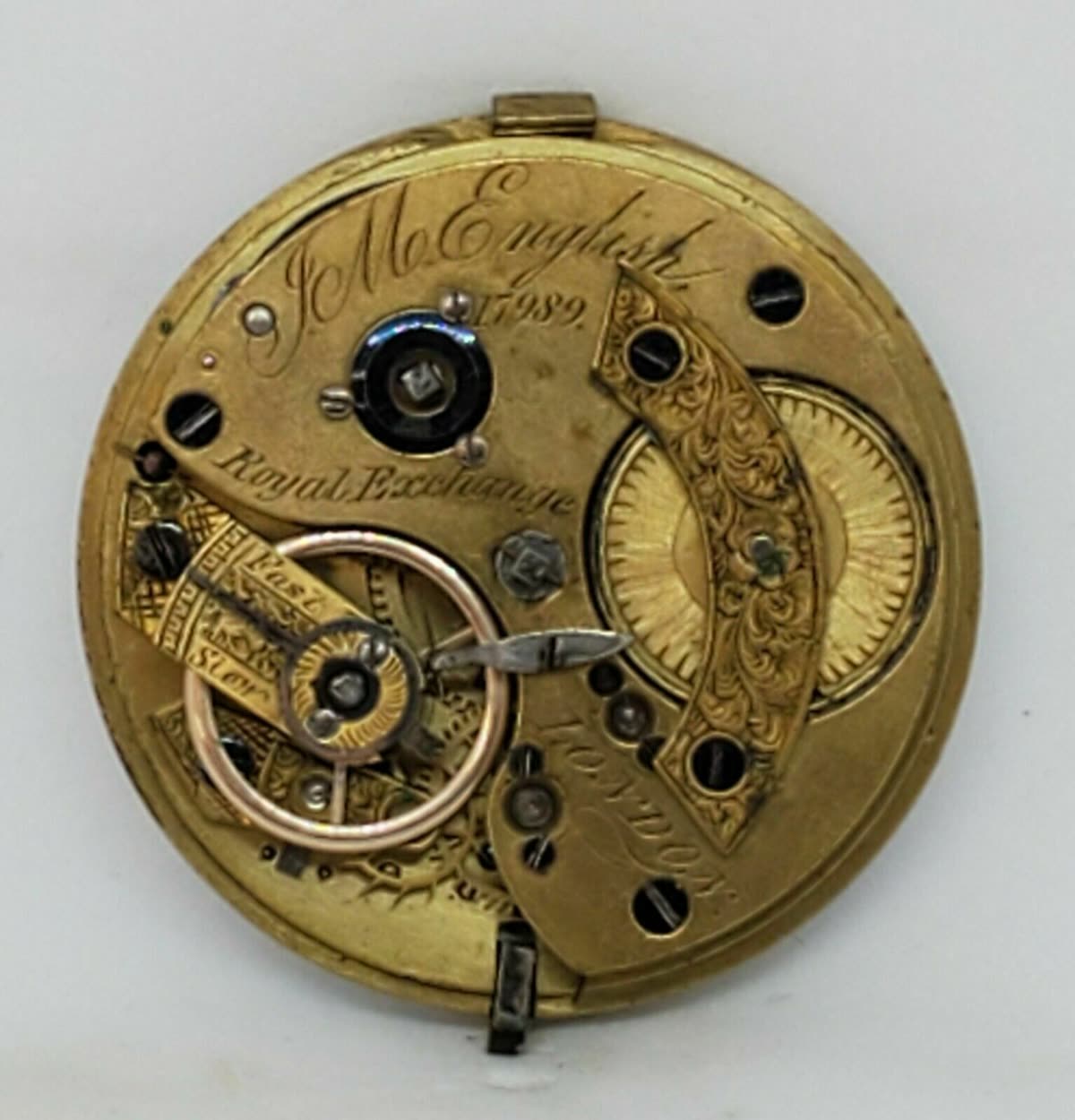
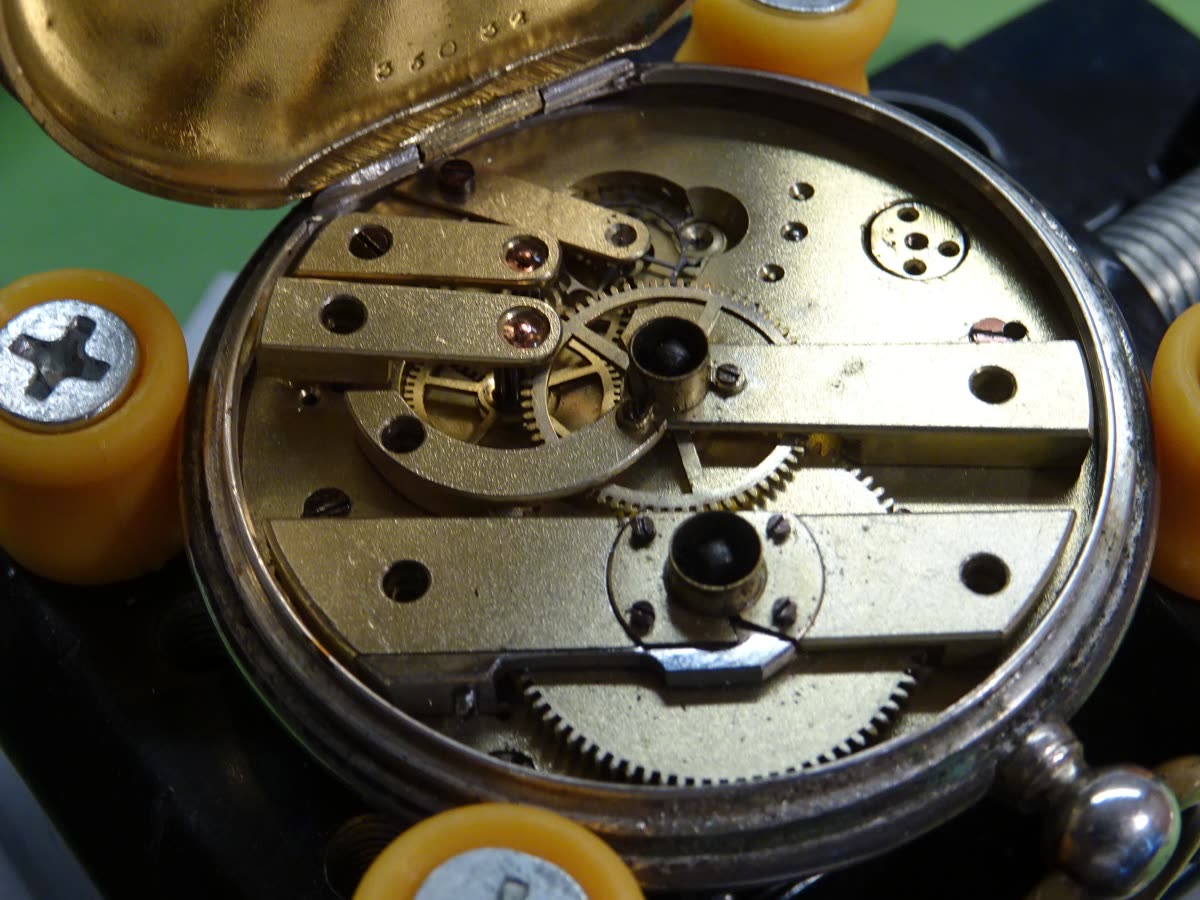
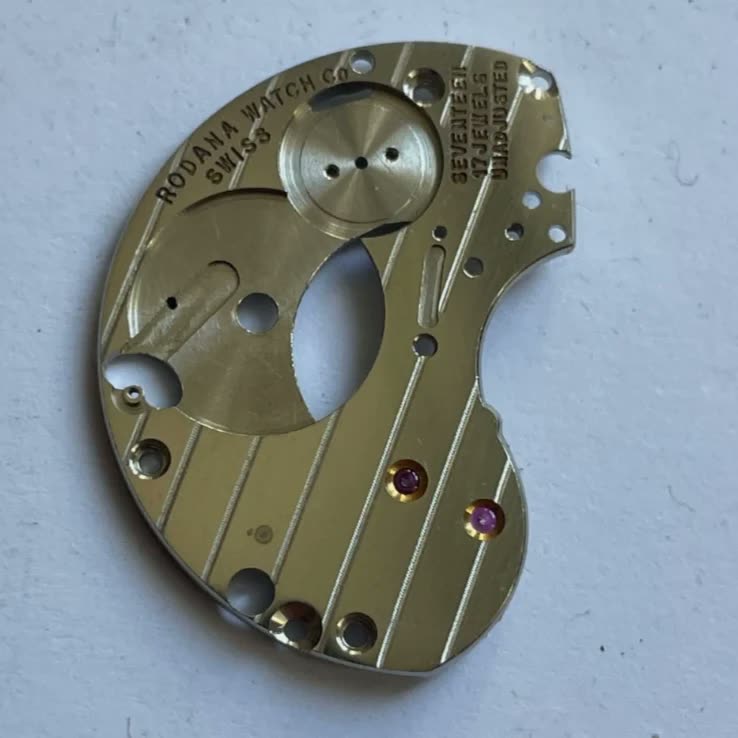
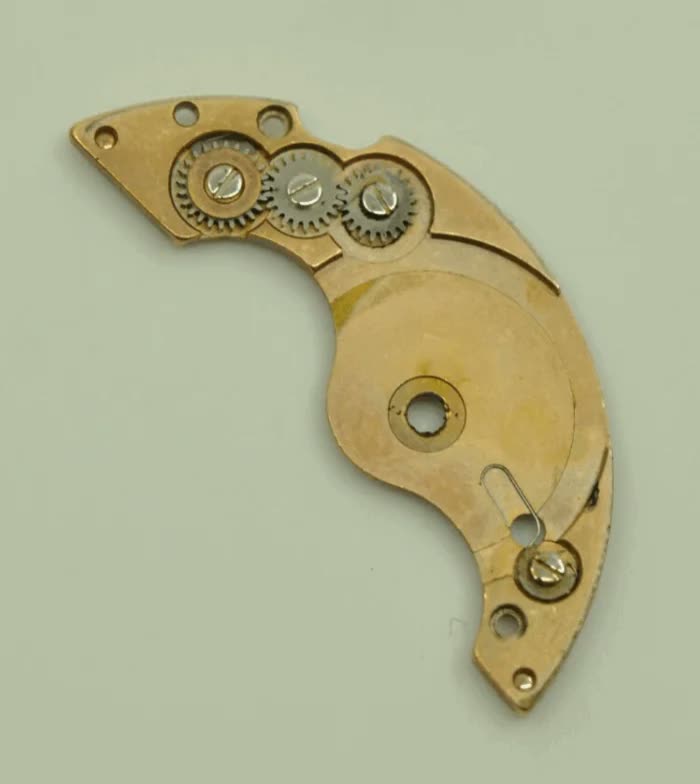
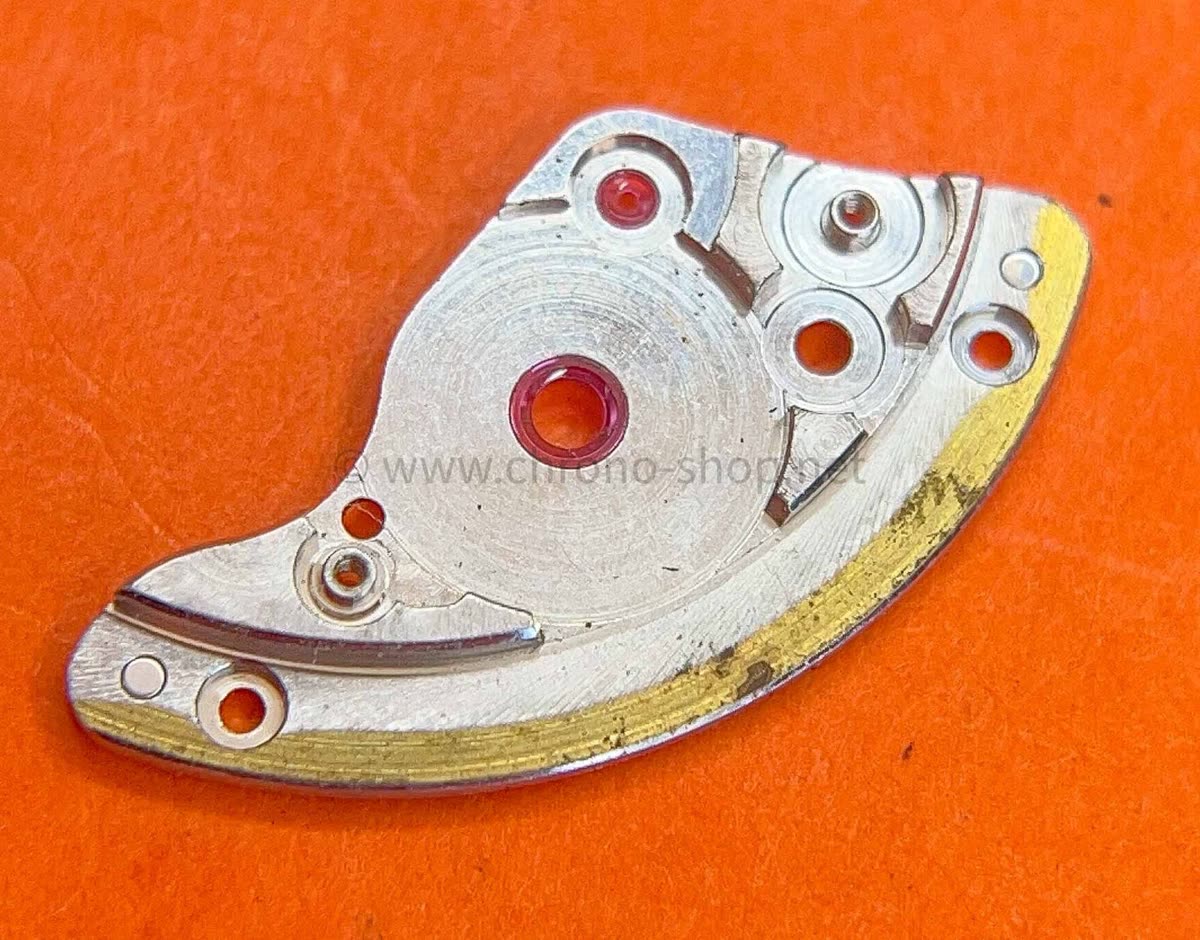
Photographs are illustrative examples of the type, not necessarily the exact object described. Verify details against the source file page.
Sources & references
- de Carle, D., Practical Watch Repairing
- de Carle, D., Watch and Clock Encyclopedia
- Fried, H. B., The Watch Repairer's Manual
- Daniels, G., Watchmaking
Where sources disagree, the disagreement is stated rather than resolved silently.