
Source catalogue · individual objects
Object Catalogue
Individual objects described by auction houses, specialist dealers and collection catalogues. Attribution, dates and specifications remain source-reported unless independently established; rights clearance is pending.
Browse makers and their key pieces · Barraud (Barrauds) profile
10 of 5699 objects · Page 1 of 1
Pocket watch · Verge & pair-cased watch
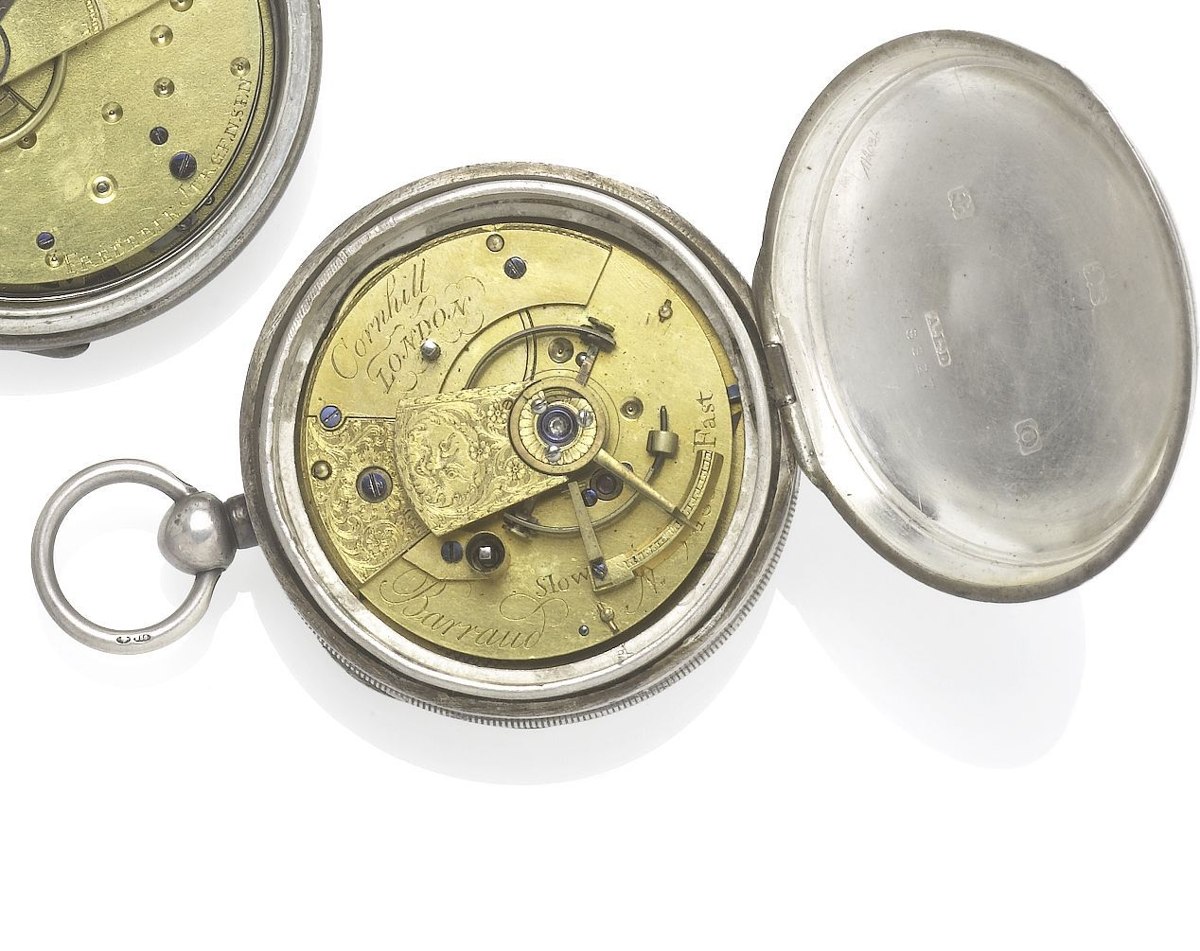
Barraud pocket watch movement in later custom-made case
According to Bonhams, this early 19th-century watch movement was produced by Barraud around 1810 and subsequently fitted into a later custom-made case. The movement top plate is engraved 'Cornhill LONDON' and 'Barraud', accompanied by a balance regulator scale labelled 'Fast' and 'Slow'. Bonhams records the movement number as 4591. In the auction photograph, the movement is shown from the back within an open silver-coloured case featuring a pendant loop, with the inner case back stamped with hallmarks and a maker's mark.
Full description
www.bonhams.com · 22
Pocket watch · Open-face watch
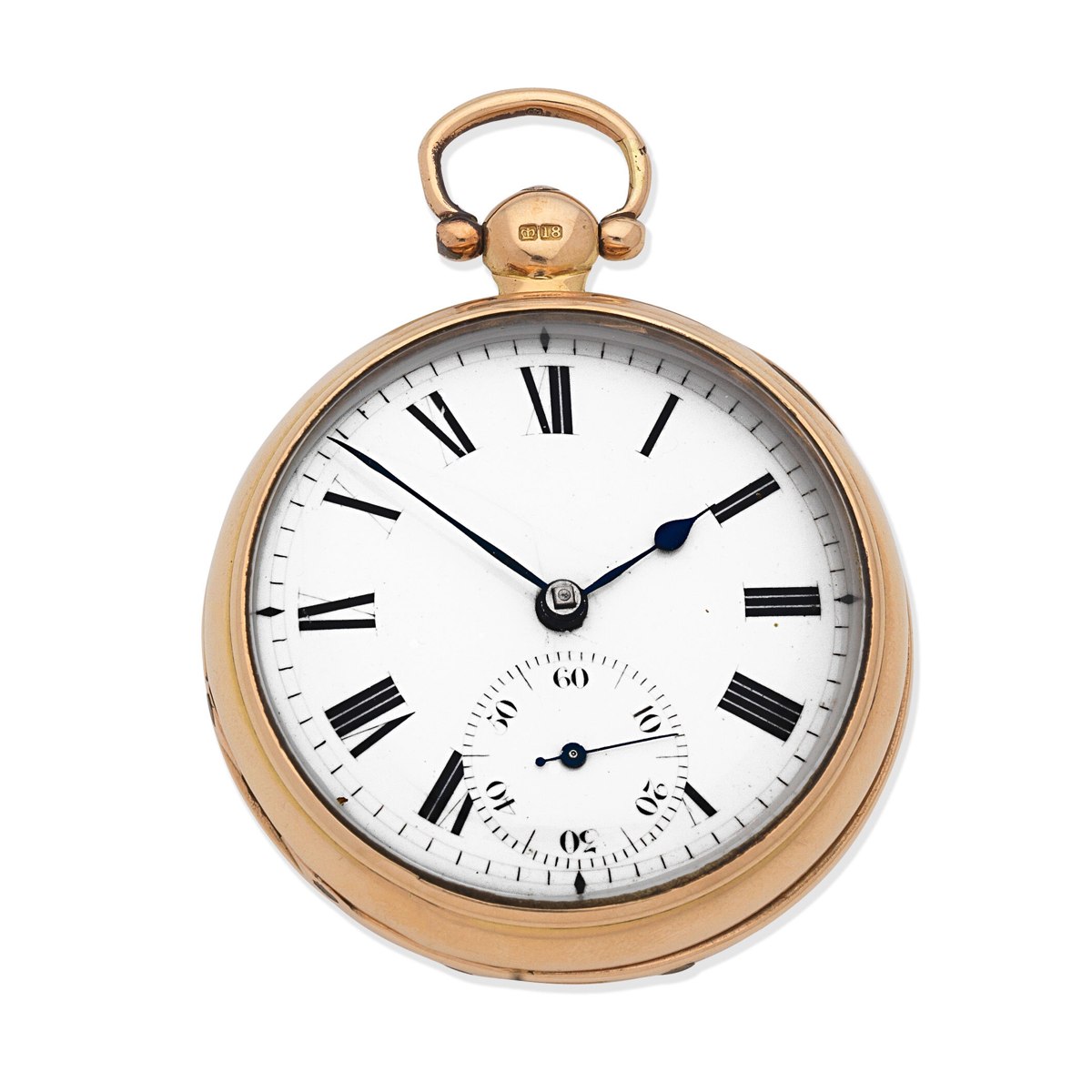
Barraud, London 18K gold key wind open face pocket watch
This is an 18K gold key-wind open-face pocket watch attributed to Barraud of London, which the source dates via a London hallmark to 1814. The watch features a white enamel dial with bold black Roman numeral hour markers, an outer minute track with diamond-shaped quarter accents, and a sunken subsidiary seconds register at 6 o'clock. Blued steel hands indicate the time. The gold pendant reveals a clear hallmark cartouche beneath the bow.
Full description
www.bonhams.com · 10
Pocket watch · Open-face watch
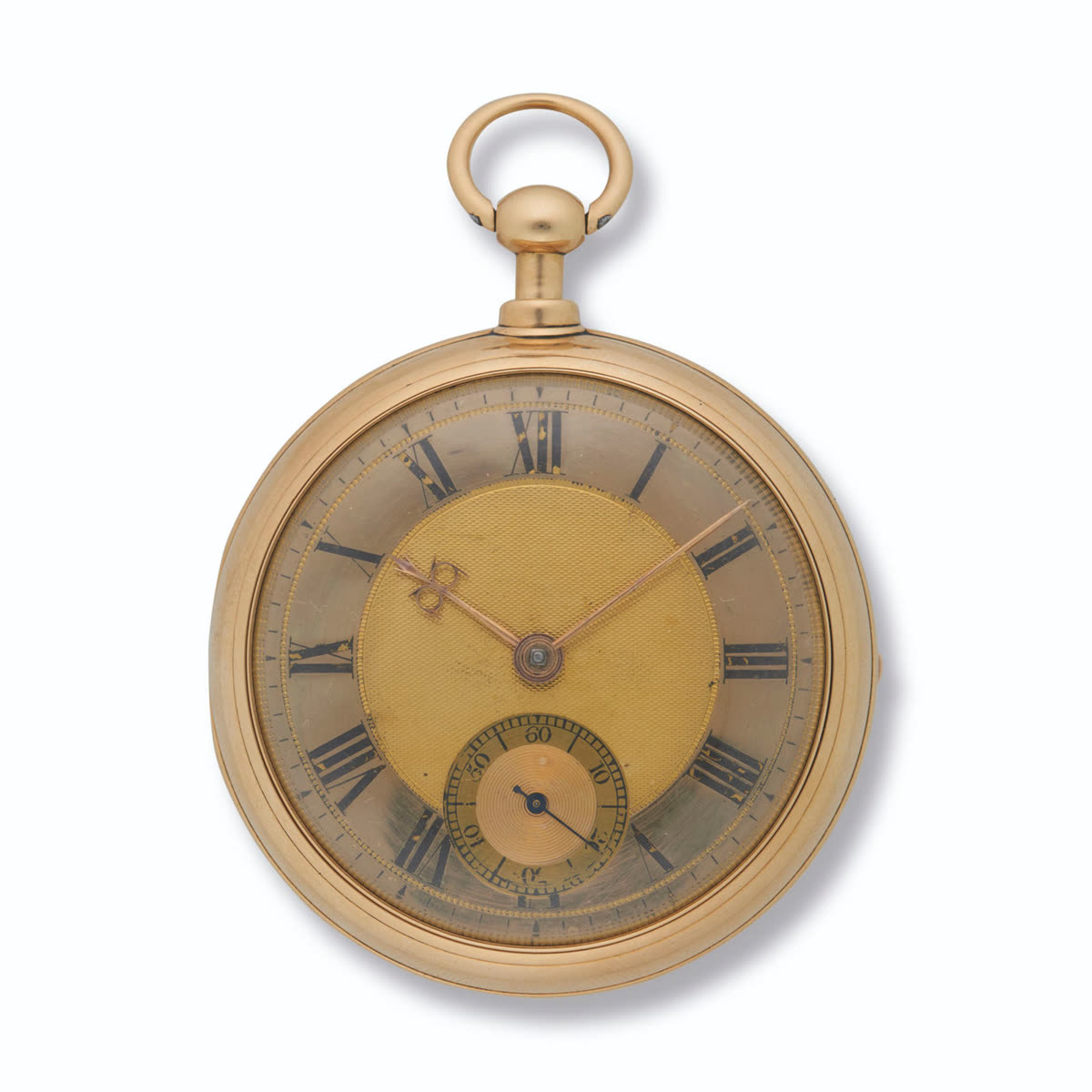
Barraud London "Cornhill" Yellow Gold Openface Pocket Watch
This openface pocket watch is catalogued by Christie's under the title Barraud London "Cornhill" and assigned a date of circa 1840. The watch is cased in yellow gold with an overall diameter of 49 mm. It features a gold dial detailed with an engine-turned center, Roman numerals, and a subsidiary seconds display located above the 6 o'clock position. The source records that the watch is key-wound with time-only functions and includes an accompanying winding key.
Full description
onlineonly.christies.com · 247
Movement · Pocket watch movement
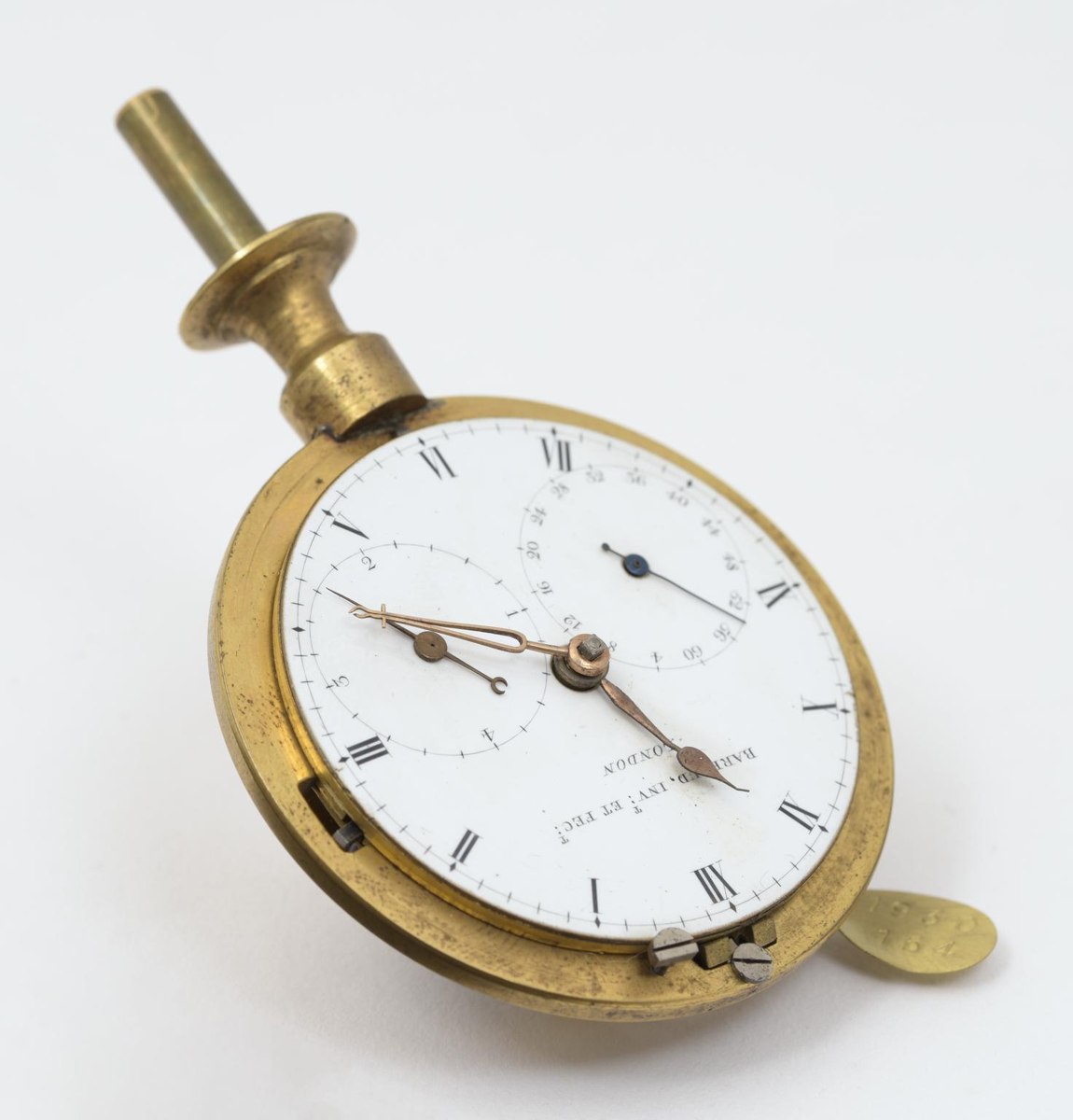
Pocket Watch Mechanism by Barraud
This repeating pocket watch movement was produced in London between 1780 and 1810 by the Barraud family. Preserved in the Science Museum Group collection under object number 1930-154, the mechanism incorporates enamel, brass, and steel components. The circular brass chassis holds a white enamel dial featuring Roman numerals for the hours along the rim, complemented by two subsidiary dials. A substantial turned brass pendant tube projects from the top rim, while the lower perimeter retains screws and a collection tag bearing the accession number.
Full description
collection.sciencemuseumgroup.org.uk · 1930-154
Pocket watch · Hunter-case watch
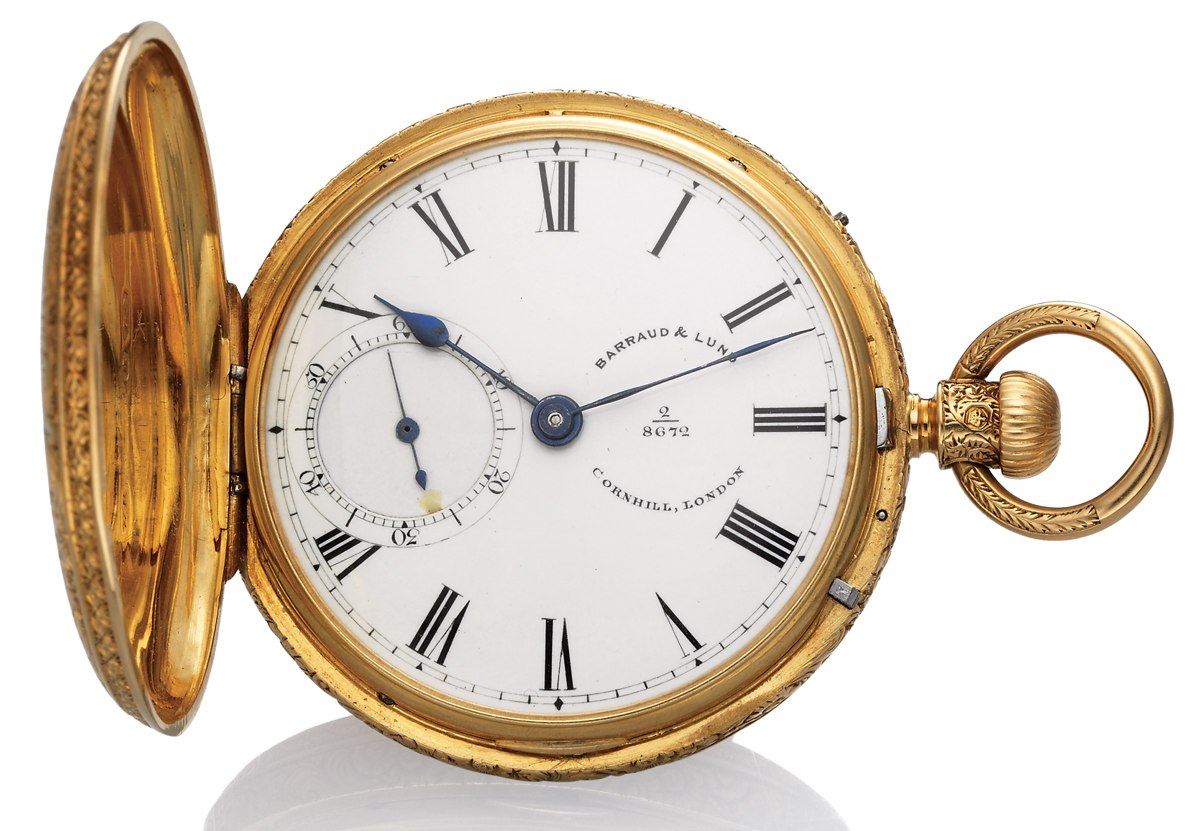
Barraud & Lund Hunting Cased Pocket Watch
This hunting cased keyless pocket watch is signed by Barraud & Lund, 41 Cornhill, London, bearing number 2/8672 and dated by the source to circa 1910. The case is reported as 18K gold and measures 42 mm in diameter. The dial features black Roman numerals and a subsidiary seconds subdial positioned near 9 o'clock. Blued steel hands are mounted over the white dial, which is inscribed with the maker's signature, location, and serial number. The winding crown and engraved bow are situated at the 3 o'clock position.
Full description
catalog.antiquorum.swiss · 381
Marine chronometer · Two-day marine chronometer
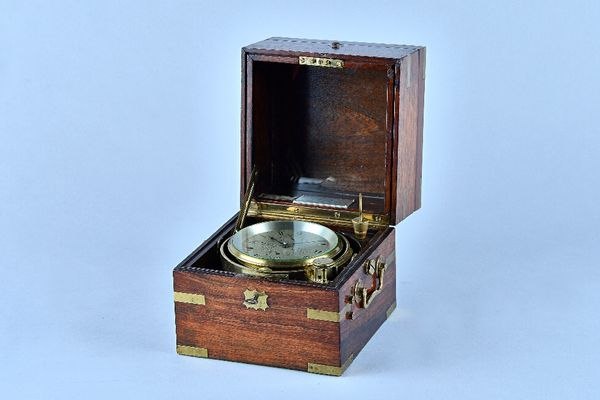
Barraud Early Victorian Marine Chronometer No. 2038
This early Victorian marine chronometer is catalogued by Bellmans as by Barraud, 41 Cornhill, London, bearing movement number 2038 and dated to circa 1845. The movement is mounted in a brass gimbal within a three-tier brass-bound wooden box constructed of rosewood and mahogany, which features brass corner brackets, brass drop handles, and an escutcheon. According to the auction listing, the lid is a replacement. The source documents a four-inch silvered dial equipped with a 56-hour up/down indicator.
Full description
app.bellmans.co.uk · 614
Clock · Bracket clock
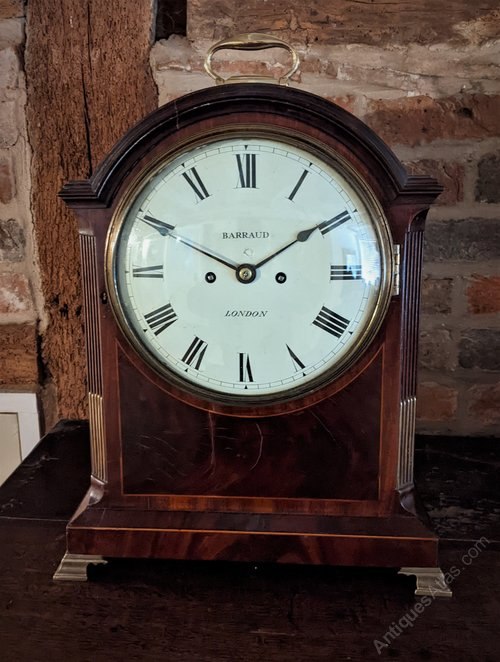
Geo IV Mahogany Fusee Bracket Clock by Barraud, London
According to the seller, this George IV bracket clock dates from around 1830 and was made by Barraud of London. The arched-top mahogany case features brass-inlaid fluting along lateral chamfered columns, brass bracket feet, side silk-lined brass fishscale frets, and a hinged brass carrying handle. The white dial is inscribed 'BARRAUD' and 'LONDON' with Roman numerals and dual winding apertures. The seller reports an 8-day twin-fusee movement striking hours on a bell, fitted with a pull repeat, a strike/silent mechanism at 12 o'clock, decorated backplates, and an original pendulum with travel clamp.
Full description
antiques-atlas.com · as823a071
Clock · Regulator
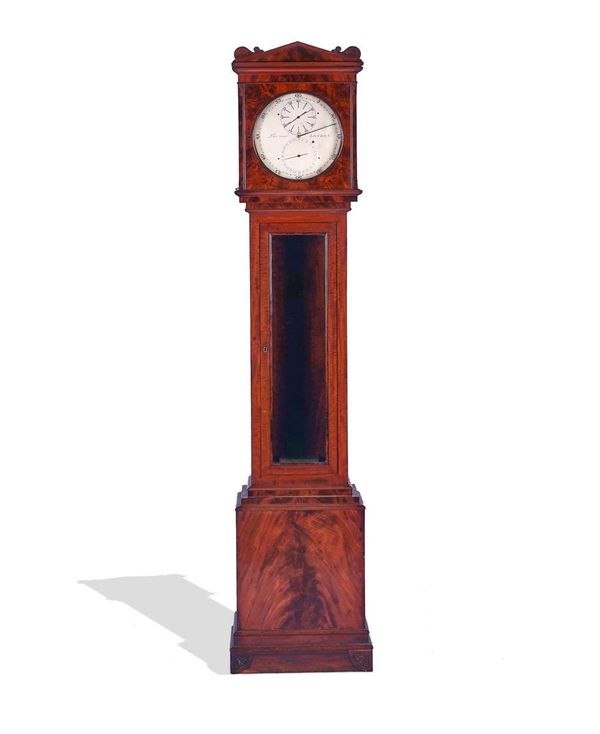
Early Victorian mahogany regulator with 24-hour dial, attributed to Barraud, London
This early Victorian mahogany regulator stands 201 cm high and features a shallow-arched hood over a circular glazed dial opening, a glazed trunk door, and a plinth base. Its 11-inch circular silvered dial is signed Barraud, London, configured with sweep minutes and subsidiary dials for seconds and 24 hours. The source reports that the movement incorporates substantial plates with angled shoulders, six large turned pillars, wheels with six crossings, maintaining power, and a deadbeat escapement. It is designed with a glazed mercurial pendulum suspended from an 'A'-frame mounted on the seatboard.
Full description
app.bellmans.co.uk · 712
Clock · Mantel clock
Gravity mantel clock
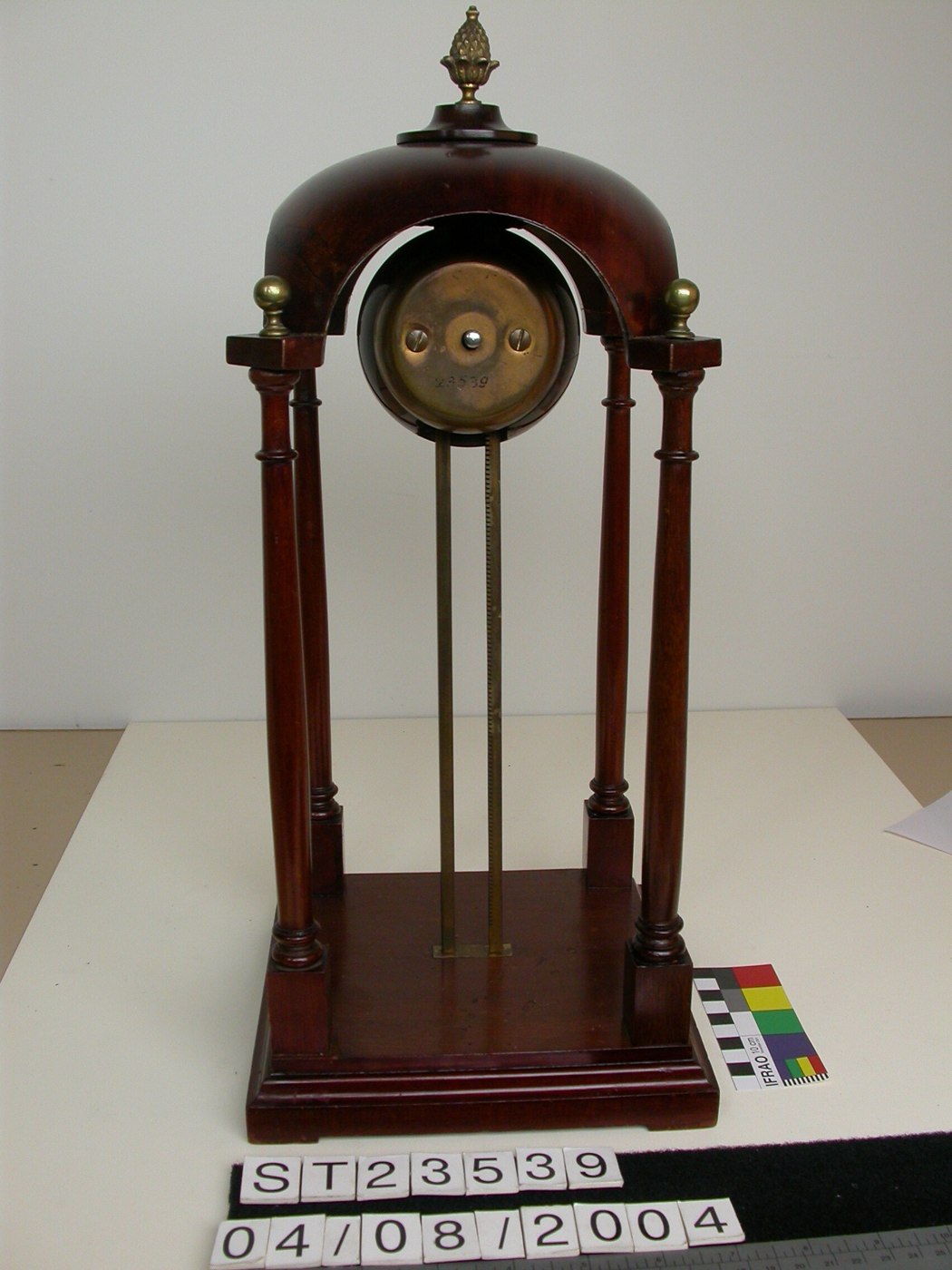
This gravity mantel clock was manufactured in France and retailed by Barraud & Lund, London, circa 1880. The timekeeping mechanism is housed in a round casing suspended within a wooden structure comprised of a curved canopy supported by four tapering pillars rising from a square base. The movement operates by gravity; the clock casing is fitted with a gear mechanism that meshes with a vertical brass toothed runner positioned between two plain brass vertical guides. As the clock descends the runners under its own weight, the gear train is driven to operate the mechanism. The constant weight of the casing ensures that the motive force remains consistent at any given location. The timepiece measures 18.5 cm in length, 18.5 cm in width, and 41 cm in height. It was acquired by the museum in 1952 via a donation from Joseph Lowy.
Full description
collections.museumsvictoria.com.au · ST 23539
Pocket watch · Pocket chronometer & deck watch
Barraud Pocket Chronometer No. 10/5342
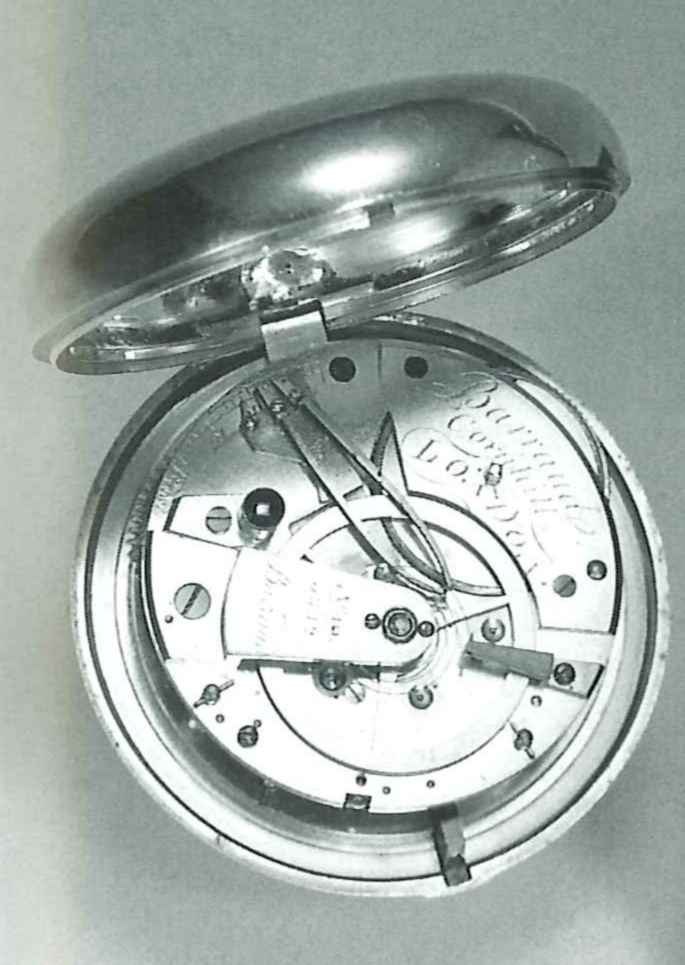
This silver pocket chronometer is signed by Barraud of Cornhill, London, and is hallmarked to the 1802-1803 period. The watch features a plain double-body silver case and is accompanied by a later protecting case. Its white enamel dial displays Roman numerals and includes a subsidiary seconds register. The movement is a gilt brass full plate construction, equipped with cylindrical pillars and a fusee with maintaining power. The technical assembly utilizes an Earnshaw type spring detent escapement. It is fitted with a plain three-armed gilt brass balance and a flat balance spring incorporating sugar-tong compensation. While sold by Barraud, research by C. Jagger suggests that these chronometers, particularly those with the specific sugar-tong compensation mechanism, were produced by Thomas Earnshaw. The piece measures 53 mm in diameter. Two chronometers of similar construction, No. 31/5815 and 32/5816, are referenced in the 1968 publication Paul Philip Barraud.
Full description
catalog.antiquorum.swiss · 74