
Skip to content
The Encyclopedia of Horology

Clock · Wall regulator clock

Vienna Regulator Wall Clock

Partially verified

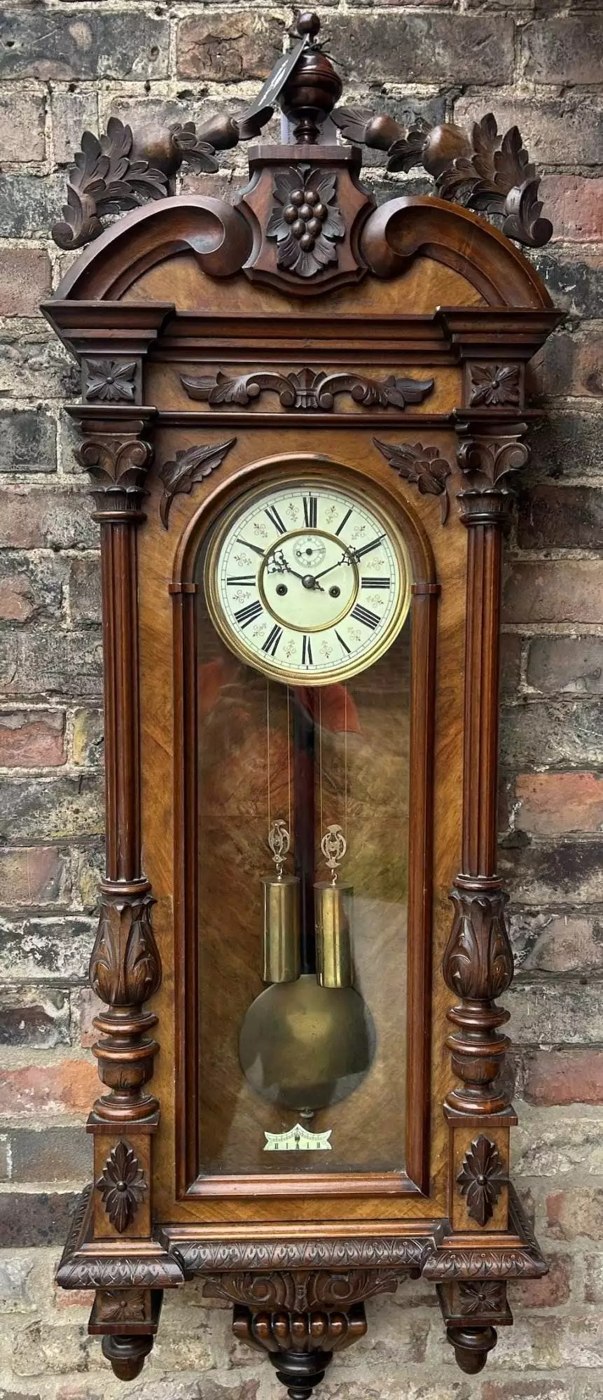
This floor regulator clock, attributed to circa 1860, is a weight-driven timepiece featuring an eight-day mechanical movement. Housed in a wooden case with an ebonised finish, the clock is decorated with carved columns, capitals, and a top pediment adorned with leaf and fruit motifs. The white enamel dial displays Roman numerals and includes a subsidiary seconds dial, complemented by ornate, pierced hands. The long glass door reveals a large pendulum and two cylindrical metal weights suspended from pulleys. The auction description notes the presence of surface wear and signs of age consistent with the object's period. While the overall condition is reported as good, there is no verification of the movement's technical performance or service history. Collectors are advised to have the enamel dial, suspension cables, and internal movement components inspected by a professional.

View of the walnut-cased Vienna regulator wall clock featuring carved pediment, enamel dial, and suspended pendulum assembly.
View of the walnut-cased Vienna regulator wall clock featuring carved pediment, enamel dial, and suspended pendulum assembly. — Zamanito (Vintage Clocks UK). Rights pending — permission not yet requested. Original source

Catalogue identity

Source
zamanito.com
Category
Clock · Wall regulator clock
Maker / attribution
Not established
Reference
Not recorded
Catalogue / lot identifier
Source URL identifies the listing
Source-reported date
circa 1860
Source-reported place
Not established

Source-reported attribution and specifications are not independent authentication. A listing does not establish present ownership, current display, availability or permission to reproduce.

Object description

Case Construction and Design

The clock is housed in a wooden case designed with a decorative architectural profile. It features side columns topped with carved capitals and a prominent carved pediment at the summit, detailed with foliage and fruit designs. The cabinet includes a long glass panel that allows a full view of the internal components, including the weights and the pendulum.

The exterior of the case is finished with an ebonised treatment. The auction description notes that the piece displays surface wear and signs of erosion consistent with its age. The construction remains intact, maintaining the classical appearance associated with this type of regulator clock.

The auction description reports: "دستگاه در یک قاب چوبی تزئینی با جزئیات منبت‌کاری کلاسیک، ستون‌های جانبی، سرستون‌های تراش‌خورده و تاج بالایی منبت با نقوش برگ و میوه قرار گرفته است." and "بدنه دارای پرداخت آبنوس‌کاری‌شده (Ebonised) بوده و آثار کهنگی و فرسایش سطحی متناسب با قدمت در آن مشهود است."

Evidence for this section
  • “دستگاه در یک قاب چوبی تزئینی با جزئیات منبت‌کاری کلاسیک، ستون‌های جانبی، سرستون‌های تراش‌خورده و تاج بالایی منبت با نقوش برگ و میوه قرار گرفته است.”
  • “بدنه دارای پرداخت آبنوس‌کاری‌شده (Ebonised) بوده و آثار کهنگی و فرسایش سطحی متناسب با قدمت در آن مشهود است.”

Dial and Hands

The clock is fitted with a large white enamel dial, which the source identifies as original. The layout includes black Roman numerals for the primary hour track and a dedicated subsidiary seconds dial.

The time is indicated by a set of ornate, pierced hands. The authenticity of these hands is noted by the source.

Evidence for this section
  • “صفحه ساعت طبق اعلام منبع از نوع لعابی سفید و اصلی (اورجینال) با ابعاد بزرگ است که اعداد رومی و یک صفحه فرعی ثانیه‌شمار روی آن نقش بسته است.”
  • “عقربه‌های ساعت به صورت ظریف و پرکار (Ornate) طراحی شده و اصالت آن‌ها توسط منبع تأیید شده است.”

Movement and Functionality

The clock utilizes a mechanical eight-day, weight-driven movement. The weights are cylindrical metal objects suspended by pulleys, visible through the glass door of the case.

The source states that the movement is in good condition, although it explicitly notes that technical operational status or recent service history remains unknown. It is suggested that prospective owners consult a specialist to verify the health of the springs, suspension cables, and the integrity of the internal mechanism.

Evidence for this section
  • “موتور ساعت دارای سازوکار مکانیکی هشت‌روزه وزنه‌محور (8-day weight driven) است.”
  • “وضعیت کارکرد دقیق موتور یا انجام سرویس‌های فنی اخیر توسط فروشنده قید نشده است.”
  • “برای مجموعه‌داران و خریداران توصیه می‌شود سلامت فنرها، کابل‌های آویز وزنه‌ها، سلامت بدون ترک بودن صفحه میناکاری‌شده، و اصالت قطعات داخلی موتور توسط متخصص ساعت‌های آنتیک به دقت بررسی شود.”

Open research questions

  • What is the specific movement calibre or manufacturer of this regulator?
  • Are there any maker's marks on the movement plates to confirm the origin?

Source evidence

Recorded claims and source quotations for Vienna Regulator Wall Clock
FieldSource-reported valueSource quotation
Mechanism8-day weight driven“موتور ساعت دارای سازوکار مکانیکی هشت‌روزه وزنه‌محور (8-day weight driven) است.”
Case finishEbonised“بدنه دارای پرداخت آبنوس‌کاری‌شده (Ebonised) بوده”
Dial typeWhite enamel“صفحه ساعت طبق اعلام منبع از نوع لعابی سفید”
Datecirca 1860“این ساعت دیواری رگولاتور (طرح وین) طبق اطلاعات منبع به حدود سال ۱۸۶۰ تعلق دارد.”
ConditionGood with signs of wear“ساعت با توجه به سن و سال خود در وضعیت کلی خوب قرار دارد، هرچند نشانه‌هایی از سایش ظاهری و کهنگی در بدنه مشاهده می‌شود.”
HandsOrnate“عقربه‌های ساعت به صورت ظریف و پرکار (Ornate) طراحی شده”

Visible details

  • Large white enamel dial with Roman numerals and subsidiary seconds
  • Elaborate carved wood pediment with fruit and leaf motifs
  • Two cylindrical metal weights visible within the glass door
  • Ornate, pierced metal hands

Research qualifications

  • Condition of movement and technical performance is not specified
  • Internal integrity of the enamel dial and suspension system is unverified

Photograph identity and source facts were screened before import; rights clearance remains pending.

Consulted source

Incredible Ebonised Floor Regulator Clock – Ca 1860

Reviewed 2026-11-02 · Record f7e1f0244a

Terms in this record

Glossary explanations for terms named in this object’s record.