
Skip to content
The Encyclopedia of Horology

Clock · Table clock

Table Clock by Martin Zoller

Partially verified

This table clock is an object held by The Metropolitan Museum of Art, assigned accession number 32.100.225. It is attributed to the clockmaker Martin Zoller, who was active between 1590 and 1633. The clock dates from the late 16th to the early 17th century and originates from Augsburg, Germany. The construction incorporates gilt bronze and crystal materials. It stands at a height of 8 5/8 inches (21.9 cm). The timepiece features a figurative support base in the form of a kneeling figure carrying the clock housing, which is surmounted by a standing figure finial. The clock was acquired by the museum as part of the Friedsam Collection, through the bequest of Michael Friedsam in 1931. The object is classified within the Department of European Sculpture and Decorative Arts and serves as an example of the decorative horology produced in the region during this era.

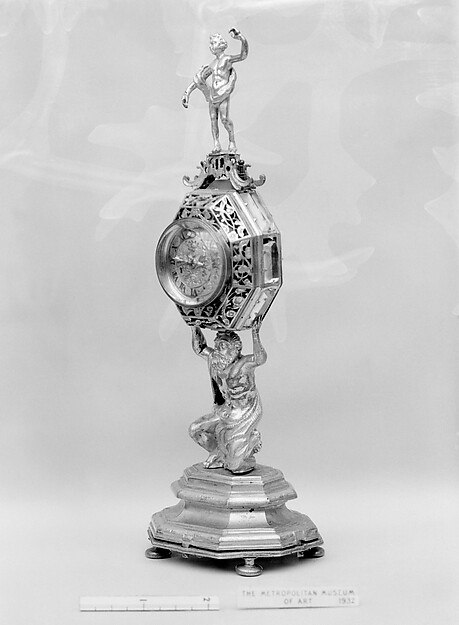
A view of the table clock, showing the kneeling figure base, hexagonal crystal and gilt bronze housing, and top finial figure.
A view of the table clock, showing the kneeling figure base, hexagonal crystal and gilt bronze housing, and top finial figure. — The Metropolitan Museum of Art — The Friedsam Collection, Bequest of Michael Friedsam, 1931. Rights pending — permission not yet requested. Original source

Catalogue identity

Source
orbiscollectibles.com
Category
Clock · Table clock
Maker / attribution
Martin Zoller
Reference
Not recorded
Catalogue / lot identifier
32.100.225
Source-reported date
late 16th–early 17th century
Source-reported place
German, Augsburg

Source-reported attribution and specifications are not independent authentication. A listing does not establish present ownership, current display, availability or permission to reproduce.

Object description

Design and Construction

The clock features a distinct structural composition primarily executed in gilt bronze and crystal. It is supported by a pedestal base upon which a kneeling male figure is positioned. This figure acts as a caryatid, bearing the weight of the clock housing on its shoulders. The main housing is hexagonal in shape, incorporating transparent crystal panels set within an ornate, pierced gilt bronze frame that allows visibility into the inner structure.

The assembly is topped by a smaller figure, acting as a finial above the clock housing. The overall height of the object is measured at 8 5/8 inches (21.9 cm). The gilt bronze provides a decorative finish to the structural components, contrasting with the clarity of the crystal panels surrounding the dial.

Evidence for this section
  • “Gilt bronze, crystal”
  • “Height: 8 5/8 in. (21.9 cm)”

Attribution and History

The clock is attributed to the Augsburg maker Martin Zoller, identified as active between 1590 and 1633. It is currently held within the collection of The Metropolitan Museum of Art. The museum assigns the object to the Department of European Sculpture and Decorative Arts.

The provenance of the object is linked to the Friedsam Collection, having entered the museum as part of the bequest of Michael Friedsam in 1931. While the object is formally attributed to Zoller by the museum, the complexity of 17th-century clock production often involved collaboration between different specialist workshops for the case, movement, and decorative elements.

Evidence for this section
  • “Clockmaker: Martin Zoller (active 1590–1633)”
  • “The Friedsam Collection, Bequest of Michael Friedsam, 1931”
  • “The Metropolitan Museum of Art holds this object as 32.100.225.”

Horological Context

The object is categorized under the museum's broad classification of horology. The construction date is placed in the late 16th to early 17th century, a period associated with the decorative and technical output of Augsburg workshops.

Due to the potential for assembly from different components or later modifications, determining the original state of such clocks requires careful inspection of the housing, the movement mounting, and the consistency of the metalwork. The museum records the object as an individual specimen without reference to standard catalogue numbers.

Evidence for this section
  • “German, Augsburg”
  • “movements and cases were frequently made by different workshops and were sometimes married later.”

Open research questions

  • Has the clock been disassembled to confirm the presence of a signature on the movement backplate?
  • Does the current movement show evidence of replacement or subsequent modification to the original housing?

Source evidence

Recorded claims and source quotations for Table Clock by Martin Zoller
FieldSource-reported valueSource quotation
MakerMartin Zoller“Clockmaker: Martin Zoller (active 1590–1633)”
Object Number32.100.225“32.100.225”
MediumGilt bronze, crystal“Gilt bronze, crystal”
Height8 5/8 in. (21.9 cm)“Height: 8 5/8 in. (21.9 cm)”
Datelate 16th–early 17th century“late 16th–early 17th century”
Place of originGerman, Augsburg“German, Augsburg”
Credit LineThe Friedsam Collection, Bequest of Michael Friedsam, 1931“The Friedsam Collection, Bequest of Michael Friedsam, 1931”

Visible details

  • Kneeling male figure base supporting the clock case
  • Standing figure surmounting the upper case
  • Crystal panels incorporated into the hexagonal clock housing
  • Gilt bronze surfaces visible on the base, housing, and figures

Research qualifications

  • The degree of historical marriage between the movement, case, and base remains unverified
  • Whether the clock represents a wider collectible type has not been independently verified beyond the museum record

Photograph identity and source facts were screened before import; rights clearance remains pending.

Consulted source

Clock, Martin Zoller, late 16th–early 17th century

Reviewed 2026-11-02 · Record 482009cf71

Terms in this record

Glossary explanations for terms named in this object’s record.