
Skip to content
The Encyclopedia of Horology

Tool · Sundial

Sandstone Sundial

Partially verified

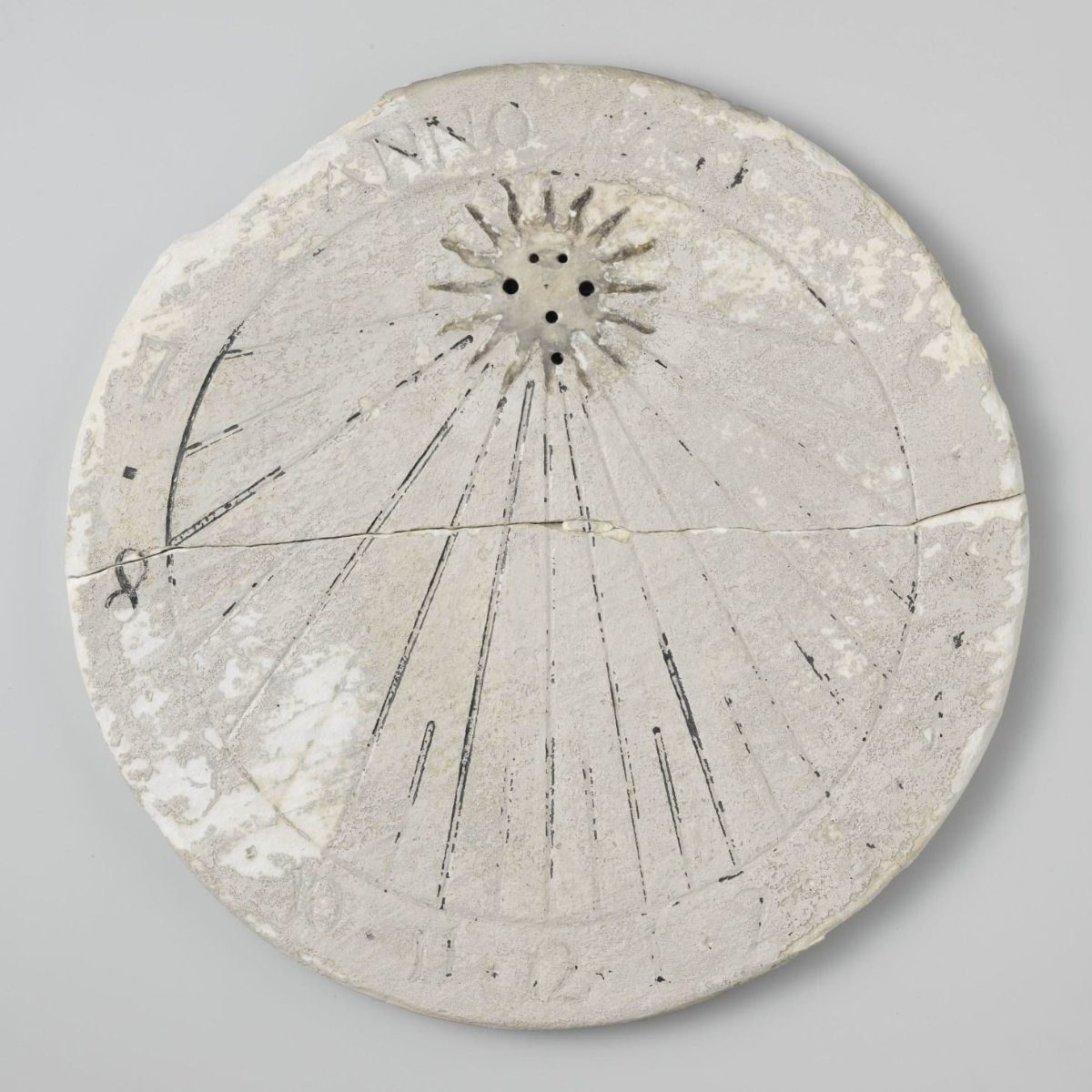
This sandstone sundial, identified as object BK-BFR-403-1, is attributed to the sculptor Ignatius van Logteren and dates to approximately 1735. The instrument consists of two parts and was originally integrated into the façade of a garden pavilion, specifically associated with the structure catalogued as BK-BFR-403. The sundial features a circular design with engraved markings radiating from a sun-motif at the center, which serves as the mounting point for the gnomon. The entire piece measures 66.5 cm in height, 66 cm in width, and 3.5 cm in depth. The Rijksmuseum acquired this architectural component in 1919. Its condition is characterized by the assembly of two distinct fragments and the visible wear of the stone surface, with some inscriptions partially obscured.

The sandstone sundial, showing the central sun motif and horizontal join between the two pieces.
The sandstone sundial, showing the central sun motif and horizontal join between the two pieces. — Rijksmuseum. Rights pending — permission not yet requested. Original source

Catalogue identity

Source
www.rijksmuseum.nl
Category
Tool · Sundial
Maker / attribution
Ignatius van Logteren
Reference
BK-BFR-403-1
Catalogue / lot identifier
BK-BFR-403-1
Source-reported date
ca. 1735
Source-reported place
Netherlands

Source-reported attribution and specifications are not independent authentication. A listing does not establish present ownership, current display, availability or permission to reproduce.

Object description

Design and Construction

The sundial is constructed from sandstone and features a circular face. The design incorporates a central sun motif, which acts as a decorative element and houses the attachment points for the gnomon. Radiating from this center are engraved lines and numerals that delineate the passage of time according to the sun's position.

The object is specifically noted for being composed of two separate pieces. The physical integrity of the piece is maintained by these two segments, which are joined to form the complete circular dial, exhibiting a horizontal line across the center where the components meet.

The dial surface bears faint inscriptions, including the word 'ANNO' near the top edge, suggesting it once contained a full date or motto. The depth of 3.5 cm indicates a relatively shallow profile, which allowed it to sit flush or near-flush with the façade of the structure it adorned.

Evidence for this section
  • “Zonnewijzer van zandsteen”
  • “In 2 delen.”

Architectural Provenance

This sundial was originally part of a larger architectural complex, specifically identified as a garden pavilion under inventory number BK-BFR-403. Its inclusion in the facade of this structure suggests that the object served both a functional role in measuring time and an aesthetic role as part of the building's exterior ornamentation.

The Rijksmuseum acquired the piece in 1919, preserving it as an individual component of the broader pavilion structure. While the pavilion itself is documented separately, this specific sundial remains the primary focus of the BK-BFR-403-1 classification. The link between the sundial and the sculptor Ignatius van Logteren is maintained within the museum records, providing an attribution to the artist working in Amsterdam during the mid-18th century.

Evidence for this section
  • “oorspronkelijk verwerkt in een gevel van een Lodewijk XIV tuinhuis (BK-BFR-403)”
  • “beeldhouwer: toegeschreven aan Ignatius van Logteren, Amsterdam”
  • “aankoop 1919”

Attribution and Dating

The sundial is attributed to the sculptor Ignatius van Logteren, a figure associated with artistic production in Amsterdam. The date of circa 1735 is assigned to the object, placing it within the mid-18th century.

As the attribution is suggested rather than confirmed by original documentation, it remains an expert opinion held by the museum. The dating similarly represents a historical estimate rather than a definitive manufacturing date inscribed on the dial itself. These identifiers are subject to ongoing review should further evidence from the pavilion's history emerge in future research.

The identification as 'BK-BFR-403-1' allows for the systematic tracking of the object within the museum's collection. By cataloguing the sundial separately from the pavilion (BK-BFR-403), the museum preserves the provenance of this specific horological tool while maintaining the context of the structure to which it was once permanently affixed.

Evidence for this section
  • “toegeschreven aan Ignatius van Logteren, ca. 1735”
  • “Objectnummer BK-BFR-403-1”
  • “Onderdeel van”

Open research questions

  • What specific gnomon design was originally utilized with this dial?
  • Are there archival images showing the dial in situ on the pavilion?

Source evidence

Recorded claims and source quotations for Sandstone Sundial
FieldSource-reported valueSource quotation
MakerIgnatius van Logteren“toegeschreven aan Ignatius van Logteren”
MaterialSandstone“Zonnewijzer van zandsteen”
Dimensions66.5 cm x 66 cm x 3.5 cm“geheel: hoogte 66,5 cm (zie deelrecords voor afzonderlijke afmetingen) x breedte 66 cm (zie deelrecords voor afzonderlijke afmetingen) x diepte 3,5 cm (zie deelrecords voor afzonderlijke afmetingen)”
Dateca. 1735“ca. 1735”
Acquisition1919“aankoop 1919”
Original contextGarden pavilion façade“oorspronkelijk verwerkt in een gevel van een Lodewijk XIV tuinhuis (BK-BFR-403)”

Visible details

  • The dial is made of two pieces joined horizontally across the center.
  • Engraved Roman numerals and lines are visible on the periphery of the dial.
  • A stylized sun face is carved at the top, featuring several drilled holes for the gnomon.
  • The word 'ANNO' is partially legible at the upper edge of the stone disk.

Research qualifications

  • The attribution to Ignatius van Logteren is qualified as an estimate by the museum.
  • The exact original position and orientation on the pavilion façade remain unverified.

Photograph identity and source facts were screened before import; rights clearance remains pending.

Consulted source

Pavilion

Reviewed 2026-11-02 · Record a0e7eb6ff0

Terms in this record

Glossary explanations for terms named in this object’s record.