
Skip to content
The Encyclopedia of Horology

Pocket watch · Chronograph pocket watch

Patent lever chronograph pocket watch

Partially verified

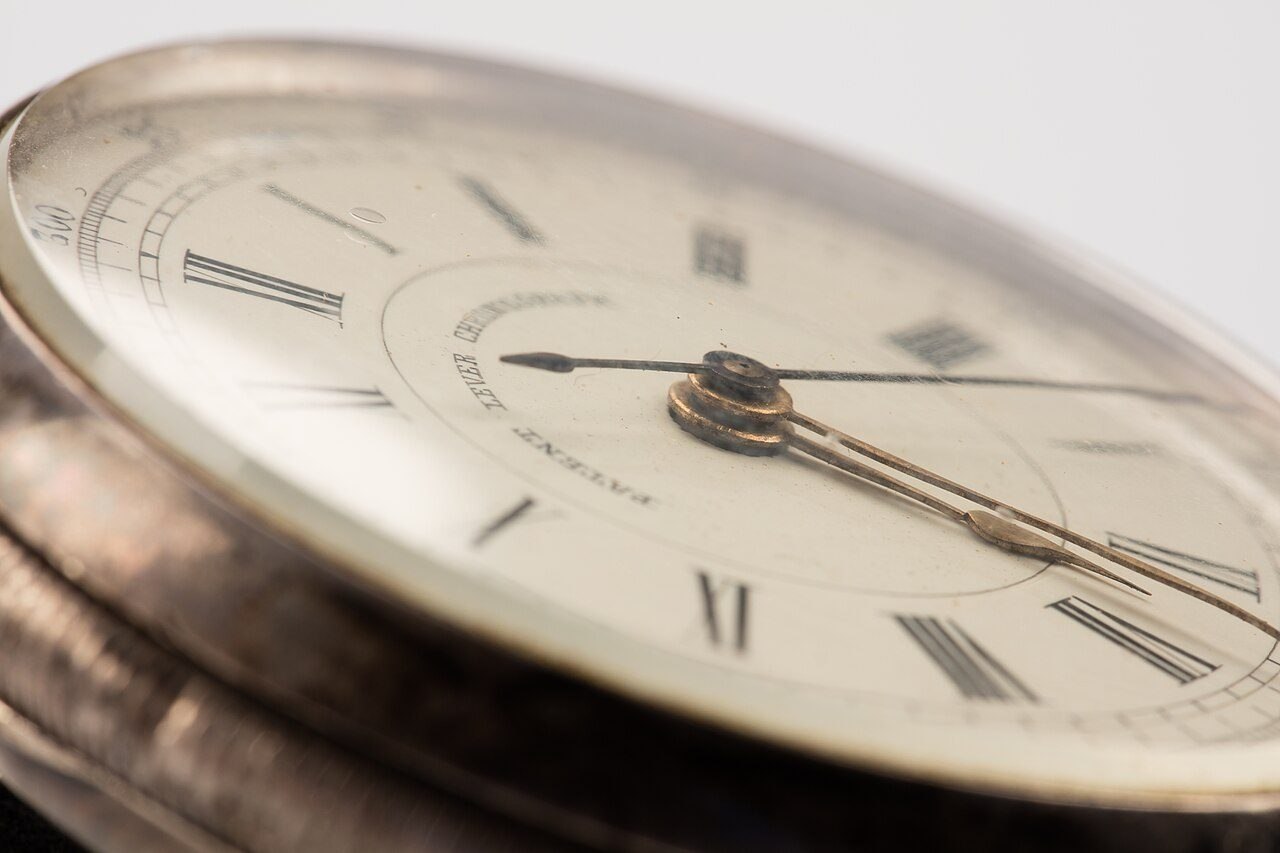
This key-wound chronograph pocket watch is dated by its hallmark to 1886–1887. The case, hallmarked in Birmingham with the maker identified by the mark 'LE', contains an interior stamped with the serial number '10069'. The watch features a cream-colored dial with Roman numerals for the hours and an outer track with intervals of 25. Timekeeping is displayed via gold-colored hour and minute hands, complemented by a blue seconds hand. The watch is equipped with a functional sliding knob on the case side, which enables the user to stop or start the movement, allowing the seconds hand to operate as a stopwatch. The watch also includes an attached winding key. The movement itself is not necessarily of English origin, though the case was manufactured in Birmingham. It is part of the Applied Arts and Design collection of the Auckland Museum Tāmaki Paenga Hira.

Detailed view of the watch dial showing the Roman numerals, hands, and the 'PATENT LEVER CHRONOGRAPH' inscription.
Detailed view of the watch dial showing the Roman numerals, hands, and the 'PATENT LEVER CHRONOGRAPH' inscription. — Auckland Museum Collections. Rights pending — permission not yet requested. Original source

Catalogue identity

Source
commons.wikimedia.org
Category
Pocket watch · Chronograph pocket watch
Maker / attribution
Not established
Reference
Not recorded
Catalogue / lot identifier
2004.44.73
Source-reported date
1886–1887
Source-reported place
United Kingdom
Source-reported serial
10069

Source-reported attribution and specifications are not independent authentication. A listing does not establish present ownership, current display, availability or permission to reproduce.

Object description

Case and Dial

The watch is housed in an engraved case which features a bow for suspension. The cream-colored dial is inscribed with Roman numerals to denote the hours. Surrounding the perimeter of the dial is an outer track marked at intervals of 25, facilitating the use of the watch as a timer.

The time is indicated by gold-colored hour and minute hands, while a blue hand is utilized for the chronograph seconds function. Access to the interior of the case is gained through a lid that opens at the hallmark, revealing an interior stamped with the serial number 10069 and additional faintly engraved numbers.

Evidence for this section
  • “Cream coloured face with blue second hand and gold coloured hour and minute hand. Roman numerals for hours. Around outside are intervals of 25. Has bow. Engraved back, back opens at hallmark. Stamped "10069" in interior back”

Movement and Chronograph Function

The watch operates as a key-wound movement, which includes an attached winding key. The timekeeping mechanism is augmented by a chronograph function, controlled by a sliding knob mounted on the exterior side of the case.

This sliding knob allows the user to start or stop the movement, enabling the seconds hand to function as a stop watch for timing purposes. The auction description reports that the movement contained within the Birmingham-made case is not necessarily of English origin.

Evidence for this section
  • “The movement is not necessarily of English origin. It is a fairly standard key-wound pocket watch, but with a sliding knob on the side of the case to stop or start the movement, so that the seconds hand could be used as a timer or stop watch.”

Hallmarks and Attribution

The case possesses hallmarks consisting of an anchor, a lion, and the letter M. These symbols indicate that the case was assayed in Birmingham during the period of 1886–1887.

The maker of the case is identified by the mark 'LE'. The object is part of the Applied Arts and Design collection at the Auckland Museum Tāmaki Paenga Hira, having been recorded under the accession number 2004.44.73.

Evidence for this section
  • “The hallmarked stamped inside the lid of the case of this watch indicates that the case was from Birmingham in 1886-1887, the maker being identified as LE.”
  • “Credit Line: Collection of Auckland Museum Tāmaki Paenga Hira, 2004.44.73”

Open research questions

  • What is the specific identity of the Birmingham maker 'LE'?
  • What is the origin of the movement if not English?

Source evidence

Recorded claims and source quotations for Patent lever chronograph pocket watch
FieldSource-reported valueSource quotation
Maker MarkLE“maker being identified as LE”
Hallmark LocationBirmingham“case was from Birmingham”
Serial Number10069“Stamped "10069" in interior back”
Date1886–1887“1886–1887”
Mechanism TypeKey-wound“standard key-wound pocket watch”
FunctionalityChronograph“sliding knob on the side of the case to stop or start the movement”
Accession Number2004.44.73“2004.44.73”

Visible details

  • Cream-colored dial with Roman numerals
  • Blue seconds hand
  • Visible sliding stop-start knob on the side of the case
  • Attached winding key

Research qualifications

  • Movement origin is not definitively English
  • Specific identity of the maker 'LE' remains unverified

Photograph identity and source facts were screened before import; rights clearance remains pending.

Consulted source

Patent lever chronograph pocket watch, 1886–1887

Reviewed 2026-11-02 · Record a435e7f981

Terms in this record

Glossary explanations for terms named in this object’s record.