
Skip to content
The Encyclopedia of Horology

Pocket watch · Pocket watch

Gold pocket watch with chased dial

Partially verified

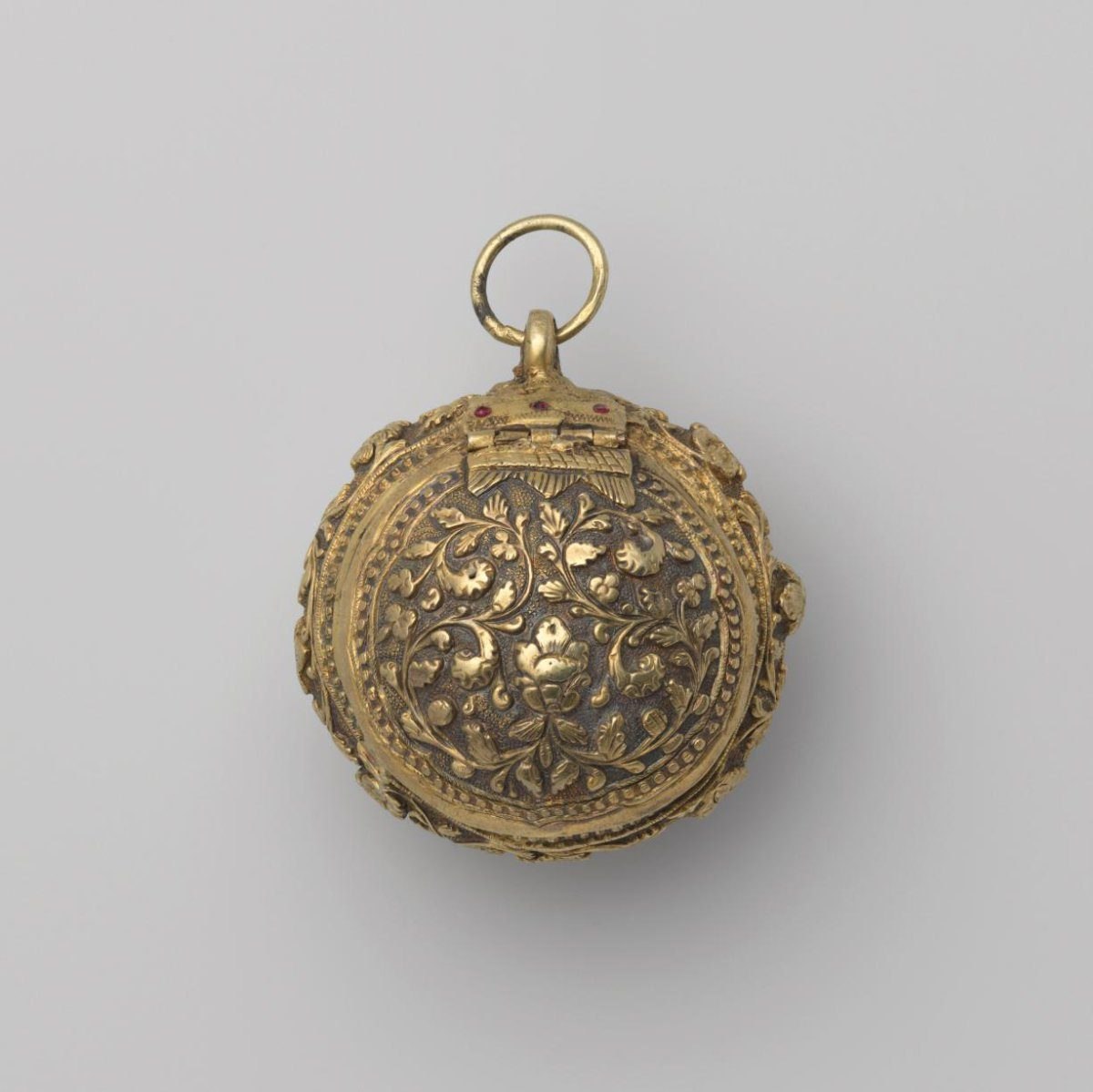
This gold pocket watch is held in the collection of the Rijksmuseum, Amsterdam, under accession number BK-NM-12831. Attributed to the period circa 1750 to 1800, the object features a chased dial that incorporates a date indication. The exterior case is constructed from gold and is decorated with embossed floral motifs and tendrils. According to institutional documentation, the case is identified as Indonesian work and was repurposed from a sirih box. The object measures 4.6 cm in diameter, with the total case diameter recorded as 6.5 cm. The item remains under the stewardship of the Rijksmuseum as part of their jewellery and watch collection, though further horological research is required to detail the internal movement specifications or specific maker attribution associated with this conversion.

Gold watch with chased dial, featuring a case repurposed from an Indonesian sirih box.
Gold watch with chased dial, featuring a case repurposed from an Indonesian sirih box. — Rijksmuseum, Amsterdam. Rights pending — permission not yet requested. Original source

Catalogue identity

Source
orbiscollectibles.com
Category
Pocket watch · Pocket watch
Maker / attribution
Not established
Reference
Not recorded
Catalogue / lot identifier
BK-NM-12831
Source-reported date
c. 1750 - c. 1800
Source-reported place
Indonesia

Source-reported attribution and specifications are not independent authentication. A listing does not establish present ownership, current display, availability or permission to reproduce.

Object description

Case Construction and Design

The surface is heavily worked with embossed ornamentation consisting of flowers and interconnected tendrils. The exterior dimensions of the casing measure 6.5 cm in diameter, providing a substantial frame for the timekeeping components housed within.

Documentation from the Rijksmuseum indicates that the housing was originally manufactured as a sirih box before being adapted for use as a watch case. This repurposed structure retains the aesthetic characteristics of the original vessel, integrated with the requirements for a watch. The hinge mechanism and suspension loop are positioned at the top, consistent with standard pocket watch design, while the dial remains protected within the decorative gold shell.

Evidence for this section
  • “The case is embossed with flowers and tendrils.”
  • “The case is Indonesian work and was once a sirih box.”
  • “kast: diameter 6,5 cm”

Dial and Timekeeping Functions

The internal face of the watch is described as a chased dial, indicating that the surface has been worked to create relief textures and patterns. Beyond the basic display of time, the dial includes an integrated date indication feature, allowing for the tracking of the day of the month alongside standard hours and minutes.

The dial’s design is consistent with the overall decorative scheme of the object, emphasizing a unified aesthetic between the exterior and interior elements. The diameter of the dial component is 4.6 cm. While the provided data confirms the presence of these functions, specific details regarding the movement or the type of escapement employed within the casing are not currently documented in the provided museum records.

Evidence for this section
  • “Gold watch with a chased dial with date indication.”
  • “diameter 4.6 cm”

Provenance and Institutional Status

The watch is currently catalogued by the Rijksmuseum, Amsterdam, under the museum object number BK-NM-12831. It is classified within the institution’s collection under the categories of jewellery and wrist watches. This record is derived from the museum's Dutch catalogue text and reflects the institution’s internal classification system.

The object is attributed to the date range of circa 1750 to 1800. As an individual museum object, the records focus on its material composition and origin. While the institution identifies the case as Indonesian, the provenance of the internal movement and the specific context of its assembly into a functioning watch remain areas requiring further research to fully establish its technical history.

Evidence for this section
  • “The Rijksmuseum, Amsterdam, holds this object as BK-NM-12831”
  • “c. 1750 - c. 1800”
  • “Museum classification jewellery · wrist watch”

Open research questions

  • What is the origin and technical specification of the internal movement housed within the repurposed gold case?
  • Is there further historical evidence detailing the specific workshop or period during which the sirih box was converted into a watch case?

Source evidence

Recorded claims and source quotations for Gold pocket watch with chased dial
FieldSource-reported valueSource quotation
Holding institutionRijksmuseum, Amsterdam“Rijksmuseum, Amsterdam”
MaterialGold“gold (metal)”
Museum NumberBK-NM-12831“BK-NM-12831”
Case constructionIndonesian work repurposed from a sirih box“The case is Indonesian work and was once a sirih box.”
Chronometric featuresDial includes date indication“chased dial with date indication”

Visible details

  • Case decorated with dense floral and leaf scrolling patterns
  • Suspension loop present at the top of the case
  • Hinged closure mechanism visible at the top
  • Gold construction shows distinct contrast between background and raised ornament

Research qualifications

  • The origin of the internal movement is not specified in the provided records
  • The history of the conversion from a sirih box to a watch case remains an attribution requiring further contextual verification

Photograph identity and source facts were screened before import; rights clearance remains pending.

Consulted source

Watch of gold with chased dial

Reviewed 2026-11-02 · Record 50556bcb00

Terms in this record

Glossary explanations for terms named in this object’s record.