
Skip to content
The Encyclopedia of Horology

Clock · Banjo clock

George Hatch Banjo Clock

Partially verified

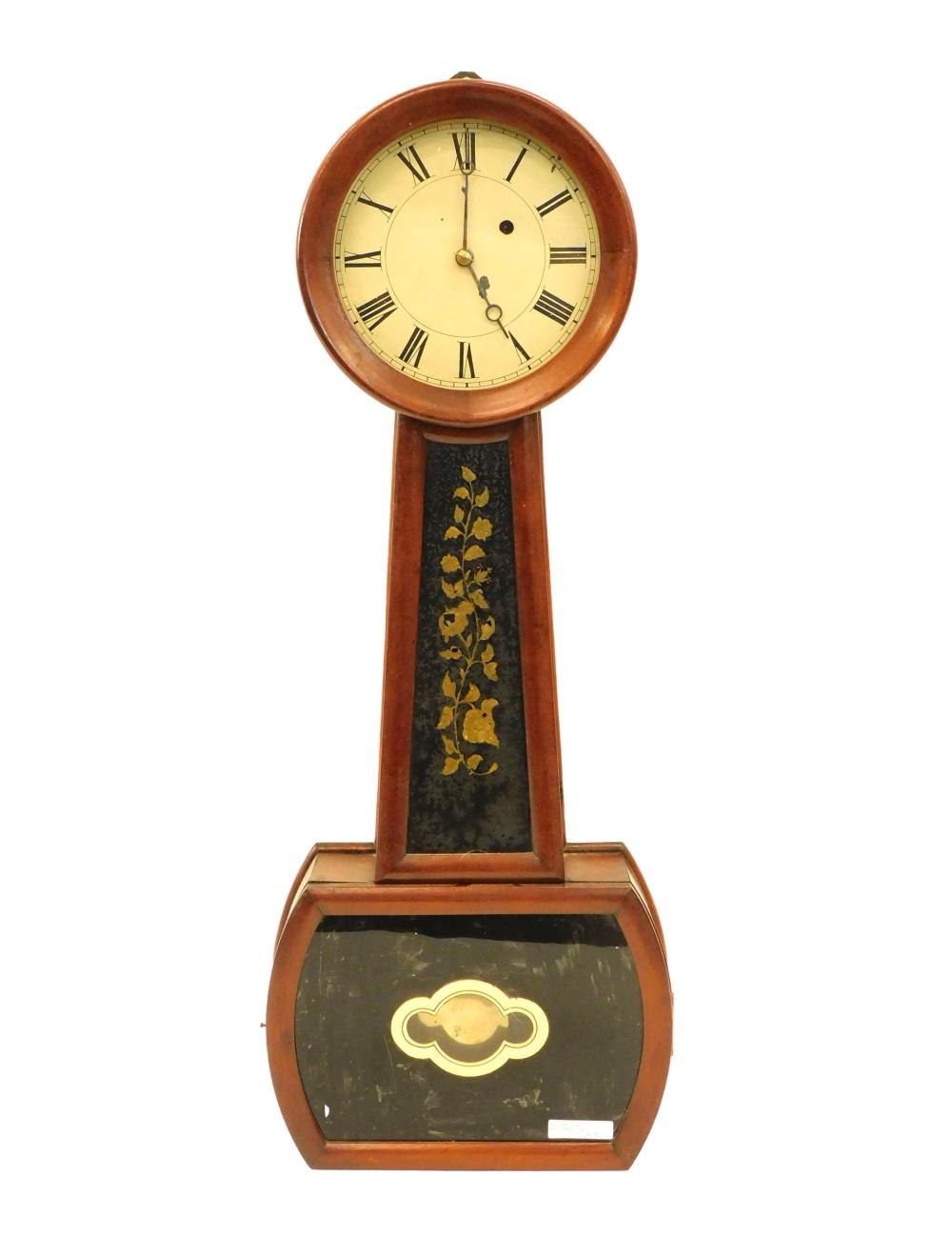
This banjo clock is attributed to George Hatch (1817-1879) of Attleboro, Massachusetts. The object features a mahogany case characterized by rounded frames and a turned wooden bezel. The timekeeping is regulated by a brass eight-day weight-driven movement, which includes a cast iron weight and a brass pendulum. The dial is constructed of iron with original paint and Roman numerals, although it remains unsigned. The clock is decorated with original gilt-painted tablets, with the lower tablet displaying evidence of touch-up paint. A distinctive feature is the brass acorn located on the weight baffle, intended to indicate a plum position. Measuring 29 inches in length, the clock is accompanied by an original key and a historical note documenting its provenance in the Leicester Post Office until 1911. The attribution to Hatch is based on these technical and physical characteristics despite confusion with other makers of the form.

A frontal view of the banjo clock displaying the iron dial, gilt-painted throat and base tablets, and mahogany frame.
A frontal view of the banjo clock displaying the iron dial, gilt-painted throat and base tablets, and mahogany frame. — Marion Antique Auctions (via Invaluable). Rights pending — permission not yet requested. Original source

Catalogue identity

Source
www.invaluable.com
Category
Clock · Banjo clock
Maker / attribution
George Hatch
Reference
Not recorded
Catalogue / lot identifier
168
Source-reported date
19th century
Source-reported place
United States

Source-reported attribution and specifications are not independent authentication. A listing does not establish present ownership, current display, availability or permission to reproduce.

Object description

Case and Aesthetic Features

The clock is housed in a mahogany case following the established banjo form, which includes a rounded bezel and rounded frames. The aesthetic presentation relies on gilt-painted glass tablets located on the throat and the lower section of the case. The auction description confirms these gilt-painted tablets are considered original to the piece, though it notes that the lower tablet has undergone localized touch-ups.

The clock assembly measures 29 inches in height, with a 9-inch diameter for the top section and an 11-inch width for the bottom section. The physical design reflects the popularization of the banjo clock form by earlier makers such as the Willards, as well as Howard and Davis. The construction incorporates a turned wooden bezel framing the dial.

Evidence for this section
  • “Mahogany case. Turned wooden bezel and rounded frames. The gilt painted tablets are original.”
  • “The lower glass tablet paint has been touched up in several areas.”

Movement and Dial

The timekeeping mechanism consists of a brass eight-day weight-driven movement. This system utilizes a cast iron weight and a brass pendulum to drive the hands. A specific feature identified on the movement is a brass acorn situated on the weight baffle, which serves to indicate a plum position for the weight. The dial is composed of iron and features painted Roman numerals.

While the clock is unsigned, the overall design and internal components are attributed by the auction house to George Hatch of Attleboro, Massachusetts. The iron dial shows signs of age, specifically described as having slight paint loss. The clock includes its original key for winding and adjustment purposes.

Evidence for this section
  • “Brass 8-day weight driven movement. Cast iron weight with brass pendulum. Has a distinct brass acorn on weight baffle for indicating a plum position.”

Provenance and Documentation

The object includes an old note, referred to as a 'granny note,' which provides context regarding its history. The note states that the clock was owned by Lunan Thurston and resided in the Leicester Post Office until his death in 1911. While the source notes that the object was once considered a Howard clock, current cataloguing attributes the manufacture to George Hatch, noting that Hatch's work is often confused with that of Howard.

The provided documentation regarding the Leicester Post Office provides a historical record of the clock's service prior to the early 20th century, adding to the provenance of the piece.

Evidence for this section
  • “Comes with original key and an old granny note stating this Howard clock belonged to Lunan Thurston and hung in the Leicester Post Office until his death in 1911.”
  • “The Hatch clocks are often confused with the Howards.”

Open research questions

  • What specific mechanical indicators distinguish a Hatch movement from those produced by Howard and Davis?
  • Are there archival records in Attleboro that confirm George Hatch's output of banjo-style clocks?

Source evidence

Recorded claims and source quotations for George Hatch Banjo Clock
FieldSource-reported valueSource quotation
MakerGeorge Hatch“All these characteristics point to George Hatch as the maker.”
Movement8-day weight driven“Brass 8-day weight driven movement.”
Case MaterialMahogany“Mahogany case.”
ProvenanceLeicester Post Office“hung in the Leicester Post Office until his death in 1911.”
Dimensions29 inches long“29" long, the top section 9" diameter, the bottom section 11" wide, 4" deep.”
Dial MaterialIron“It has an iron dial with original paint”

Visible details

  • Mahogany case with turned wooden bezel
  • Brass acorn on weight baffle
  • Iron dial with Roman numerals
  • Gilt-painted tablets on throat and base

Research qualifications

  • Maker attribution is based on design characteristics and not a signature
  • Lower glass tablet paint noted as having been touched up

Photograph identity and source facts were screened before import; rights clearance remains pending.

Consulted source

George Hatch (1817-1879) Banjo Clock

Reviewed 2026-10-26 · Record 964ffc4919

Terms in this record

Glossary explanations for terms named in this object’s record.

Other banjo clock records